What Goes On A Biltong Charcuterie Board (And What Actually Works)
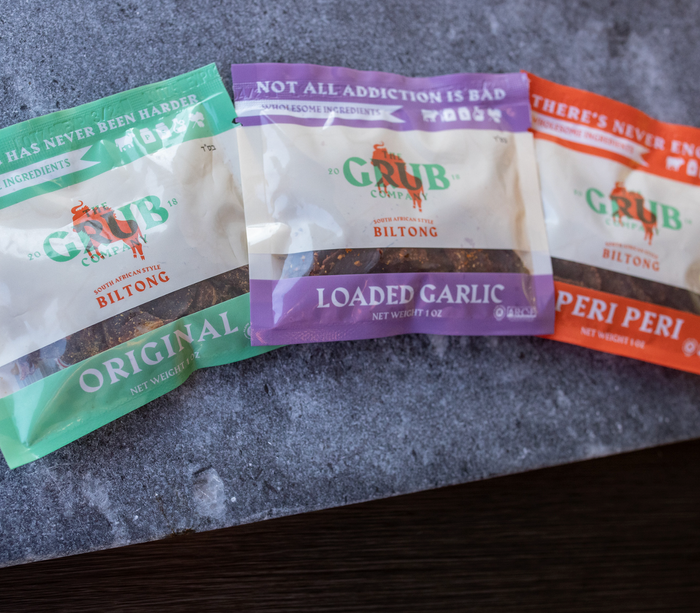
A biltong charcuterie board works best with three flavor anchors, Original, Peri Peri, and Loaded Garlic, staged as a deliberate taste progression from mild to heat to umami. Use sliced biltong as your base layer, a slab cut fresh at the table for visual drama and better texture, and mini portions so guests can sample without committing. Because biltong is air-dried rather than smoked, it holds its texture and shelf stability across a long board service without the crumbling or drying out that plagues jerky or pre-sliced cold cuts, which means less restocking and less waste.
Shop the real thing: buy biltong online, Glatt Kosher and made in Florida. US orders over $50 ship free.
Most charcuterie board guides treat biltong as a jerky substitute. They tell you what to put around it. We are going to tell you something different: biltong, built right, does the condiment work itself. The seasoning in Peri Peri and Loaded Garlic is doing what mustard pots and hot sauce ramekins do on every other board. Take those off the table. The biltong is the architecture here, not the protein filler.
The Biltong Layer: Which Format to Use and Why
Format is the first decision, and it shapes everything else. The wrong format creates board problems before a single guest arrives.
Start with the Sliced Biltong Mini's at $4.99. These are the right entry point for shared boards because they are already portion-controlled. A guest can pick up a mini portion of Original, taste it, move to Peri Peri, and then reach for Loaded Garlic without committing to a full serving of any one variety. That freedom to sample is what keeps people moving around the board and actually tasting the progression you have built. Pre-cut full slices in a pile tend to get picked apart unevenly, with the top pieces gone and the rest left to dry. Mini portions solve that structurally.
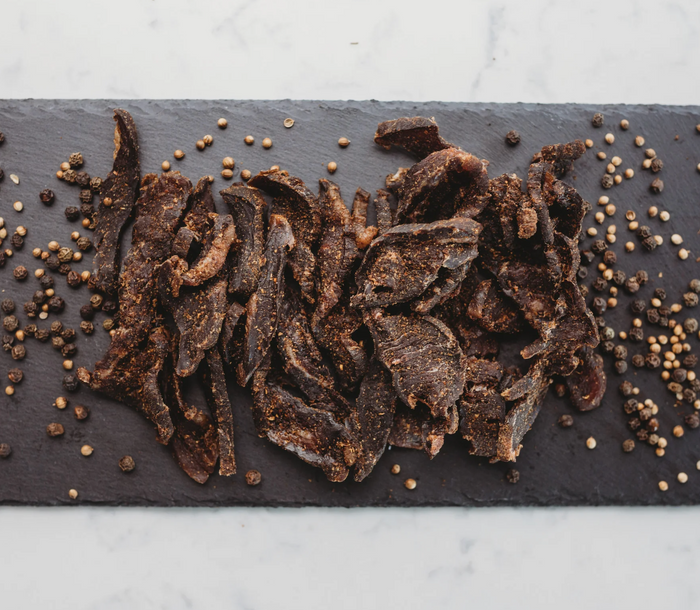
The Sliced Biltong at $11.99 is your workhorse layer. This is what fills the board between your visual centerpiece and your mini sampling stations. It is made from grass-fed beef and seasoned simply, which matters more than it sounds on a shared board. Grass-fed beef has a cleaner, less gamey finish than conventional cured meats, and when you are serving a crowd with different palate tolerances, that cleaner base note keeps the board approachable across the full flavor range. Nobody gets fatigued by the fourth or fifth piece the way they might with a heavily processed or grain-fed alternative.
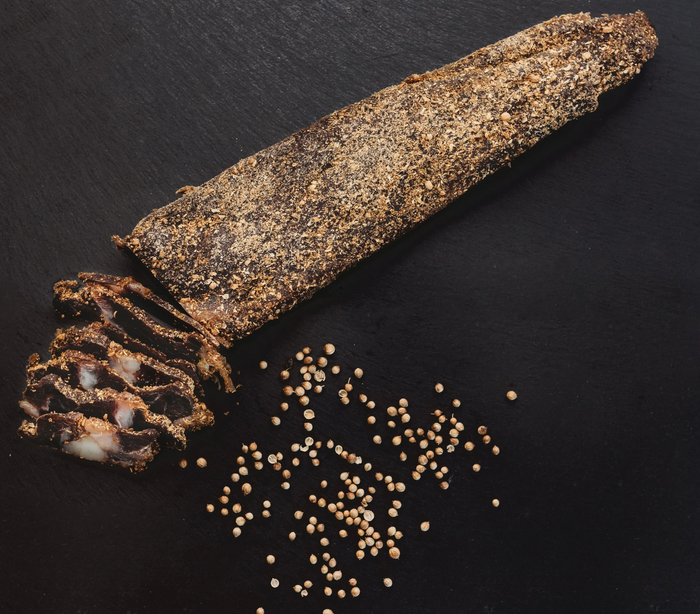
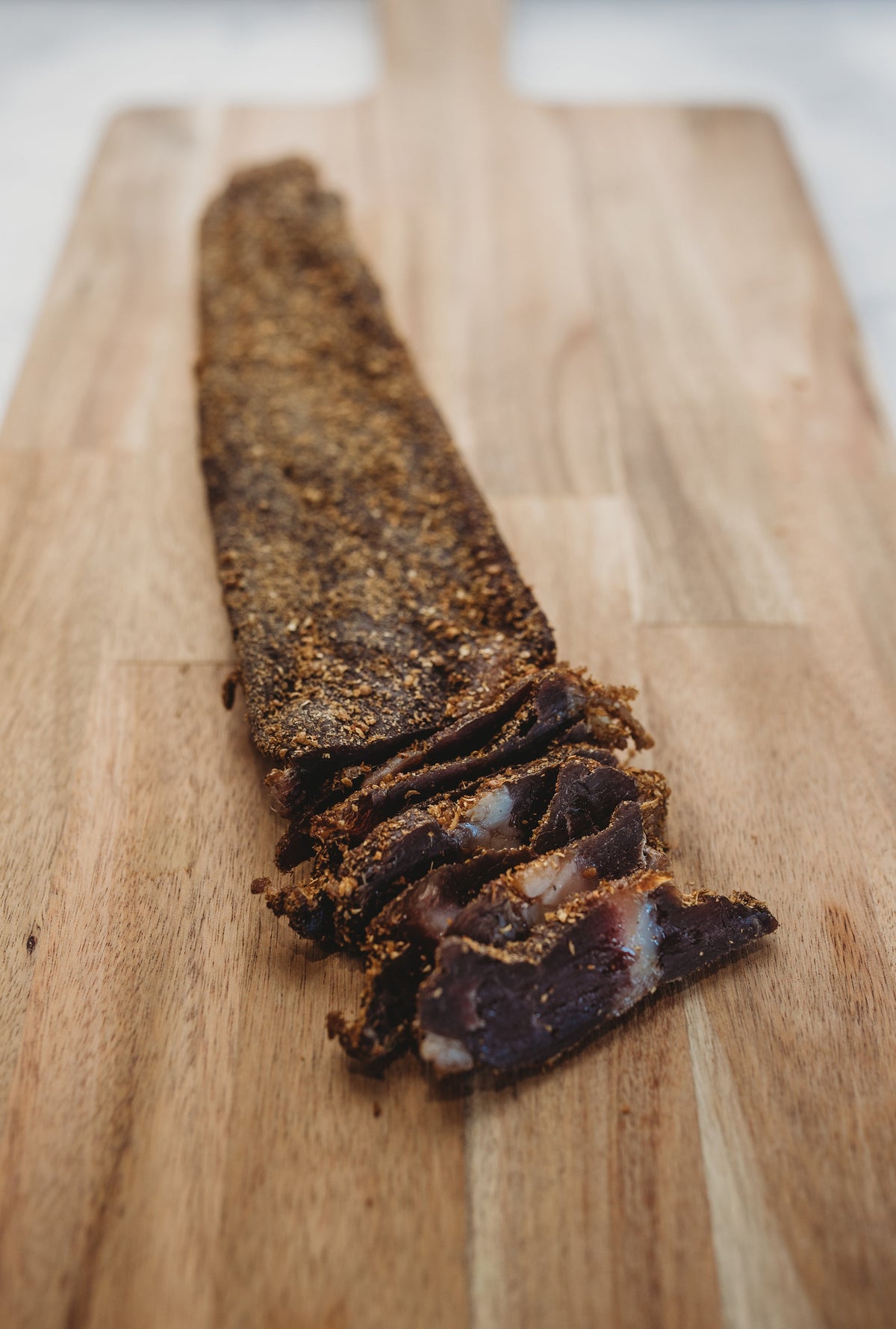
Then there is the Biltong Slab at $58. This is the occasion piece. Slab inventory is genuinely limited because we set aside only a handful per batch, and orders can carry a two to three week wait as a result. Plan ahead if you want one for a specific date. What you get for that wait is the best texture argument on any board: biltong sliced fresh off the slab at serving is meaningfully more tender than anything pre-sliced and packaged. The difference is not subtle. Slicing just before serving means you are working with the full moisture and structure of the meat rather than the slightly firmed-up surface that forms on pre-sliced portions over time. For a dinner party or a wedding board where the presentation matters, bring the slab to the table and slice there. It creates a moment. It also tastes better.
For large boards, the Bulk Biltong 1LB of Sliced Biltong at $58 is the practical answer. One pound eliminates all the individual bag portioning and gives you enough volume to build a genuinely generous spread without running out midway through. It is the same sliced biltong, just scaled for the size of event where a single bag is clearly not enough. If you are feeding more than eight people and you want all three flavors represented in real quantity, you are looking at the bulk format.
The format hierarchy, then, is this: Mini's for sampling stations, Sliced for the base layer, Slab for the centerpiece when you have lead time, and Bulk when the guest count demands it. These are not interchangeable. Each one solves a different board problem.
The Flavor Progression: Why This Is Not a Random Assortment
A lot of boards put out multiple flavors of something and call it variety. That is not the same as a progression. The Original, Peri Peri, Loaded Garlic sequence has a logic to it that pays off if guests move through it in order, and is still coherent if they do not.
Original is where the board starts. It is the cleanest expression of the biltong itself, the grass-fed beef and the spice blend without any additional heat or aromatics. Guests who are new to biltong should land here first. It establishes the baseline: what the meat tastes like, what the texture is, what makes it different from the jerky they have tried before. That air-dried density, the way it pulls rather than crumbles, registers clearly when there is nothing else competing for attention.
Peri Peri is the heat anchor. It moves the board forward from neutral to warm without tipping into aggressive territory. The job of the Peri Peri placement on the board is to create contrast with the Original and invite guests to notice the difference. This is where the board starts to feel curated rather than assembled. On any other charcuterie spread, this is where you would reach for a pepper jam or a sriracha ramekin. You do not need those here. The heat is in the meat.
Loaded Garlic is the umami close. It is the most complex flavor of the three, and it lands differently after the Peri Peri than it would eaten cold. Garlic and heat read together as depth. This is the flavor that guests tend to go back to, because it sits at the intersection of savory and warming in a way that feels complete. It is also the flavor that works hardest against rich cheeses and creamy accompaniments, because the garlic cuts through fat without needing acid to do it.
Here is the architectural point that most board guides miss entirely: because the biltong itself carries the heat (Peri Peri), the acid (Original's spice mix), and the umami (Loaded Garlic), you do not need a condiment row. No mustard pots. No hot sauce. No pickled vegetable dish sitting in the corner that nobody uses. The board becomes cleaner, the serving area stays tidier, and guests can navigate it without figuring out which condiment goes with which meat. That simplicity is a feature, not a shortcut.
The Biltong Sampler Pack at $12.99 is the right way to build your first board if you have never done this before. It contains one mini bag of each flavor, which gives you a direct taste comparison before you commit to larger quantities of any single variety. It is also the fastest way to figure out which flavor your crowd responds to most, because you can watch which mini station empties first. That information is useful the next time you order.
The Rest of the Board: What Actually Belongs Here
The supporting elements on a biltong board should be chosen in response to the biltong's specific seasoning, not picked from a generic charcuterie checklist. Brie, cheddar, and gouda are fine cheeses. But whether they belong on this board depends entirely on which biltong varieties you are using and where you need the flavor to go.
Loaded Garlic needs a dairy counterweight. A creamy, mild cheese, something in the fresh or soft category, gives the garlic somewhere to land without competing with it. The goal is cooling, not matching. Strong aged cheeses fight with the Loaded Garlic rather than complement it, and the result is a flavor collision that makes guests reach for water instead of going back for more. Keep the cheese mild wherever the Loaded Garlic is the dominant biltong flavor.
Peri Peri pairs well with something slightly sweet. Dried apricot, honeycomb, or a few fresh grapes placed near the Peri Peri station give guests a natural palate reset between pieces. The sweetness does not need to be elaborate. It needs to be present. A small cluster of grapes next to the Peri Peri station costs almost nothing and makes a real functional difference.
This is where Meat Candy earns its place on the board. The Meat Candy (listed as Beef Jerky on the site) is the sweet and savory bridge between the biltong section and the dessert-adjacent corner of the board. Pair it near dark chocolate, dried cherries, or candied nuts and it creates a section of the board that reads like a transition zone rather than an afterthought. Guests who have worked through the biltong progression often migrate naturally toward something sweeter. Give them somewhere to go. The Meat Candy carries that section without needing chocolate to do all the work.
Crackers and bread belong on the board for texture variation, not as vehicles for the biltong. Biltong holds on its own. What crackers add is a neutral landing pad for guests who want to build a small bite with cheese and meat together. Choose something thin and unseasoned so it does not compete with the Loaded Garlic or Peri Peri. A heavily seasoned cracker next to biltong is redundant at best and muddy at worst.
One more thing worth saying about board service timing: biltong does not suffer on the table the way other cured meats do. Pre-sliced cold cuts start to dry at the edges and lose their appeal after an hour. Biltong, air-dried from the start, is already at its ambient state. It does not degrade perceptibly over a two or three hour service window, which means you can set the board once and leave it. That matters for hosts who want to spend time with guests rather than restocking the board every forty minutes.
Because biltong is high in protein and iron relative to most charcuterie staples, guests tend to eat it with more intention and less franticness than they might with lighter options. The board lasts longer as a result. That is not a small thing when you have paid for quality ingredients and built something worth looking at.
The Practical Buying Path
If this is your first biltong board, start with the Sampler Pack at $12.99. It covers all three flavors in mini bag form, which lets you taste the full progression before you commit to volume. You will know after one sampler which flavor your crowd responds to most.
For a board serving six to ten people, the Sliced Biltong at $11.99 per bag combined with the Mini's at $4.99 for sampling stations gives you both formats without over-investing. Add the Meat Candy for the sweet corner.
For a large gathering where you need real volume across all three flavors, the Bulk Biltong 1LB at $58 is the format that makes sense. It removes the per-bag portioning problem entirely and gives you enough to build a generous spread without mid-service gaps.
For an occasion build where the presentation is the point, order the Biltong Slab at $58 well in advance of your date. Remember the two to three week wait on slab inventory. Plan backward from your event. Bring the slab to the table whole and slice at service. Everything else on the board supports that moment.
The biltong is not the garnish here. Build the board around the progression, choose your formats for the guest count and occasion, and let the seasoning do the condiment work. That is a board that runs itself.
Ready to pick one? Browse Biltong Bulk & Wholesale.