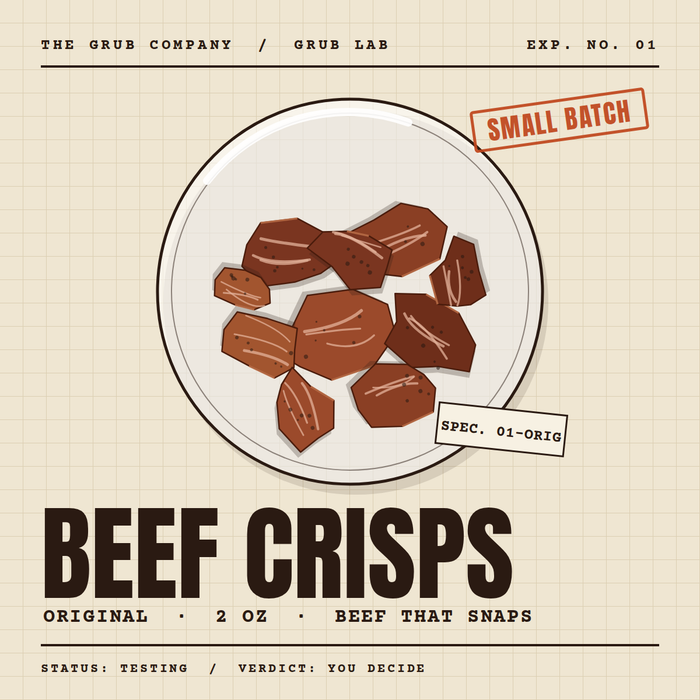
Biltong for Beginners: Your First Bag, Explained
If you have never eaten biltong, there are about five things worth knowing before your first bag — and one mistake almost everybody makes. This guide covers what to order, what it will actually taste like, why the texture surprises people, how to eat it, how to keep it, what to do when the first bite is not what you expected, and how to buy properly once you know you like it.
Start here: the one mistake
Do not buy a pound of one flavor.
It is the most common first order and the most common regret. Biltong flavors differ far more than jerky flavors do, because the spice sits on the surface of an unsweetened meat rather than being carried in a sugar marinade that smooths everything out. With jerky, the sweetness is doing most of the talking and the difference between teriyaki and peppered is a matter of degree. With biltong there is nothing in the way, so a garlic blend and a chili blend are genuinely different experiences.
A pound is roughly a month of eating for one person. That is a long time to spend with a flavor you are lukewarm about, and biltong does not improve by sitting.
Buy a 3 oz bag of Original, or a few single-serve minis in different flavors. Then go big on the one you actually want.
What biltong is, in four sentences
Beef, cut into thick strips, washed in vinegar, salted, coated in cracked coriander and black pepper, and hung in moving air for days until most of the water is gone. Nothing is ever cooked. It comes from South Africa, where it was invented as a way to keep meat without refrigeration. It is not jerky, and if you have only eaten jerky you should expect something quite different.
If you want the full version, we have a complete guide to what biltong is. This page assumes you just want to eat some.
What to order first
| If you are… | Order | Why |
|---|---|---|
| Completely new to it | 3 oz sliced, Original | Original is the reference point. Everything else makes sense once you have tasted it. |
| Cautious about spending | 1 oz mini, Original | The cheapest way to find out if this is for you |
| Sure you like bold food | Minis, one of each flavor | Taste the range in one order |
| Buying for someone else | A sampler or mixed minis | Never guess another person's heat tolerance |
| Coming from jerky and bored of sugar | 3 oz Original | This is the specific thing you are looking for |
| Feeding a household already sold on it | Bulk, 1 lb | Best price per ounce — but portion it on arrival |
| Hosting, and want it to look like food | A whole slab | Slice it yourself at the table; it holds far better once opened |
Original is not the boring option. It is the blend with nowhere to hide, which makes it both the fair test of any maker and the flavor most people settle on. A producer who gets Original right will get the others right; a producer hiding behind chili often cannot.
The flavors, and what they actually do
| Flavor | What is in it | What it is like | Start here if… |
|---|---|---|---|
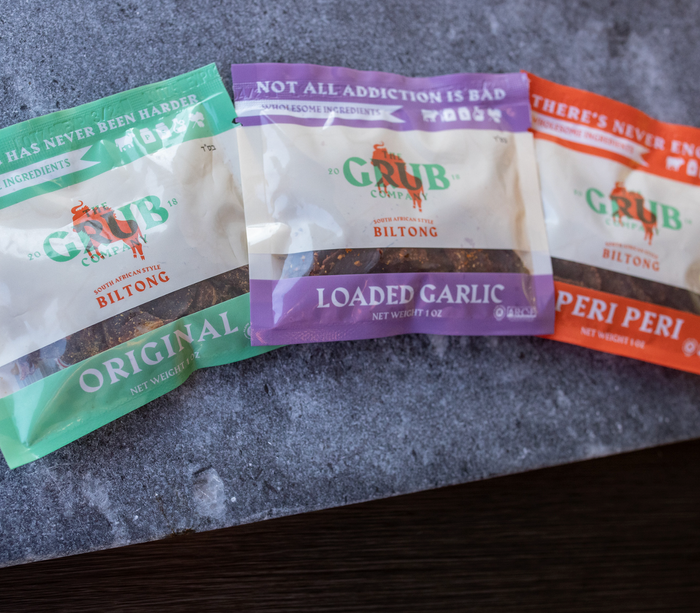
| Original | Beef, coriander, black pepper, salt, garlic, vinegar | Beef first, then the warm citrus of coriander. No heat. | You have never had biltong. Always. |
| Peri Peri | The above plus red pepper and a little brown sugar | Real heat, not a suggestion. The sugar balances rather than sweetens. | You already know you like chili |
| Loaded Garlic | Coriander, garlic, roasted garlic, salt, tomato powder, vinegar | Savory and deep rather than hot. Roasted garlic forward. | You want intensity without heat |
One practical warning: do not make peri peri your first bite. It is excellent and it is not a first impression — the heat will occupy the whole experience and you will learn nothing about what biltong tastes like. People who start there sometimes conclude they do not like biltong when what they did not like was the chili.
Wet or dry — decide before you buy
The other axis nobody warns beginners about. How far a batch was dried changes the eating experience more than the flavor does.
| Style | What it is like | Good for |
|---|---|---|
| Wet | Soft, deep red middle, yields immediately | Newcomers, children, anyone who dislikes chewy food |
| Medium | Firm edge, tender center — the standard | Most people. The safe default |
| Dry | Firm all through, shreds, very intense | Traditionalists, long trips, strong flavor |
Here is the useful part: you can move biltong drier at home, but never wetter. Leave the bag open overnight and medium becomes dry. There is no way back. So when in doubt, buy on the wetter side and let it dry to your taste.
What it will actually taste like
Beef first. Then salt. Then a warm, faintly citrusy note that most people cannot name — that is coriander, roasted and cracked, and it is the signature of the whole tradition. Then a small sourness underneath from the vinegar the meat was washed in before drying.
What you will notice by its absence is sweetness. If you have eaten supermarket jerky, a large part of that flavor was sugar — often fifteen to twenty grams in a 3 oz bag, about what is in a candy bar. The first honest reaction to biltong is frequently "oh — this just tastes like meat."
That is the point, and it takes most people two or three pieces to recalibrate. Give it that.
The texture surprises people more than the flavor
Biltong is cut along the grain before drying and across it afterward. Jerky is cut against the grain and then cooked. That difference in handling produces two completely different things in the mouth.
Good biltong separates into soft strands. It yields. Jerky resists and you work at it. If your biltong is tough and needs chewing like gum, it was over-dried or badly made — that is not what it is supposed to be, and it is worth trying a different producer before deciding the category is not for you.
What the piece should look like
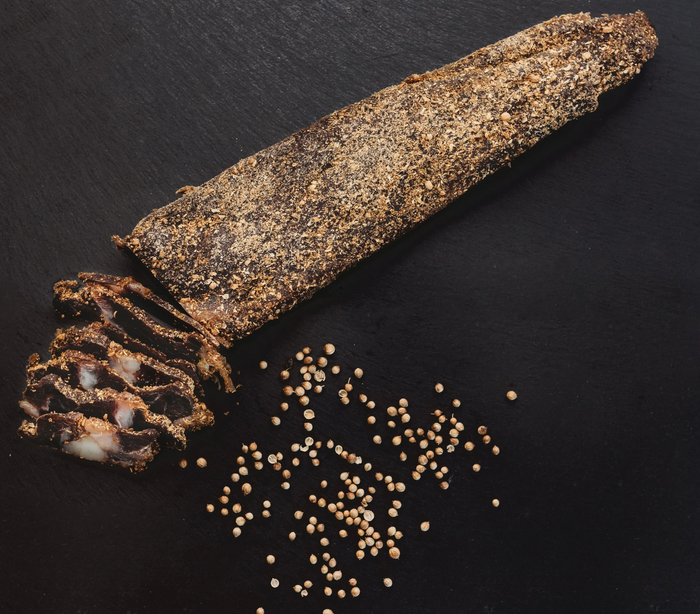
Deep red-brown, darker at the edges than in the middle. Sliced biltong should show a visible gradient across the cut face — a firmer dark rim and a softer, redder center. That gradient is the physical record of slow drying, and it is the clearest sign you have the real thing rather than something made in a dehydrator in an afternoon.
You should also see cracked spice on the surface and a little loose in the bag. If it looks powder-coated, the coriander was ground rather than cracked, and it will have lost most of its aroma before you opened it.
How to eat it
Out of the bag, mostly. That is not a cop-out; it is how the overwhelming majority is eaten and it needs nothing else.
But it is a real ingredient and rewards being treated as one:
- On a board — sliced thin, with a sharp hard cheese, pickles and dried fruit. It behaves like bresaola, because it essentially is one.
- Over salad — shredded, in place of bacon. The salt seasons the whole plate, so go easy on the dressing.
- With eggs — chopped in at the very end, off the heat, so it warms without cooking.
- On a baked potato — shredded, with butter and cheese.
- In a stew — a South African habit. It rehydrates and adds depth without browning anything.
- With a drink — a hoppy beer cuts the salt; a bold red matches the density.
- In a lunchbox — no refrigeration, no utensils, no smell problem.
The one thing not to do is cook it hard. It is already dried and cured. Heat only makes it tougher and drives off the aromatics in the coriander that you paid for.
Keeping it
| Situation | How long | What to do |
|---|---|---|
| Bag unopened | 3–6 months | Cupboard, cool and dark. No fridge needed. |
| Opened, room temperature | 2–3 days | Press the air out, reseal |
| Opened, refrigerated | 1–2 weeks | Sealed container, not the open bag |
| Frozen | 6 months+ | Wrap tight; thaw in the fridge, then warm to room temperature |
| Humid house in summer | 1–2 days opened | Refrigerate from the start |
| In a hot car | An hour, not an afternoon | Take it inside |
The single most useful habit: press the air out before you reseal. It costs nothing and does more than anything else on this page.
Why any of this works is worth thirty seconds. Unopened bags contain a small sachet — an oxygen absorber — which pulls the oxygen out of the sealed space. Between that and how far the meat was dried, there is neither enough oxygen nor enough available water for anything to grow. Open the bag and you remove both protections at once, which is why the numbers change so sharply.
Hard is fine. Fuzzy is not.
If your biltong goes hard, it has not gone bad — it has kept drying. Hard biltong is perfectly safe and some people prefer it. What is not fine:
- Raised, fuzzy growth — white, green or blue-green. That is mold. Discard the whole bag, not just that piece.
- A tacky or slimy surface — bacterial growth. Discard.
- A sour or ammonia smell — spoilage. Discard.
- A paint-like or crayon smell — the fat has gone rancid. Discard.
The one that confuses everybody: a flat white crystalline dusting is salt, not mold. It brushes off and it is harmless. Mold is raised and has visible texture. Look at the piece in good light from an angle — mold casts a shadow, salt does not.
Things that surprise first-timers
- It is not cooked, and that is fine. Vinegar, salt and drying make it safe, the same way they do for prosciutto and bresaola. The long answer is here.
- The middle is softer and redder than the edge. That is correct and desirable. A uniform cross-section suggests heat was used.
- It does not need a fridge. Until you open it.
- It is salty. Salt is the preservative, not the seasoning — you cannot make a low-salt version, only an unsafe one. An ounce is a serving.
- It disappears faster than jerky. There is no sugar wall to make you stop. Plan quantities accordingly.
- A pound is not as much as it sounds. It is two to three pounds of beef with the water removed.
- Good biltong is tender. If you are fighting it, something went wrong upstream.
If the first bag is not right
Three failures account for nearly all disappointing first orders, and none of them means biltong is not for you.
Too dry and tough. Common, and usually a batch or storage problem rather than the maker's intent. Nothing reverses it, but it tells you to buy on the wetter side next time, or from someone who ships faster after drying.
It tasted sweet. This one is diagnostic. Biltong should not taste sweet. If it did, check the ingredient list — you have probably bought a jerky-process product with a South African name on the bag. The fix is a different producer, not a different flavor.
You started with the hot one. Peri peri is excellent and it is not an introduction. Go back and try Original before you decide anything.
There is a fourth possibility worth naming: you tried it once, cold, standing at the counter, distracted. Biltong is a food that reads better on the second and third piece than the first, because your palate is expecting jerky and has to adjust. Give a new bag three pieces before you judge it.
How much to buy, once you know you like it
| Situation | Amount |
|---|---|
| One person, snacking regularly | 3–6 oz a week |
| Household of four | 1 lb every week or two |
| Party, as one snack among several | ~2 oz per person |
| Party, as the thing people are eating | ~4 oz per person |
| Board for eight | 8–12 oz |
| Office of ten, weekly | 1–2 lb |
| Care package or gift | 1 lb, sealed, unopened |
If you buy a pound, split it into week-size bags the day it arrives and keep one out. Opening one bag thirty times is far worse for the meat than opening four bags seven times each — every opening resets the clock on the whole quantity.
Work out the real price per ounce
Bag sizes in this category are deliberately inconsistent, so headline prices tell you very little. Convert everything, and include shipping — a single small bag with paid postage is usually the worst value available, worse per ounce than buying single-serve minis. Either build an order that clears a free-shipping threshold, or keep it deliberately small and accept the premium.
A short buying checklist
- Vinegar in the process and coriander in the spice. Both should be mentioned somewhere on the site.
- Days, not hours, of drying. Hours means jerky, whatever the label says.
- No sugar high in the ingredient list. A little in a heat blend is normal; second ingredient is not.
- No nitrates or nitrites. Properly dried biltong does not need them.
- An oxygen absorber in the bag. That sachet is what makes the shelf life real.
- A short ingredient list. Five to seven items is what the genuine article looks like; twelve is a formulation.
- A named cut. "Silverside" or "topside" is an answer; "premium beef" is not.
- Someone who describes their own process. Makers talk about making. Resellers talk about heritage.
Your first month, planned
Week one. One 3 oz bag of Original. Eat a third of it straight from the bag, standing up, before you do anything clever with it. Reseal with the air pressed out. Come back the next day and see what you think — the second sitting tells you more than the first.
Week two. If you liked it, buy minis in the other two flavors and taste them side by side against Original. Now you know your flavor.
Week three. Try it as an ingredient once — over a salad, or with eggs — so you know what it does beyond snacking.
Week four. Buy the format that matches how you actually behave. If you are organized, a pound, portioned on arrival. If you are not, a subscription of 3 oz bags will give you fresher meat and remove the discipline problem entirely.
By the end of that you will know whether you want it wetter, drier or hotter — and that is everything you need to order properly forever after.
The vocabulary you will meet
Biltong comes with its own words, most of them Afrikaans, and product pages assume you know them. You do not need all of these, but you will see them.
| Word | What it means |
|---|---|
| Slab | A whole dried strip, uncut. You slice it yourself |
| Sliced | Cut across the grain into ready-to-eat pieces. The everyday format |
| Minis / bits | Smaller pieces, usually single-serve bags |
| Wet / dry | How far a batch was dried. Wet is soft, dry is firm. Not a freshness claim |
| Droëwors | "Dry sausage" — dried sausage with the same spice profile. A cousin, not biltong |
| Chili bites | Small, drier, chili-spiced pieces |
| Silverside / topside | The lean hindquarter cuts biltong is traditionally made from |
| Coriander | The signature spice — the seed, roasted and cracked, not the green herb |
| Water activity | How much water is available to bacteria. The number that makes it shelf-stable |
| Braai | South African barbecue. Where a lot of biltong gets eaten |
What a first bag should cost
Prices look scattered until you convert them, at which point the category is quite narrow. Work in dollars per ounce.
| Format | Typical size | Typical price | Per ounce |
|---|---|---|---|
| Mini / single-serve | 1 oz | $4.99 | $4.99 |
| Standard sliced bag | 3 oz | $11.99 | $4.00 |
| Sampler | ~3.3 oz mixed | $12.99 | ~$3.94 |
| Bulk sliced or whole slab | 16 oz | $58.00 | $3.63 |
Two things fall out of that. The per-ounce price drops only about 20–25% between the smallest format and a full pound, which is a much flatter curve than most packaged snacks — because the cost sits in the beef and the drying time, not the packaging. And single-serve is not a rip-off; you are paying for portioning, which for a first order is worth having.
If you find biltong well under $3 an ounce, something has been substituted — a cheaper cut, a shorter dry leaving water weight you are paying for, or sugar carrying a weaker product. It takes two to three pounds of beef to make a pound of biltong, and that ratio puts a hard floor under the price.
Where to buy your first bag
| Online, direct from a maker | A shop that stocks it | |
|---|---|---|
| Range | Every flavor and format | Usually one or two |
| Freshness | Often better — shipped days after drying | Depends how fast the shop turns it |
| Inspection | Not possible | You can see the color and the cut |
| Price per ounce | Better, especially in bulk | Retail markup |
| Speed | Days | Today |
In the US, biltong in person means kosher grocers and South African specialty shops far more often than supermarkets — it is a slow-turning specialty item, so most chains do not carry it. For a first bag either works. Online gives you the choice of format that actually matters for a beginner, since the shop will almost always have sliced Original and nothing else.
How it compares to the rest of the snack shelf
| Snack | Protein per 100 cal | Added sugar | Ingredients | Needs a fridge? |
|---|---|---|---|---|
| Biltong | ~15 g | None | 5–7 | No |
| Beef jerky | ~11 g | Usually | 12+ | No |
| Meat sticks | ~9 g | Sometimes | 10+ | No |
| Protein bar | ~9 g | Usually | 15+ | No |
| Greek yogurt | ~10 g | Varies | 1–3 | Yes |
| String cheese | ~9 g | None | 3–5 | Yes |
| Almonds | ~4 g | None | 1 | No |
Protein per 100 calories is the honest comparison, because bag sizes vary so much that grams-per-serving tells you almost nothing. Read the last column alongside it: everything that matches biltong on a short ingredient list needs refrigeration, and everything shelf-stable that competes on convenience loses on sugar or ingredient count. The overlap — high protein, short label, no fridge — is a small space, and that is the space biltong occupies.
Buying it as a gift
Biltong gifts unusually well because it needs nothing: no refrigeration, no cooking, no serving equipment, and three to six months of shelf life sealed. It also survives being forgotten in a drawer, which most food gifts do not.
Three rules if you are buying for someone else. Send a sampler or mixed minis unless you know their taste — guessing a stranger's heat tolerance is how a gift goes uneaten. Do not send a slab without a knife, or it will sit on a counter for a month. And never repackage it into a nicer jar; you lose the seal and the oxygen absorber, which is the entire preservation system.
What to do with the last of the bag
Every bag ends the same way: a handful of small pieces and spice crumbs too fiddly to eat by hand. Do not throw them out.
- Blitz them into a powder and use it as a seasoning — on eggs, popcorn, roast vegetables, or the rim of a bloody mary.
- Stir the crumbs into scrambled eggs at the end, off the heat.
- Scatter over a salad in place of croutons or bacon bits.
- Drop them into a stew or soup — they rehydrate and add depth.
Biltong dust is one of the better seasonings you can have in a kitchen, and it costs you nothing because you already bought it.
Storing a pound properly, if you get that far
Most people who like biltong end up buying it by the pound within a couple of months, and that is where the one real skill comes in. A pound is not a bigger bag; it is a different problem.
- Portion it the day it arrives. Four week-size portions for one person, two for a household. This is the whole trick and it takes five minutes.
- Seal each portion separately. Vacuum bags if you have them, zip bags with the air pressed out if you do not.
- Keep one out, refrigerate or freeze the rest. The portion you are eating lives in the cupboard. The others stay unopened until their turn.
- Freeze anything beyond three weeks out. Biltong freezes well because there is so little free water left in it to form damaging ice crystals.
- Thaw in the fridge, then bring to room temperature before eating. Cold biltong tastes muted — the fat and the spice aromatics need a little warmth to read properly.
The failure mode is obvious once stated: a pound in one bag, opened daily for a month, is a pound of biltong being slowly dried into something much harder than what you bought. If you know you will not do the portioning, a subscription of small bags gives you fresher meat for a similar price and removes the discipline problem entirely.
Reading a label like someone who knows
After a few bags you will start reading these automatically. Here is the shortcut.
| What you see | What it tells you |
|---|---|
| Beef, vinegar, salt, coriander, pepper, garlic | The real thing. Six items is what it should look like |
| Sugar second or third | You are buying a sweet snack with a South African name |
| Soy sauce, Worcestershire | A jerky marinade. Different product |
| Sodium nitrite / nitrate | Properly dried biltong does not need it. Ask why it is there |
| "Dehydrated" or "slow-cooked" | Heat was used. That is jerky |
| "Air-dried", "hung", "cured" | The right language |
| A drying time in days | Good sign |
| A drying time in hours | Not biltong, whatever it says on the front |
| Twelve or more ingredients | A formulation rather than a food |
| No process described anywhere on the site | The seller probably does not do the drying |
The single most informative thing on any biltong page is the ingredient list, and it takes ten seconds. A short list is not a marketing choice — it is a consequence of the method. There is nothing for a long list to be doing.
Common questions
What does biltong taste like? Beef, then salt, then warm citrusy coriander, then a faint vinegar sourness. Not sweet.
Is it safe to eat straight from the bag? Yes. That is how it is meant to be eaten.
Is it raw? No — cured, not cooked, not raw. Vinegar, salt and drying do what heat does elsewhere.
Does it need refrigeration? Not while sealed. After opening, refrigerate if you will not finish it in two or three days.
Can children eat it? Generally yes. Two caveats: it is salty, so portion it; and firm dried meat is a choking risk for toddlers, so buy on the wetter side and cut it small.
Is it keto or low-carb? Yes, in an unsweetened Original blend — near-zero carbohydrate.
How is it different from jerky? Cured rather than cooked, unsweetened rather than sugared, cut with the grain rather than against it, dried for days rather than hours.
Why is it more expensive than jerky? It takes two to three pounds of beef to make a pound of biltong, and a batch occupies a controlled room for days.
How much should I eat? An ounce is a serving — roughly 12 g of protein and 80 calories. Two ounces is a substantial snack.
What if I do not like it? Tell the maker. Any producer worth buying from would rather hear it than have you quietly not reorder.
The complete guide to what biltong is → · Start with Original →
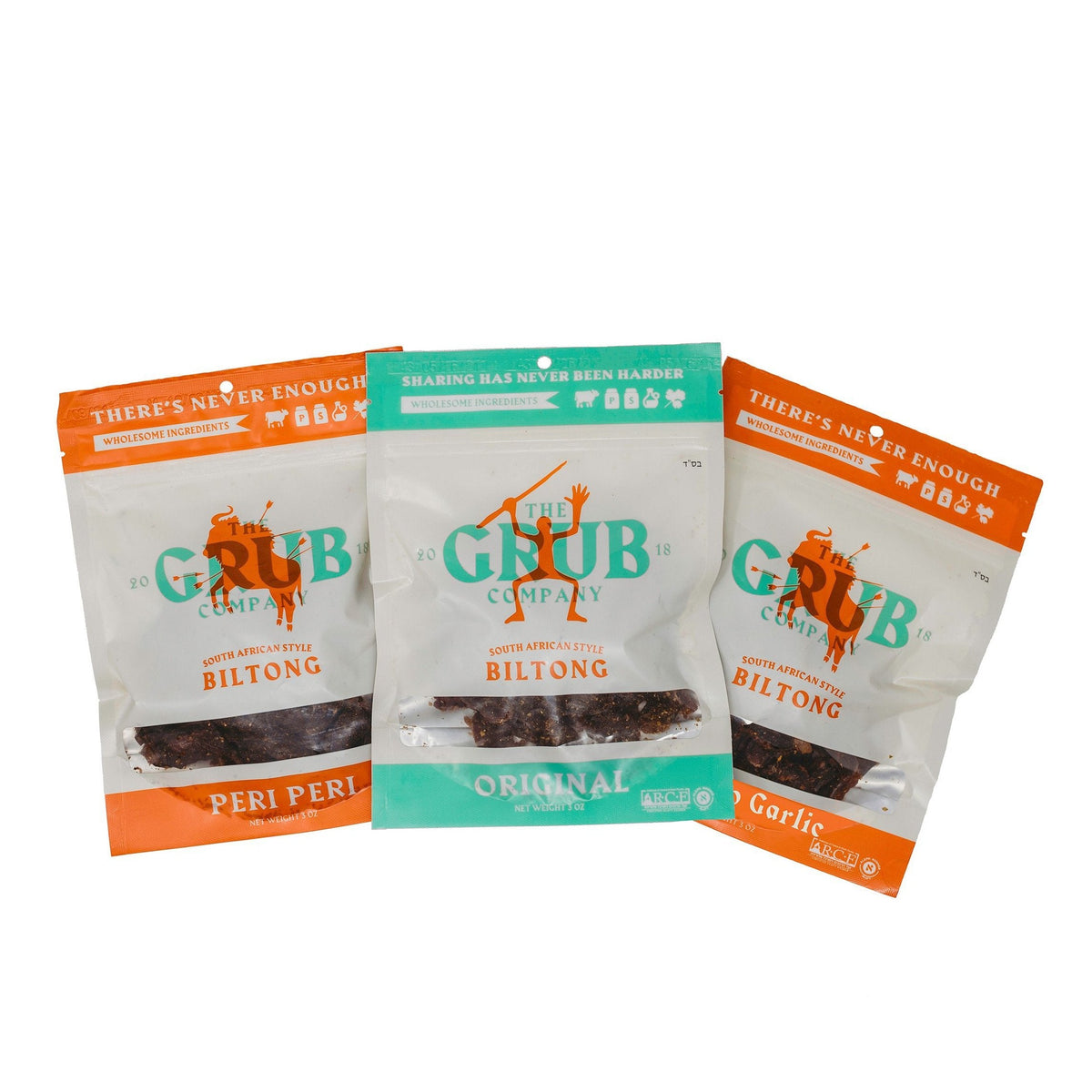
The first-order shelf: Original 3 oz, the sampler, and the minis.