How to Eat Biltong
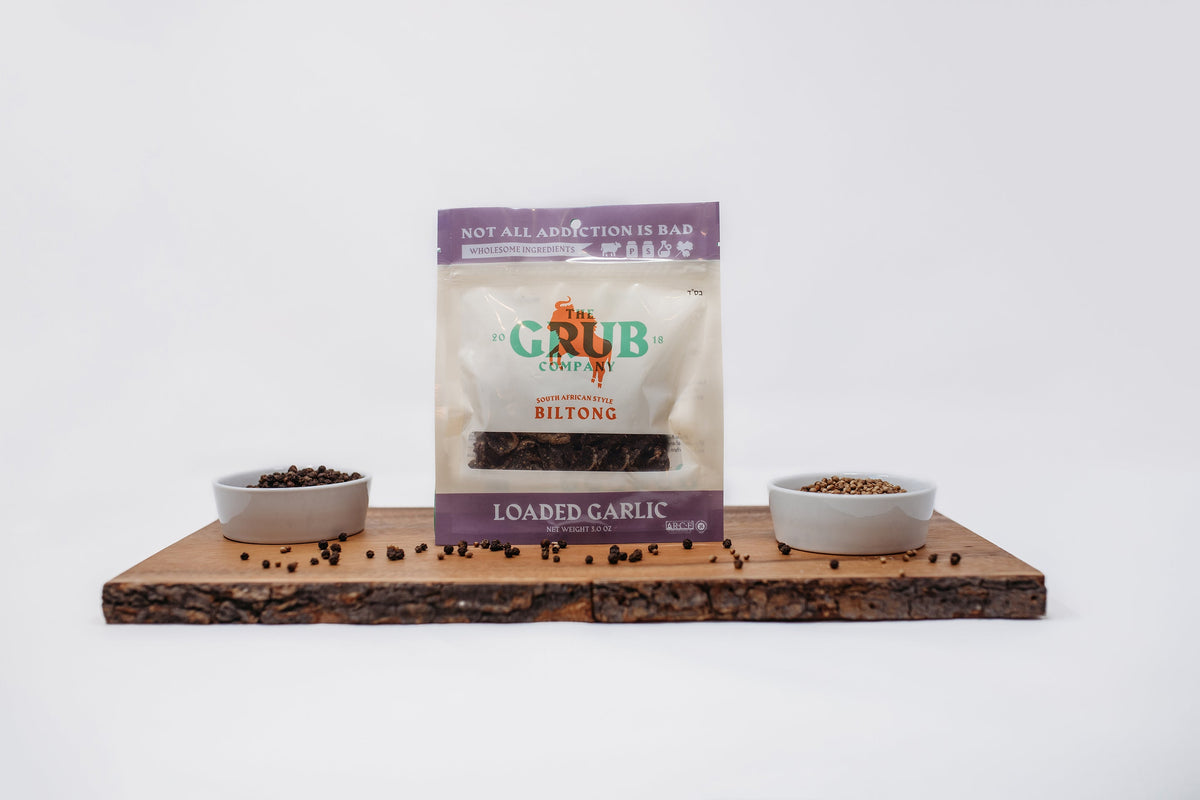
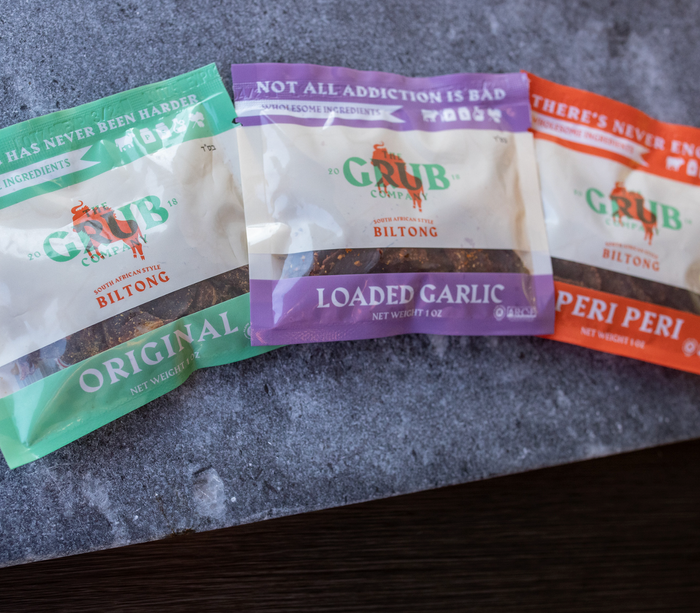
Eat biltong straight out of the bag, at room temperature, a few pieces at a time. There is nothing to prepare, nothing to heat and nothing to soak. It is a finished food that arrived finished, and the single most common mistake is treating it as an ingredient that needs something done to it.
Ready to try it? Buy Glatt Kosher biltong online. Made in Florida, free US shipping on orders over $50.
Related: Biltong Recipes: 10 Ways to Cook and Serve Kosher Biltong
That is the short answer, and it is genuinely most of the answer. The longer version is worth having because biltong does not behave like the dried meats most Americans have met. The chew changes with how it was cut, the thickness changes the whole experience, and the first piece of a first bag catches a lot of people off guard. Here is what we would tell someone standing in a kitchen holding their first bag and wondering whether they are doing this right.
Out of the bag, at room temperature, in your fingers
Open it, take a piece, eat it. Biltong was designed by people who needed food they could carry and eat without stopping, and everything about how it works still reflects that.
Room temperature matters more than people expect. Cold mutes the beef and stiffens the fat, so biltong straight from a refrigerator eats harder and tastes less like itself. If it has been in the cold for any reason, give it twenty minutes on the counter before you judge it.
Fingers rather than a fork, and no plate required. This is not fussiness on our part. Handling a piece tells you things about it that looking does not, including whether it is drier or softer than the last bag you had, which changes how you will want to eat your way through it.
Your first piece will probably surprise you
It is worth saying this before anything else, because a lot of people conclude they do not like biltong on the strength of one bite taken with the wrong expectation.
If you are expecting jerky, you will notice the absence of sweetness and smoke immediately, and it can read as a taste that is missing rather than one that was never there. If you are expecting salami, you will notice there is no ferment and no richness carrying it. What is left is beef, salt, coriander and a sour note underneath, and it is more direct than either of those foods.
Give it three or four pieces before deciding. Almost everyone who ends up loving biltong describes the same arc, where the first piece was strange and the fifth one was obvious. It is a taste with very little decoration on it, and that takes a moment to land.
Grain direction is why two bags chew differently
The single biggest variable in how biltong eats is which way the meat was cut relative to the muscle fibers, and almost nobody is told this.
Cut along the grain, the fibers stay long. The piece pulls apart in strands and takes real chewing. Some people love that and it is the traditional experience for a lot of eaters. Cut across the grain, the fibers are short, and the piece breaks down quickly into something much softer.
Neither is a defect. If you have had biltong twice and found one bag pleasant and the other like hard work, grain direction is probably the reason rather than freshness or quality. Once you know which you prefer, you know what to look for, and you stop blaming the wrong thing.
Thickness changes the food more than the spice does
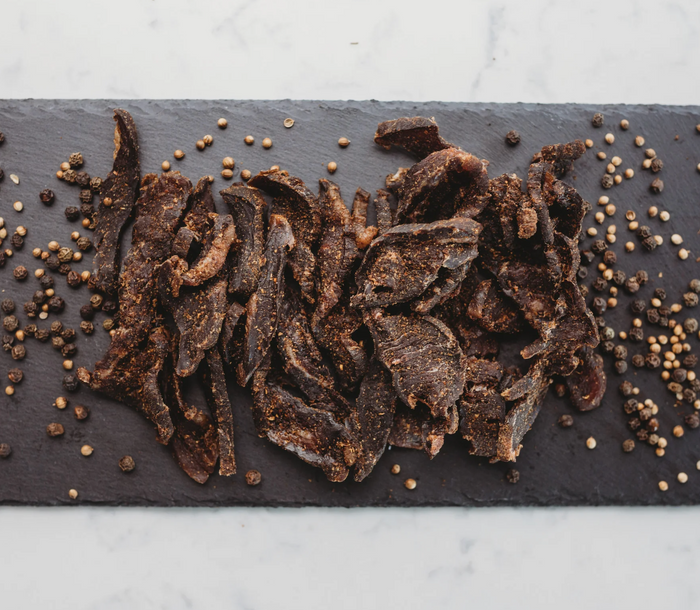
A thin slice and a thick chunk of the same biltong are close to two different snacks. Thin slices carry more spiced surface per bite, dry through more evenly and eat fast. Thick pieces keep a softer, redder middle, taste more of straight beef and take longer to work through.
Most people who say they prefer a particular biltong are really expressing a thickness preference without having identified it. It is the variable with the largest effect on the eating and the one people are least aware of.
If you buy sliced, the thickness was decided for you and it will be consistent, which is exactly why sliced formats suit most people. If you want to control it, that is what a slab is for, and we come back to that below.
Tear it or cut it, and when each is right
Tearing along the grain is the natural way to eat a larger piece. The meat has a direction and your hands can feel it. Pull with the fibers and it separates cleanly into a strip the right size for a mouthful.
Cutting is the answer when you are portioning for other people, when you want even pieces for a board, or when the piece is drier than you would like. A sharp knife across the grain on a firm piece produces something far easier to eat than the same piece torn.
The one thing not to do is bite straight into a large dry piece and pull. That is how people end up thinking biltong is impossibly tough, when the actual problem was geometry. Reduce it first, then eat it.
Do not warm it
People try this, usually with good intentions, and it does not work. Biltong was never cooked and it does not want to be. Warming it does not soften it in any useful way. It renders the fat, drives off the aromatics from the coriander and pepper, and leaves the lean drier than it started.
The microwave is the worst version of this. It heats unevenly, turns the exposed edges to something brittle and does nothing good to the middle.
If a piece is drier than you want, the answer is to cut it thinner rather than to heat it. Thickness is the lever. Heat is not, and a warmed piece cannot be sent back.
How much at a time
Biltong is concentrated, because most of the water that was in the beef has left. A small handful goes further than the same visual volume of almost any other snack, and people routinely eat a whole bag in one sitting on the first go and then wonder why they are so thirsty.
A reasonable pattern is a small handful at a time, with something to drink alongside. Not because there is anything wrong with more, but because the taste is intense and it fatigues faster than a lighter snack does. Eaten in smaller amounts it stays interesting all week.
The formats reflect this. Sliced Biltong Mini's at $4.99 is deliberately a small bag. Sliced Biltong at $11.99 is the size that lasts across a week for one person. Bulk Biltong, 1LB of Sliced Biltong at $58.00 is for households where several people are eating it, or where running out has become annoying.
What to drink with it
Water first, and more of it than you think. Dried salted beef is thirsty work and the drink is part of the experience rather than an afterthought.
Beyond water, biltong sits well with anything carbonated and not sweet, and with dry red wine, which has enough tannin and structure to meet the beef rather than disappear underneath it. A dry cider works. Strong black coffee works better than it sounds, particularly with a fattier piece.
What fights it is anything very sweet. Sweetness plus salt plus a sour vinegar background is a crowded mouth, and the biltong is the thing that loses. If you want a sweet drink, put a gap between them.
On a board with other things
Biltong belongs on a board and it takes almost no work to put there. Slice it thin, fan it out, and it holds its own next to anything cured.
What goes with it: hard cheeses, sharp pickles, olives, mustard, plain crackers, fresh bread. What to avoid piling next to it: sweet chutneys and fruit pastes, which are usually there to cut richness, and biltong is lean rather than rich, so the sweetness has nothing to cut and simply takes over.
The practical tip is to slice it just before serving. Cut surface dries out on a board over an hour, and thin slices left sitting go noticeably firmer. Cut what people will eat in the first half hour, then cut more.
Using it in cooking, and where that goes wrong
Biltong works in cooking as a finishing ingredient rather than a component. Grated or finely chopped over eggs, folded through a salad at the end, scattered on a baked potato, mixed into a savory muffin batter, stirred through a bowl of soup at the table.
Where it goes wrong is prolonged heat and liquid. Simmering it does not reconstitute it into tender beef, it strips the spice into the liquid and leaves fibrous shreds behind. Anything that would work with fresh beef is the wrong instinct here.
Think of it the way you would think of an aged hard cheese. It is a concentrated thing that goes on at the end, in small amounts, to add something the dish did not have. Treated that way it is genuinely useful in a kitchen.
The dry end of the bag
Every bag has an ending, and by then the pieces are firmer than they were on day one, because biltong keeps drying in the bag. Nothing has gone wrong. It is simply further along than it was.
The easiest fix is mechanical. Cut those last pieces much thinner than you were cutting before and they eat perfectly well. The drier the meat, the thinner it wants to be.
The other route is to stop eating them as a snack and use them. Grate the hard ends over eggs or pasta, chop them into a salad, or drop a piece into a pot of soup at the table so it softens in the bowl. The dry end of a bag makes better cooking material than the soft middle ever did, so there is no reason for any of it to be thrown away.
Serving it to someone who has never had it
Give them a thin piece, not a thick one, and tell them what to expect before they bite. Say it is not jerky, say there is no sweetness in it, and say the taste is mostly beef and coriander. Thirty seconds of framing prevents most bad first impressions.
Start people on a milder cut with a bit of fat on it if there is a choice. Fat carries taste and softens the impression, and a very lean, very dry piece is a demanding introduction.
If you are buying specifically to introduce someone, the Biltong Sampler Pack at $12.99 does this better than a single bag, because it lets them find what they like rather than judging the whole category on one style.
Cutting your own from a slab
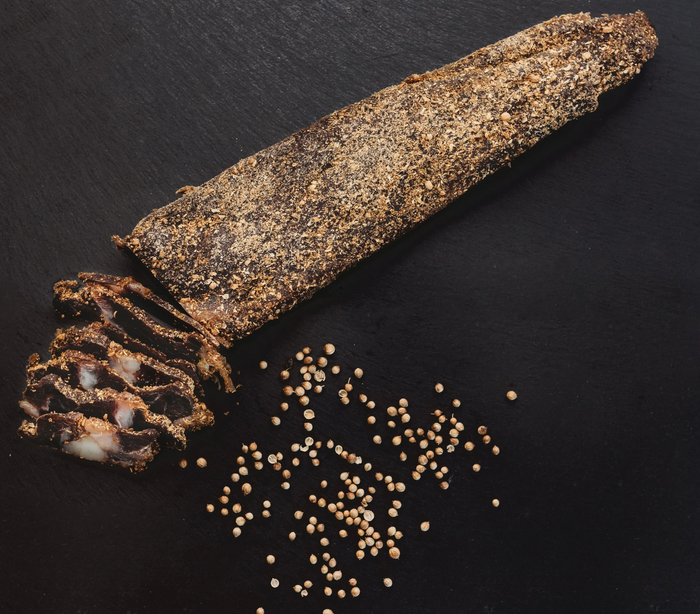
A slab is dried whole and cut when you want it, which puts the most important variable in your hands. This is the format for people who have decided they care about thickness, and for anyone who has ever thought a bag of sliced was not quite how they remembered biltong.
You need a sharp knife and a board, and that is all. Cut across the grain for a softer bite, along it for a chewier one, and adjust the thickness until it is what you want. Slice what you are about to eat rather than the whole slab, because cut surface dries fast.
Biltong Slabs at $58.00 is the format, and it is a commitment rather than a first purchase. The upside is that a slab holds its interior moisture far longer than sliced does, because so much less surface is exposed, so the last of it eats much more like the first.
Where to start if you are new
Sliced Biltong Mini's at $4.99 is the cheapest way to find out whether you like this at all, and it is a small bag on purpose. Sliced Biltong at $11.99 is the everyday format and the one most people settle on, ready to eat with no decisions to make.
The Biltong Sampler Pack at $12.99 is the better first order for anyone who wants to work out a preference rather than take a single guess. Bulk Biltong, 1LB of Sliced Biltong at $58.00 and Biltong Slabs at $58.00 are restock orders for people who already know what they want. Nobody should spend $58.00 on a food they have never eaten.
Bottom line
Eat it at room temperature, straight from the bag, in your fingers, a small handful at a time, with water alongside. Cut it thinner if it is drier than you want. Do not heat it. Give it four or five pieces before you decide what you think, because the first one arrives without the sweetness and smoke most people are unconsciously expecting.
Beyond that, the only real variables are grain direction and thickness, and both are preferences rather than standards. Start with Sliced Biltong at $11.99 or Sliced Biltong Mini's at $4.99, and move to Biltong Slabs at $58.00 when you want to make the thickness decision yourself.
Frequently Asked Questions
Do you eat biltong straight out of the bag?
Yes. It is a finished food that arrived finished, so there is nothing to prepare, heat or soak. Eat it at room temperature, in your fingers, a few pieces at a time. If it has been in a refrigerator for any reason, leave it on the counter for twenty minutes first, because cold mutes the beef and stiffens the fat, which makes a good piece eat harder and taste less like itself. The most common mistake is treating biltong as an ingredient that needs something done to it.
Should biltong be warmed up or cooked?
No. Biltong was never cooked and warming it does not improve it. Heat renders the fat, drives off the aromatics from the coriander and pepper, and leaves the lean drier than it started. A microwave is the worst version, because it heats unevenly and turns the exposed edges brittle while doing nothing useful to the middle. If a piece is drier than you want, cut it thinner instead. Thickness is the lever that works. Heat is not, and a warmed piece cannot be undone.
Why does some biltong chew so much more than others?
Usually grain direction. Cut along the muscle fibers, the fibers stay long, so the piece pulls apart in strands and takes real chewing. Cut across them, the fibers are short and the piece breaks down quickly into something softer. Thickness is the other half of it, since a thick piece keeps a softer middle and takes longer to work through while a thin slice eats fast. Neither cut is a defect. If one bag felt like hard work and another did not, this is almost always why.
How much biltong should you eat at once?
A small handful at a time, with something to drink alongside. Most of the water that was in the beef has left, so it is concentrated, and a small amount goes further than the same visual volume of almost any other snack. The taste is intense and it fatigues faster than a lighter snack, which is why smaller amounts stay interesting across a week. Sliced Biltong Mini's at $4.99 is a small bag on purpose, and Sliced Biltong at $11.99 is the size that usually lasts one person a week.
What should you drink with biltong?
Water first, and more than you expect, because dried salted beef is thirsty work. Beyond that it sits well with anything carbonated and not sweet, with dry red wine, which has the tannin and structure to meet the beef rather than vanish under it, with dry cider, and with strong black coffee, particularly alongside a fattier piece. What fights it is sweetness. Sugar on top of salt and a sour vinegar background makes a crowded mouth, and the biltong is the thing that loses.
What do you do with the hard pieces at the end of a bag?
Cut them much thinner than you were cutting before, because the drier the meat the thinner it wants to be, and they eat perfectly well. The other route is to stop treating them as a snack. Grate them over eggs or pasta, chop them into a salad, or drop a piece into a bowl of soup at the table so it softens as you eat. The dry end of a bag makes better cooking material than the soft middle ever did, so none of it needs throwing away.
Can you cook with biltong?
Yes, as a finishing ingredient rather than a component. Grated or finely chopped over eggs, folded through a salad at the end, scattered on a baked potato, mixed into a savory muffin batter, or stirred into soup at the table. Where it goes wrong is prolonged heat and liquid. Simmering does not turn it back into tender beef, it strips the spice into the liquid and leaves fibrous shreds. Treat it the way you would treat an aged hard cheese, added late and in small amounts.