Biltong Slabs Vs. Sliced Biltong: Which Format Should You Buy?
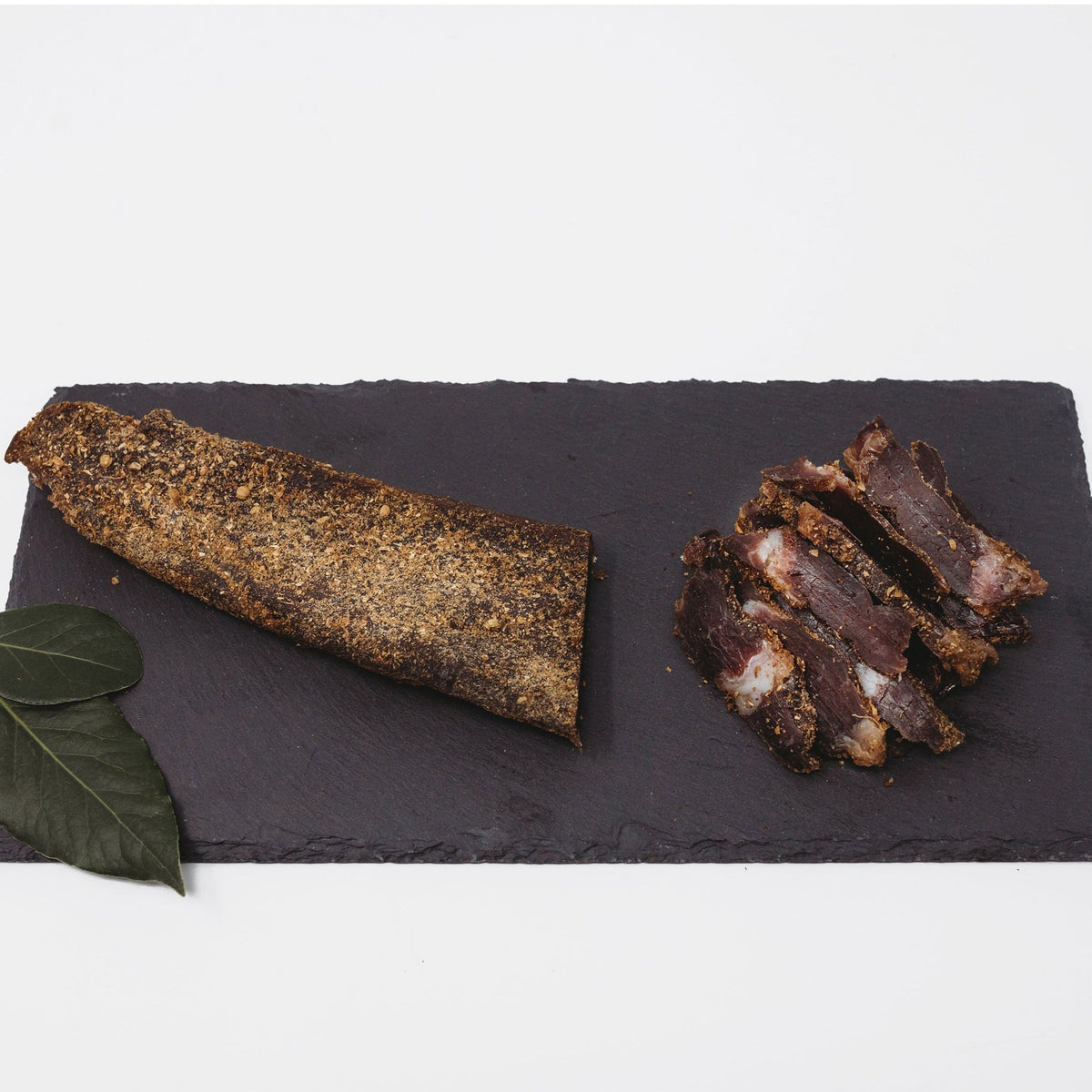
The slab is the more dramatic purchase. You get a whole piece of cured beef, you slice it yourself, and every bite is as fresh as it gets. But pre-sliced biltong is the one most people actually finish. Knowing which format fits your life is the whole decision.
Shop the real thing: buy biltong online, Glatt Kosher and made in Florida. US orders over $50 ship free.
What actually changes between a slab and sliced biltong
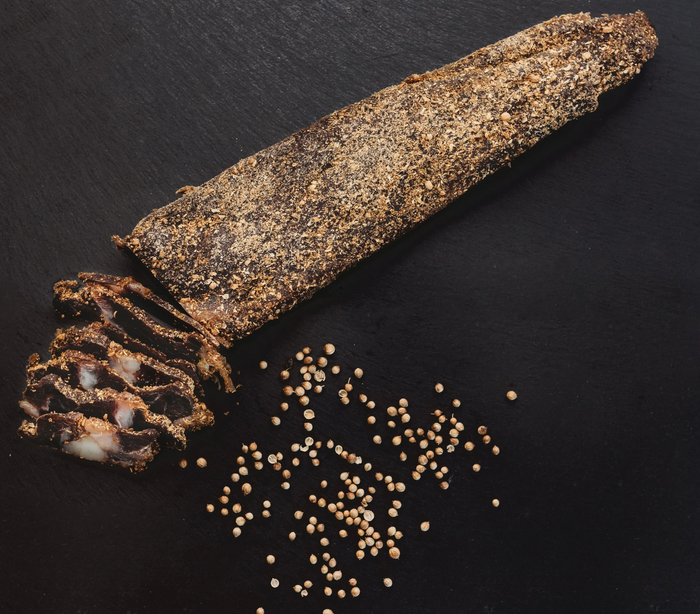
A biltong slab is biltong in its most intact form. The drying process seals the outside, and the interior stays tender because it has not been exposed to air. When you slice a piece fresh off the slab, that cross-section is soft, slightly moist, and deeply beefy in a way that pre-sliced product cannot fully replicate. Once you see it, you cannot unsee it.
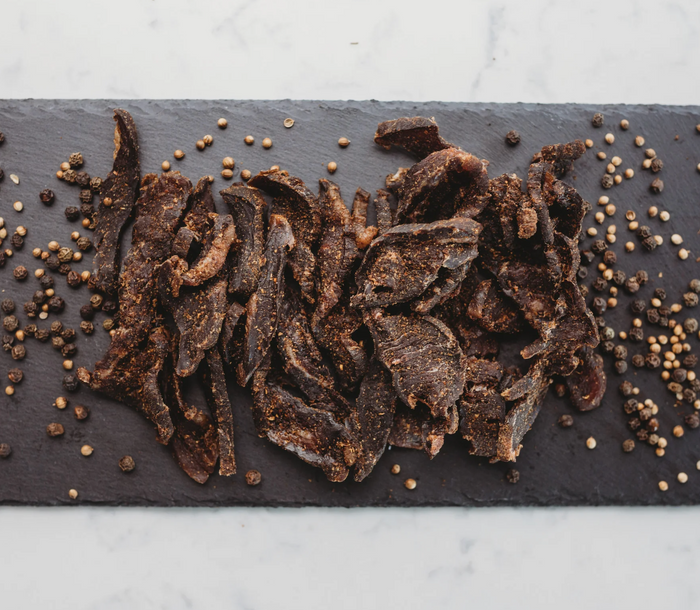
Pre-sliced biltong has already been cut and packaged. The slices are exposed to air from the moment they are cut, so the texture settles into something firmer and more consistent. That is not a flaw. It is just a different eating experience, and for most people in most situations, it is the more practical one.
The grass-fed beef and the all-natural spice blend are identical across both formats. The difference is purely structural. A slab gives you control over thickness. You can cut a thin, almost translucent slice or a thick, chewy chunk. Pre-sliced gives you consistency and convenience instead.
Who should buy the slab
The Biltong Slab is sold by the pound at $58.00. That is a real commitment. You are buying something that rewards a little ceremony around it. If you grew up eating biltong in South Africa, this is the format that brings the memory back correctly. You pull it out, you find a sharp knife, you slice while you talk. That is a real thing, and it matters to the people it matters to.
It also works well for anyone who wants to control texture deliberately. Thick slices off a slab are chewier and more filling. Thin slices are tender almost to the point of melting. You get to decide at the moment of eating, not before.
The slab is not the right move if biltong is new to you. You will not know how thick to slice it, and there is a decent chance the outer crust throws you off before you reach the good part. Start somewhere else if this is your first order.
Who should buy sliced biltong
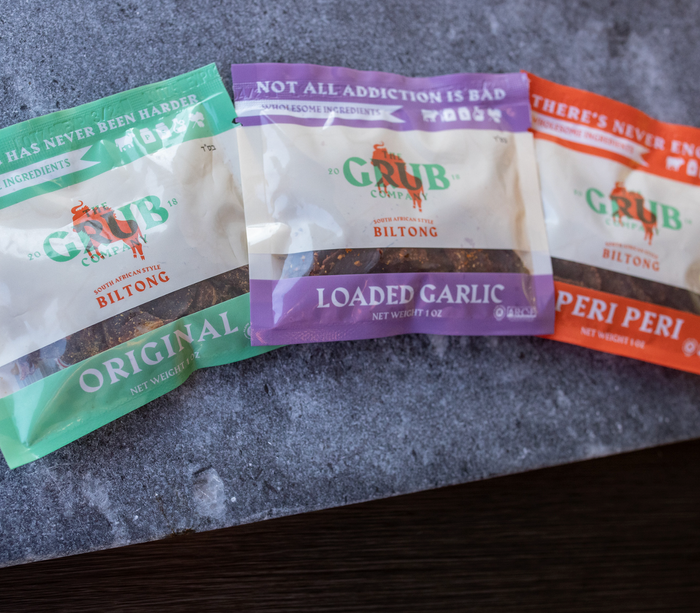
Sliced Biltong at $11.99 per bag is the most accessible entry point for someone who wants real biltong without committing to a pound of it. The Sliced Biltong Minis at $4.99 go even lower. Both use the same premium grass-fed beef, both carry Glatt Kosher certification, and both come in the same flavor lineup.
Pre-sliced biltong is also the format that works best for sharing. Picture a charcuterie board at a Friday night dinner. Pulling out a slab and slicing it tableside is a conversation piece, but pre-sliced biltong is what actually gets passed around. The Bulk Biltong 1LB bag at $58.00 exists precisely for that use case. One pound of sliced biltong in any of the three flavors, ready to serve without any prep.
For an everyday snacker, pre-sliced wins. You open the bag, you eat. There is no setup, no knife, no board. That is how you actually eat, not how you plan to eat.
The sampler before anything else
If you have not tried biltong before, or if you are not sure which flavor profile you want in a larger format, the Biltong Sampler Pack at $12.99 is the right first move. It includes one mini bag each of Original, Peri Peri, and Loaded Garlic in pre-sliced form. You learn your flavor preference before spending $58.00 on a slab or a bulk bag of something you have not tasted yet. This is not a small risk to skip over.
Once you know your flavor, then you decide on format. If you want the freshest possible bite and you enjoy a little ritual around your snacking, go slab. If you want convenience, sharing portions, or a lower entry price, go sliced.
The bottom line is simple. Both formats are the same quality beef with the same spices. The slab is for people who want to be involved in the process and who get something out of that. Sliced is for everyone else, which is most people. Neither choice is wrong. They just suit different moments.
A few questions come up every time someone is deciding between these two formats. Here are the straightforward answers.
Frequently Asked Questions
Does a biltong slab stay fresh longer than pre-sliced biltong?
Yes, meaningfully so. Because the interior of a slab has not been exposed to air, it retains moisture and resists drying out longer than pre-sliced product. Once you start slicing, the exposed surfaces begin to dry. If you buy a slab, slice only what you plan to eat that day and store the rest in a cool, dry spot away from direct airflow. Pre-sliced biltong should be consumed within a few days of opening for best texture, though it remains safe to eat beyond that.
What knife do I need to slice a biltong slab properly?
A sharp chef's knife or a sturdy carving knife works well. The slab has a firm outer crust, so a dull blade will drag and tear rather than cut cleanly. You do not need any special equipment. Slice across the grain for more tender pieces, or with the grain for a chewier, more fibrous bite. Most people who grew up with biltong have a strong opinion about which way is correct. You will form your own.
Is the Bulk Biltong 1LB bag the same product as the standard Sliced Biltong, just in a larger quantity?
Essentially, yes. The Bulk Biltong 1LB bag uses the same grass-fed beef and the same spice blends as the standard Sliced Biltong. The difference is volume and value. A one-pound bag makes sense for charcuterie boards, family gatherings, or anyone who already knows their favorite flavor and goes through biltong quickly. If you are still exploring, the standard Sliced Biltong or the Sampler Pack is the smarter starting point.
Which format works better on a charcuterie board?
Pre-sliced biltong is easier to arrange and serve. The slices lay flat, guests can grab a piece without any effort, and the portions are already consistent. A slab makes a dramatic visual centerpiece if you want to slice tableside, but it requires a knife and a cutting surface, which not every host wants to manage mid-party. For most charcuterie setups, the Bulk Biltong 1LB bag in your preferred flavor is the practical call.
Can I try the slab format before committing to a full pound?
Not directly, since slabs are sold by the pound. The closest approach is to start with the Sampler Pack at $12.99 to confirm your flavor preference, then move to a slab once you know what you like. The sampler is pre-sliced, so the texture will differ slightly from a fresh-cut slab, but it gives you a reliable read on flavor before you invest $58.00.
Are the slabs and sliced biltong both Glatt Kosher certified?
The Sliced Biltong and Sliced Biltong Minis carry Glatt Kosher certification. The store holds certifications from Harav Weissmandl and Aleph K. For specific certification details on the slab format, reach out directly before purchasing if Kosher compliance is a firm requirement for your household or event.
Which format is better for someone new to biltong?
Start with the Biltong Sampler Pack. It is the lowest-risk way to try all three flavors in pre-sliced form without over-committing on quantity or format. Once you know which flavor you prefer and how you like the texture, you can decide whether the convenience of pre-sliced biltong suits your habits or whether the slab experience is what you actually want.
Ready to pick one? Browse Biltong Bulk & Wholesale.