Kosher Biltong: Choose The Right Format Before You Choose A Flavor
Six SKUs, prices from $4.99 to $58, three flavors, and one certification standard that rules out most of the dried-beef market: kosher biltong is a narrow category, and the single decision that determines whether a purchase works is format, not flavor. Pick the wrong format and no spice profile rescues it.
Ready to try it? Buy Glatt Kosher biltong online. Made in Florida, free US shipping on orders over $50.
What Kosher Certification Actually Restricts in Biltong Production
The hechsher (kosher seal) governs more than the beef. It covers every spice, every curing agent, and every surface the meat contacts during production, all under rabbinical supervision. The practical consequence for biltong specifically: the pool of approved spices and curing agents is smaller than in non-kosher production. Flavor additives that rely on non-certified flavor carriers, certain vinegar derivatives, and blended spice mixes without their own certification are off the table.
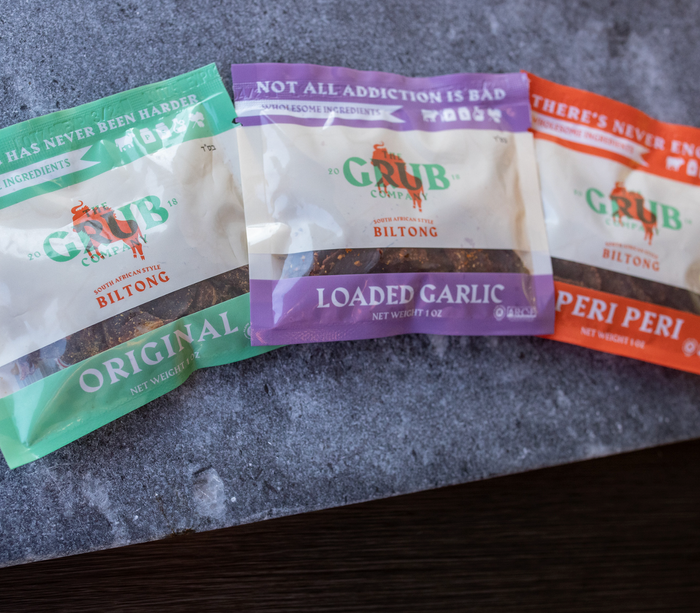
That constraint is not a weakness. It forces the flavor profile toward cleaner, fewer-ingredient seasoning — which is part of why kosher biltong tends to have a more ingredient-forward taste than heavily flavored commercial jerky. Our three profiles, Original, Peri Peri, and Loaded Garlic, were built within those restrictions from the start, not adapted from a non-kosher recipe.
One thing worth separating clearly: the kosher certification and the grass-fed sourcing designation are two different claims answering two different questions. The hechsher tells you the production process met kosher law. Grass-fed tells you how the cattle were raised. Neither implies the other. If both matter to you, verify herd certification alongside the kosher seal — do not assume one covers the other.
Biltong vs. Jerky: The Structural Difference Kosher Buyers Need to Know
Jerky is cooked — heat-processed to achieve drying and food safety. Biltong is air-dried and vinegar-cured, never heat-processed. That process difference produces lower moisture content without cooking, which preserves more of the beef's natural texture. The result is a chewier, denser product with a less brittle bite than jerky.
For kosher consumers specifically, the process difference matters for a second reason: heat-processing equipment in commercial kitchens raises cross-contamination questions that air-drying facilities largely sidestep. A dedicated kosher biltong production environment is easier to certify and maintain than a shared heat-processing facility. That is one structural reason kosher biltong certification is cleaner to verify than kosher jerky from a multi-product line.
Sugar content is the other dividing line. Most mass-market jerky uses sugar as a curing aid and flavor carrier. Biltong traditionally uses vinegar and salt. Our products contain no added sugar, which matters on a charcuterie board — sweet jerky fights aged cheese and cured meats; savory biltong does not.
The Six Formats: What Each One Is Actually For
Sliced Biltong Mini's, $4.99. The travel and trial format. Small bag, no refrigeration required, fits in a gym bag or backpack without a second thought. This is also the lowest-commitment entry point in the catalog — useful if you want to try the product before spending more. Primary use cases: commuting, flying, school, between meetings.
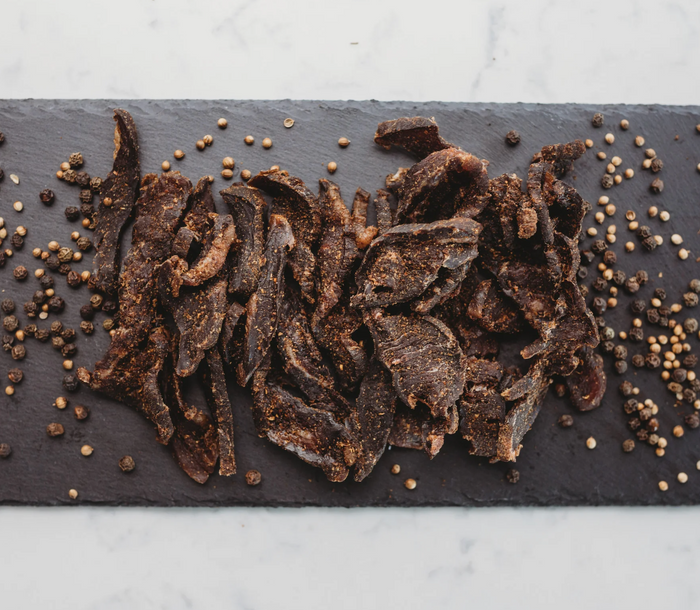
Sliced Biltong, $11.99. The everyday home-and-desk format. Pre-sliced to consistent thickness, ready to eat, no prep required. Grass-fed beef, clean spice blend. If you want biltong as a regular snack and you are not trying to control slice thickness or feed more than one or two people at a time, this is the correct format.
Biltong Sampler Pack, $12.99. Three flavors — Original, Peri Peri, Loaded Garlic — in one purchase. The rational first buy for anyone who has not had our biltong before and is not certain which flavor profile suits them. Committing $58 to a bulk bag of the wrong flavor is a real and avoidable risk. The Sampler Pack costs $12.99 and removes that risk entirely. Once you know your flavor, buy in your preferred format.
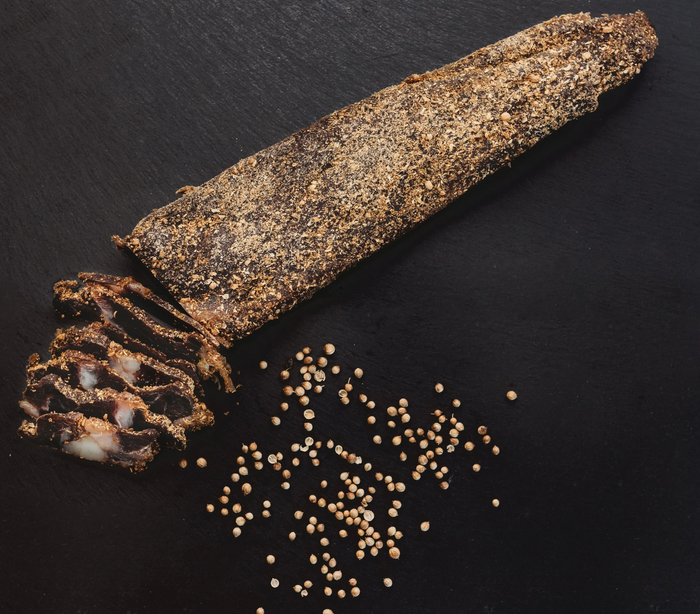
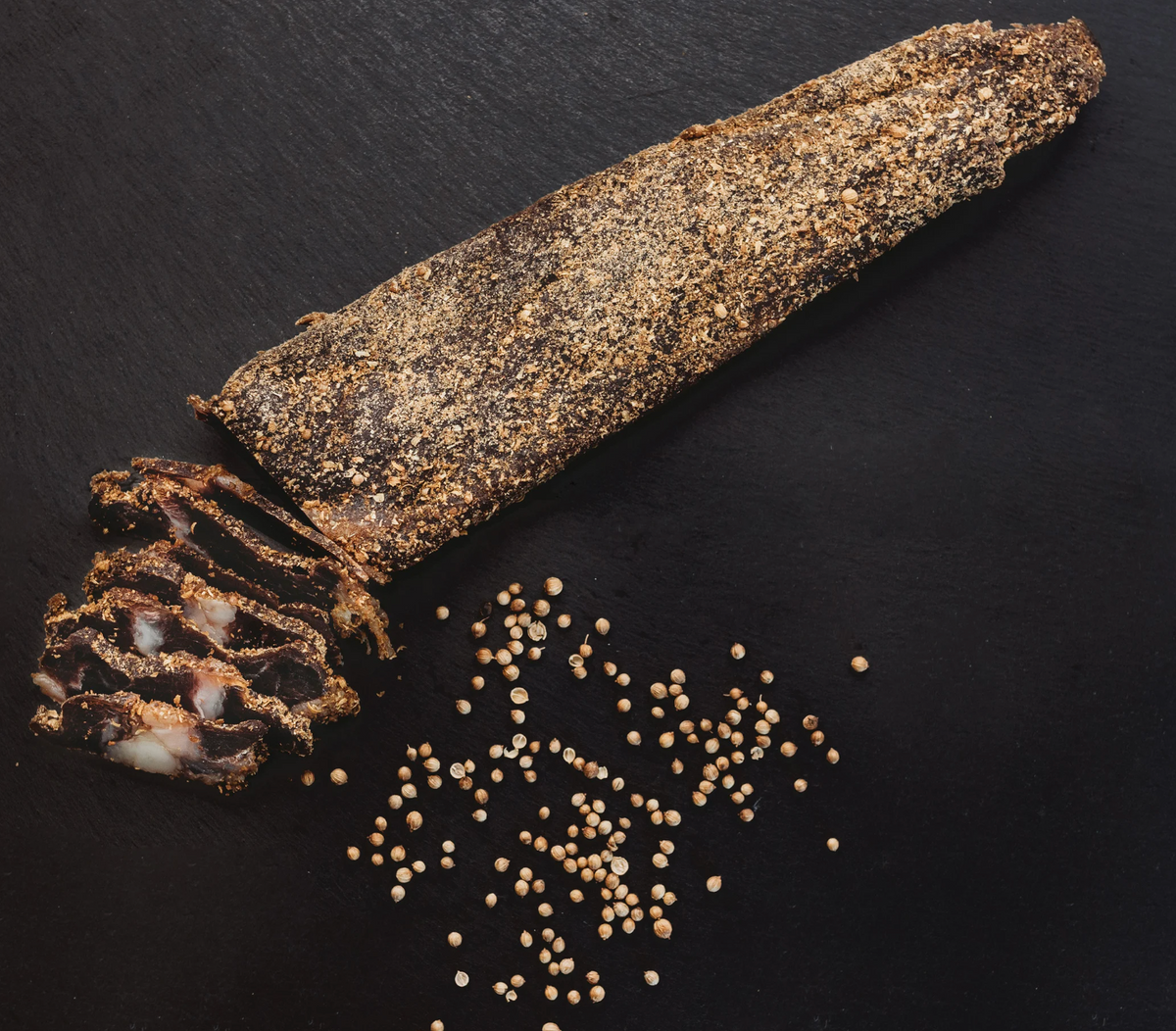
Biltong Slabs, $58. Unsliced, which means you control cut thickness on every piece. Paper-thin for a charcuterie board? Done. Thick and chewy for direct snacking? Also done. That texture control is structurally unavailable in any pre-sliced format — the product is already set at the factory cut, and you cannot undo that at home. One supply caveat: slab inventory is intentionally limited to a small number of units per production batch. Once a batch sells out, the next is not available until the following production run. Slab is not a last-minute purchase for a weekend event. If you need it for a specific date, check availability at least a week out.
Bulk Biltong, 1LB Sliced, $58. One pound of pre-sliced biltong in a single bag. The correct format for entertaining, charcuterie boards, or high-frequency snacking once you have confirmed your flavor preference. More economical per ounce than assembling multiple smaller bags, and operationally cleaner for plating — you portion from one continuous supply rather than emptying a series of mini packets. Note that the bulk format contains all three flavors, so you get variety at scale rather than a single-flavor pound.
Format-to-Use-Case Matching: The Short Version
First-time buyer, no flavor preference yet: Sampler Pack at $12.99. All three flavors, lowest regret risk in the catalog.
On-the-go snacking, travel, kids' school bag: Sliced Biltong Mini's at $4.99. No refrigeration, no overthinking.
Everyday home or desk snacking: Sliced Biltong at $11.99. Pre-sliced, consistent, ready.
Charcuterie board or entertaining, want pre-sliced convenience: Bulk 1LB at $58. Scale without assembly headaches.
Charcuterie board or entertaining, want texture control: Biltong Slab at $58 — but check availability first. Batch-limited, sells out between production runs.
Why Biltong Works on a Charcuterie Board When Jerky Does Not
The problem with sweet jerky on a cheese board is not the meat — it is the sugar. Sugar-forward dried beef pulls the palate toward candy while everything else on the board is pulling it toward salt, fat, and acid. The flavors actively compete.
Biltong's spice profile is savory. Its sugar content is effectively zero. It sits alongside aged cheddar, manchego, cornichons, and cured salami without creating flavor conflict. Peri Peri adds heat, which pairs well with mild, creamy cheeses. Loaded Garlic anchors harder, earthier cheeses. Original works across the board.
For board use specifically: the Slab format gives you piece-size control to match the scale of everything else you are plating. The Bulk 1LB gives you enough volume to anchor the board without running short. Pre-sliced mini-format bags work in a pinch but are undersized for entertaining at any real scale.
The lower spice complexity in kosher biltong also has a practical shelf-life benefit: fewer oxidation catalysts in the seasoning means the product holds its condition longer in ambient storage. That matters if you are buying in bulk and not finishing the bag in one sitting.
Refrigeration, Storage, and Shelf Life: What Kosher Biltong Buyers Actually Ask
Biltong does not require refrigeration before opening. It is a dried, vinegar-cured product — ambient storage is correct. The Mini format is specifically designed for refrigeration-free portability, which is why it works for travel and school. After opening, store in a cool, dry place. Sealing the bag between uses slows oxidation.
Shelf life in ambient conditions varies by format. Pre-sliced formats have slightly more surface area exposed to air than slab, which means they oxidize marginally faster after opening. This is not a meaningful difference for normal snacking pace, but it is worth noting if you plan to buy in bulk and pace consumption over several weeks.
Frequently Asked Questions
What makes biltong kosher?
Kosher biltong requires certified beef sourcing, kosher-approved spices and curing agents, and production under rabbinical supervision. The hechsher on the package confirms that all of these standards were met for that specific batch — not just the meat source but every ingredient and every production surface. One practical effect: the pool of available spices and curing agents is smaller than in non-kosher production, which pushes the flavor toward cleaner, simpler seasoning.
Why is the Biltong Slab sometimes out of stock?
Slab inventory is limited by design. We set aside only a small number per production batch. Once a batch sells out, the next is not available until the following production run. It is not a logistics problem — it is a production reality. If you need slabs for a specific event, check availability at least a week ahead. This is not a format you can order last-minute and expect to receive in time.
Is the Sampler Pack worth it if I already have a flavor preference?
No. If you are confident in your flavor, go straight to the Sliced Biltong or Bulk format in that flavor. The Sampler Pack at $12.99 is designed specifically for first-time buyers who want to try all three profiles — Original, Peri Peri, Loaded Garlic — before committing to a larger purchase. If you already know what you want, the Sampler adds no value.
Does kosher biltong need refrigeration?
No. Biltong is dried and vinegar-cured, not heat-processed. It does not require refrigeration before opening. After opening, store in a cool, dry place. The Mini format is built specifically for on-the-go, refrigeration-free use — travel, school, commuting. The cleaner spice blend also helps: fewer oxidation catalysts in the seasoning means longer ambient shelf life compared to heavily spiced alternatives.
How does the 1LB Bulk format differ from buying multiple smaller bags?
The Bulk format is more economical per ounce than assembling multiple smaller bags, and it gives you one continuous supply to portion from — which matters for charcuterie boards and entertaining. It also contains all three flavors, so you get variety at scale rather than a single-flavor bulk buy. If consistency of a single flavor at volume is what you need, the Bulk bag delivers that; just note the multi-flavor composition before ordering.
What texture difference does the Slab format actually produce?
Thin cuts from a slab produce a drier, more delicate bite. Thick cuts retain more interior moisture and produce significantly more chew. Pre-sliced biltong is cut to a fixed thickness during production — you cannot replicate texture variation after the fact. If cut control matters, slab is the only format that delivers it. If you want a consistent, ready-to-eat piece every time without the extra step, sliced is the correct choice.
Is the grass-fed claim verified separately from the kosher certification?
Yes, and the distinction is important. The hechsher verifies that production met kosher law. The grass-fed designation is a sourcing claim about how the cattle were raised — a separate certification tied to herd management, not production process. Neither implies the other. If both matter to you, verify herd certification alongside the kosher seal. We use grass-fed beef, but a careful buyer should confirm both independently rather than assuming one covers the other.