Is Biltong Keto? What Is Actually In It
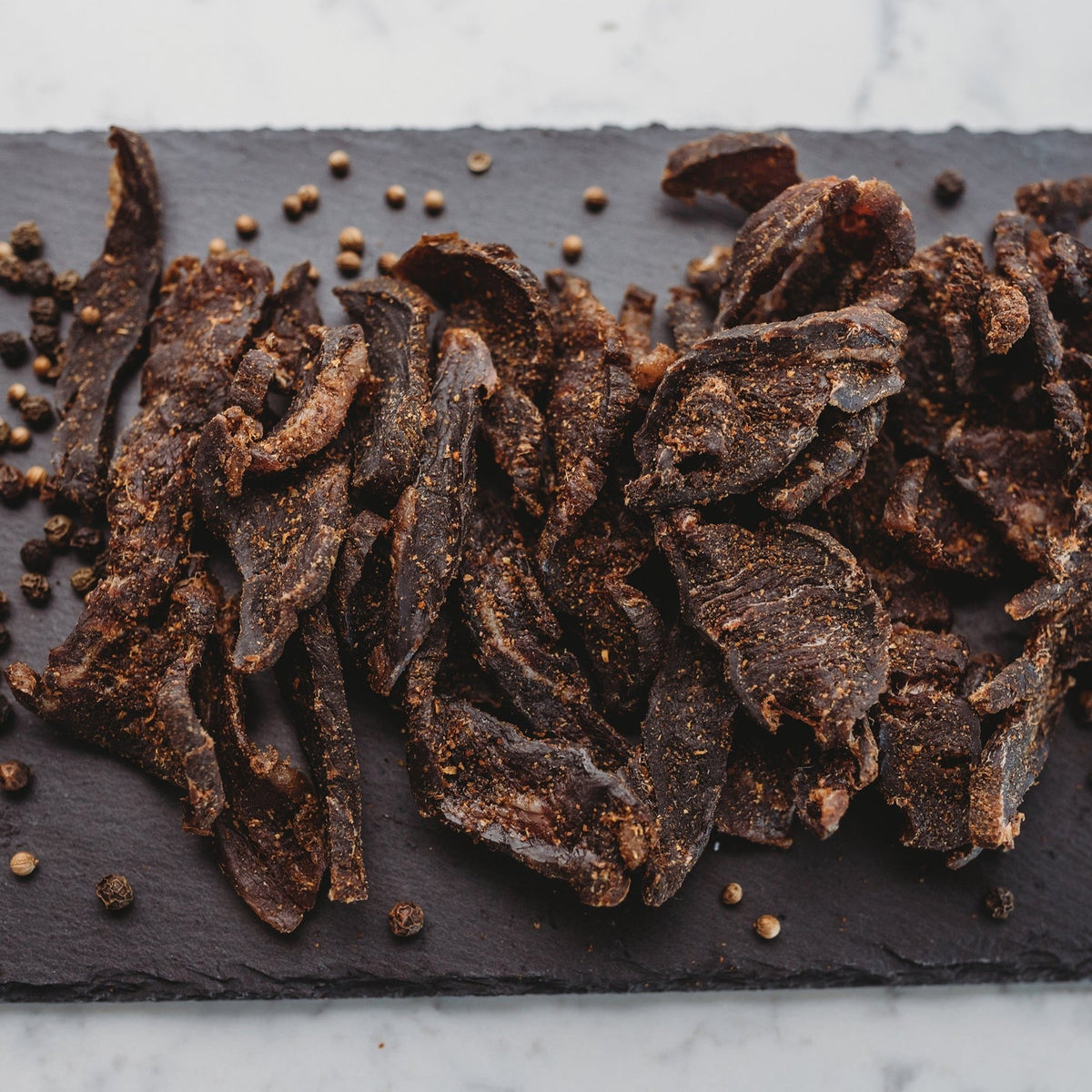
Biltong is dried beef with a vinegar and salt cure and a spice blend, and on a plain piece that is the entire ingredient list. Nothing is added to sweeten it, because the traditional method never called for sweetening. That is the reason the keto question comes up about biltong at all, and it is a question about what is in the bag rather than about anything else.
We are not going to tell you what to eat or make any claim about what this food does to a body. We make dried beef and we can describe exactly what goes into it, which is the part of this question we are actually qualified to answer. Read the composition, read the label on whatever you are considering, and make your own decision from there.
What is in a plain piece
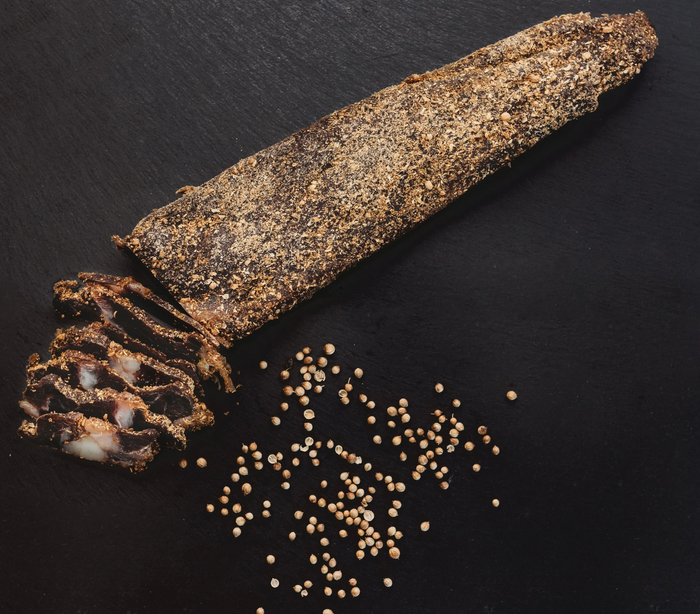
Beef. Vinegar. Salt. Spice, with coriander and black pepper as the usual backbone. That is the traditional build of biltong and it is short enough to hold in your head.
Each of those is there for a reason that is not taste alone. The vinegar drops the surface acidity in the first hours when the meat is most exposed. The salt pulls water out of the beef by osmosis. The spice goes on before drying, so it works into the surface across the entire time water is leaving. Then air does the rest.
Nothing in that sequence requires sugar. There is no glaze to caramelize because nothing is being heated, no marinade being reduced, and no browning step that sweetness would be there to encourage. Sugar is not being left out of biltong as a concession. It was never a part of the method.
Why people ask this about dried meat specifically
Someone eating a low carbohydrate way looks at ingredient lists more carefully than most shoppers do, and dried meat is a category where the same word covers wildly different recipes. Two bags labeled dried beef can have very different lists behind them.
That is the real reason for the question. It is not that beef is a mystery. It is that the treatment applied to the beef is where anything unexpected would be, and treatment is exactly what a front-of-bag description leaves out.
So the useful version of the question is not is biltong keto. It is what has been put on this specific meat, and does the label tell me. That is a question a label can answer, and one that a category name never can.
Where sugar enters a dried meat
Sweetness in dried meat almost always arrives through the marinade or the glaze. Many jerky recipes are built around one, because heat drying and sugar work together, and a sweet coating that caramelizes is part of what defines that style. Biltong is dried in moving air at room temperature with a vinegar cure and no glaze, which is why the two categories differ on this point. That is the whole of the comparison and this piece will not spend more on it.
Within biltong itself, added sweetness is not unheard of in a flavored product, and it would be dishonest to say the word biltong on a bag guarantees anything. What it guarantees is a method. What went on the meat is a separate question that belongs to whoever made it.
Which brings the whole thing back to the label, every time. Not the category, not the country of origin, and not the picture on the front.
Does the vinegar add anything
Vinegar is there for chemistry, not for taste, and a wipe or short dip is the traditional application rather than a long soak. Most of what goes on is doing its job at the surface in the first hours.
People sometimes assume vinegar means something sweet is involved because certain vinegars are made from fruit. What matters is the vinegar itself and what, if anything, was added to it, which is a formulation question rather than a category one.
This is the sort of detail that separates a real answer from a confident one. We can tell you what vinegar is doing in the process. We cannot tell you what is in a bottle we did not buy.
Spice blends are where things hide
Coriander and pepper are straightforward. A blend is less so, because a blend is a manufactured product and its own list can include anti-caking agents, carriers and other components that never appear in the common name on the front.
This is the least glamorous part of reading a dried meat and the most useful. If you are checking a bag for anything added, the spice line is where an unexpected ingredient is most likely to be sitting, not the meat line.
It is also the part where the difference between a short, plainly stated list and a long vague one tells you the most. A maker who can name what is on the meat in one line is telling you something about how the product was built.
Drying concentrates what was already there
This is the point most people miss when they read a dried meat and compare it to fresh beef. Nothing is added by drying. Water is removed, and everything that stays behind is now a larger share of a smaller weight.
So a given weight of biltong represents a considerably larger weight of raw beef. Protein is a large share of what remains, because protein is what is left when you take water out of lean muscle. Fat is unchanged in absolute terms, because it had very little water to lose in the first place. Salt is present and is now concentrated along with everything else.
None of that is a nutritional argument. It is arithmetic about what happens when you take water out of a food, and it applies equally to every air dried meat on earth.
Protein, stated plainly
Biltong is high in protein by weight, and the reason is the concentration effect above rather than anything special done to it. Lean beef is mostly water and protein. Take out a large share of the water and protein becomes the dominant component of what remains.
We are stating that as a composition fact, the same way you would say a dried apricot is more sugar by weight than a fresh apricot. It is a description of what is in the food and not a claim about what it does.
If you want figures, use the panel on the product you are actually holding. We are not going to quote a number for a bag we did not weigh, and any general figure you read for biltong as a category will be somebody's product rather than yours.
Salt, honestly
Salt is not a footnote here and we are not going to pretend otherwise. It is central to how the meat is made, it is present in the finished product, and drying concentrates it along with everything else.
Anyone watching sodium for their own reasons should read the panel rather than take a category-level answer from anybody, including us. A dried salted meat is a dried salted meat, and no method of making it changes that fundamental.
There is also a difference between salt as an ingredient and salt as a result. Some of the salt applied at the start leaves with the water it pulled out. How much remains depends on the cure and the drying, which is another reason a category-level figure is close to useless and the panel on your own bag is not.
What we can say about the traditional method is that the South African hand with salt tends to be measured rather than heavy, because a reliable drying climate meant the maker never had to lean on salt to compensate. That is a description of a practice, not a number about our bags.
Fat, and what drying does not do to it
Fat does not dry. It has almost no water to lose, so while the lean around it shrinks and firms, the fat stays roughly what it was. A fattier piece and a very lean piece from the same batch are meaningfully different foods by the time they reach you.
That matters to anybody reading composition, because fat content on a dried meat is largely determined by the cut and the trim rather than by the drying. Two pieces treated identically can differ substantially on this depending on where on the animal they came from.
Silverside and topside are the traditional cuts, both from the hind leg and both lean. That tends toward a leaner product, with the qualification that trim practice varies and some people specifically want fat left on because it carries taste.
Read the panel, not the front
The front of a bag is written to sell. The back is written to comply. When you want to know what is in something, the back is the only side worth your time.
- The ingredient list, in order, since order tells you proportion.
- The spice line specifically, and whether the blend is broken out or hidden behind one word.
- Any word ending in ose, plus honey, molasses, syrup, cane, and anything described as a glaze or marinade.
- The panel figures, on the product in your hand rather than a category average found online.
Serving size is the other thing worth a second look, because panel figures are stated per serving and a serving on a dried meat is smaller than most people assume. Two bags can look very different on paper purely because they defined a serving differently, so check what the numbers are actually counting before you compare anything.
All of that takes about fifteen seconds and it settles the question far better than any article can, including this one.
Words on packaging that mean nothing
Plenty of language on dried meat is decoration. Natural has no fixed meaning that would help you here. Artisan describes nobody's recipe. Traditional describes a method rather than an ingredient list, and even then only loosely.
Claims about diet compatibility printed on a front panel are marketing until you check the back and confirm them. That is true of every product in every category and it is not a criticism of anybody in particular.
The list is the only part of a bag that is obliged to be accurate. Everything else is a decision somebody made about how to present the product, and it is worth exactly what it costs to print.
What we will not tell you
We will not tell you that this food does anything for you, because we do not know and it is not ours to say. We will not make a claim about weight, energy or anything happening inside a body. We will not tell you whether biltong fits your particular way of eating, because we do not know what that is or why you chose it.
What we will do is describe the product accurately and leave the decision where it belongs. A seller who describes composition and stops has given you something you can use. A seller who tells you what a food will do for you has moved into a conversation they are not equipped to have.
If you have a medical reason for watching what you eat, the person to ask is a professional who knows your situation, not a company that dries beef.
Which of ours suits someone counting closely
If you are reading labels carefully, you are probably also portioning carefully, and format matters more than people expect for that. Sliced Biltong Mini's at $4.99 is a small bag, which makes it easy to keep an eye on how much you have eaten in a sitting.
Sliced Biltong at $11.99 is the everyday size and the one most people settle on. Bulk Biltong, 1LB of Sliced Biltong at $58.00 is for households eating it regularly, and Biltong Slabs at $58.00 lets you cut exactly the amount you want, which is the most precise portioning option we have.
The Biltong Sampler Pack at $12.99 is the sensible first order if you are new to this and want to find your preference before committing. Our jerky product, Meat Candy at $7.99, is a different thing built a different way, and anyone reading labels closely should read its own list rather than assume it matches the biltong.
Bottom line
Biltong is beef, vinegar, salt and spice, dried in air. Sugar was never part of the method, which is why the question gets asked about this category and why the honest answer is a description of composition rather than a verdict about diets.
Read the ingredient list and the panel on whatever bag you are holding, ours included, and decide from there. Anybody who answers a question about what is in a food by telling you what it will do for your body has changed the subject, and it is worth noticing when they do.
Frequently Asked Questions
What is actually in biltong?
Beef, vinegar, salt and spice, with coriander and black pepper as the usual backbone. That is the traditional build and it is short enough to hold in your head. The vinegar lowers the surface acidity in the first hours when the meat is most exposed, the salt pulls water out of the beef, and the spice goes on before drying so it works into the surface while water is leaving. Air does the rest. Nothing in that sequence calls for sugar, because nothing is heated and there is no glaze to caramelize.
Does biltong contain sugar?
The traditional method does not use any, because there is no glaze, no reduced marinade and no browning step that sweetness would be there to encourage. Sugar is not being left out as a concession. It was never part of how biltong is made. What the word biltong on a bag guarantees is a method rather than a specific recipe, so a flavored product could still have something added. The ingredient list on the bag you are holding is the only thing that settles it, and it takes about fifteen seconds to check.
Why does jerky often have sugar when biltong does not?
Many jerky recipes are built around a marinade or a glaze, and heat drying and sugar work together, so a sweet coating that caramelizes is part of what defines that style. Biltong is dried in moving air at room temperature with a vinegar cure and no glaze, so there is nothing in the process that a sweet coating would contribute to. That is the whole of the difference on this point. It is a difference in method rather than a judgment about either food.
Does drying add anything to the meat?
No. Drying removes water and adds nothing. Everything that stays behind becomes a larger share of a smaller weight, which is why a given weight of biltong represents a considerably larger weight of raw beef. Protein is a large share of what remains, because protein is what is left when water leaves lean muscle. Fat is unchanged in absolute terms, since it had very little water to lose. Salt is concentrated along with everything else. That is arithmetic about water loss rather than a nutritional argument.
Where would an unexpected ingredient be hiding?
The spice line, far more often than the meat line. Coriander and pepper are straightforward, but a blend is a manufactured product with its own list, and that can include anti-caking agents, carriers and other components that never appear in the common name printed on the front. When you are checking a dried meat for anything added, read that line first. A maker who can name what went on the meat in one plain line is telling you something useful about how the product was built.
How should I check a bag myself?
Turn it over. The front is written to sell and the back is written to comply, so the back is the only side worth your time. Read the ingredient list in order, since order tells you proportion. Read the spice line specifically and see whether the blend is broken out or hidden behind one word. Look for anything ending in ose, plus honey, molasses, syrup, cane, and anything described as a glaze or a marinade. Then read the panel figures on that product rather than a category average found online.
Which format is easiest to portion?
Biltong Slabs at $58.00 gives the most control, because you cut exactly the amount you want when you want it. For most people the simpler answer is a smaller bag. Sliced Biltong Mini's at $4.99 makes it easy to see how much you have eaten in one sitting, and Sliced Biltong at $11.99 is the everyday size most people settle on. Bulk Biltong, 1LB of Sliced Biltong at $58.00 suits a household getting through it regularly rather than someone measuring carefully.