Biltong Slabs Vs. Sliced Biltong: Which One Should You Buy?
The slab and the sliced bag come from the same grass-fed beef, the same spice blend, the same small-batch process. But they are genuinely different eating experiences, and picking the wrong one for how you actually eat is a real way to leave money on the table.
Where to get it: Glatt Kosher biltong for sale, made in Florida and shipped anywhere in the US (free over $50).
What the Slab Format Actually Gives You
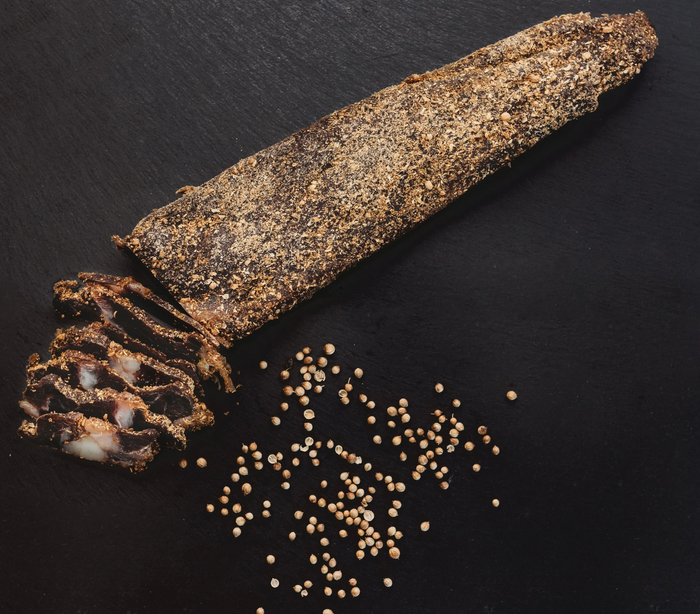
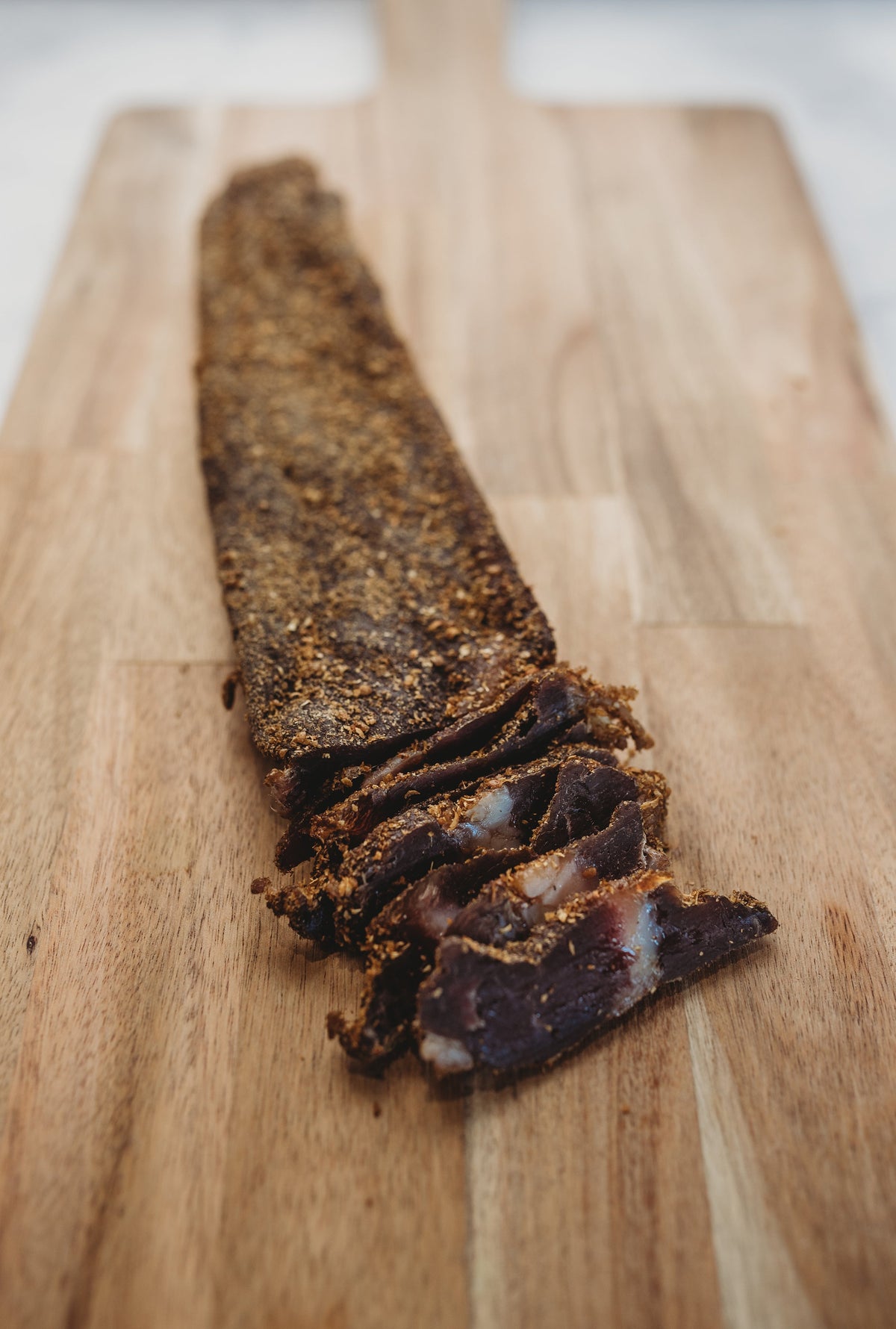
A biltong slab is a whole cured piece of beef, uncut. You slice it yourself, right before you eat it. That detail matters more than it sounds.
Biltong dries from the outside in. The interior stays softer, more tender, more saturated with flavor than the outer surface. When you slice off the slab fresh, you expose that interior at the moment you eat it. You get the full melt-in-your-mouth texture the beef is capable of. A bag of pre-sliced biltong that has been sitting, even for a few days, has started to equalize: the moisture migrates out toward the surface and the slices firm up slightly.
That is not a flaw in pre-sliced biltong. It is just physics. But if texture is what you are chasing, slabs win on freshness every time.
The slab also gives you control over thickness. Thin shaved slices are almost translucent and melt instantly. Thick cuts have chew and presence. A slab lets you cut to the mood. Pre-sliced bags do not.
Practically: slabs are the move for the table. Think family Shabbat, a charcuterie spread, a group of people who want to tear into something together. One slab at the center of a board, a sharp knife nearby, and the thing becomes an event. People slice their own piece, they taste the difference immediately, and they come back for more. That is a real thing that happens at our customers' tables.
The Biltong Slabs are sold by the pound at $58.00. That is a committed purchase. Buy it when you know you will consume it fairly quickly, because once you start slicing, the clock is running on freshness.
What Pre-Sliced Biltong Is Actually For
Pre-sliced biltong is biltong optimized for how you actually snack, not how you imagine you will snack.
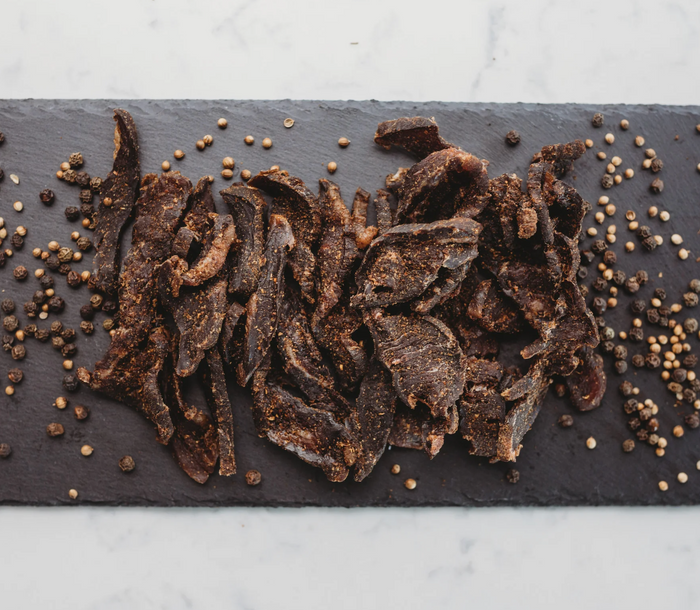
You are not going to pull out a cutting board at your desk. You are not slicing anything at the gym or on a road trip or in the school pickup line. A bag of Sliced Biltong at $11.99, or a Sliced Biltong Mini at $4.99, opens, closes, and fits in a bag. The convenience is the point.
The texture in a pre-sliced bag is still excellent. Grass-fed beef, no sugar, no fillers, the same spice profile. The difference is marginal unless you are the kind of person who would notice a slight difference in moisture between Day 1 and Day 4 of an open bag. Most people are not. Most people open the bag, eat some, close it, and go about their day.
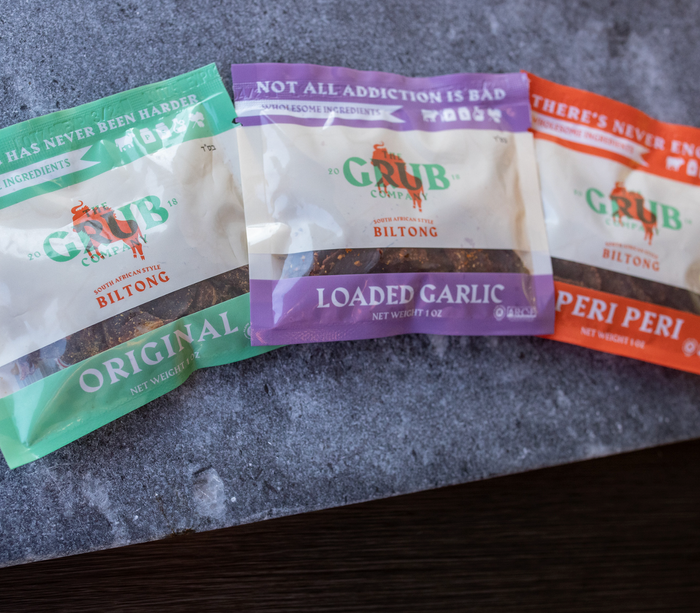
The Mini at $4.99 is also the right first buy if you have never had biltong before and you are not ready to commit to a full bag. It is low stakes. If you love it, you scale up. If you are curious about flavors, the Sampler Pack at $12.99 gets you Original, Peri Peri, and Loaded Garlic in one shot, which is a smarter path than buying three full bags and discovering one of them is not for you.
The Bulk Biltong option, one pound of sliced biltong at $58.00, is pre-sliced biltong scaled up. That one is for the person who already knows their flavor, buys regularly, and wants to stop reordering every two weeks. It is also the right call for a party where you need volume without the theater of the slab.
The One Real Trade-Off Nobody Mentions
Slabs require a little effort. You need a knife. You need a surface. You need to be in a context where slicing is acceptable. If you are snacking alone, that friction adds up. If you are hosting, that friction disappears because the process becomes part of the experience.
Pre-sliced bags remove the friction entirely but hand you a fixed eating format. You get what is in the bag and that is it. No adjusting, no theater, no event.
The format you want is the one that matches how you are actually going to eat it. A slab bought with great intentions but eaten mostly alone out of the fridge, sliced haphazardly with a steak knife, is not living up to its potential. A bulk bag bought for a dinner party and portioned onto a board in a bowl is doing fine but missing the moment a slab would have created.
Neither format is better. They serve different contexts. Once you see it that way, the decision is obvious.
Quick Reference: Which Format for Which Situation
- First-time buyer, not sure about flavors: Sampler Pack or Sliced Biltong Mini.
- Regular snacker, known flavor preference: Sliced Biltong bag or Bulk Biltong.
- Hosting, charcuterie board, Shabbat table: Biltong Slab.
- Party or event needing volume: Bulk Biltong, one pound sliced.
- Gift, or someone who wants the full experience: Biltong Slab, no question.
The slab is the showpiece. The sliced bags are the workhorse. Most households end up buying both, for different occasions. Start with wherever you are actually going to be when you eat it.
A few questions come up every time someone is deciding between these two. Here are the straight answers.
Frequently Asked Questions
Does the biltong slab taste different from the pre-sliced bags?
The base product is the same: grass-fed beef, same spice blend, same small-batch process. The difference is texture and freshness at the moment you eat it. A slab sliced fresh exposes the tender interior immediately. Pre-sliced biltong has had more time for the surface moisture to equalize, so it is slightly firmer. The flavor profile is identical. If you are a texture-first person, the slab will impress you more. If you are a convenience-first person, the sliced bag delivers everything you need.
How do I slice a biltong slab at home?
A sharp chef's knife or a slicing knife works well. Cut against the grain for the most tender result. Thin slices, around two to three millimeters, give you that melt-in-your-mouth texture. Thicker cuts have more chew. There is no wrong answer. Some people prefer to shave it almost paper-thin. Others want a substantial bite. The slab lets you decide in the moment, which is part of the appeal. A cutting board and a sharp knife are all you need.
Which format makes more sense for a charcuterie board?
Both work, but they create different moments. A whole slab on the board with a knife is a conversation piece. Guests slice their own, the act of cutting becomes part of the experience, and people engage with the food differently. Pre-sliced biltong on a board is easier to portion and serves more people quickly without any effort. For a large party where the board is one of many things on the table, sliced or bulk biltong is more practical. For a smaller gathering where the biltong is the star, a slab is the right call.
Is the Sampler Pack a good starting point if I have never tried biltong before?
Yes, it is the smartest first order for most new customers. At $12.99 you get one mini bag each of Original, Peri Peri, and Loaded Garlic. That covers the full range of the flavor lineup without committing to a full bag of something you have not tasted. Original is the baseline: clean, savory, traditional. Peri Peri adds heat. Loaded Garlic is bold and aromatic. Most people discover a clear favorite after the sampler, and then they know exactly what to buy next time.
How long does an uncut slab stay fresh compared to a sliced bag?
An uncut slab stays fresh longer than an open sliced bag because less surface area is exposed to air. Once you start slicing, treat it the way you would treat an open bag: store it in a cool, dry place or refrigerate it, and aim to finish it within a week to ten days for peak texture. A sealed sliced bag has a longer pantry shelf life. Once opened, consume it within a similar window. Refrigeration slows moisture loss and keeps both formats at their best longer.
What is the difference between Sliced Biltong and Bulk Biltong?
Sliced Biltong is a single-serving or household bag at $11.99. Bulk Biltong is one full pound of sliced biltong at $58.00. The product inside is the same. Bulk is for buyers who already know their flavor, go through biltong regularly, and want to reduce how often they reorder. It is also the right buy for a party or large gathering where you need enough volume to serve a crowd without running out. If you are still figuring out which flavor you prefer, start with the regular sliced bag or the sampler first.
Are the slabs and sliced biltong both Glatt Kosher certified?
The Sliced Biltong and Sliced Biltong Minis carry Glatt Kosher certification. If Kosher certification is a requirement for your household or event, check the specific product listing before ordering to confirm the certification status on that item. All products are made with grass-fed beef and all-natural spices, with no hidden ingredients or sugary marinades.
Ready to pick one? Browse Biltong Bulk & Wholesale.