What Does Glatt Kosher Mean?
Glatt is a Yiddish word meaning smooth, and on a meat package it refers to a stricter standard of post-slaughter inspection, specifically the condition of the animal's lungs. An animal whose lungs are found free of the adhesions that would otherwise require closer examination is described as glatt, meaning smooth. When you see glatt kosher on a label, you are being told that the meat met that stricter inspection standard on top of everything else kosher already requires.
Related: What Makes Meat Kosher: Species, Shechita, Glatt and Salting
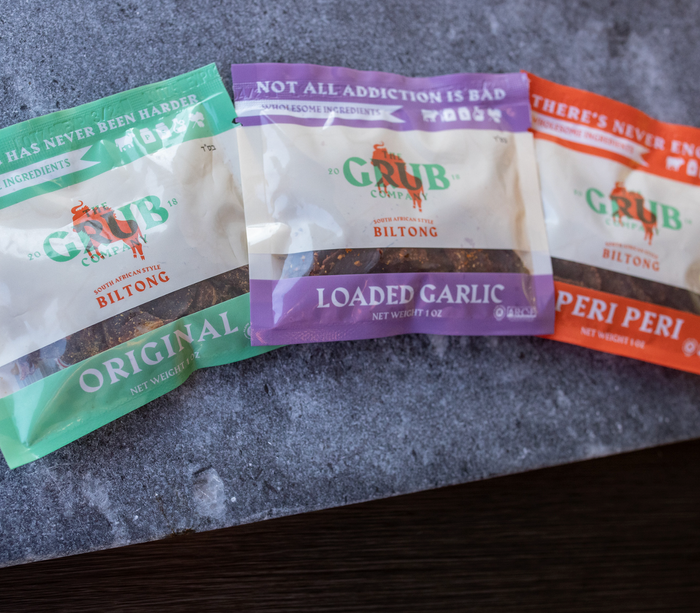
Shop the real thing: buy biltong online, Glatt Kosher and made in Florida. US orders over $50 ship free.
Our biltong carries a glatt kosher certification, which is why this question reaches us often enough to be worth answering carefully. What follows explains the term, where it sits inside kosher more broadly, and what it does and does not tell a shopper. It does not rule on anything. Questions about what is appropriate for your own observance belong with your rabbi, and we say that plainly rather than as a disclaimer at the end.
The word itself
Glatt is Yiddish for smooth. The Hebrew term used for the equivalent idea is chalak, which also means smooth. Neither word originally described food quality, freshness, or how carefully something was made. Both describe a physical finding on the animal.
That is worth holding onto, because the word has drifted in ordinary usage. In a lot of everyday American speech glatt has come to mean something loose like extra kosher or held to a higher standard generally. The drift is understandable and it is not what the term technically denotes.
Knowing the literal meaning changes how you read a label. Smooth is a description of a finding, and a finding is either made or not made. It is a specific determination rather than a general endorsement.
What is being inspected, and why lungs
After an animal is slaughtered, kosher practice includes inspection of the internal organs for signs that the animal was not sound. The lungs get particular attention, because adhesions can form on them and those adhesions raise a question about whether there was a perforation underneath.
An adhesion is a place where tissue has stuck to tissue. Some are minor and some are not. The traditional examination involves both looking and feeling, and where adhesions are found there are established procedures for determining what they mean.
The examination is a skilled job rather than a glance. Someone trained in it is working through a specific set of questions about a specific organ, and the outcome of that examination is what the word on the package is ultimately reporting.
Lungs found free of those adhesions are smooth. Glatt. The stricter standard is essentially a decision to accept only animals whose lungs presented no such question in the first place, rather than accepting animals whose adhesions were examined and resolved.
How this sits inside kosher more broadly
Glatt is not a separate system running alongside kosher. It is a stricter setting on one specific part of a larger set of requirements, and the rest of that set still has to be satisfied.
Kosher meat involves a permitted species, slaughter carried out by a qualified person according to established requirements, inspection afterward, the removal of certain fats and blood, and the handling of the meat separately from anything that would compromise it. It also involves everything downstream: what else touches the meat, what equipment it meets, and what goes onto it.
So glatt sits on top of all of that. A product described as glatt kosher is claiming the whole set plus the stricter lung standard. A product that met the stricter lung standard but failed something else in the chain would not be kosher at all, and the word glatt would not save it.
What a shopper is actually being told
Practically, glatt kosher on a package is a statement about the source animal and the standard of inspection applied to it, backed by whoever certified the product.
What it does not tell you, directly, is anything about taste, tenderness, freshness, how the animal was raised, what it was fed, or how skillfully the product was made. Those are separate questions with separate answers, and no certification mark speaks to them.
This trips people up in both directions. Some shoppers assume glatt means premium in a general food sense and are surprised when it says nothing about the eating. Others assume it is marketing language and dismiss it, when it refers to a real and specific standard. Neither reading is right.
The term has a stricter reading and a looser one
Within observant practice there is more than one standard circulating under similar language, and the distinctions are real. Chalak Beit Yosef is a particular standard associated with Sephardic practice, and it is not identical to every use of the word glatt in the American market.
There is also the plain commercial reality that the word appears on packages of things that are not beef and not even meat, where the lung standard cannot apply at all, because it has become a general shorthand for stringency.
We are not going to adjudicate any of that. What we will say is that if the precise standard matters to you, the word by itself is not enough information, and the certifying authority behind the product is the thing to look at. Which standard is acceptable for your household is a question for your own rabbinic authority, not for a meat seller.
Who is actually behind the claim
A kosher certification is a relationship between a producer and a certifying authority. The authority sets requirements, inspects, and permits its mark to appear. The mark is the visible end of a process the shopper does not see.
That means the meaningful question about any kosher claim is not whether the word appears on the bag. It is who stands behind it. A word printed by a producer with nobody supervising it is a word. A recognized certification is an accountable claim.
Certification is also ongoing rather than a one-time award. A producer stays certified by continuing to meet requirements and by remaining open to inspection, which is a different arrangement from a badge earned once and displayed forever. That distinction is invisible on a package and it is a large part of what the mark represents.
If you are unfamiliar with a certification you find on a product, the right move is to ask, and to ask someone qualified to answer. Certifications differ in what they require and in whose practice accepts them, and that is not a question a shopper should have to guess at.
Why this matters more on meat than on almost anything else
Kosher status on many products is largely a question of ingredients and equipment. On meat it involves the animal itself, the slaughter, and the inspection, which are steps that happen long before any recipe exists.
That is why meat certification carries more weight and why the standards attached to it are more specific. There is simply more that has to go right, and none of it can be inspected by the person buying the finished product.
Dried meat adds another layer, because the meat has been transformed. A shopper looking at a bag of biltong cannot see the cut, cannot see the animal, and cannot assess anything about what happened before drying. The certification is standing in for all of it.
What certification has to cover on a dried meat
The beef is the first question, and it is the one glatt speaks to directly. Beyond that, everything that touches the meat afterward comes into scope.
On an air dried product that means the vinegar, the salt, the spice blend and anything else applied to the surface before the meat goes up to dry. Spices are agricultural products that have been processed somewhere, and their own status has to be established rather than assumed.
It also means the equipment and the space. Racks, hooks, knives, surfaces, the drying room itself. Meat hangs for a long time in that room, and what else has hung there is a real question rather than a technicality.
The vinegar and spice are not a footnote
People tend to focus certification questions on the beef and stop there, which understates what the process involves. Everything that goes onto an air dried piece stays on it. There is no rinse, no cooking stage, no point at which the surface treatment is removed.
Vinegar is a produced ingredient with a production process behind it. Spice blends can carry carriers, anti-caking agents and other components that never appear in the common name of the spice. A certification covering a dried meat has to account for all of that or it is not covering the product.
This is one of the places where a serious certification does visible work. It is not glamorous and it is not what anybody advertises, and it is a large part of what is actually being supervised.
What we can tell you about ours
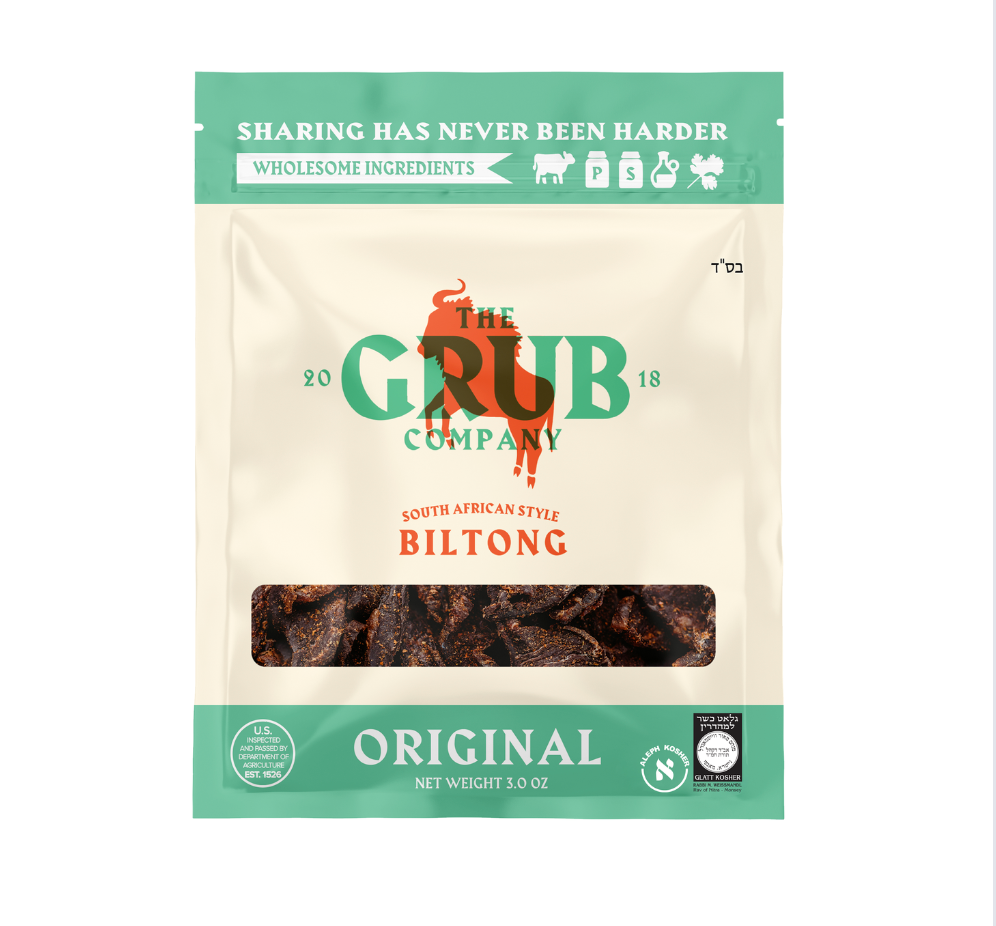
Our biltong carries a glatt kosher certification. That is a statement about our product, and it is the sort of statement a seller is entitled to make about their own goods.
What we will not do is tell you what that means for your observance. That is not modesty. It is that the question of which standards and which certifications are appropriate for a given household is a rabbinic question, and a meat company answering it would be overstepping in a way that helps nobody.
If you keep kosher and you are weighing whether our products fit your practice, take the certification details to the person you normally ask. That is the right process, and we would rather you follow it than take our word for something that is not ours to give.
Reading a package without guessing
A few things are worth checking on any product where kosher status matters to you, and none of them require specialist knowledge.
- Is there an actual certification mark, or only the word kosher printed as text by the producer?
- Does the mark identify who issued it, so you can look them up or ask about them?
- Does the product say glatt specifically, or only kosher, and do you know which you need?
- Is the claim on the package itself rather than only on a website page describing the product?
None of that tells you whether a given standard is right for you. It tells you whether there is something concrete to ask about, which is the part a shopper can genuinely check.
The same logic applies to anything sold online. A product page can say a great deal, and the package is what actually travels to your kitchen. If the two do not agree, believe the package, and ask the seller why they differ.
Where the confusion usually comes from
Most of the muddle around this word comes from a single mismatch. The technical meaning is narrow and specific, and the everyday usage is broad and reputational. Both are in circulation at once, often on the same shelf.
Someone hears glatt and understands top tier. Someone else hears glatt and understands lungs without adhesions. They are having different conversations while using identical words, which is how a shopper ends up more confused after asking than before.
The way out is to treat the word as a pointer rather than an answer. It points at a standard and at the authority that applied it. Follow the pointer and you learn something real. Stop at the word and you have learned very little.
What glatt does not claim to be
Glatt does not mean the meat is better tasting. It does not mean the animal lived differently. It does not mean the product is cleaner in any general sense, and it is not a food safety grade issued by anyone.
It also does not make a piece of biltong good. Drying skill, the cut, the spice hand and the patience of whoever ran the process decide that, and none of them are in scope for a kosher certification.
Both things are true at once. The certification is a real and specific claim, carefully supervised, and it is not the reason a bag of dried beef eats well. Keeping those separate is the honest way to talk about it.
Bottom line
Glatt means smooth, and on meat it refers to a stricter standard of lung inspection sitting on top of everything kosher already requires. On a package it is a claim about the source animal and the standard applied to it, backed by whoever certified the product. It is not a taste grade, not a quality ranking, and not a general seal of approval.
Our biltong carries a glatt kosher certification, and that is where our authority ends. Whether a particular standard or certification fits your practice is a question for your rabbi, and anybody selling you meat who answers it for you is answering a question they were not asked to answer.
Frequently Asked Questions
What does the word glatt actually mean?
Glatt is Yiddish for smooth, and the Hebrew term used for the equivalent idea is chalak, which also means smooth. On meat it refers to the condition of the animal's lungs, which are examined after slaughter. Lungs found free of adhesions are smooth, and animals meeting that stricter standard are described as glatt. The word does not originally describe taste, freshness, or how carefully a product was made, even though it is often used loosely in everyday speech to mean something like extra kosher.
Is glatt kosher different from kosher?
Glatt is a stricter setting on one part of kosher rather than a separate system. Everything kosher already requires still applies: a permitted species, slaughter carried out according to established requirements, inspection, the removal of certain fats and blood, and correct handling of everything that touches the meat afterward. Glatt sits on top of that as a stricter standard on the lung inspection specifically. A product that met the lung standard but failed elsewhere in the chain would not be kosher at all.
Does glatt kosher mean the meat is higher quality?
Not in the ordinary food sense. Glatt refers to a finding about the animal and the standard of inspection applied to it. It says nothing directly about taste, tenderness, freshness, how the animal was raised, or the skill of whoever made the finished product. Those are separate questions and no certification mark speaks to them. A shopper who reads glatt as a general premium grade is reading in something the term does not carry, and a shopper who dismisses it as marketing is missing that it points at a real standard.
Who decides whether something is glatt kosher?
A certifying authority does, through a relationship with the producer that involves requirements, inspection and permission to display a mark. The meaningful question about any kosher claim is therefore who stands behind it rather than whether the word appears on the bag. If a certification is unfamiliar to you, ask someone qualified to explain it. Which standards and which certifications are appropriate for your own observance is a rabbinic question, and it is not one a meat seller should be answering on your behalf.
What does certification have to cover on a dried meat?
More than the beef. On an air dried product, everything applied to the surface stays on it, because there is no rinse and no cooking stage that would remove it. That puts the vinegar, the salt and the spice blend in scope, and spice blends can carry carriers and other components that never appear in the common name of the spice. The equipment and the space matter too. Racks, hooks, knives and the drying room itself all have to be accounted for, because meat hangs in that room for a long time.
Is your biltong glatt kosher?
Our biltong carries a glatt kosher certification. That is a statement about our own product and it is the sort of statement a seller is entitled to make. What we will not do is tell you whether that satisfies your practice, because the question of which standards and certifications are appropriate for a given household belongs with a rabbinic authority rather than with a company selling dried meat. If you keep kosher and are weighing whether our products fit, take the certification details to the person you normally ask.