Building a Biltong Charcuterie Board
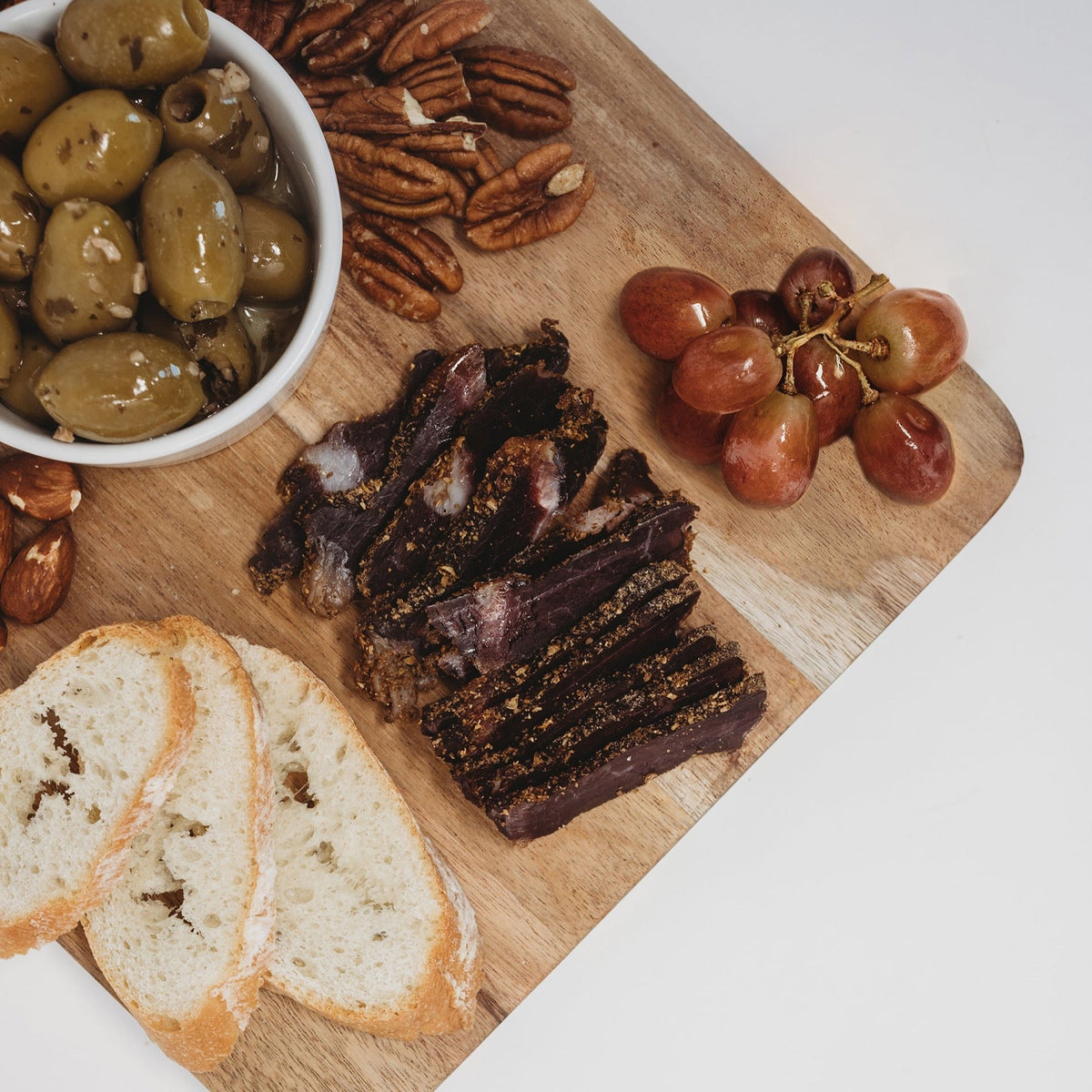
A biltong charcuterie board is a regular charcuterie board with biltong standing in for some or all of the cured meat. It's not a stretch. Biltong is air-dried, vinegar-cured beef, which puts it in the same category as salami and prosciutto in terms of texture and how it behaves sitting out on a table. The difference is you're not fighting grease, and you're not watching the clock on a warm day.
Related: Kiddush Lunch: What to Serve When the Whole Shul Is Hungry
Shop the real thing: buy biltong online, Glatt Kosher and made in Florida. US orders over $50 ship free.
Why biltong works better on a board than you'd expect
Most cured meats on a charcuterie board are sliced thin and start sweating fat within an hour, especially outdoors. Biltong doesn't do that. It's shelf-stable and doesn't need refrigeration unopened, and once it's out, it holds its texture instead of going limp. That matters more than it sounds like it should when you're hosting for three hours and don't want to keep swapping out plates.
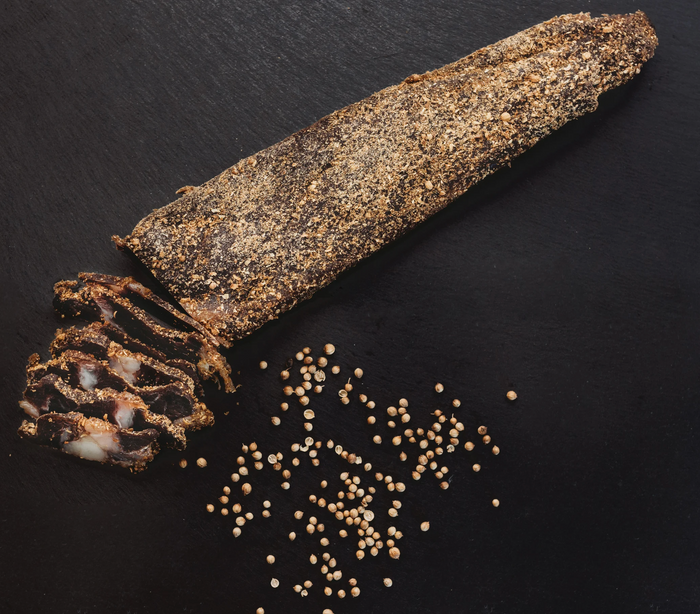
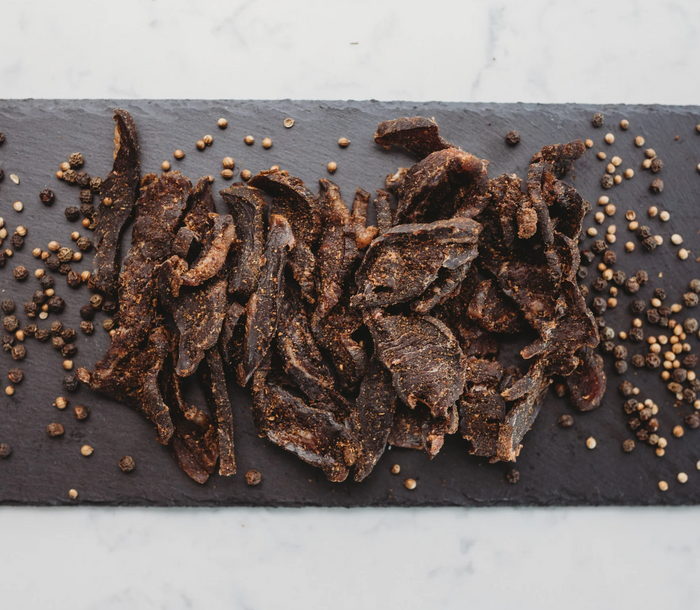
Sliced Biltong lays out clean for a board that people are picking at with their hands. Biltong Slabs, cut thicker, work if you want something people can tear into strips themselves, which gives the board a little more of an interactive feel than pre-sliced meat sitting flat.
What to build around it
Think in categories, not a shopping list you copy exactly:
Pareve pairings. On a kosher meat board, no dairy goes on the board. Original goes well with olives and grainy mustard. Peri Peri goes well with dried apricot or fig. Loaded Garlic goes well with pickles.
Crackers or bread. Plain water crackers let the biltong do the talking. If you want more texture, a seeded cracker or a sliced baguette gives people something to build a small bite on.
Fruit. Dried apricots or figs against Peri Peri biltong is a good move, the sweetness takes the edge off the heat the same way it does with spicy salami. Fresh grapes work anywhere on the board.
Something briny. Olives or a small dish of grainy mustard rounds it out. You don't need much, just enough to give the board a savory anchor besides the meat.
A real layout for a board that feeds six
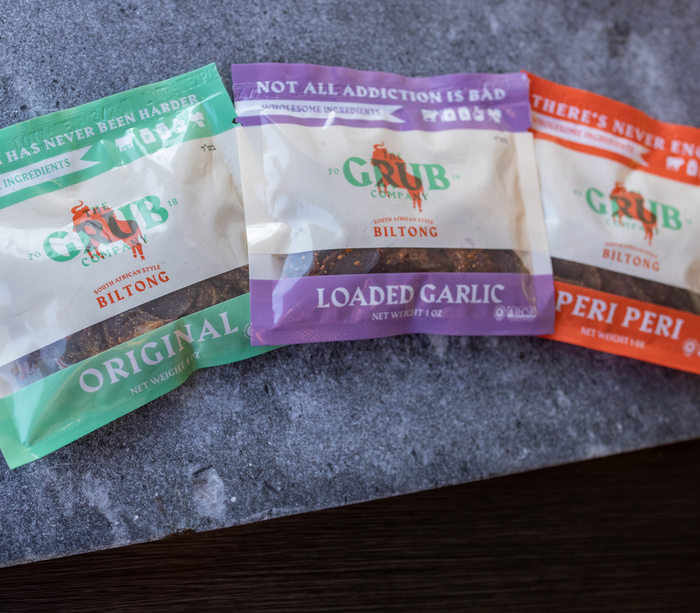
Start with the Biltong Sampler Pack so you've got Original, Peri Peri, and Loaded Garlic already portioned into small piles across the board. Add a small bowl of dried apricots, a handful of grapes, a stack of crackers, and a little dish of olives or mustard in the corner. Fill any gaps with fresh herbs like rosemary sprigs, which cost nothing and make the board look intentional instead of thrown together.
Once the board's built, the next thing worth thinking about is how long it can sit out and what to do with leftovers, since that's usually where boards with cut fruit run into trouble.
First, a Kosher Rule That Changes the Board
Meat and dairy are not served together. That is plain, accepted practice, and it applies to a board the same way it applies to a dinner table. Biltong is meat, so a kosher biltong board is a meat board, and cheese does not sit beside it. If you want a cheese board too, make it a separate board, on a separate table, served in its own course. How long to wait between meat and dairy is a family custom, so follow yours or ask your rabbi.
The pairings above that suggest cheese are for a household that does not keep this separation. If you do, use the pareve ideas below instead. For more on the rule itself, see how to build a kosher charcuterie board.
Pareve Pairings That Work With Biltong
Pareve means neither meat nor dairy. Check each label, since we cannot vouch for other brands' ingredients.
- Briny: olives, pickles, pickled peppers. They cut the richness.
- Sweet: dried apricots, figs, fresh grapes, sliced pear or apple.
- Crunch: plain crackers, toasted bread, whole nuts if nobody at the table avoids them.
- Spread: grainy mustard, hummus, roasted pepper spread.
- Fresh: cucumber rounds, cherry tomatoes, sliced radish.
The principle: biltong is salty, savory and a little tangy from vinegar, so give it something sweet, something sharp and something cool.
How to Cut and Arrange a Slab
If you buy Biltong Slabs, you are choosing to be the one holding the knife. It is worth it. Here is the sequence.
- Put the slab on a board and look at the grain, the direction the muscle fibers run.
- Cut across the grain with a sharp knife. Cutting across gives a tender bite. Cutting with the grain gives a chewy strip.
- For a thin, almost translucent slice, press lightly and let the knife do the work. For a thicker, chewier slice, cut wider.
- Cut only what you need for the first round. Keep the rest of the slab whole, wrapped and out of the air, and cut again as the board empties.
That last step is the whole advantage of a slab. A cut slice dries out at its edges over a long afternoon. A whole slab does not.
For a board people graze on without waiting, Sliced Biltong is already cut and ready. The honest trade-off: sliced disappears faster, a slab waits for a volunteer with a knife. Many hosts use both, with the slab as the centerpiece and a few sliced bags at the edges.
Arranging the Board
- Start with the anchors. Put the biltong and any bowls down first, spaced out across the board.
- Fan the slices. Overlap slices in a gentle arc rather than a pile, so people can pick one without pulling five.
- Separate the flavors. Keep Original, Peri Peri and Loaded Garlic in their own zones, with a small label if guests will ask. Peri Peri has real heat, so mark it.
- Use small bowls for wet items. Olives and pickles go in dishes so their brine does not touch the meat.
- Fill the gaps last. Grapes, crackers and herb sprigs go in whatever space is left.
How Much to Buy: Rules of Thumb
We will not give you a gram count, because it depends on your guests. Use these rules instead.
- If the board is one part of a bigger meal, biltong can be the accent. A little goes a long way.
- If the board is the meal, buy more than you think you need and more of the plain Original, which suits the widest range of guests.
- If you are unsure about heat, include one spicy flavor and one mild, never only spicy.
- If you are unsure about quantity, a bag left over keeps. Biltong is shelf-stable, and an unopened bag does not need refrigeration.
Not sure which flavors your guests will choose? A sampler lets you try all three first. When you are ready to order, browse the biltong collection.
Serving and Cleanup
Put out a small knife for the slab, a plate for scraps and a few napkins, since biltong is dry but the olives are not. Keep the board off direct sun and away from the stove. Fold any opened bag closed and keep leftovers sealed in a dry, cool spot. If you served anything else on the board, treat each item by its own rules, because the biltong is usually the easiest part to leave out.
The bottom line: for a kosher household, a biltong board is a meat board with pareve pairings. Keep the dairy off it, give the meat something sweet, sharp and cool, and cut a slab only as fast as the guests eat.
Frequently Asked Questions
Can biltong sit out on a charcuterie board as long as cured salami can?
Longer, actually. Biltong is fully air-dried and shelf-stable, so it doesn't sweat fat or dry out the way sliced salami does after sitting at room temperature for a couple of hours. The cut fruit on your board will need attention before the biltong does, so keep an eye on those instead of worrying about the meat.
What pairs best with biltong on a board?
On a kosher meat board, no dairy goes on the board. Olives and grainy mustard suit Original, dried apricot or fig suits Peri Peri, and pickles suit Loaded Garlic. Check any cracker label for dairy.
Is Sliced Biltong or Biltong Slabs better for a charcuterie board?
Sliced Biltong lays out clean and is ready to eat immediately, which is easier for a board people are grazing on. Biltong Slabs are thicker and meant to be torn by hand, which gives the board a more interactive feel if that's the vibe you're going for. For a formal board, sliced is usually the better fit.
What fruit goes with Peri Peri biltong specifically?
Dried apricots or figs work well because their sweetness balances the gradual heat in Peri Peri, similar to how sweet fruit is often paired with spicy salami. Fresh grapes are a safe, neutral option anywhere else on the board, especially next to Original. Keep the fruit in a separate small bowl so it doesn't make the biltong damp.
Do I need to refrigerate a biltong charcuterie board while it's out?
The biltong itself doesn't need refrigeration as long as the bag was unopened before you built the board. Any cut fruit is the part that actually needs watching, especially if the board is sitting outside on a warm day. That's the real reason to check the clock during a long gathering.
How much biltong do I need for a board that feeds six people?
A Biltong Sampler Pack covers a smaller gathering since it gives you three flavors in small portions. For six people snacking over a couple of hours, plan on a Sliced Biltong bag or two on top of that, more if biltong is the main protein on the table rather than one part of a bigger spread with crackers and sides doing some of the work.