Sliced Biltong
$11.99
Options

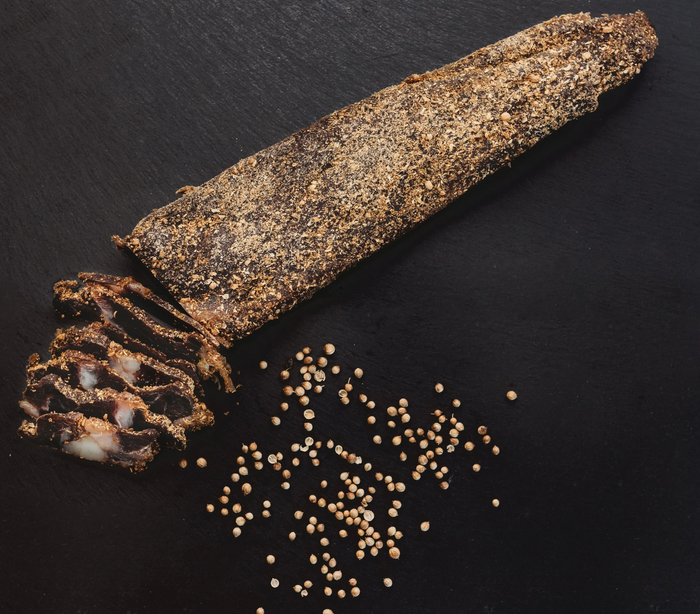
Biltong belongs on a board, and it solves the problem most kosher boards have — no cheese, so the whole thing has to work on meat, texture and contrast instead.
The principle is contrast: salty against sweet, firm against soft, rich against sharp.
| Role | Use | Why |
|---|---|---|
| The anchor | A slab and a knife, or sliced | Substantial, savory, needs nothing |
| Sweet counterpoint | Dried apricots, figs, dates | The oldest pairing with cured meat there is |
| Acid | Pickles, olives, preserved lemon | Resets the palate; stops the salt stacking up |
| Crunch | Seeded crackers, pretzels | Carries the meat |
| The odd one | Dark chocolate | Sounds wrong against chili biltong. Works |
| To drink | Whisky, a bold red, a hoppy beer | All three cut salt, differently |
A slab, if people will be standing around it for more than an hour. Slices in a bowl dry at the edges over a long afternoon; a slab does not, because you cut what you need when you need it. It also looks like something you made rather than something you opened.
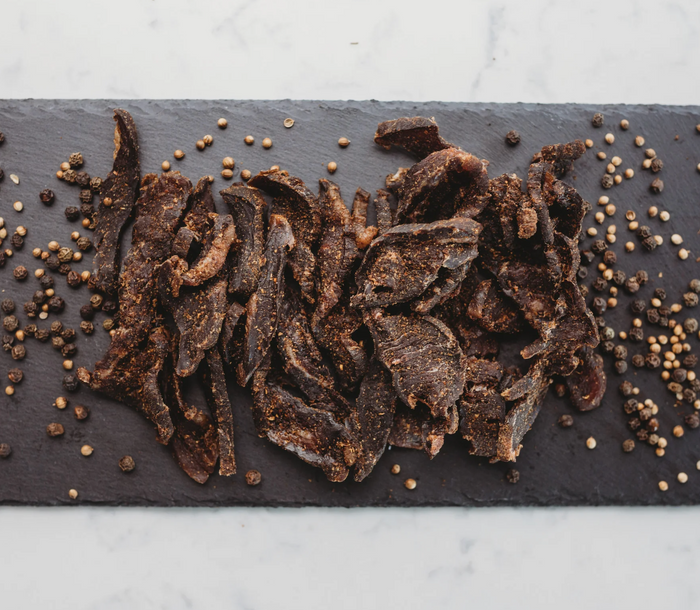
Sliced, if you want it eaten. A slab waits for someone willing to pick up a knife, and at a party that friction is real.
About 2 oz a head if the board has other food on it, 4 oz if the biltong is what people came for. Ten people with a mixed board is roughly a pound.
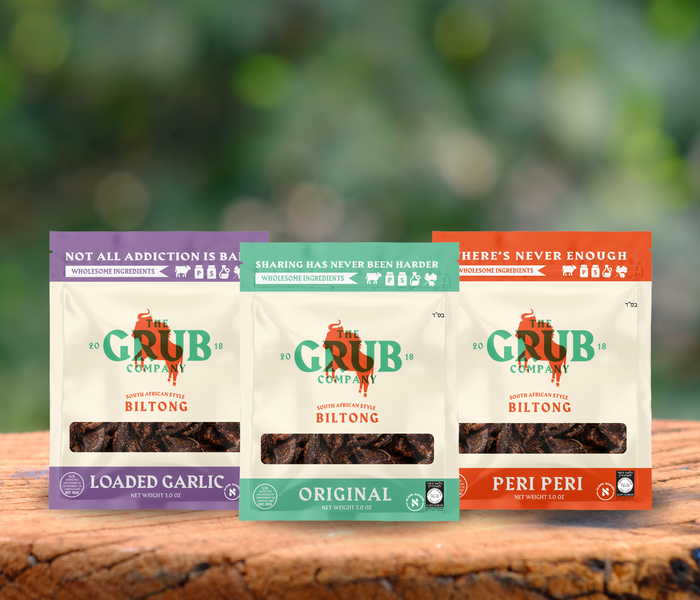
Original suits a table. Peri Peri divides a room, which is entertaining at home and inconvenient at a kiddush.
Availability moves — we dry in batches rather than holding warehouse stock, so what is buyable today is whatever the cards below say. Sold-out formats come back.
No chemically created, sand-paper tasting jerky here. Just a healthy and addicting snack.
Biltong and Meat Candy, made in small batches in Florida. Drop your email and the code is yours.