Why Some Biltong Is Darker Than Others
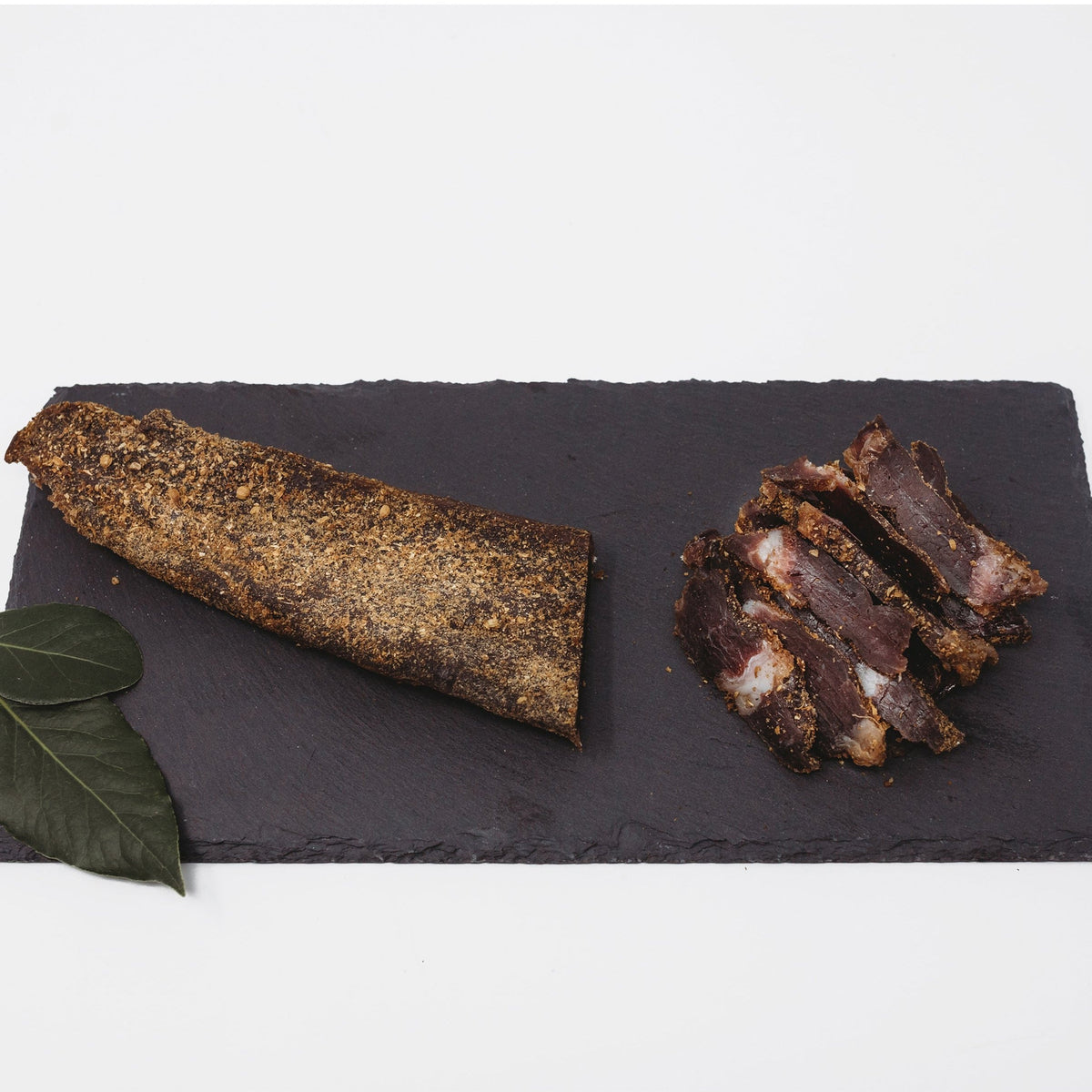
Two bags of biltong can sit side by side, made the same week from the same kind of beef, and one will be visibly darker than the other. Four things account for nearly all of that difference: which muscle the meat came from, how much fat is in the piece, how far the drying went, and how heavy the spice coating is. Age is not on that list, and neither is quality.
Ready to try it? Buy Glatt Kosher biltong online. Made in Florida, free US shipping on orders over $50.
This is one of the most common questions we get and one of the least usefully answered elsewhere, usually with some version of darker means drier. It is a fair guess and it is right often enough to be dangerous, because it is wrong in exactly the cases where being wrong costs you something. Here is what color is actually recording, and what to look at instead when you want to know what you are buying.
What darkening actually is
Raw beef is red because of myoglobin, the protein that holds oxygen inside muscle cells. Myoglobin changes color depending on how much oxygen it is bound to and what state its iron is in. Bright cherry red is oxygenated. Purple red is the color of meat that has not met air. Brown is what you get when that iron oxidizes further, which is a normal and irreversible chemical step rather than a sign of anything wrong.
Drying pushes that process along in two ways at once. Removing water concentrates the myoglobin into a smaller volume, so the same amount of pigment sits in less meat and reads darker. At the same time the surface is exposed to air for days, which drives the oxidation. Both effects run in the same direction, which is why every dried meat is darker than the raw meat it came from.
So the baseline is simple. Darker means the pigment is more concentrated and more oxidized than it was. What that does not tell you is how much of each effect you are looking at, and that is where the useful information hides.
The muscle decides the starting color
Different muscles on the same animal are different colors before anyone does anything to them. The amount of myoglobin in a muscle tracks how hard that muscle works, because working muscle needs more oxygen stored locally. Hard working muscles are darker red raw and darker still once dried.
Silverside and topside are the usual biltong cuts and they do not behave identically. They sit next to each other in the hind leg, they are both lean, and they still produce recognizably different results in the same drying room. A piece cut from a harder working part of the round starts darker and finishes darker, at the same moisture level, on the same day.
The animal matters too. Older cattle carry more myoglobin than younger ones, which is the same reason older beef is a deeper red on the counter. None of this is a quality signal in either direction. It is a starting point that the rest of the process builds on.
Fat lightens a piece and lean darkens it
Fat has no myoglobin in it. A seam of fat running through a slice stays cream or pale yellow through the whole dry, and the finished piece reads lighter overall simply because a proportion of what you are looking at was never going to darken.
The effect is stronger than people expect. A fattier bag looks noticeably paler than a lean one from a distance, and a single very lean slice in a fatty bag can look almost black by comparison. Neither piece is different from what it should be. You are looking at a composition difference and reading it as a process difference.
Fat also changes the surface. As it warms and softens it spreads a thin film across the outside of the piece, and that film reflects light in a way that lean meat does not. A slightly greasy surface reads lighter and glossier even when the meat underneath is exactly as dark as its neighbor.
How far the dry went, and why thickness confuses it
Drying further does darken a piece, so the common belief is not wrong. It is incomplete. The problem is that thickness changes the relationship between time and appearance in a way that makes cross comparisons unreliable.
Drying happens from the surface inward. A thin slice reaches its finished moisture level quickly, so the outside has only been exposed to air for a short time and has not oxidized much. A thick piece takes far longer to dry through, which means its exterior spends days more in contact with air than the thin slice ever did. The thick piece can be at exactly the same dryness overall and still have a much darker outer surface, purely because that surface is older.
Turn that around and the trap becomes obvious. A darker outside tells you the surface has been exposed longer. It does not tell you the middle is drier. A thick, dark exterior wrapped around a soft red core is a completely normal and often deliberate result.
The spice coating sits on top of everything
The last layer of the answer is the one people forget, which is that a good deal of what you are looking at is not meat at all. Biltong carries a spice coating, coriander among other things, and that coating has its own color. It is applied to the outside, it stays on the outside, and it is between your eye and the beef.
A heavier coating reads darker. A coating with more of anything roasted or toasted in it reads darker still. Two pieces of identical meat at identical dryness will look different if one carries more spice, and since spice adheres better to a slightly damper surface, the amount that sticks varies with the exact moment it was applied.
The vinegar wash that precedes curing plays into this as well. It changes the surface chemistry of the meat and the acidity affects how the surface browns during drying. That is a process detail rather than something you can see directly, but it is part of why the surface and the interior of one piece can be such different colors.
Why two pieces in the same bag look different
This is worth stating plainly because it worries people. Variation inside a single bag is normal and expected, and a bag where every piece looks identical would be the odd one.
Whole muscle meat is not a uniform material. One slice catches a fat seam and comes out pale. The next comes from the middle of the muscle and comes out dark. A piece that hung near the edge of a rack got more airflow than one in the middle and dried faster. A piece that was cut a little thicker took longer and darkened more on the outside. All of these are the ordinary consequences of drying real meat rather than manufacturing a uniform product.
The variation that would concern us is different in kind, not degree. Patchy dull gray on an otherwise dark surface, especially in blotches rather than a gradient, points at moisture getting back into the bag. That is a storage signal and it looks nothing like the ordinary light to dark spread you get across good product.
What color does not tell you: age
A darker piece is not an older piece. This is the assumption we hear most and it is the one that costs buyers the most, because it pushes people away from perfectly fresh product and toward paler pieces that may simply be fattier.
Color is set almost entirely during drying, in the days the meat spends on the rack. Once a piece is dried, bagged and stored properly, it does not keep darkening in any way you would notice. A bag that has sat in a cupboard for a month looks essentially the way it looked when it was sealed. What changes with time is texture and moisture, not shade.
If you want to know how old something is, look at the date on the bag. That is what it is for. The meat will not tell you.
What color does not tell you: quality
There is no shade of biltong that is inherently better than another shade. Dark is not premium and pale is not cheap. A dark piece might be a lean cut dried thoroughly, or a thick piece with an old surface and a soft middle, or a heavily spiced piece, or beef from an older animal. A pale piece might be fatty, or thin and quickly dried, or lightly spiced.
The reason this matters commercially is that darkness is easy to produce on purpose. Anyone who wanted to sell the appearance of a long dry could get there faster with a heavier coating. We would rather buyers judged the thing itself than a proxy that can be manufactured.
Say what you actually want and the question becomes answerable. Wetter or drier. Leaner or fattier. Thicker or thinner. Those are real variables with real consequences for how it eats, and none of them map cleanly onto shade.
What color does not tell you: salt or spice level
A dark surface does not mean a heavily salted piece. Salt is white, it dissolves into the meat during curing, and it contributes nothing visible to the finished color. Two pieces with very different salt levels can look identical.
Spice is a partial exception, since a heavier coating both darkens the piece and delivers more spice to your mouth. Even there the link is loose, because the color of a blend depends on what is in it and how it was treated before it went on. A pale coating can carry plenty of coriander.
The only reliable way to know how something tastes is to taste it, which is the honest argument for a Biltong Sampler Pack at $12.99 over reasoning about it from the outside of a bag.
What to look at instead
Everything genuinely useful about a piece can be got at by hand and by eye, once you stop treating shade as the headline.
- The gradient across a cut face. A smooth shading from a darker rim to a lighter core is what good drying looks like. A hard boundary between a stiff shell and a soft middle means the outside dried much faster than the inside.
- Feel. Press a piece. It should give slightly and spring back rather than feeling either rigid or slack.
- Visible grain. You want to see muscle fibers as fine parallel lines rather than a uniform paste.
- Fat that reads as distinct seams and specks, still separate from the lean around it rather than smeared through it.
- A matte, dry looking surface rather than a wet or slick one.
- Smell. Beefy and spiced is right. Sour or musty is not, at any color.
Those six things tell you more in ten seconds than any amount of staring at the shade.
Where our own formats sit on this
Our sliced formats are cut relatively thin, which means their surfaces have spent less time in air than a slab exterior has, so as a rule they read lighter than a slab does. That is a geometry difference, not a difference in how far either was taken.
Sliced Biltong at $11.99 and Sliced Biltong Mini's at $4.99 will show you a spread of shades in one bag, and that spread is the honest result of slicing whole muscle. Biltong Slabs at $58.00 will look darker on the outside than any slice, and when you cut into one you will find a lighter interior. That contrast is the point of a slab and the reason people who like cutting their own tend to stay with it.
If a bag arrives and one piece looks much darker than its neighbors, eat that one and see. It will usually be leaner, firmer and more concentrated in taste. Plenty of people go looking for exactly that piece.
Bottom line
Color records the cut, the fat content, how long the surface was exposed and how heavy the spice coating is. It does not record age, quality, salt or how the middle of the piece is doing. A darker piece is not older, better dried or more expensive to make, and a paler one is very often just fattier.
Buy on the variables that actually change how it eats, which are wetness, fat, thickness and spice level, and check the piece by feel, by grain and by the gradient across a cut face. If you want to know what a difference tastes like rather than reason about it from the outside of a bag, a Biltong Sampler Pack at $12.99 answers the question directly.
Frequently Asked Questions
Does darker biltong mean it is drier?
Not reliably. Drying does darken meat, but thickness breaks the link. Drying happens from the surface inward, so a thick piece spends days longer on the rack than a thin slice and its exterior is exposed to air for all of that time. The thick piece can finish at the same overall dryness with a far darker outside, wrapped around a soft red core. A dark surface tells you the surface is old. It says nothing definite about the middle.
Does darker biltong mean it is older?
No. Color is set during drying, in the days the meat spends on the rack, and a properly stored bag does not keep darkening in any way you would notice. A bag that has been in a cupboard for a month looks much the way it did when it was sealed. What changes over time is texture and moisture, not shade. If you want to know how old a bag is, read the date printed on it. The meat will not tell you.
Why are the pieces in one bag different colors?
Because whole muscle meat is not a uniform material. One slice catches a fat seam and comes out pale, the next comes from the middle of the muscle and comes out dark. A piece near the edge of a rack gets more airflow than one in the middle. A slightly thicker cut takes longer to dry and darkens more on its surface. All of this is ordinary variation from drying real beef. A bag where every piece looked identical would be the strange one.
Which is better, dark biltong or light biltong?
Neither. There is no shade that is inherently better. A dark piece might be a lean cut taken further, a thick piece with an older surface, a heavily spiced piece, or beef from an older animal. A pale piece is very often just fattier, because fat carries no myoglobin and never darkens. Buy on the variables that actually change how it eats, which are wetness, fat content, thickness and spice level, and treat shade as a side effect rather than a grade.
Why is fatty biltong lighter in color?
Fat contains no myoglobin, the pigment that makes lean beef red and that darkens as the meat dries and oxidizes. A seam of fat stays cream or pale yellow all the way through the process, so a fattier piece reads lighter overall because part of what you are looking at was never going to darken at all. Softened fat also spreads a thin film across the surface that reflects light, which makes the piece look lighter and glossier still.
Does the spice coating change the color?
Yes, and more than most people assume. The coating is applied to the outside and stays there, so it sits between your eye and the meat. A heavier coating reads darker, and a blend with more roasted or toasted elements in it darker again. Since spice adheres better to a slightly damper surface, the amount that sticks varies with the exact moment it goes on. Two pieces of identical beef at identical dryness can look quite different for this reason alone.
What color is a warning sign?
Patchy dull gray blotches on an otherwise dark surface, especially when they sit in irregular spots rather than shading smoothly from edge to core. That pattern points at moisture getting back into the bag and the surface partially rehydrating, which is a storage failure rather than a drying one. It looks nothing like the ordinary light to dark spread across good product. Pair it with a sour or musty smell and the piece is not worth eating at any shade.
How do I judge biltong if not by color?
Six things, all available by hand and eye. Look for a smooth gradient across a cut face rather than a hard line between a stiff shell and a soft middle. Press a piece and expect a little give and a spring back. Look for visible muscle grain rather than a uniform paste. Look for fat as distinct seams and specks. Want a matte, dry surface rather than a slick one. And smell it, because beefy and spiced is right and sour is not, at any color.