Why Biltong Needs No Preservatives, and What Does the Preserving Instead
Biltong keeps without added preservatives because three older things already do that work. Salt, acid from the vinegar wash, and the removal of most of the water leave a piece of meat in a state where very little can get going. Nothing is missing from the ingredient list. The preserving was done by the process instead of by an additive.
Want some on hand? Order biltong online: Glatt Kosher, air-dried in Florida, free US shipping over $50.
This is a shelf stability explanation rather than a safety ruling, and we want to be plain about the difference before we start. We are describing why a dried, salted, acidified piece of beef behaves the way it does on a shelf. We are not issuing guidance on what is safe in your kitchen, and we are not saying anything at all about whether additives elsewhere are good or bad. They do a real job in products built around them.
What a preservative is for
A preservative is a job description rather than a category of villain. Its job is to make a food inhospitable to the organisms that would otherwise grow in it, and to slow the chemical changes that turn fats and pigments stale over time. Anything that does those two things is preserving, whether it arrives as a powder or as a process.
Most foods need something in that role because most foods are wet. Water is what organisms need in order to do anything, and a food that holds a lot of freely available water is a hospitable place. Something has to change that, or the food has to stay cold, or it has to be eaten quickly.
Dried meat solves the same problem from a completely different direction. Rather than adding something that makes the water hostile, the process takes most of the water away and chemically ties up much of what is left. The job gets done. The ingredient list stays short.
Salt does more than season
Salt is the oldest tool in this craft and it works by moving water. Put salt against wet muscle and water travels out of the muscle toward the salt, which is the same physics that makes a salted cucumber weep. That happens before any air drying begins, which means the meat arrives at the rack already lighter than it started.
The second thing salt does is subtler and it matters more. Dissolved salt binds water molecules to itself. Water that is attached to something is not free to participate in anything else, so even the water still sitting in the meat is less useful to anything that might want it.
Both effects run in the same direction. Less water in the meat, and less of the remaining water available. Salt in a cure is doing structural work rather than only making the finished piece taste of salt, which is why the level in a traditional cure is not a matter of preference alone.
What the vinegar wash contributes
Biltong is typically washed in vinegar before it is spiced and hung. That step lowers the pH at the surface of the meat, which is the exact place and the exact moment where the meat is most vulnerable, because the surface is wet, exposed to air and not yet dried at all.
An acidic surface is a much less comfortable place for things to start. The wash buys the maker time during the window between hanging and the point where drying has progressed far enough to be doing its own defending. It is a bridge across the riskiest hours of the whole process.
The flavor is the visible consequence and the reason people think the vinegar is there. The tang that separates biltong from every other dried beef is a byproduct of a step that exists for structural reasons. Take the vinegar out and you would change both what it tastes like and how the early hours on the rack go.
Taking the water out is the big one
Salt and vinegar set the stage. Drying does the main work. A finished piece of biltong has lost a large fraction of the weight it hung at, and nearly all of that loss is water leaving through the surface and evaporating into moving air.
What remains is a concentrated version of the original muscle. The protein is all still there, the fat is all still there, the minerals are all still there, and the water that was carrying them is mostly gone. That is why dried meat tastes so much more intensely of beef than the beef did. Nothing was added. Everything was made denser.
The keeping follows from the same fact. A food that has given up most of its water has removed the one thing every unwanted process needs in order to run. That is the whole mechanism, and it is the reason dried meat existed long before anyone could refrigerate anything.
Water activity, which is the number that governs it
Here is the idea that ties the previous three sections together. What decides how a dried food keeps is not how much water is in it. It is how much of that water is chemically available, meaning free to move, free to dissolve things and free to be used. The measure of that availability is called water activity.
The distinction is easy to feel with an everyday comparison. Honey is around a fifth water by weight and it sits on a shelf for years. A fresh cucumber is far wetter and it collapses in a week. The honey holds much more water than most people assume, and almost none of it is available, because it is bound up by the sugar dissolved in it.
Dried meat sits on the same principle. Salt binds water. Drying removes water. Between them, a finished piece can still contain a real amount of moisture, which is why good biltong is not brittle, while almost none of that moisture is free to do anything. The piece is moist and stable at the same time, and those two things only sound contradictory if you are measuring the wrong number.
Why the raw percentage misleads people
Two pieces of dried meat can hold the same percentage of moisture and behave completely differently, because one of them has far more salt dissolved in that moisture than the other. The wetter feeling piece with more salt can be the more stable of the two.
This is why moisture percentage on its own is close to meaningless as a keeping signal, and why judging a bag by how soft it feels tells you less than people think. Softness is a texture reading. Availability is a chemistry reading. They are related but they are not the same thing, and the second one is what actually decides how a piece behaves over time.
It also explains a thing every biltong eater has noticed. A soft, wet cut and a hard, dry cut of the same product are at different points on the same scale, and the difference in how long each stays at its best is larger than the difference in how they feel in your hand.
What an additive would be doing instead
If you wanted a dried meat that felt softer and wetter than the process alone allows, you would need something else in the formula holding the line. That is a legitimate way to build a product and there are plenty of good foods built exactly that way.
What it changes is which part of the system is doing the preserving. In a traditional biltong, the answer is salt, acid and the removal of water, and the texture you get is whatever that combination produces. In an additive built product, the additive is holding the position and the texture becomes a design choice rather than a consequence.
We make the first kind. That means the texture of what we sell is downstream of the preserving rather than independent of it, and it also means the number of things that can go wrong in a bag is smaller, because there are fewer moving parts. It equally means we cannot offer a texture the process will not produce.
Why we do not turn this into a claim about other products
Saying our biltong has no added preservatives is a statement about our ingredient list. It is not an argument about anybody else's, and it is not a health claim of any kind. We are describing a method, not ranking foods.
The reason worth caring about is practical rather than moral. A short ingredient list is easier for a buyer to check against whatever they personally avoid, and it means the flavor you taste comes from beef, salt, vinegar and spice with nothing else contributing. That is the appeal, and it is enough of one without any additional argument attached.
The honest trade of a process built preservation
Here is the cost, and it lands on you rather than on us. A product preserved by its own process has nothing in reserve to compensate for how it is treated afterward. There is no ingredient sitting in the bag holding the line while conditions move around.
What that means in practice is that storage matters more, not less. Heat, air and moisture all push a dried piece back up the availability scale, and every step in that direction shortens the window in which the piece is at its best. A sealed bag in a cool cupboard is doing real work. An open bag in a warm kitchen is undoing some of it.
The reverse is also true and it is the pleasant half. Kept properly, a piece that has been dried well and salted well is remarkably stable for something with no additive in it at all, and it does not need refrigeration to stay in good condition.
Format changes the arithmetic
The same principle applies differently across our range, because exposure differs:
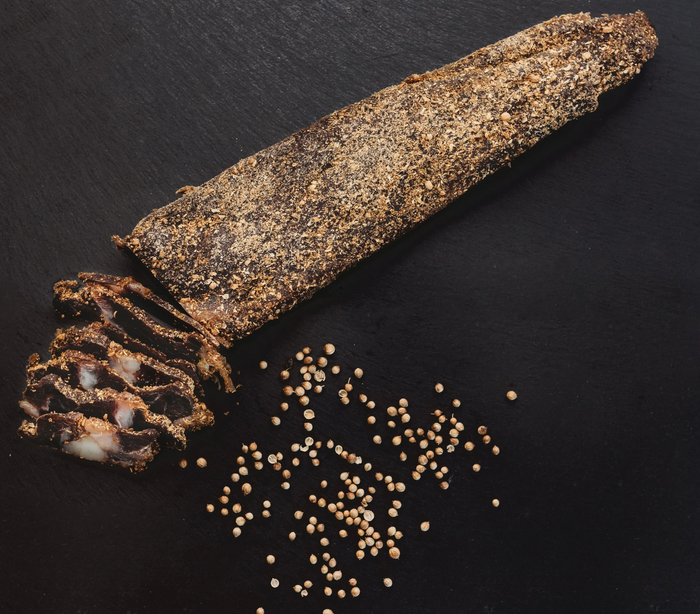
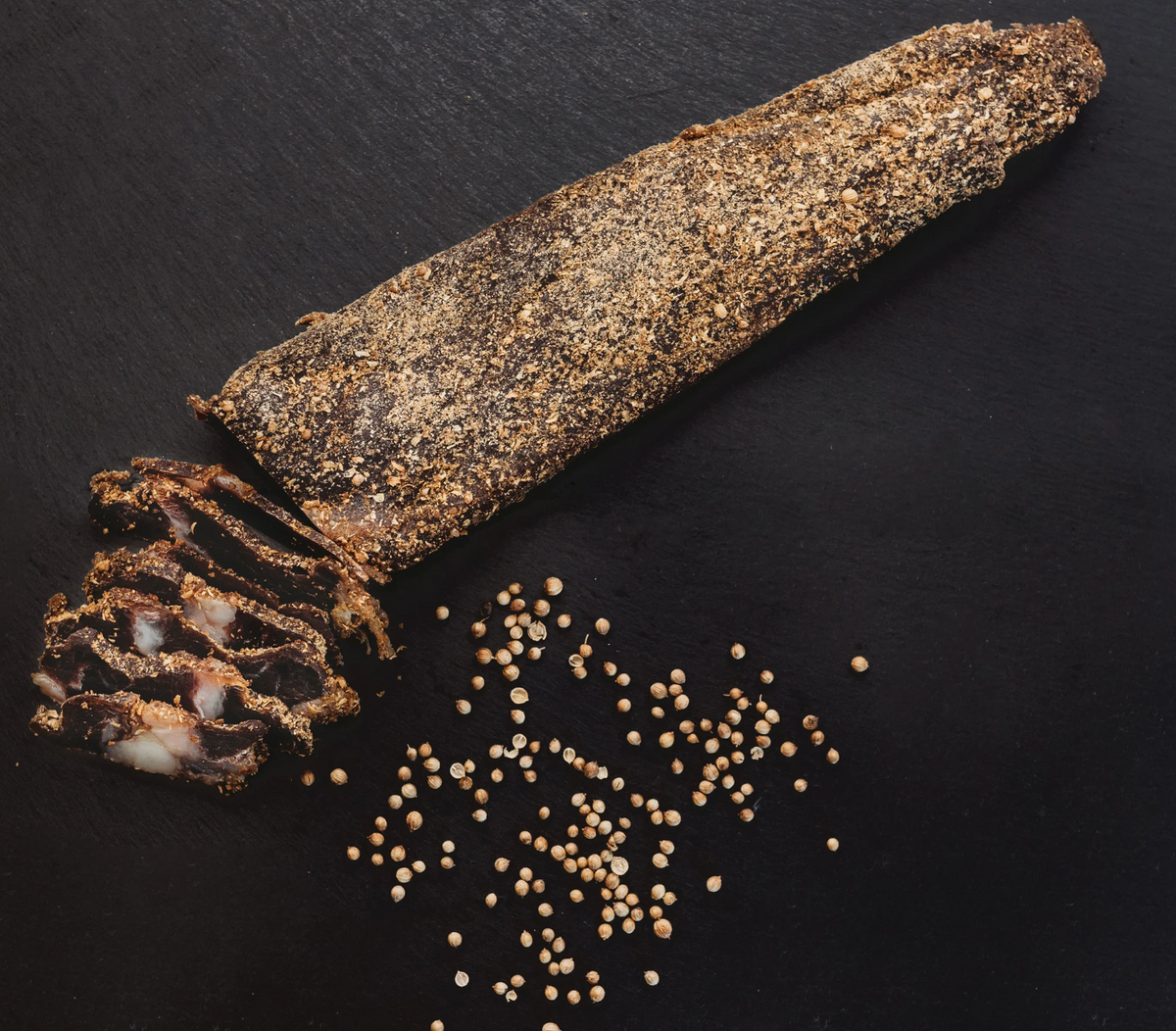
- Biltong Slabs at $58.00 have the least surface relative to their mass, so an uncut slab is the most stable thing we sell and stays that way for as long as you leave it whole.
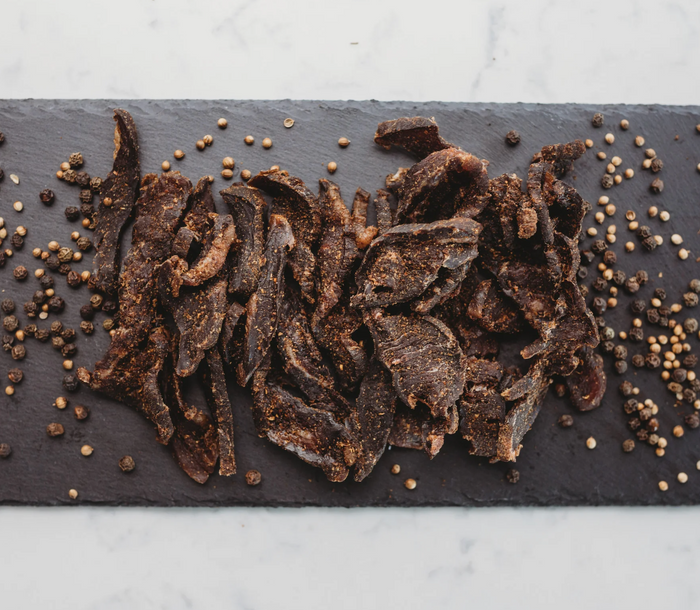
- Sliced Biltong at $11.99 has been cut, so every piece carries two fresh faces that are open to the air in the bag.
- Sliced Biltong Mini's at $4.99 are thin and small, so they are almost all surface, and they move fastest in either direction once opened.
- Bulk Biltong at $58.00 is a pound of the sliced format, which means it is the one where how you store it after opening matters most, simply because it will be open longer.
None of those are different in what preserves them. They are different in how much of them is exposed, which changes how fast conditions in your kitchen can act on them.
What happens after you open the bag
Opening a bag introduces room air, and room air is a two way street. In dry conditions the meat keeps losing moisture and firms up further. In humid conditions the surface can pick moisture back up, which raises availability at exactly the place where you least want it raised.
The second case is the one to pay attention to. A surface that has taken moisture back on looks slightly dull and feels less dry to the touch than it did on day one. That is the meat moving in the wrong direction, and the fix is straightforward, which is to keep the bag closed and keep it somewhere cool and dry.
Nothing here needs a container from a specialty store. A tightly closed original bag or any sealed container away from a warm stove covers almost every household situation.
What we will and will not tell you
We will not give you a shelf life number in this article, because a single figure would be a promise about your kitchen rather than a fact about the meat. Conditions decide too much of it. The date on the bag is the answer to that question and it is the only one we would stand behind.
We will tell you what to look at, which is the surface and the smell rather than the calendar. Dried meat that has been kept well looks matte and even and smells of beef and spice. Something that looks damp when it did not before, or smells sharply different from how it smelled on opening, is telling you it has been somewhere it should not have been. That is a judgment call for you to make, and if a piece is telling you something is off, we would rather you trusted it than a rule of thumb from an article.
Bottom line
Salt binds water, vinegar acidifies the surface during the vulnerable early hours, and drying removes most of the water outright. Together they bring the available moisture in a finished piece low enough that it keeps, which is what an added preservative would otherwise be doing. The number that matters is availability rather than raw moisture percentage, which is why good biltong can feel moist and still be stable. The trade is that storage is entirely on you, so keep the bag closed, keep it cool, and keep slabs whole until you are ready to cut.
Frequently Asked Questions
What actually keeps biltong stable if there are no added preservatives?
Three things working together. Salt draws water out of the muscle before drying starts and binds much of what remains, so it is no longer free to move. The vinegar wash lowers the pH at the surface during the hours when the meat is wet and most exposed. Drying then removes the large majority of the water outright. The result is a piece where very little moisture is available, which is the same end state an added preservative would be aiming at by another route.
What does water activity mean in plain terms?
It means how much of the water in a food is chemically available, meaning free to move and free to be used, rather than how much water is present in total. Honey is around a fifth water by weight and sits on a shelf for years, because sugar binds almost all of that water. A cucumber is far wetter and collapses in a week. Dried meat works on the same principle. Salt binds water and drying removes it, so a piece can feel moist and still be stable.
If my biltong feels soft, does that mean it will not keep?
Not on its own. Softness is a texture reading and availability is a chemistry reading, and they are related without being the same thing. Two pieces holding the same percentage of moisture can behave very differently depending on how much salt is dissolved in that moisture, and the softer feeling piece can be the more stable of the two. What is true is that a wetter cut and a drier cut sit at different points on the same scale, and the wetter one is at a livelier point in its own timeline.
Does no preservatives mean biltong needs refrigeration?
No, and that is the point of the method. A piece that has been salted, acidified and dried properly is stable at room temperature without help, which is why dried meat existed long before refrigeration. What it does need is a closed bag and a cool, dry spot. Heat, air and moisture all push a dried piece back up the availability scale, and the further it moves that way the shorter the window in which it is at its best. Storage is doing real work here.
Are added preservatives a bad thing?
That is not a question this article is answering, and we are not going to pretend otherwise. Additives do a real job in the products built around them, particularly where a maker wants a texture that a process alone will not produce. Saying our biltong has none is a statement about our ingredient list rather than an argument about anybody else's, and it is not a health claim. The practical appeal of a short list is that it is easy to check and that the flavor comes from beef, salt, vinegar and spice.
Does format change how well it keeps?
Exposure changes, not the mechanism. Biltong Slabs at $58.00 have the least surface relative to mass, so an uncut slab is the most stable thing we sell and stays that way while you leave it whole. Sliced Biltong at $11.99 carries two cut faces on every piece, and Sliced Biltong Mini's at $4.99 are almost all surface, so they move fastest once opened. Bulk Biltong at $58.00 is a pound of the sliced format, so it is the one where post-opening storage matters most because it stays open longest.
How long will an opened bag stay good?
We are not going to put a single number on that, because it would be a promise about your kitchen rather than a fact about the meat. Conditions decide too much of it, and the date on the bag is the figure we would stand behind. What we can tell you is what to look at. Well kept dried meat looks matte and even and smells of beef and spice. A surface that looks damp when it did not before, or a smell that has clearly changed, is worth trusting over any rule of thumb.