How the Bokkoms Trade Shaped the Biltong Supply Chain
The bokkoms trade shaped the biltong supply chain before biltong even existed as a product. When VOC merchants at the Cape needed to cure beef for long journeys, they did not invent a new system. They picked up the one already running: salt, vinegar, open-air drying, whole-product handling, bulk distribution to traders. That system had been moving dried harders fish across southern Africa for centuries. The switch from fish to beef changed the protein. It changed almost nothing else.
Shop the real thing: buy biltong online, Glatt Kosher and made in Florida. US orders over $50 ship free.
This matters more than it sounds like a footnote should. Every structural choice in a modern biltong supply chain, from why slabs ship in small batches on 2-to-3-week lead times to why a pound of bulk biltong costs $58 and goes out the door to a single buyer rather than pre-portioned to a shelf, has a direct ancestor in how bokkoms was handled, priced, and distributed. Most articles about biltong history treat bokkoms as color. We think of it as the reason our inventory works the way it does.
Bokkoms Was Not a Recipe. It Was a Trade Network.
Bokkoms is salted, dried harders. Small fish, heavy salt, hung in the open air until the moisture is gone and what remains can travel without refrigeration and hold value across long distances. The Cape fishing communities who developed it were not just curing fish for personal use. They were building a protein economy. Dried fish became a reliable store of value and a practical food source that could move through southern Africa's trade routes without spoiling.
What the VOC brought to the Cape was not preservation knowledge. The local population already had that. What the VOC brought was scale and a demand for the same logic applied to beef. Their supply problem was real: how do you feed people and trading parties across a territory without cold storage? The answer was already working a few hundred yards away in the fish curing operations. You salt heavily, you add vinegar to stabilize and add acidity that slows bacterial activity, and you hang the product whole in moving air until it is dry enough to be shelf-stable.
The VOC's adoption of these methods for beef was not an independent invention. It was an infrastructure transfer. And when that transfer happened, it carried with it every operational assumption of the bokkoms trade: whole-product handling (you cure and sell the piece, not a processed derivative of it), bulk distribution to traders rather than retail packaging for individuals, and a quality-over-seasoning philosophy where the preservation method itself does the work and spice is a finishing touch, not a mask.
That last point is one people miss. Bokkoms does not rely on heavy spice because it does not need to. Heavy spicing in dried protein is historically a way to cover inconsistency in the underlying meat. When your fish is fresh and your salt ratio is right and your drying conditions are controlled, you do not need to bury the result in flavor. You let it be what it is. The VOC beef-curers who built on that model brought the same restraint to biltong. You see it in our own ingredient list: grass-fed beef, salt, vinegar, and a short list of spices. That is not minimalism for marketing purposes. It is fidelity to a curing philosophy that goes back to dried harders on the Cape coast.
Tracing Each Trade Principle to a Specific Supply Chain Choice
The easiest way to see the inheritance is to map it directly, because the connection is not abstract once you look at the actual SKU-level decisions that define how we source, cure, and distribute biltong today.
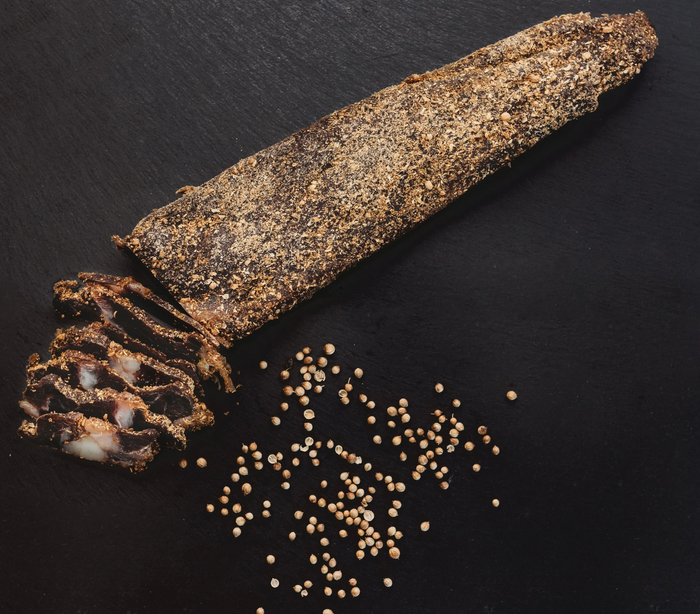
Whole-product preservation was the bokkoms default because a whole dried fish holds its moisture balance better than pieces do, and it is harder to adulterate. Our Biltong Slabs at $58 a pound work the same way. You receive the slab intact. You slice fresh off it when you eat. The moisture stays locked in the whole piece until the moment you cut it, which means every slice is what the curing process intended it to be, not a pre-sliced portion that has been oxidizing in a bag since the factory floor. The product description says it plainly: you experience biltong at its best by slicing every bite fresh off the slab. That is not a pitch line. It is a preservation principle the bokkoms trade established centuries before we started curing beef.
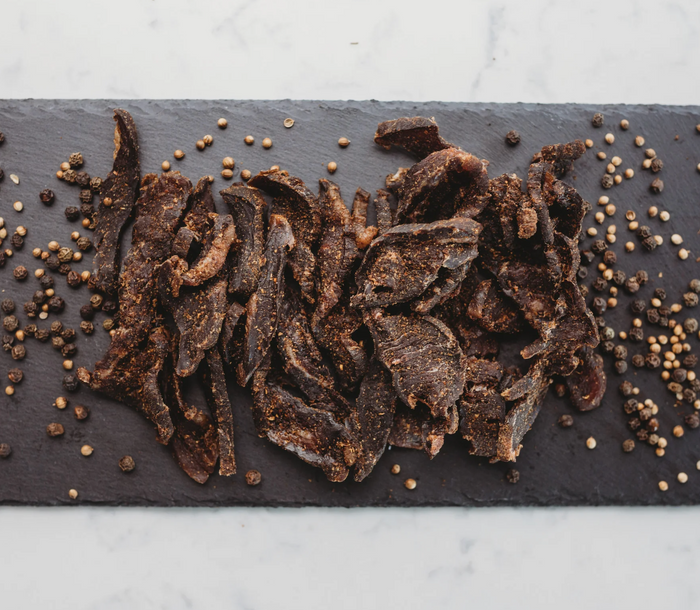
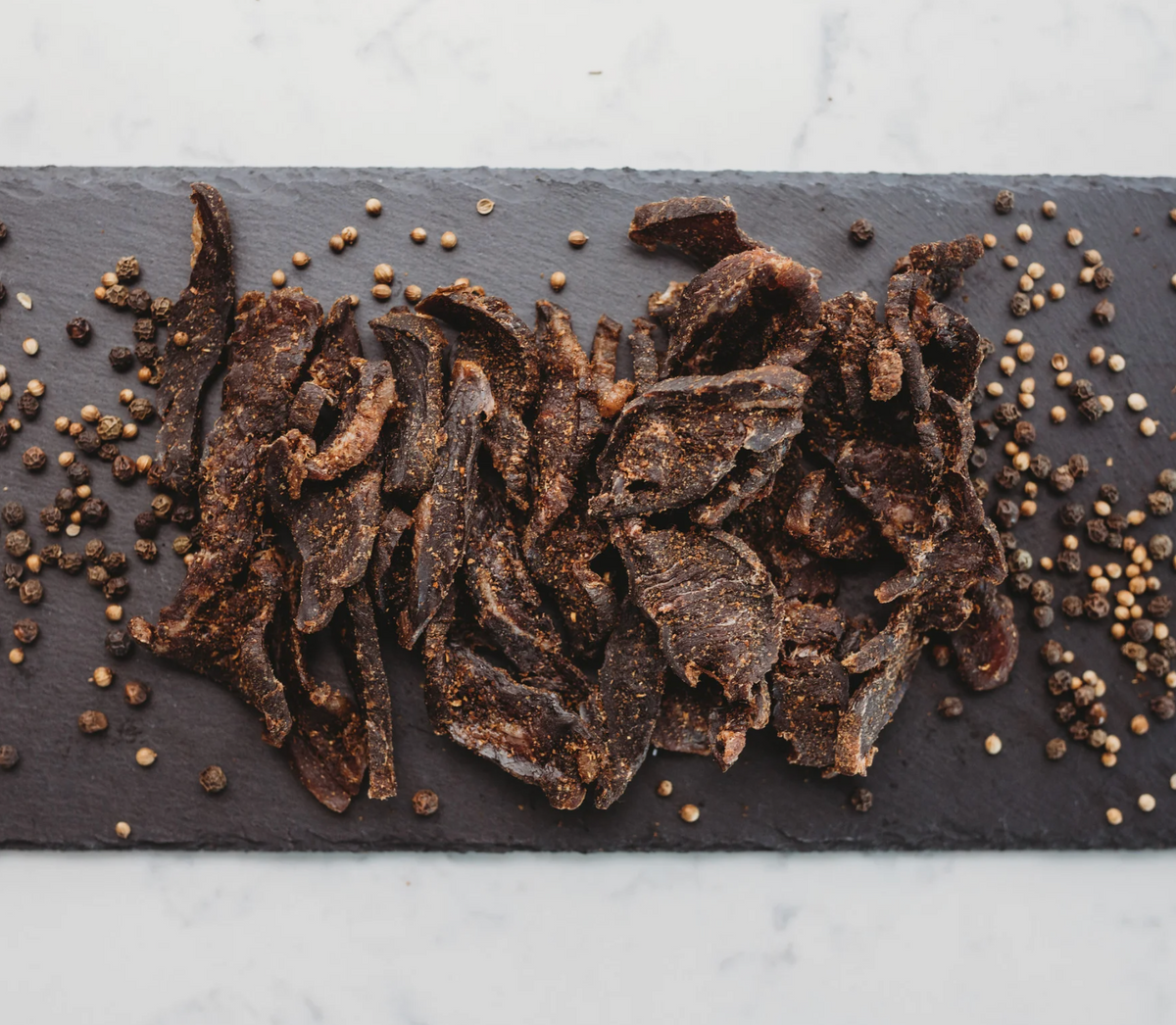
Bulk distribution to traders, not retail packaging for individuals, was how bokkoms moved through the region. You did not go to the fish curer and buy a handful for your lunch. Bokkoms went out in volume to people who would then distribute it. Our Bulk Biltong at $58 for a full pound of sliced biltong follows that exact model. A pound of sliced biltong is not a snack portion. It is a supply quantity. It goes to households stocking for the week, to party hosts building charcuterie boards, to anyone who has moved past sampling and decided they need a real supply. The VOC traders who bought cured beef in bulk and distributed it along the Cape routes would recognize the logic immediately.
Grass-fed sourcing is where the bokkoms lineage gets specific in a way most people have not thought through. Bokkoms worked because harders are lean, wild fish with a consistent fat profile that responds predictably to salt-curing. Too much fat in the wrong places and the drying process produces rancidity, not shelf-stability. When the same logic was applied to beef, the quality of the animal became a preservation variable, not just a taste preference. Grass-fed beef is leaner, with a different fat distribution than grain-fed, and it responds to air-drying the way the curing protocol requires. We source grass-fed beef for our Sliced Biltong and across the range because the curing method demands it. The bokkoms trade made animal diet a supply chain input. We still treat it that way.
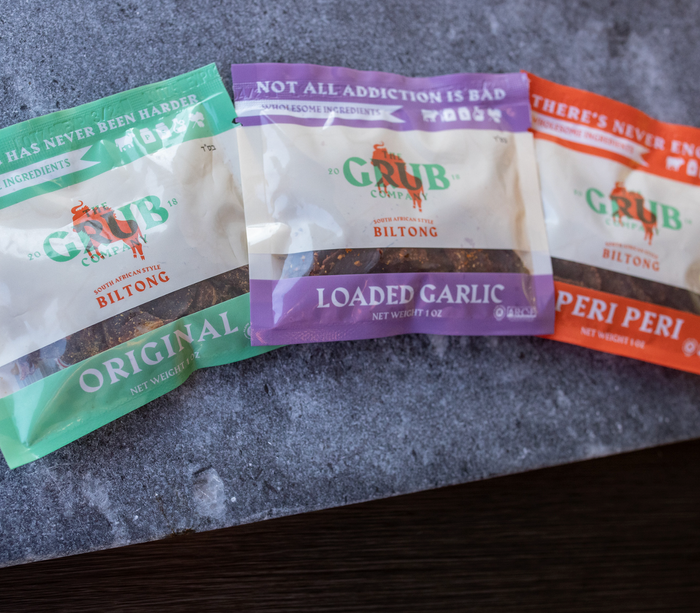
Minimal spice philosophy, the restraint that runs through every flavor we carry, is the direct descendant of the salt-and-vinegar simplicity that defined bokkoms. Original biltong is beef, salt, vinegar, and coriander. Peri Peri adds chili heat. Loaded Garlic adds garlic. None of them use filler, binders, or flavor enhancers that mask the underlying meat. The Biltong Sampler Pack at $12.99 lets you try all three in one order, one mini bag of each, and what you will notice is that even the most seasoned version still lets the beef come through. That is not an accident. A three-ingredient preservation base is hard to hide behind, which means the beef has to be good enough to carry the product on its own. Our grass-fed sourcing is what makes that possible. The bokkoms trade built the same dependency into its supply chain: if the fish was poor quality, no amount of salt saved it.
Regional flavor segmentation is the one principle that carries a different flavor of the inheritance. The bokkoms trade moved through distinct regional communities with their own curing variations, which meant that even within the same basic method, local protocols produced different results. Peri Peri heat reflects the Mozambican trade influence that moved through the same southern African routes where bokkoms circulated. The sampler pack exists because flavor preference in biltong is genuinely regional in origin, and you cannot know which one lands for you without trying them side by side. That is the same reason the bokkoms trade routes produced regional variants rather than one universal product. The preservation logic was shared. The finishing was local.
The Slab Lead Time Is the Bokkoms Small-Batch Model, Still Running
Here is the thing about our Biltong Slabs that we are honest about: inventory runs low because we set aside only a handful of slabs per batch. That creates 2-to-3-week wait times on orders when stock is thin. We say that plainly on the product page because hiding it would mean disappointed customers, and disappointed customers do not come back for more.
But the structure behind that lead time is not a logistics failure. It is the bokkoms small-batch model, unchanged. Bokkoms was never a mass production product. It was a careful, whole-product preservation process where the batch was the unit of quality control. You hung what you had. You waited for it to dry correctly. You did not rush the moisture out of the product to meet a shipping deadline, because rushing the drying produces a brittle, inconsistent product that does not hold up. The batch cleared when it was ready, and the next batch started from scratch.
That is exactly what happens with our slabs. Each batch goes through the full curing and air-drying process before we touch it. We do not pre-slice slabs and bag them for convenience, because doing that would mean trading fresh-slice quality for shelf-life optimization. A pre-sliced slab in a sealed bag starts oxidizing immediately. A whole slab, handled correctly, holds its moisture balance and its flavor profile until you cut it yourself. The 2-to-3-week wait is the cost of doing it this way. For the customers who know what biltong is supposed to taste like, it is not a hard trade to make.
The Bulk Biltong at $58 for a pound of sliced biltong exists partly because not everyone wants to wait or to own a slicing setup. Pre-sliced biltong in bulk lets you access the full pound at the right thickness without the lead time of the slab format. You give up the fresh-slice experience. You get immediate availability and a format that works straight out of the bag for charcuterie boards, parties, or keeping on hand through the week. The bokkoms trade had the same bifurcation: whole dried fish for serious traders who knew how to handle and portion it, and processed portions for buyers who needed convenience over maximum quality. Both served the market. Both traced to the same source.
The Sliced Biltong Mini's at $4.99 and the Sliced Biltong at $11.99 sit in the same logic. They are the entry-level format, the way a first-time buyer gets to understand what cured beef actually tastes like before committing to a pound or a slab. The Biltong Sampler Pack at $12.99 is the cleanest version of this: three flavors, one order, no commitment to a full quantity of anything until you know what you want. It is a tasting model, not a buying model. And it exists because the bokkoms trade understood, even in its earliest form, that a buyer who trusts the product becomes a trader-quantity buyer over time. You sample first. Then you buy by the pound.
Why Biltong Slices Fresh and Jerky Does Not
Jerky is pre-sliced before drying. The strips go into the dryer thin, and what comes out is a finished, shelf-stable product that requires no further handling. That model optimizes for retail shelf life. A pre-sliced, fully-dried strip goes into a bag, gets sealed, and can sit on a shelf for months. The drying process and the format are designed around each other to produce something that never needed the buyer to do anything except open the bag.
Biltong's supply chain never made that trade, and the reason goes back to bokkoms. Bokkoms was dried whole. The end user handled the final cut. That kept the product's moisture balance intact during the distribution phase and gave the buyer control over how they consumed it: thick slices for texture, thin shavings for use in cooking, or anything in between. The whole-product model was not about inconveniencing the buyer. It was about protecting the quality of what the buyer received.
Our Biltong Slabs carry that forward literally. You slice fresh off the slab. The experience is different from opening a bag of pre-sliced jerky in the same way that cutting from a wheel of cheese is different from eating pre-sliced singles. The product has not been exposed. The moisture profile is what the curing process produced, not what survived a week in a sealed pouch after being cut. That is why we describe it as melt-in-your-mouth, not chewy. The texture comes from the whole-slab format protecting the cure until the moment you eat it.
Jerky is a different product solving a different problem. It is optimized for convenience and shelf life. Biltong, in the slab format especially, is optimized for what the bokkoms trade was optimized for: delivering the highest quality version of a preserved protein to the person who is going to eat it, with the distribution infrastructure intact around it. The VOC traders who adapted bokkoms methods to beef were not thinking about retail convenience. They were thinking about how to move high-quality preserved protein across long distances without losing what made it worth carrying. That goal has not changed.
What you get when you order a biltong slab, wait the 2-to-3 weeks, and slice your first piece off the block is the direct product of that centuries-old logic. Salt, vinegar, open air, whole product, small batch, fresh cut. Everything in between is just the same trade route, pointed at your kitchen counter.
Ready to pick one? Browse Biltong Bulk & Wholesale.