Teriyaki Beef Jerky: The Kosher Traps in a Sweet Soy Glaze
Teriyaki beef jerky is beef dried in a sweet, salty soy glaze, and most of what is on the shelf is not kosher. The beef is rarely the problem. The glaze is, because soy sauce, mirin and "natural flavors" each need their own certification, and a certified Glatt Kosher jerky has to clear every one of them.
We make certified Glatt Kosher biltong and beef snacks in small batches in Florida, so we read ingredient panels for a living. Teriyaki is the flavor kosher customers ask us about most, and it is the one with the most traps. This guide explains what teriyaki is, where each trap sits, and how to read a bag in the store. It also says plainly what we do and do not make. Our kosher biltong page covers how certification works on our own line.
What teriyaki actually is
Teriyaki is a Japanese cooking style, not a single recipe. "Teri" means shine and "yaki" means grilled or broiled. The glaze is built from a short list:
- Soy sauce for salt and depth.
- Sugar or another sweetener for the gloss.
- Mirin or sake, both rice-based alcohols, for sweetness and shine.
- Ginger and garlic for bite.
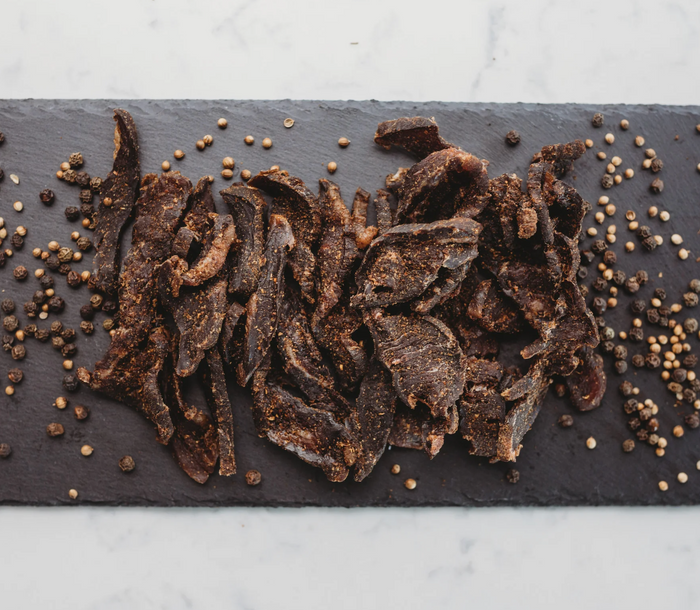
Jerky makers copy the flavor, not the method. The beef is sliced thin, soaked in a teriyaki-style marinade, then dried. The sugar in the marinade is why teriyaki jerky is sticky and soft, closer to candy than to a dry strip of meat. It is also why the ingredient list is longer than you expect, and every extra line is a place for a kosher problem to hide.
Trap one: the soy sauce
Soy sauce looks like a plant product, so people assume it is fine. A plain kosher consumer cannot assume that. Soy sauce is fermented, and what it is brewed with and what equipment it runs through are not visible on the label. Many soy sauces are made on shared lines with other products. Some carry alcohol from the brewing process.
The rule that everyone accepts is simple: an ingredient that is not certified is an unknown ingredient. A bag that says "soy sauce" with no certification on the bag tells you nothing about the soy sauce. We go through this question in detail in Is Soy Sauce Kosher? The Jerky Marinade Question.
Trap two: mirin, sake and any "wine"
Mirin and sake are rice alcohols. They are not grape wine, but they are still a regulated category in a kosher kitchen, and they come in many commercial versions. Cheap mirin-style seasonings often contain added flavorings, sweeteners and preservatives on top of the rice base.
What this means in practice: if the label lists mirin, sake, rice wine, cooking wine or any wine, that line needs a certification of its own. If you cannot find one, that is a reason to put the bag back. Whether a specific alcohol ingredient is acceptable in a given situation is a question for your rabbi. The label is where you find out whether you have to ask.
Trap three: "natural flavors" and "seasoning"
This is the line that most often sinks a bag. "Natural flavors," "spices" and "seasoning" are legal catch-all terms. A single one can stand for a dozen components, and some of those components can be meat-derived, dairy-derived or made on shared equipment.
Three things to know:
- Dairy hides in seasoning. Some commercial marinade blends include milk-derived ingredients such as whey or caseinate. Meat and dairy are kept apart in a kosher home. Dairy in a meat product is a serious problem, not a technicality.
- Worcestershire is a common offender. Teriyaki-style and other jerky marinades often borrow it, and it can contain fish. We explain why in Why Worcestershire Sauce Makes Most Jerky Not Kosher.
- "Natural" is not a kosher word. It describes where a flavor came from, not whether anyone certified it.
A certification on the finished bag covers the whole recipe, including the flavor blend. That is the entire reason to buy certified. Without it, the only way to verify a teriyaki jerky is to call the maker and get a full ingredient list for every component, and few people do that.
Trap four: the beef itself
Teriyaki jerky is a crowded category, and most brands sell it as an everyday snack. That is also the part of the market where the beef is least likely to be kosher. A teriyaki marinade can hide a lot, and some producers use it to cover lower-grade or ground meat.
For jerky to be kosher, the beef has to come from a kosher animal, slaughtered by shechita, inspected, and soaked and salted. Then the finished product has to be made under supervision on equipment that is not shared with non-kosher meat. "Glatt Kosher" is a stricter standard on the inspection step. If a bag says "kosher style," "kosher-inspired" or "made with kosher beef" and shows no certification, none of that is verified. We cover that wording in Does "Kosher-Style" Jerky Mean Anything?.
How to read a teriyaki jerky bag in thirty seconds
Do this in order. Stop at the first failure.
- Look for a certification symbol on the front or back of the bag. No symbol, no sale. Everything else is moot.
- Check that it says meat. Jerky is a meat product. A symbol that marks it as pareve would be a red flag. See Is Kosher Beef Jerky Meat or Pareve?
- Read the ingredients for dairy words. Milk, whey, caseinate, lactose, butter.
- Read for fish. Worcestershire, anchovy, fish sauce. Whether a fish ingredient is acceptable in a meat product is a question for your rabbi.
- Look at the alcohol lines. Mirin, sake, wine, rice wine. With a certification on the bag, these are covered. Without one, you are guessing.
- Buying for Passover? Look for a Passover certification on the bag itself. A year-round certification does not cover it.
What we make, and what we do not
We do not make a teriyaki jerky. We will not call anything teriyaki that is not, and we will not borrow the name to sell you something near it.
What we do make is Meat Candy (aka Beef Jerky), our certified Glatt Kosher jerky, in two flavors:
- Baa-Baa BBQ Sheep. Korean BBQ, sweet and savory together, with more going on than a straight glaze. It is the closest thing on our shelf to the sticky, sweet-and-salty experience people want from teriyaki. It is not teriyaki, and it does not taste identical.
- Hickory Kickory Dock. Smoky hickory with the sweetness behind it rather than in front. It is the one that tastes closest to what most people mean by jerky.
It is real, whole sliced beef, cooked, glazed and sweet. If a sweet soy-forward jerky is the exact thing you are after, our Korean BBQ flavor will land nearest, but we would rather you know that going in than feel misled when the bag arrives.
Here is the honest trade-off. If you want a teriyaki and nothing else will do, we are the wrong pick today. A certified teriyaki jerky exists only if the whole marinade is certified, and that is a high bar. If what you want is a sweet, tender, kosher jerky, our kosher beef jerky is where to start.
If you want savory instead of sweet
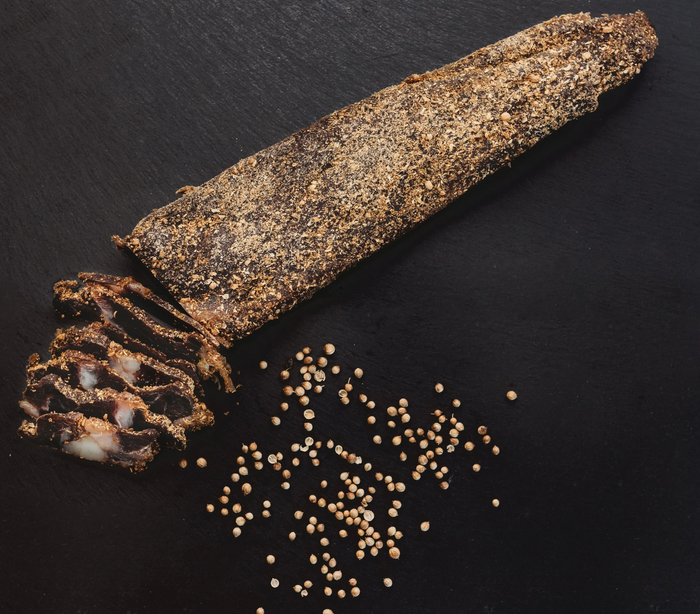
Teriyaki fans who are open to a different style should look at biltong. It is the opposite method: air-dried, not glazed. It is savory, not sweet, with beef first and then the warm citrus note of coriander. There is no sugary marinade to check, and the flavor comes from a short, plain spice list.
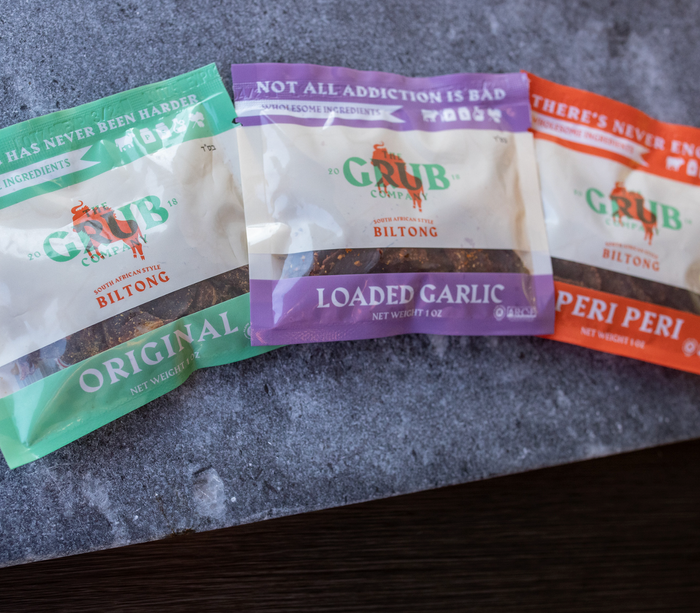
Our Sliced Biltong comes in Original, Peri Peri and Loaded Garlic. It is the right pick if you like the salt and the chew but not the sugar. It is the wrong pick if you want the sticky glaze that defines teriyaki. If you are unsure, the sampler lets you try all three flavors before you commit, and you can see every size and flavor on Buy Biltong Online. US orders over $50 ship free.
The bottom line
Teriyaki jerky is a kosher minefield because the glaze has four or five ingredients that each need to be certified, and a vague flavor line can hide more. A certification on the finished bag settles it. Without one, treat the bag as unverified. We do not make teriyaki. We make certified Glatt Kosher jerky and biltong, and we will tell you exactly which one comes closest to what you want.
Frequently Asked Questions
Is teriyaki beef jerky kosher?
Only if the finished product carries a reliable kosher certification. The beef, the soy sauce, any mirin or sake, and the flavor blend all have to be certified. Most teriyaki jerky on the shelf has no certification, so it cannot be assumed kosher.
Is soy sauce kosher?
Some soy sauces are certified and some are not. Soy sauce is fermented and often made on shared equipment, so an uncertified brand is an unknown. If the jerky bag has a certification, the soy sauce in it is covered.
Does teriyaki jerky contain dairy or fish?
It can. Some seasoning blends use milk-derived ingredients, and Worcestershire sauce can contain fish. Read the label for milk, whey, caseinate, anchovy and fish sauce. Whether a fish ingredient is acceptable in a meat product is a question for your rabbi.
Does Grub make a teriyaki beef jerky?
No. We make Meat Candy in two flavors, Hickory Kickory Dock and Baa-Baa BBQ Sheep, which is a Korean BBQ flavor. We do not call it teriyaki. It is sweet and savory and the nearest thing we have to a sticky glaze.
Is "kosher style" teriyaki jerky the same as certified kosher?
No. "Kosher style" and "kosher inspired" describe a flavor, not a verified process. Look for an actual certification on the bag.
Is teriyaki jerky kosher for Passover?
Not automatically. Soy sauce and many sweeteners are an issue on Passover, and a year-round certification does not cover it. Look for a Passover certification on the bag itself, and ask your rabbi about anything in doubt. We do not sell our jerky as kosher for Passover.
Do I have to cook jerky or biltong before eating it?
No. Both are ready to eat out of the bag. Neither needs refrigeration before opening.