Biltong for Travel: What Survives a Trip and What Does Not
Biltong travels better than almost anything else you can put in a bag, and the reason is that the hard part has already happened. The water came out weeks before you packed it. A snack that has already given up most of its moisture has very little left to lose on a plane, in a car or in a rucksack, which is why air dried beef has been a road food for as long as there have been roads worth worrying about.
Related: Road Trip Snacks That Need No Cooler · Healthy Road Trip Snacks: A Practical List
Shop the real thing: buy biltong online, Glatt Kosher and made in Florida. US orders over $50 ship free.
That is not the same as saying nothing happens to it. Heat, motion and a sealed bag all leave a mark, and the mark is different for a pocket bag of slices than it is for a whole slab. What follows is what actually changes on a trip, which of our formats handles it best, and what to expect when you open the bag at the other end.
Why dried meat is built for the road
Every food that spoils quickly does so because there is water available inside it for bacteria and mold to use. Drying removes most of that water. What matters is not the raw moisture percentage but water activity, meaning how much of the remaining water is chemically free rather than bound up in the meat itself. Salt and the drying process together pull that number down until very little is available to anything living.
The practical consequence is that biltong is stable at room temperature in a way that fresh meat is not, and it stays stable across a fairly wide band of conditions. It does not need ice. It does not need a cooler. It does not need power. Nothing about a six hour flight or a nine hour drive changes the fundamental chemistry of a piece of meat that has already been dried down and packed.
Compare that to almost every other portable snack and the advantage is obvious. Fruit bruises. Chocolate melts and never recovers its temper. Chips arrive as dust. Sandwiches have a clock on them. Biltong has none of those failure modes, which is why it ends up in glove compartments and carry ons far more often than its shelf presence would suggest.
Heat is the one variable that matters most
Warmth does not spoil dried meat quickly, but it does speed everything up. Chemical change in food roughly doubles in rate for every ten degrees Celsius of extra warmth, and the reactions that eventually turn good biltong stale are no exception. A bag that would have stayed at its best for weeks in a cool cupboard is working through that same timeline much faster on a dashboard in August.
The other thing heat does is move fat. Beef fat softens well below the temperature a parked car reaches in summer sun, and once it softens it migrates. It seeps out of the seams in the lean, spreads across the surface, and coats the inside of the bag. When the bag cools down again that fat sets in its new position rather than going back where it came from. The meat is still fine to eat and the texture of the lean is unchanged, but the piece looks greasier and the surface feels different.
Lean pieces are far less bothered by this than fatty ones. If you know a trip involves a hot car, a leaner selection is the sensible pack. It is a small choice that decides whether the bag you open looks the way it did when you closed it.
What cabin pressure actually does to a sealed bag
A sealed bag of biltong on a plane will puff up. Cabin altitude is pressurized to something well below sea level pressure, so the air trapped inside the bag pushes outward against thinner air outside and the bag inflates. Anyone who has watched a bag of chips balloon at cruising altitude has seen the same physics.
For the meat this is a non event. Dried beef has almost no free gas in it and it does not expand. What can happen is that a bag with a weak seal or an existing pinhole gives way, and once the seal is gone the bag is just a wrapper. That matters less for biltong than for most foods, because the product does not need an airtight seal to survive a day or two. It matters for the tidiness of your luggage.
The fix is dull and effective. Put the sealed bag inside a second bag, or open the original before takeoff so it is not fighting the pressure difference in the first place. A bag that has already been opened has nothing to inflate against.
Motion, crushing and the mechanical problem
The damage most people actually see after a trip is not spoilage. It is breakage. Hours of vibration in a bag turns slices into smaller slices and produces a layer of fine crumb at the bottom. In checked luggage under a stack of other cases, a bag of sliced biltong compresses into a denser brick than it started as, and the pieces at the edges get powdered.
None of this affects how it eats in any meaningful way, and the crumb at the bottom is genuinely useful rather than waste. What it affects is presentation. If the bag is a gift, or if you are bringing it to hand around, arriving with a bag of fragments is a worse result than arriving with a bag of slices.
Thicker pieces survive handling better than thin ones, and a whole slab survives it best of all, because there is nothing to break. A slab in a suitcase arrives as a slab.
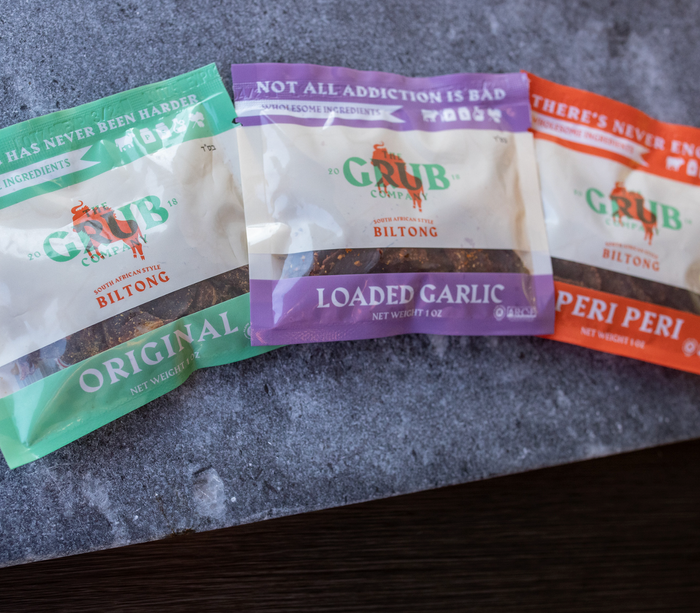
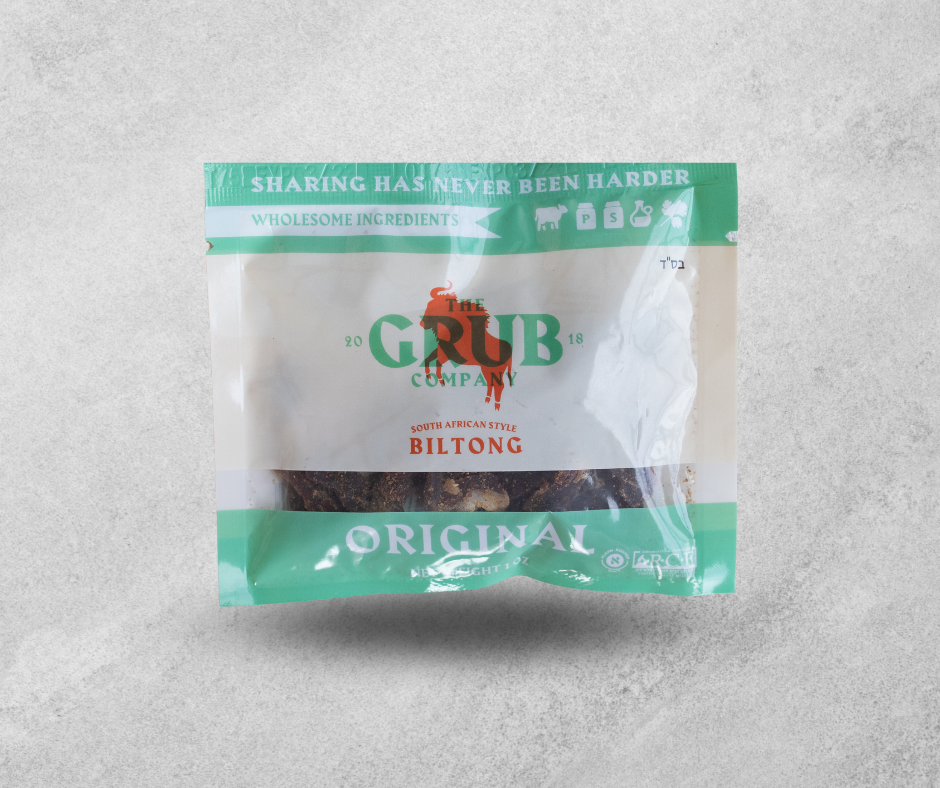
Sliced Biltong Mini's at $4.99: the format for a pocket
Mini's are the travel format we would reach for first, and the reason is portioning rather than any difference in the meat. A small sealed bag that gets eaten in one go never spends days half open in a warm environment. That is the single biggest thing you can do for the quality of what you eat on the fourth day of a trip.
They also fit places a larger bag does not. A jacket pocket, a seat back pocket, the lid pocket of a rucksack, a glove box. At $4.99 each you can buy several and distribute them across a bag rather than carrying one large unit that everything else has to be packed around.
The trade is cost per ounce and the fact that you will get more crumb per bag, because a smaller bag means a higher proportion of the contents is in contact with the edges where the crushing happens. For a trip we accept both. Portion control beats efficiency when the alternative is a large bag that has been open since Tuesday.
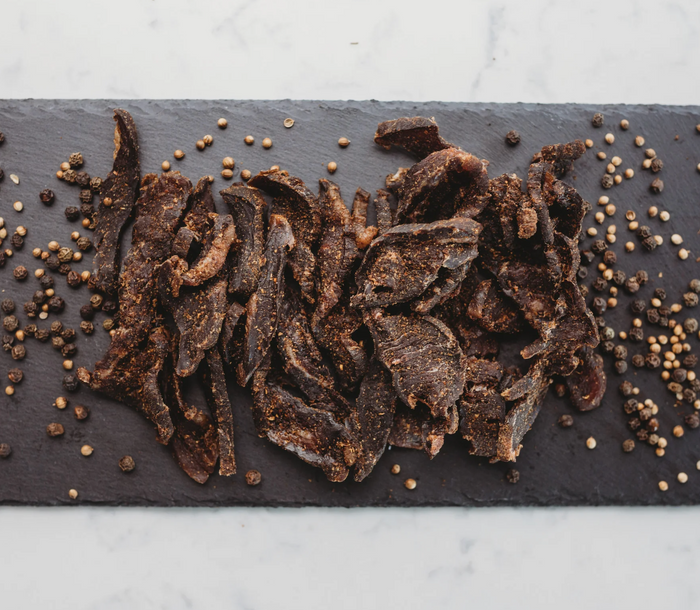
Sliced Biltong at $11.99: the shared bag
The standard sliced bag is the right unit when the biltong is for more than one person, or when the trip is long enough that a single small bag will not cover it. It is the format most people mean when they say they took biltong on vacation.
Its weakness on the road is the same as its strength at home. Once it is open it stays open, and on a trip that usually means it lives rolled down in a warm bag for several days. The meat does not go bad in that time, but it does keep drying, and the last of a bag opened on day one and finished on day five will be noticeably firmer than the first handful.
If that bothers you, the answer is a clip or a small resealable bag packed alongside it. If it does not bother you, and for a lot of people the drier later pieces are the better ones, then ignore the problem entirely and enjoy the change.
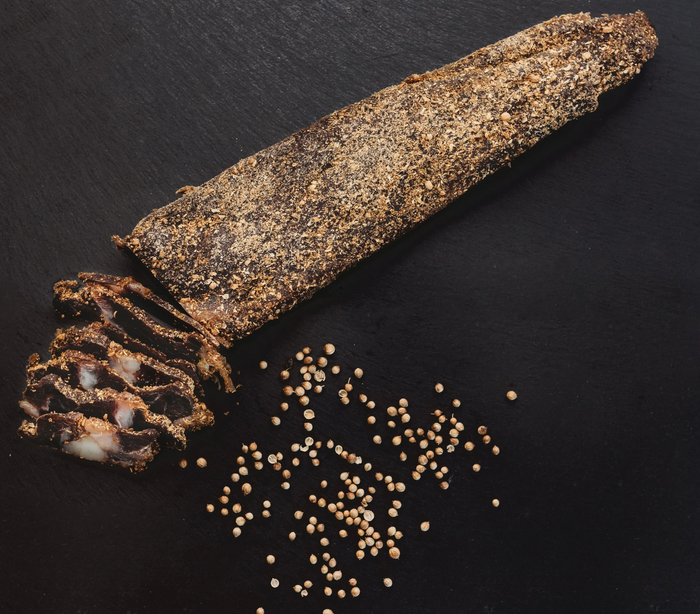
Biltong Slabs at $58.00: what a whole slab does on a journey
A slab is the most durable thing in our range for travel and the least convenient. It is dried whole and sliced later, so what you are carrying is one solid piece of meat with a hard exterior and no cut faces exposed to the air. Nothing crumbles. Nothing crushes. The outer surface is doing the job of a wrapper.
The catch is that at some point you have to cut it, and cutting a slab wants a sharp knife and a board. That is a fine proposition at a rented house, a family visit or a campsite with a table. It is a poor one on a train.
The other honest note is bulk. A slab is a real object with real weight, and $58.00 of it is not a thing you slip into a coat. Take a slab when you are traveling to somewhere, with a kitchen at the other end and people to feed. Take slices when you are traveling for hours and eating along the way.
The car is harder on biltong than the plane
People worry about flights and should worry about cars. A cabin is climate controlled for the whole journey and rarely goes above room temperature. A car parked in direct sun in summer reaches temperatures far above anything the meat will see in a cupboard, and it holds them for hours.
A bag left on a dashboard through an afternoon comes back warm, greasy on the surface, and further along its life than it was that morning. It is still safe. It is simply older than the calendar says. Do that three times over a week of driving and the difference is easy to taste.
The habit worth building is to treat the biltong the way you would treat anything else you care about in a car, which is to say take it with you or put it in the footwell rather than the parcel shelf. Shade and airflow cost nothing.
How to pack it, in practice
This is what we would actually do for a week away.
- Buy small formats for the journey itself and a larger one for the destination.
- Keep the day's supply in a pocket or a day bag, not in the suitcase.
- Double bag anything that will fly, so a failed seal is contained.
- Keep it away from anything with a strong smell, because dried meat picks up odor from a shared bag.
- Do not pack it against the outside wall of a case where it will be crushed by the case above.
- If you are bringing it as a gift, carry it separately and hand it over unopened.
That last one matters more than it sounds. A bag that arrives sealed reads as a present. A bag that arrives half eaten and full of crumb reads as leftovers, whatever it cost.
What to expect when you open it at the other end
A bag that has traveled well looks slightly different from a bag straight off the shelf, and none of the differences are faults. Expect a little more crumb at the bottom. Expect the pieces to have settled into a denser mass. Expect a faint sheen on fattier pieces if the trip involved any warmth at all.
The pieces themselves will usually be a touch firmer than they were, because a few days in transit is a few more days of slow drying, especially if the bag was opened. The taste will be a little more concentrated for the same reason. Whether that is better is a matter of preference and we are not going to pretend there is a right answer.
What you should not see is anything wet, anything slick to the touch, or any smell that reads as sour rather than beefy and spiced. Those are storage failures rather than travel failures, and they come from moisture getting in, not from the journey.
Short trips and long trips are different problems
For anything up to about two days, none of this needs thought. Put the bag in the car, eat the bag, done. The timeline is too short for heat or drying to change much of anything.
Past a week, the calculation shifts. Now the question is not whether the meat survives but whether you are eating it at its best on day seven, and the honest answer is that an open bag on day seven is a different product from the same bag on day one. Buying two smaller bags instead of one larger one solves that for a few dollars.
Past a month, you are no longer talking about travel. You are talking about storage, and the rules that apply are the ordinary ones: cool, dark, dry, and out of the sun.
Rules across borders are not ours to state
Carrying meat products across an international border is governed by the rules of the country you are entering, and those rules change, differ from place to place, and sometimes differ by the port of entry within one country. We are a meat business, not a customs authority, and we are not going to tell you what any particular country will or will not allow.
What we will say plainly is this: the rules vary, they change, and checking them before you fly is the traveler's job. The official border or agriculture authority for your destination is the only source worth relying on, and a five minute check on their own website before you pack is the whole of the work.
Domestic travel inside the United States is a different and far simpler matter, and biltong in a carry on is ordinary food. The care and thought go into the international leg.
Bottom line
Take Sliced Biltong Mini's at $4.99 for the journey and a larger format for wherever you are going. The small sealed bags are the ones that survive a trip in the state you bought them, because they get finished before the environment has a chance to work on them, and they fit in the places you actually want food to be. Sliced Biltong at $11.99 is the right call for a shared car or a longer stay. A slab at $58.00 is for a destination with a kitchen, not for a seat pocket.
Expect a little crumb, a little extra firmness, and a slight sheen if the trip was warm. Expect nothing worse than that. And if you are crossing a border, check that country's own rules yourself before you pack, because they vary and nobody else can answer it for you.
Frequently Asked Questions
Does biltong need to be refrigerated while traveling?
No. Biltong is air dried and salted, which pulls its water activity down far enough that it is stable at room temperature without any cooling. That is the whole point of the format and the reason it has been a road food for centuries. A cooler adds nothing except condensation risk, which is actively unhelpful, because moisture is the one thing you want kept away from dried meat. Keep the bag cool, dark and dry if you can, but a warm car is a quality question rather than a safety one.
Which biltong format travels best?
Sliced Biltong Mini's at $4.99 for the journey itself. The advantage is portioning rather than anything about the meat. A small sealed bag gets opened and finished in one go, so it never spends four days rolled down in a warm bag slowly drying out. They also fit a jacket pocket or a seat back pocket, and at that price you can spread several through your luggage instead of packing around one large bag. For a destination with a kitchen and people to feed, a slab at $58.00 is the more durable choice.
Will a sealed bag of biltong burst on a plane?
It will inflate, and a bag with a weak seal or a pinhole can give way. Cabin air is thinner than sea level air, so the air trapped inside the bag pushes outward and the bag balloons, exactly the way a bag of chips does. The meat itself is unaffected because dried beef contains almost no free gas and does not expand. Put the bag inside a second bag, or open it before takeoff so there is no pressure difference for it to fight.
Can I bring biltong into another country?
That depends entirely on the country you are entering, and we are not going to guess on your behalf. Rules on carrying meat products across a border vary from country to country, change over time, and can even differ by port of entry. Check the official border or agriculture authority for your destination before you pack. It takes five minutes on their own website and it is the traveler's job, not the seller's. Travel within the United States is a much simpler matter and biltong is ordinary carry on food.
Why is there so much crumb at the bottom of the bag after a trip?
Vibration. Hours in a car or a hold shake the slices against each other and against the bag, and the edges shed fine particles. Compression from luggage stacked above makes it worse. None of it changes how the meat eats, and the crumb at the bottom is genuinely useful over eggs or a baked potato rather than something to throw away. If presentation matters, because the bag is a gift, carry thicker pieces or a whole slab, which has nothing to break off.
Does biltong go bad in a hot car?
Not quickly, but it ages faster. Warmth speeds up the chemical changes that eventually make dried meat taste flat and stale, so a bag on a dashboard in summer is working through its timeline at several times the normal rate. Warmth also softens beef fat, which then migrates out of the lean, coats the surface and sets in the wrong place when the bag cools. Lean pieces handle heat far better than fatty ones. Keep the bag in the footwell or take it with you.
How much biltong should I take for a week away?
Split it rather than buying one large bag. Two or three Sliced Biltong Mini's at $4.99 cover the travel days, and a Sliced Biltong at $11.99 covers the stay. The reason is not cost, it is that a bag opened on day one and finished on day seven has kept drying the whole time, so the last of it is firmer and more concentrated than the first handful. Some people prefer those later pieces. Buying two smaller bags gives you the choice.