What Happens to Biltong in a Hot Car, a Fridge, and a Sealed Bag
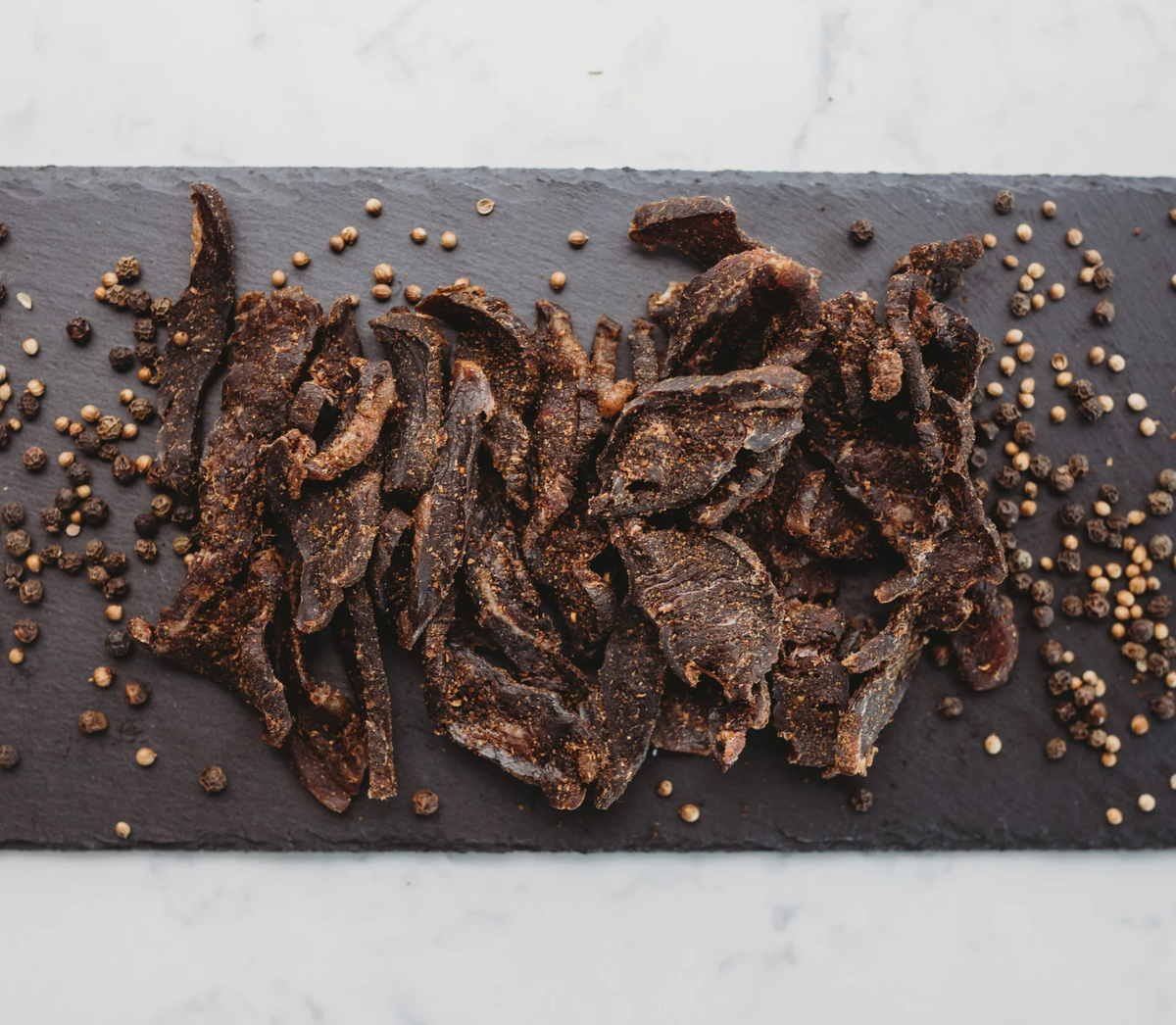
A hot car dries biltong out and makes it hard. A fridge is more humid than most people assume and can leave the surface damp. A sealed bag traps whatever moisture is already there and spreads it around until every piece matches. Three very different outcomes, and all three come from one mechanism.
That mechanism is moisture moving toward equilibrium. Water always travels from wherever it is more concentrated toward wherever it is less concentrated, and it keeps going until the two sides balance. A piece of dried meat sitting in air is in a slow negotiation with that air, and whichever side has more available water gives some up to the other. Everything below is that one sentence applied to three situations.
Equilibrium, in plain terms
Think of the meat and the air around it as two containers that are allowed to trade water. If the air is drier than the meat, water leaves the meat. If the air is wetter than the meat, water moves into the meat. The trade continues until neither side has an advantage, and then it stops, and the piece sits there unchanged until something about the air changes.
The number that decides which direction the trade runs is relative humidity, not temperature. Temperature matters enormously, but it matters because of what it does to humidity and to speed, not on its own. Warm air can hold far more water than cold air, so the same amount of actual water makes warm air feel dry and cold air feel damp.
That is the piece of physics that makes a hot car and a fridge behave in opposite ways even though both are just boxes with air in them. One is warm and therefore thirsty. The other is cold and therefore saturated. The meat responds to what the air wants, and the air wants opposite things in the two cases.
The hot car: thirsty air, and a lot of it
A car parked in the sun becomes an oven with very dry air in it. The temperature climbs well above what the outside is doing, and as it climbs, the air's capacity to hold water climbs with it. The actual amount of water in that air has not changed, so the relative humidity falls through the floor.
Now put a piece of biltong in there. The air is far drier than the meat, so water leaves the meat, and it leaves fast, because heat speeds up every part of that transfer. A few hours in a hot car can do to a piece of dried meat what a couple of weeks on a shelf would have done more gently.
The result is a piece that is noticeably harder, darker at the surface, and smaller. It is not spoiled. Nothing about heat and dry air makes dried meat unsafe on its own, and in fact it moves in the safer direction rather than the riskier one. What it does is take the piece past where you wanted it, and that is not reversible in any way that improves it.
What car dried biltong actually tastes like
Firmer, saltier and more concentrated, because everything that was not water is now a larger fraction of what is left. The salt and the spice have not increased. The thing they were dissolved in has decreased, so they read stronger on the tongue.
Texture is where the loss really shows. A well made piece has a specific yield to it, a resistance and then a give, and hard drying removes the give. You end up chewing rather than eating. A thin slice suffers more than a thick slab does, because a slice had no reserve of interior moisture to draw on in the first place.
Our honest position is that this is a downgrade rather than a disaster. If a bag of Sliced Biltong at $11.99 spent an afternoon in a car, eat it, and eat it soon, and accept that it is a firmer version of itself. Do not treat it as a lesson about the product. Treat it as a lesson about the car.
Can you bring a hard piece back?
Partly, and only in one way that is worth doing. Sealing hard pieces in a bag with softer pieces will even the batch out, because the softer meat gives up water to the drier meat until they meet in the middle. It works, it takes a few days, and it is the only rehydration method we would suggest.
What we would not do is add water directly, or put a damp paper towel in the bag, or anything else that introduces liquid. Free water on the surface of a dried meat is exactly the condition the drying was meant to remove, and you will get a soggy exterior over a still hard interior rather than a piece that has genuinely relaxed.
The realistic answer is to accept the piece as it is and adjust how you eat it. Harder biltong is better sliced thinner, better in cooking, and better with something soft alongside it than eaten in the same lumps you would have eaten it in before.
The fridge: cold, and wetter than you think
People put biltong in the fridge because the fridge is where food goes. It is a reasonable instinct and it is usually the wrong call, for a reason that has nothing to do with the cold.
A domestic fridge runs at a high relative humidity. It has to, because it is full of open water in the form of vegetables and cooked food and half covered dishes, and the air inside it is cold and therefore cannot hold much water before it counts as saturated. That combination makes the inside of a fridge a damp environment even though everything in it feels dry to the touch.
Put dried meat into damp air and the trade runs backward. Water moves from the air into the meat, starting at the surface. The piece does not become wet in any dramatic way, but the outer layer softens, the matte finish turns to a slight gloss, and the surface goes tacky. That surface moisture is the beginning of every storage problem dried meat has, because it is the one condition the drying was designed to prevent.
Why the fridge feels right and is usually not
Cold does slow things down. Enzyme activity slows, fat reacts with oxygen more slowly, and if the only variable were temperature the fridge would win easily. The problem is that the fridge changes two variables at once, and the humidity change works against you harder than the temperature change works for you.
There is a second problem that catches people out. A cold piece taken into a warm room pulls water out of that room's air onto its own surface, exactly the way a cold glass fogs. If the piece is inside a sealed bag when you do that, the water condenses on the inside of the bag and on the meat, and now you have liquid water sitting on dried beef in a closed container.
If you do refrigerate, and there are cases below where you should, take the bag out and let it come to room temperature before opening it. That one habit removes most of the risk in the whole practice.
The freezer, briefly
Freezing works better than refrigerating for long holds, because a freezer is much colder and the meat is not sitting in the damp air of a fridge for weeks. It genuinely slows the changes that eventually limit how long a piece stays good.
The same condensation trap applies, and more sharply. A frozen piece brought straight into a warm kitchen will sweat. Thaw it sealed, slowly, and only open the bag once it has reached room temperature. Do it that way and freezing costs you very little. Do it the other way and you have undone the point of freezing in about ten minutes.
The sealed bag: nothing leaves, so everything shuffles
A sealed bag is the third case and it behaves differently from both of the others, because there is no outside to trade with. The only water available is the water already in the bag, distributed between the pieces and the small volume of air around them. Equilibrium still happens. It just happens internally.
What that means in practice is that a sealed bag averages its contents. Wetter pieces give up water, drier pieces take it on, and given a few days everything in the bag converges toward the same condition. Nothing gets drier overall and nothing gets wetter overall. The distribution just flattens.
That is genuinely useful, and it is the single most practical trick in this article. If a bag has some pieces you find too firm and some you find too soft, seal it and leave it alone for three or four days. It will even itself out, and the result will be closer to the middle than either extreme was.
When a sealed bag is the wrong choice
Sealing works when the average moisture in the bag is where you want it. It fails when the average is too high, because then the sealing traps the problem instead of solving it.
Two situations to watch:
- A piece that was warm when it went in. As it cools, the air in the bag cools with it, and cool air holds less water, so the excess lands on the meat as condensation.
- A batch that includes one distinctly soft piece. That piece will donate water to every other piece in the bag, and the whole bag ends up damper than any of the drier pieces started out.
The fix for both is the same and it is unglamorous. Open the bag, let everything sit in moving room air until the surfaces read matte again, then reseal. Air is free and it is the tool the whole product was built around.
Why format changes the answer
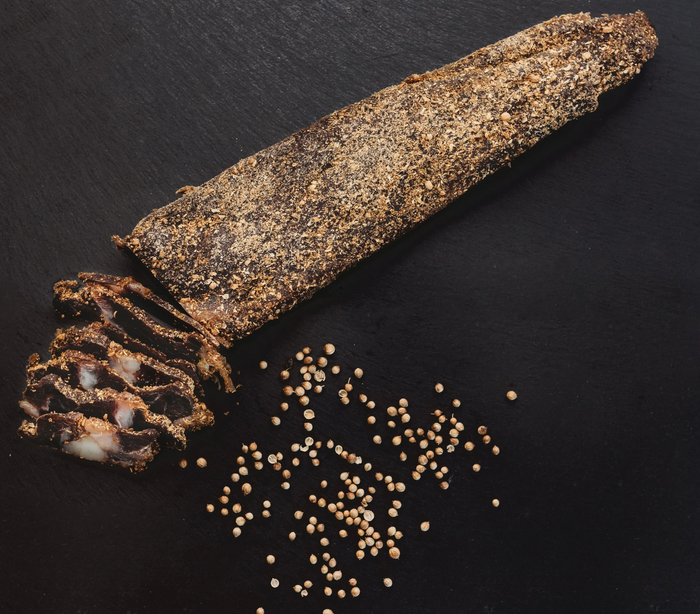
None of this lands the same way on every product, because surface area decides how fast a piece can trade water with its surroundings. A slab has a small surface relative to its mass and a dried outer shell, so it responds slowly to everything. Our Biltong Slabs at $58.00 will shrug off an afternoon that would ruin a bag of slices.
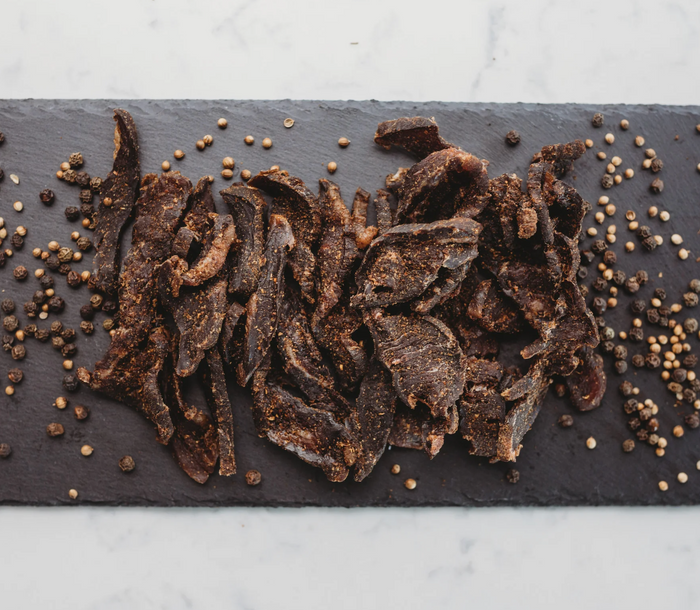
Sliced product is the opposite. Every slice is nearly all surface, so the trade happens quickly in both directions. Sliced Biltong at $11.99 and the Sliced Biltong Mini's at $4.99 both dry out faster in dry air and take moisture on faster in damp air than a slab does. Bulk Biltong, 1LB of Sliced Biltong, at $58.00 has the same sensitivity, with the added factor that a pound takes longer to eat, so it spends more of its life in whatever conditions you keep it in.
The rule that falls out of that is simple. The more surface a product has, the more its storage matters, and the more worth it is to take the extra minute.
What we would actually do
Concrete answers, since the mechanism is only useful if it turns into decisions.
- Everyday storage. A cool, dark cupboard in a room at normal humidity, in a resealable bag with most of the air pressed out. This is the right answer for the large majority of people.
- A very humid house. The fridge becomes defensible, sealed well, and always brought to room temperature before opening.
- A car, a bag or a desk in summer. Buy the smaller pack and eat it sooner rather than trying to store well in a place that will not cooperate.
- Longer holds. Freeze it, sealed, and thaw it sealed and slowly.
- An uneven bag. Seal it and wait three or four days before deciding you dislike it.
Notice that four of those five are about controlling air rather than controlling temperature. That is not an accident. Air is what did the work in the drying room and air is what keeps doing the work afterward.
Bottom line
One mechanism, three outcomes. A hot car surrounds the meat with thirsty air and pulls water out fast, leaving something harder and more concentrated than you bought. A fridge surrounds it with damp air and pushes water back in at the surface, leaving something tacky. A sealed bag gives the water nowhere to go, so it redistributes until every piece in the bag matches.
Keep it cool, keep it dark, keep it sealed, and keep it in a room rather than a fridge unless your house is genuinely humid. When something has gone wrong, ask which way the water was traveling and the fix usually names itself.
Frequently Asked Questions
Is biltong ruined if it was left in a hot car?
Almost certainly not ruined, just changed. A car in the sun becomes very hot and very dry, and dry air pulls water out of dried meat quickly. What you get back is a firmer, darker, smaller piece that tastes saltier and more concentrated, because the salt and spice did not increase but the water they were dissolved in did decrease. Heat and dry air move dried meat in the safer direction rather than the riskier one. Eat it soon, slice it thinner than you otherwise would, and treat it as a lesson about the car.
Should I keep biltong in the fridge?
Usually not. A domestic fridge runs at a high relative humidity because it is full of open water in the form of vegetables and covered dishes, and cold air saturates easily. Dried meat put into damp air takes water back on at the surface, which turns the matte finish glossy and slightly tacky. Surface moisture is the condition the drying was meant to remove. A cool, dark cupboard in a normally humid room is the better default. The fridge becomes defensible if your house is genuinely humid, as long as you bring the bag to room temperature before opening it.
Why does my biltong sweat when I take it out of the fridge?
The same reason a cold glass fogs on a warm day. A cold surface pulls water out of the warmer air around it, and that water condenses on the surface. If the piece is inside a sealed bag when it warms up, the water lands on the inside of the bag and on the meat, leaving liquid water on dried beef in a closed container. The habit that fixes it is to take the sealed bag out and let it reach room temperature before you open it. That single step removes most of the risk in refrigerating dried meat.
What does a sealed bag actually do to biltong?
It averages the contents. Nothing can leave and nothing can enter, so the only water available is the water already in the bag, and it redistributes between the pieces until they all match. Wetter pieces give some up. Drier pieces take some on. Overall the bag gets neither wetter nor drier, the distribution just flattens. That makes sealing the best trick available for an uneven bag. Seal it, leave it three or four days, and it will land closer to the middle than either extreme started.
Can I soften biltong that has gone too hard?
Only one method is worth doing. Seal the hard pieces in a bag with softer pieces and leave them for a few days, and the softer meat will give up water to the drier meat until they meet in the middle. What we would not do is add water directly, or put a damp paper towel in the bag. Free water on the surface is exactly what the drying removed, and it produces a soggy exterior over a still hard interior rather than a piece that has genuinely relaxed. Otherwise, slice it thinner and accept it.
Is freezing biltong a good idea?
For long holds it works better than refrigerating, because a freezer is far colder and the meat is not sitting in the damp air of a fridge for weeks. It genuinely slows the changes that eventually limit how long a piece stays good. The condensation trap applies more sharply though. A frozen piece brought straight into a warm kitchen will sweat heavily. Thaw it sealed and slowly, and open the bag only once it has reached room temperature. Done that way, freezing costs you very little.
Does storage matter more for slices than for a slab?
Yes, and the reason is surface area. A slab has a small surface relative to its mass plus a dried outer shell, so it trades moisture with its surroundings slowly and shrugs off conditions that would change a bag of slices in an afternoon. Every slice is nearly all surface, so it dries out faster in dry air and takes moisture on faster in damp air. A pound of slices has the same sensitivity with the added factor that it takes longer to eat, so it spends more of its life in whatever conditions you keep it in.