Hurricane Food List: What a Florida Kitchen Keeps Before the Storm
A hurricane food list is shelf-stable food you can eat with no power, no water to spare and no stove: canned protein, dry staples, a few ready-to-eat snacks and the water to go with them. We make certified Glatt Kosher biltong in Florida, so we shop this list every June. Dried meat has a place on it, but it is a part of the kit, not the whole kit.
One thing first. Water and official guidance come before any food. Store water, follow your county's evacuation and safety instructions, and treat everything below as the second layer. We are a snack maker, not an emergency agency, so check your local emergency management office for what they want in your kit.
Plan around three problems, not a shopping list
Most hurricane lists fail the same way. They are written as a pile of products. A storm is three separate problems, and each one needs different food.
- No refrigeration. The fridge becomes a warm box within hours of an outage. Anything that needs it is a plan for the first day only.
- No cooking. No power means no stove, microwave or kettle. Gas may work, but do not build the plan around it.
- No water to waste. Pasta, rice and anything that needs boiling or rinsing spends water you may need to drink.
So the best storm food is already cooked, already sealed and needs nothing added. That is a short list, and most of it is boring. That is fine. You are not trying to eat well for four days. You are trying to eat enough, safely, with the least effort.
The core list: what a Florida kitchen should hold
Build it in layers. Fill the first two before you think about treats.
Protein you can open and eat
- Canned tuna, salmon, chicken or sardines, with pull-tab lids if you can find them. A can opener is a tool people forget until the night they need it. Buy a manual one and tape it to the box.
- Canned beans and chickpeas, eaten cold. Not exciting, but they work.
- Nut butters in jars. They keep, they are dense in calories, and they need a spoon at most. Check first that no one in the house has a nut allergy.
- Dried meat. Biltong and jerky are sealed, ready to eat and compact. More on this below.
Dry staples
- Crackers, rice cakes and plain granola or cereal bars.
- Dry cereal that works without milk, or shelf-stable boxed milk if you want it.
- Dried fruit and trail mix, again with the allergy check.
- Shelf-stable bread or tortillas for the first day or two, before they go stale.
Fruit and vegetables that survive
- Canned fruit in juice, applesauce cups and fruit pouches.
- Canned vegetables you can eat cold, such as corn and green beans.
- Whole fruit that keeps without a fridge, like apples and oranges, for the first few days.
The small things that decide whether it works
- A manual can opener, paper plates, plastic forks and spoons, and a roll of trash bags. Washing dishes with no water is not a task you want.
- Salt, a few spice packets and honey or jam for morale.
- Formula, baby food, pet food and any special-diet food. These are the items people forget, and they are the ones you cannot improvise.
- Coolers and ice for the first day only, aimed at whatever is already in the fridge.
Where biltong fits, and where it does not
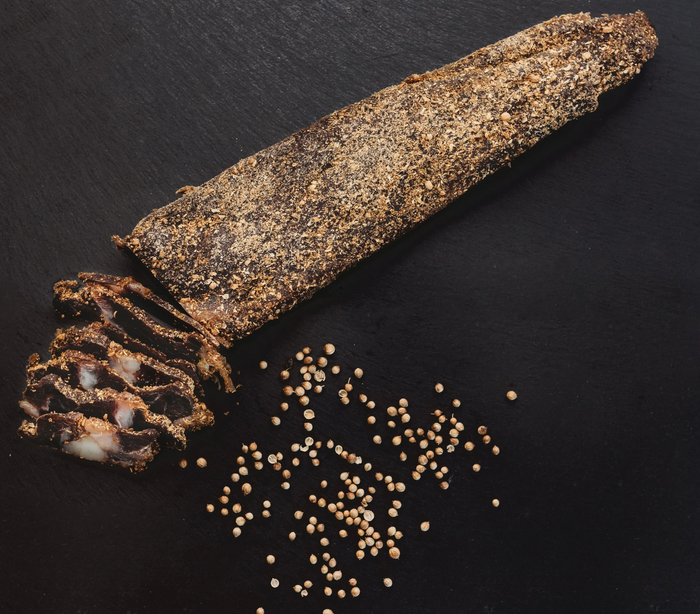
Biltong is air-dried beef, cured with vinegar, salt and spices. It is ready to eat as it comes. It needs no refrigeration while sealed, no utensils and no water. It is also light, which matters if you leave in a hurry and each bag counts.
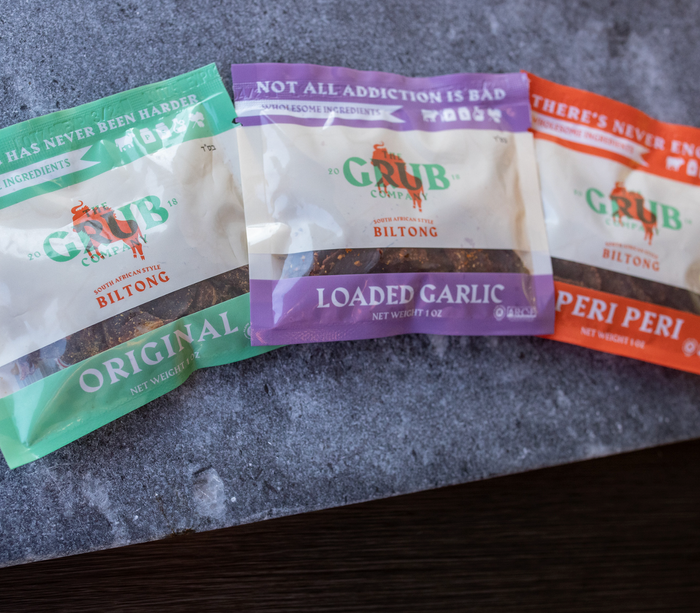
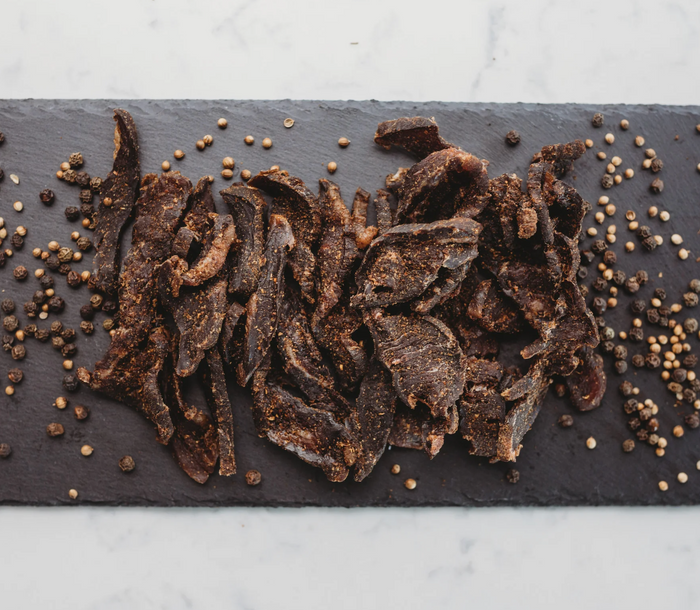
Our Sliced Biltong comes in 3 oz bags in Original, Peri Peri and Loaded Garlic. It is sliced already, so there is no knife and no cutting board. If you are stocking up for a family, one bag per person per day of the storm is a sensible sizing, and it is simple to count. We wrote about how long an opened bag really lasts if you want to plan for a bag you do not finish in one sitting.
Here is the honest part. Dried meat is salty and it is dense. It is a good protein snack. It is not a meal on its own, and it is not hydration. If you eat a lot of it and drink little, you will feel it. That is one more reason water comes first. In a storm kit, think of biltong as the protein layer you can eat with crackers or fruit, not the main course.
Biltong is also the wrong pick if you are not a fan of a firm, savory, chewy snack and nobody else in the house is either. In that case, buy canned protein and spend the difference on more water. A kit that is never eaten is a bad kit.
Not sure which flavor the family will actually eat? Start with the Biltong Sampler Pack. It has one mini bag each of Original, Peri Peri and Loaded Garlic. Do the tasting in July, not in the dark. Original suits everyone. Peri Peri has real heat, which is better discovered at the kitchen table than in a hallway with a flashlight.
If you prefer a sweeter jerky, our Meat Candy is cooked and glazed rather than air-dried. The same rule applies: check the label for ingredients that matter to your household. For a closer comparison of the two snacks, see our kosher jerky collection and the biltong shelf on Buy Biltong Online.
If you keep kosher, plan for it on purpose
Storm shopping is the worst time to discover that the shelter's food, the neighbor's offer or the only open store is not something your household can eat. If you keep kosher, build the kit around what you already trust.
- Buy certified food in advance. Do it before the storm is named, while shelves are full. Look for a real kosher symbol on the package, not "kosher-style" or "made with kosher salt."
- Keep meat and dairy separate, even in the kit. Keep a short stack of disposable plates and utensils for each, and label the boxes. Wait between meat and dairy according to your family's custom.
- Know what is meat and what is pareve. Canned fish, fruit, vegetables and most crackers are easy. Meat snacks are meat. Our biltong and jerky are certified Glatt Kosher, and they are made in Florida in small batches from grass-fed beef.
- Think about Shabbos and Yom Tov. Storms do not check the calendar. A kit of food that needs no cooking works on Shabbos too. If a storm lands on a day when you cannot use electricity or cook, ask your rabbi what applies to your situation, especially if you are being asked to evacuate.
- Pesach is its own question. If a storm lands near Passover, check each item for a Pesach certification. Do not assume a year-round certification covers it.
If you are evacuating, call ahead to wherever you are going and ask what you can bring, what the kitchen is like and whether there is a place to eat. Pack the food you trust. Shelf-stable and sealed travels best.
How much to buy, and when
Official guidance changes, so check your county for the current number of days they ask households to prepare for. Our rule is simple: plan for more days than you think and buy for the people and pets in the house, not the ones you wish were.
A workable rhythm:
- In May, before the season: buy the non-perishables. Prices are normal, shelves are full and nobody is panicking.
- When a storm is named and heading your way: top off only what you are missing. The empty shelf at the grocery store is a warning, not a plan.
- The day before landfall: fill the cooler, charge the phones and put the can opener where you can find it.
- After the season: eat what you stocked and rotate it. Our storage guide covers how to keep biltong and jerky at their best in a hot, humid state.
Heat and humidity matter. Florida garages and car trunks get hot, and a kit left in one for months is not the same kit you packed. Keep the food indoors, in a cool, dry closet, away from the stove and the sun. Check dates on everything, ours included. Rotate each year.
Food safety after the power goes out
This is where people get hurt, so be conservative. When the power fails, keep the fridge and freezer doors closed as much as you can. A full freezer holds its cold longer than a half-empty one. Past that, follow the guidance from your state's health or agriculture department on what to keep and what to throw out. We are not going to give you a number of hours here. We are a food maker, not your health department.
The rule most agencies share is simple: when in doubt, throw it out. Do not taste-test meat, dairy or leftovers to see if they are fine. The shelf-stable food in your kit is there so you do not have to make that call.
The bottom line
Store water first. Then build the kit around food that is cooked, sealed and needs nothing: canned protein, dry staples, shelf-stable fruit and a few snacks you will actually eat. Biltong is a good addition, light, salty and ready to eat, but it is a layer, not the plan. If you keep kosher, buy certified food now, not in the storm. Taste the snacks in July, rotate the kit every year, and follow your county's guidance over anything a food company tells you, including us.
Frequently Asked Questions
What food should I have before a hurricane?
Shelf-stable food you can eat with no power, no stove and little water: canned protein, canned fruit and vegetables, crackers, nut butter if no one is allergic, dried snacks and any special-diet, baby or pet food. Add a manual can opener, plates and utensils. Water comes first, and your county's emergency office has the official guidance.
Is biltong good to keep in a hurricane kit?
It is a good protein snack for one because it is sealed, ready to eat and needs no refrigeration while sealed. It is not a full meal and it is salty, so pair it with water, crackers or fruit. Treat it as one part of a kit.
What food is safe to eat when the power goes out?
Sealed, shelf-stable food is the safest choice. For refrigerated and frozen food, follow the guidance from your state's health or agriculture department. Keep the doors closed, and when in doubt, throw it out.
Do I need to refrigerate biltong?
Not while the bag is sealed. Once you open a bag, keep it closed and store it somewhere cool and dry. Our guide to opened-bag shelf life goes into the details.
How do I keep a hurricane kit kosher?
Buy certified food ahead of time with a real kosher symbol on the package. Keep meat and dairy separate, with their own disposable plates and utensils, and wait between them according to your family's custom. For any question about Shabbos, Yom Tov or an evacuation, ask your rabbi.
When should I buy hurricane food?
Before the season starts, when shelves are full and nobody is rushing. Top off what you are missing when a storm is named. Then rotate the food each year so nothing sits past its date.
Where should I store emergency food in Florida?
Indoors, in a cool, dry closet away from heat, sun and humidity. Garages and car trunks get hot enough to shorten the life of packaged food. Check dates on everything at the start of each season.