Why Biltong Prices Range From $4.99 to $58.00, and What Changes Across That Range
The spread from $4.99 to $58.00 across our catalog is mostly quantity, and the rest of it is format and labor. Nothing in that range is a different grade of meat pretending to be a different product. It is the same craft sold in six different amounts and shapes, and once you understand the yield problem behind dried beef, the top of the range stops looking strange.
Ready to try it? Buy Glatt Kosher biltong online. Made in Florida, free US shipping on orders over $50.
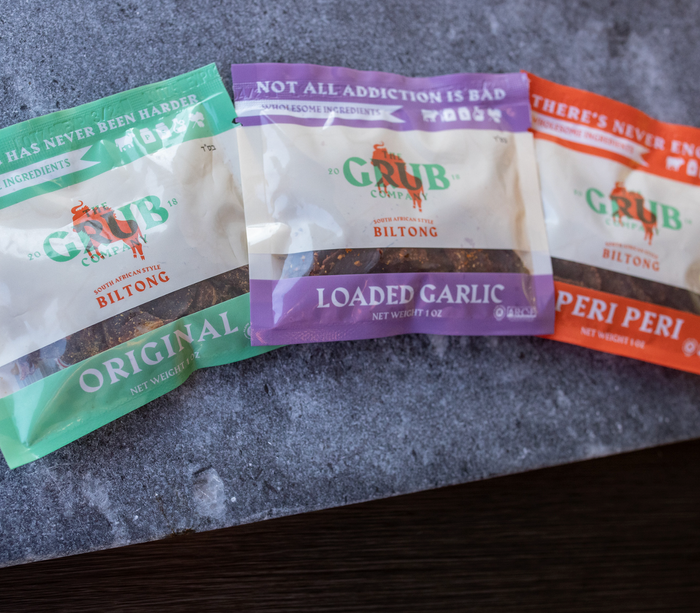
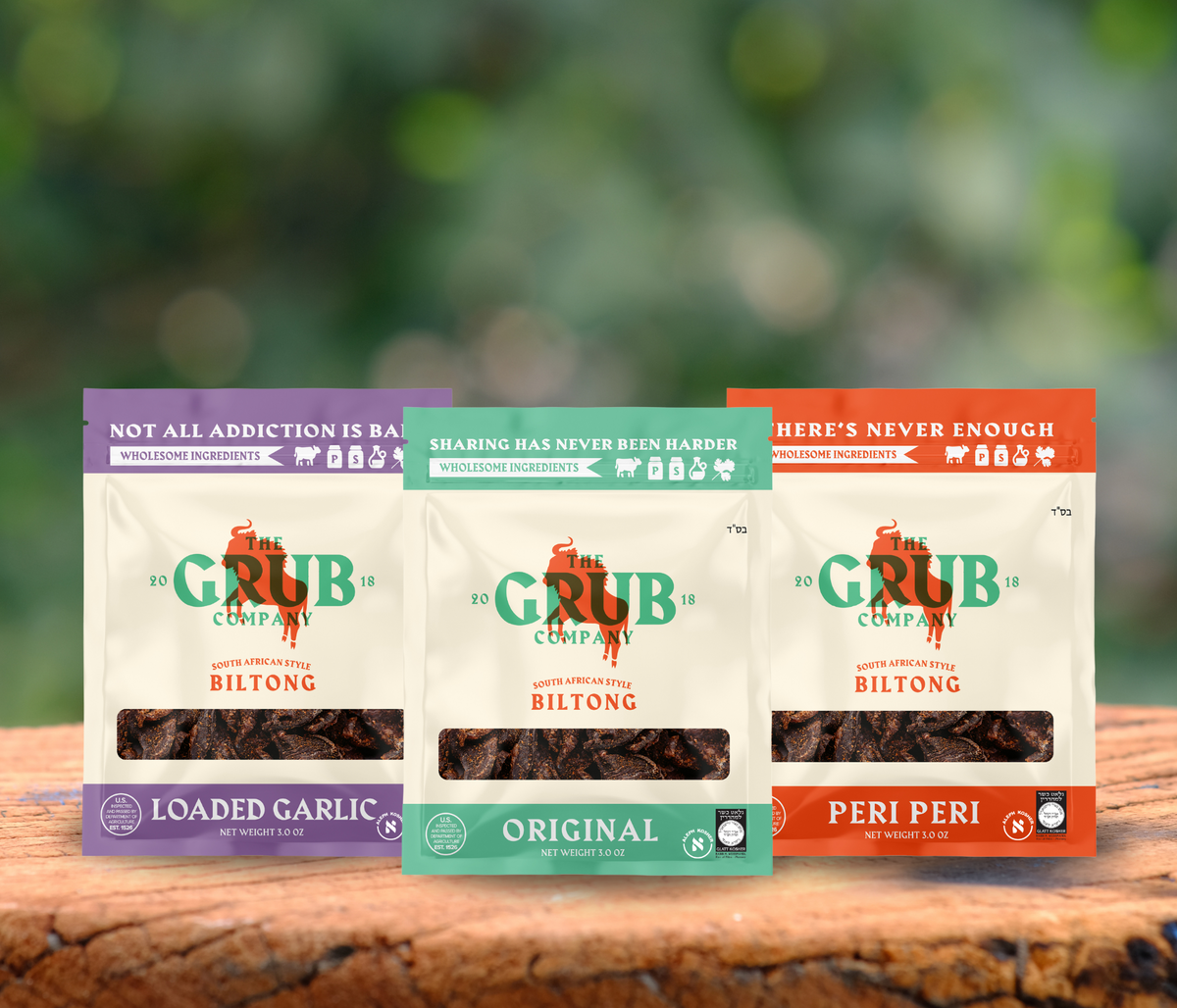
Here is the whole list, and every price in this article comes from it. Sliced Biltong Mini's at $4.99. Meat Candy at $7.99. Sliced Biltong at $11.99. The Biltong Sampler Pack at $12.99. Biltong Slabs at $58.00. Bulk Biltong, 1LB of Sliced Biltong, at $58.00. Six products, roughly a twelvefold spread, and three things moving underneath it.
The yield problem is the single biggest fact about dried meat pricing
Air drying removes water, and water is most of what raw beef weighs. A finished pound of biltong did not start as a pound of anything. It started as a considerably larger quantity of raw muscle that was trimmed, washed, spiced, hung and then allowed to lose the majority of its weight to the air over days.
That single fact reframes every price on the list. When you buy dried beef by weight, you are buying the concentrate rather than the ingredient. The water that left was never something you were going to eat, and it took a lot of the original purchase price with it when it went. Nobody prices the water. Everybody pays for it.
It also explains why dried meat looks expensive next to fresh beef at first glance and stops looking expensive the moment you compare like with like. A given weight of biltong and a much larger weight of raw steak represent a similar amount of actual beef. The comparison people run in their heads, price per pound against price per pound, is the wrong comparison, and it is the reason the top of the range needs explaining at all.
Quantity is the first axis and it explains most of the spread
Set format aside for a moment and just look at amounts. Sliced Biltong Mini's at $4.99 is the smallest amount we sell. Sliced Biltong at $11.99 is a regular bag. Bulk Biltong, 1LB of Sliced Biltong, at $58.00 is exactly what its name says, a full pound of the same sliced product.
Those three are the same thing in three sizes, and the price ladder between them behaves the way price ladders normally do. The smallest unit costs the most per unit of meat, because the bag, the label, the fill and the shipping do not shrink in proportion to the contents. The pound costs the least per unit of meat for exactly the inverse reason.
If nothing else in this article stuck, that would be enough to shop well. If you already know you like it, buy larger. If you do not, buy smaller and pay for the privilege of finding out cheaply. There is nothing clever hidden in the middle of that ladder.
Format is the second axis, and a slab is not a slice
Biltong Slabs at $58.00 and Bulk Biltong at $58.00 land on the same number by different routes, which is the most interesting coincidence in the catalog. They are not the same purchase and they should not be treated as interchangeable just because the totals match.
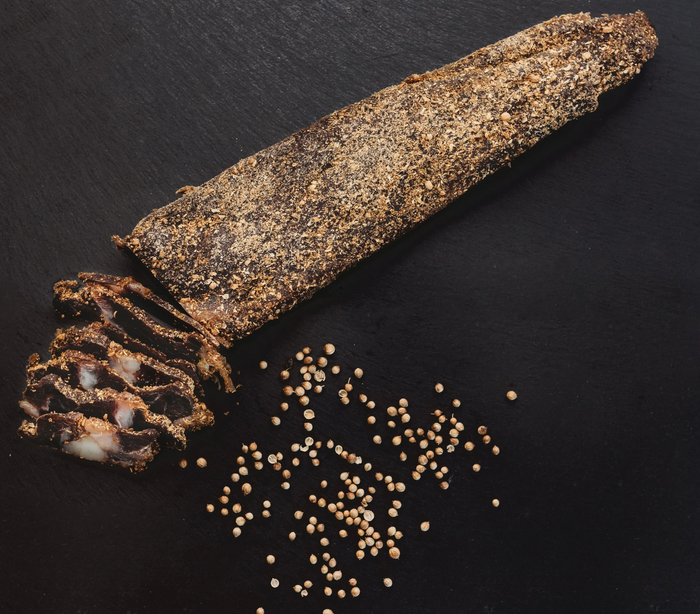
A slab is dried whole and sliced later, by you, whenever you feel like it. That means the meat has a genuine protected interior the entire time it sits in your kitchen. The dried outer layer acts as its own shell, and what is behind that shell stays softer, redder and largely shielded from the air. A slab keeps developing in a way a slice cannot, because a slice has no inside left.
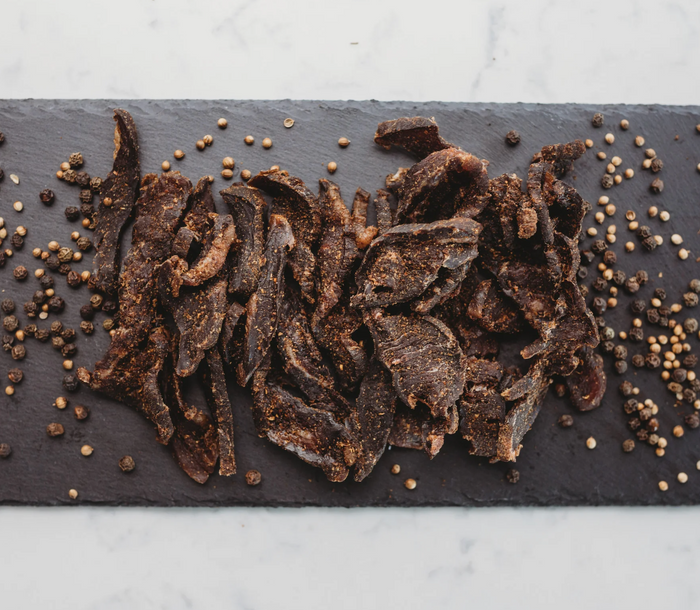
Sliced product is the opposite bargain. Cutting multiplies the exposed surface enormously, and every one of those new faces is open to the air from the moment it is made. That is not a defect, it is the point. You get evenness, consistency from piece to piece, and something you can eat by the handful without a board and a knife. What you give up is the protected interior and the slower clock that comes with it.
Labor is the third axis, and it hides inside format
The work that separates a slab from a bag of slices is not glamorous but it is real. Slicing dried meat well is harder than slicing raw meat, because the material fights back. It is firm, the grain matters, thickness has to stay consistent or the bag reads as careless, and every cut face has to be handled without smearing fat across it.
Then the sliced product has to be sorted, weighed and packed, and it has to be packed faster and more carefully than a slab does, because every new surface starts changing the moment it exists. A slab goes into a bag as one object. A pound of slices is dozens of objects that each need to arrive looking like the others.
So when a pound of slices carries the same price as a slab, part of that is the slicing and the handling, and part of it is that you are being handed a finished thing rather than the raw material for one. Neither is a rip off. They are two different amounts of somebody else's time.
Sliced Biltong Mini's at $4.99, the trial tier
The mini bag exists so that trying this costs less than a sandwich. It is the highest cost per unit of meat in the catalog and it is meant to be. Nobody should stock a pantry out of mini bags, and we would say the same thing to anyone who asked.
Where it earns its place is first purchases, a single serving carried in a pocket, and the specific case where you want a fixed portion rather than an open bag you will keep dipping into. That last one matters more than it sounds. A sealed small bag is a portion decision made in advance, and for some people that is worth the premium on its own.
Meat Candy at $7.99 is a different product, not a cheaper biltong
Meat Candy sits in the list at $7.99 and it is our jerky product rather than a biltong. Jerky and biltong are made differently, and we are going to spend exactly one paragraph on that here because the site already has plenty on it. Biltong is air dried and never heated. Jerky goes through heat. That single difference changes the texture, the flavor direction and the whole eating experience, and it means comparing their prices to each other is comparing two categories rather than two grades.
The reason it matters for pricing is that people see the lower number and read it as the budget option in a single ladder. It is not on that ladder. If you want biltong, the $7.99 line is not the cheap way to get it, and the mini bag at $4.99 is closer to what you are actually after.
The Biltong Sampler Pack at $12.99 buys information
The sampler sits a dollar above a regular bag of Sliced Biltong and it does a different job. What you are paying for is the ability to compare, which is the only reliable way to find out what you like in a category where the vocabulary is unfamiliar and every description sounds appealing.
We would recommend it to almost anyone buying for the first time, and it is the single best answer to somebody who wants to buy a gift for a person whose preferences they do not know. What it is not is the cheapest route to a given quantity of meat. Sampling costs a little more per unit for the same reason small bags do, and the extra dollar over a standard bag is not really the price of the sampling. The smaller portions inside it are.
Sliced Biltong at $11.99 is the anchor of the whole catalog
Most catalogs have one product that everything else is measured against, and ours is the standard bag of Sliced Biltong at $11.99. It is the normal purchase. It is the one to buy if you already know you like this and you are not stocking up.
Its value case is straightforward. It costs meaningfully less per unit of meat than the mini bag, it requires nothing of you, and it is small enough that you will finish it while it is at its best rather than watching it firm up in the back of a cupboard for a month. That last point is underrated. Buying more than you will eat promptly is a false economy in any product that changes over time, and dried meat changes over time.
Where the two $58.00 products actually differ
Both cost the same and they suit different people, so it is worth being plain about which is which.
- Buy Bulk Biltong, 1LB of Sliced Biltong, if you are feeding a group, restocking something you already know you like, or you want zero work between the bag and your hand.
- Buy Biltong Slabs if you want to control thickness, if you like a softer interior, if you want the product to hold up better over a longer period, or if the cutting is part of the pleasure rather than a chore.
- Buy the slab if you are serving people, because slicing to order in front of them is a genuinely better experience than tipping out a bag.
- Buy the pound of slices if the biltong is going to live in a desk drawer or a gym bag and get eaten in handfuls.
Neither one is the connoisseur choice and neither is the lazy choice. They are answers to different questions, and the fact that they cost the same is a useful accident that lets you decide on the merits instead of on the money.
Where the value actually sits
Value in this catalog is a straight line with one bend in it. Cost per unit of meat falls steadily as you go up in size, so the pound is the best value on that measure and the mini bag is the worst. That much is boring and true.
The bend is that value per unit of meat is not the same as value to you. A pound bought by somebody who eats a bag a month is worse value than a small bag bought by somebody who eats it that week, because dried meat firms up and concentrates as time passes and an opened bag drifts steadily away from where it started. The best value purchase is the largest one you will actually finish in good condition.
That is our honest recommendation and it costs us money to give it. Most people are better served by the $11.99 bag than by the $58.00 pound, and the people genuinely better served by the pound already know who they are.
What price does not tell you in this category
A higher price in dried meat does not reliably indicate a better cut, a longer dry or more care. It usually indicates more of it. That is worth saying because in a lot of food categories price does track quality, and shoppers reasonably carry that habit across.
The things that actually determine whether a piece of biltong is good are the cut it came from, how evenly it dried, and how quickly it got to you afterward. None of those are visible in a number on a page, and none of them scale with pack size. A well made small bag and a well made pound are the same product in different quantities.
So use price to decide how much to buy, and use everything else to decide who to buy from. Those are separate decisions and treating them as one is how people end up paying for size when they meant to pay for quality.
Bottom line
The $4.99 to $58.00 range is quantity first, format second, labor third. The yield problem sits underneath all of it, because a finished pound of air dried beef started as a great deal more raw beef, and the water that left took real cost with it.
For most people the answer is the $11.99 bag of Sliced Biltong, with the $12.99 Sampler Pack for anyone still working out what they like. Go to $58.00 when you are confident and buying for a household or a group, and choose between the slab and the pound of slices on how you want to eat it rather than on the price, because on that one point the price has nothing to tell you.
Frequently Asked Questions
Why does a pound of biltong cost so much more than a pound of raw beef?
Because a finished pound of biltong started as considerably more than a pound of raw beef. Air drying removes most of the raw weight as water over a period of days, so what you are buying is the concentrate rather than the ingredient. Comparing price per pound of dried meat against price per pound of fresh meat compares two different things. Once you account for the weight that left during drying, plus the trimming, washing, spicing, hanging and packing, the numbers stop looking strange. Nobody charges for the water, but somebody paid for it.
Is the mini bag bad value?
It is the highest cost per unit of meat in the catalog and it is meant to be. Sliced Biltong Mini's at $4.99 exists so that trying biltong costs very little, and so that you can carry a fixed portion instead of an open bag. Small packaging does not shrink in proportion to its contents, so the bag, the label and the shipping make up a larger share of the price. It is a good first purchase and a poor way to stock a pantry. If you already know you like biltong, move up to the $11.99 bag.
The slab and the pound of slices are both $58.00. Which one should I get?
Choose on how you want to eat it, because the price has nothing to tell you here. Biltong Slabs suit anyone who wants to control the thickness, prefers a softer interior, is serving people and would enjoy slicing to order, or wants the product to hold up better over a longer stretch, since a whole slab keeps a protected interior behind its own dried shell. Bulk Biltong, 1LB of Sliced Biltong, suits anyone who wants zero work between the bag and their hand, is feeding a group, or is restocking something they already know they like.
Does a higher price mean better biltong?
Not in this category. A higher price usually means more of it. What actually determines whether a piece is good is the cut it came from, how evenly it dried and how quickly it reached you afterward, and none of those are visible in a number on a page or scale with pack size. A well made small bag and a well made pound are the same product in different quantities. Use price to decide how much to buy and everything else to decide who to buy from.
Why is Meat Candy cheaper than the biltong?
Meat Candy at $7.99 is our jerky product rather than a biltong, so it is not the budget rung on a single ladder. Jerky goes through heat and biltong is air dried and never heated, which makes them different categories with different textures and different eating experiences. If what you want is biltong, the $7.99 line is not the cheap way to get it. The mini bag of Sliced Biltong at $4.99 is closer to what you are after.
Is the Sampler Pack worth a dollar more than a regular bag?
For a first purchase or a gift, yes. The Biltong Sampler Pack at $12.99 buys you the ability to compare, which is the only reliable way to work out what you like in a category where every description sounds appealing and the vocabulary is unfamiliar. It is not the cheapest route to a given quantity of meat, and the extra dollar over the $11.99 bag is really the cost of dividing the same amount into smaller portions. If you already know what you like, buy the standard bag instead.
Should I just buy the biggest size to save money?
Only if you will finish it in good condition. Cost per unit of meat does fall steadily as pack size rises, so on that measure the pound wins. But dried meat keeps changing after the bag is opened, firming up and concentrating as the weeks pass, so a pound bought by someone who eats a bag a month is worse value than a small bag bought by someone who finishes it that week. The best value purchase is the largest one you will actually get through while it is at its best.
Feeding a crowd? Quantities per head and the formats that suit a party.