Why Biltong Does Not Need Refrigeration, and When That Stops Being True
Biltong keeps at room temperature because air drying removes enough water that there is very little left for anything to work with. That is the whole answer, and it is a genuine one rather than a marketing convenience. Dried meat has been a room temperature food for as long as people have been drying meat, and the reason is chemistry rather than tradition.
Related: Emergency Food Supply: Shelf Stable Protein for Hurricanes and Outages
Where to get it: Glatt Kosher biltong for sale, made in Florida and shipped anywhere in the US (free over $50).
The idea that governs it is water activity, meaning how much of the water in a food is chemically free rather than how much water is present by weight. That distinction does most of the work in this article, and it also explains every exception, because the exceptions are all cases where free water goes back up. There are four of them worth knowing, and we will be specific about each.
Water activity is the number that matters
Two foods can contain exactly the same percentage of water by weight and behave completely differently. What separates them is how much of that water is available. Water bound to salt, or held by proteins, or tied up in dissolved substances, is present but not usable. Water that is free to move and take part in reactions is the water that counts.
Water activity is the measure of that free fraction. Bacteria, yeasts and molds all need free water to grow, and each has a threshold below which it cannot. Drop a food below the relevant threshold and those organisms stop being able to do anything, regardless of how much total moisture the food still holds.
That is why a well made piece of biltong can feel soft, taste moist and still be stable on a shelf. The softness is real. The available water is not high. People who judge dried meat by how dry it feels are measuring the wrong thing, and it is the single most common misunderstanding in the category.
How salt and vinegar change the math
Drying does not act alone. Salt is the other half of the equation and it works by binding water to itself, taking it out of circulation without removing it from the food. A salted piece of meat reaches a given water activity at a higher total moisture than an unsalted one would, which is why cured meat can be both moist and stable.
Vinegar contributes differently. A vinegar wash before curing lowers the surface acidity, and acidity narrows the range of organisms that can establish themselves in the first place. It also has a direct effect on flavor, which is why properly made biltong has that faint tang on opening.
Put the three together and you get a food with several independent defenses rather than one. Low free water, a high salt fraction and lowered surface acidity all point the same direction. None of them depends on refrigeration, and that is exactly why refrigeration is not part of the design.
Why air drying gets there, in one paragraph
Biltong is air dried and never heated, and jerky goes through heat. That is the only comparison this article needs, and it matters here for one reason. Both routes end at a low water activity, but air drying gets there slowly, over days, which lets the moisture in the interior migrate outward steadily and lets the whole piece arrive at a fairly even condition. Heat drives water off faster and does other things to the protein on the way. The destination is similar. The road is not, and the road is why the two products eat so differently.
What shelf stable actually means, and what it does not
Shelf stable means the food does not require refrigeration to remain safe. It does not mean the food is unchanging, and the gap between those two statements causes a lot of confusion.
A piece of biltong on a shelf is still doing things. It continues to lose water slowly to the air. Its fat continues to react with oxygen. Enzymes inside the muscle continue working, more slowly than they would in fresh meat but not at zero. None of that is a safety story. All of it is a quality story, and quality is what actually decides when a piece stops being worth eating.
So the honest framing is this. Room temperature storage is correct for biltong, and biltong at room temperature is on a clock anyway. The clock is about how good it is, not about whether it is safe, and the two things run on different schedules and respond to different variables.
Exception one: a wetter cut
The first and biggest exception is a piece that was deliberately left moister. Anything described as wet or medium has been taken off the rack earlier, and it has more free water in it than a fully dried piece of the same meat.
That is a legitimate product and a lot of people prefer it. It is also a product with a shorter useful life and less margin for poor storage. The further from a fully dried condition a piece sits, the more the ordinary defenses depend on everything else being right, and the less room there is for a warm week or a humid room.
Our position is straightforward. Buy the wetter product if that is what you like, and buy less of it at a time. A softer piece rewards being eaten promptly in a way a hard one does not, and the smallest pack you will finish quickly is a better purchase than a large one you will manage carefully.
Exception two: a humid climate
Water moves toward equilibrium in both directions, and the direction depends on whether the air around a piece holds more or less available water than the piece does. In a normal indoor environment the air is drier and the piece slowly gives up more water, which is fine.
In a genuinely humid room the trade runs the other way. The surface takes water back on, the outer layer softens, water activity at that surface rises, and the whole basis for room temperature storage weakens at the exact place where problems start. This is a real effect and people in humid coastal climates run into it constantly.
If that describes your house, sealing becomes far more important than it is elsewhere, and the fridge stops being a mistake and becomes a reasonable trade. You are choosing between two imperfect environments rather than between a right and a wrong one, and the fridge wins when the room is losing.
Exception three: a slab you have already sliced
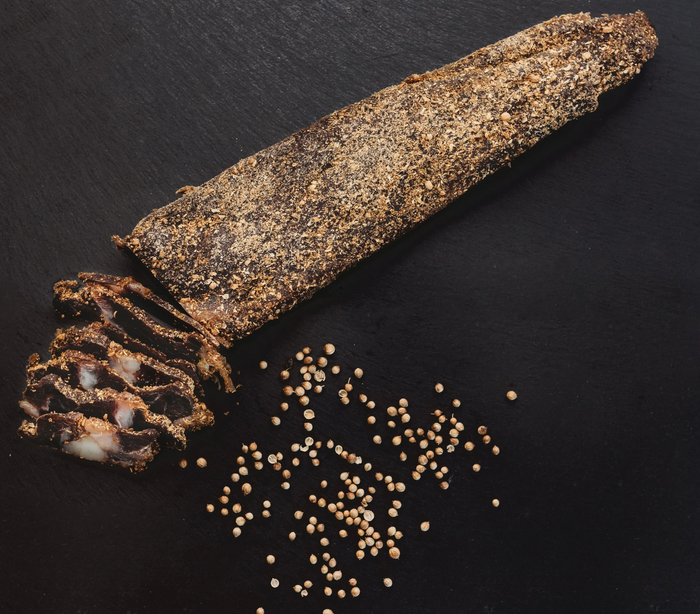
A whole slab is a protected object. It has a small surface relative to its mass, and the dried outer layer acts as its own barrier. The interior stays behind that barrier, largely shielded from the air, which is a large part of why Biltong Slabs at $58.00 hold up the way they do.
Cut into it and you have created new surfaces that have never been exposed to anything. Those faces are softer, moister and completely unprotected, and they behave nothing like the outside of the slab did. The piece you were storing casually last week is a different storage problem this week.
The practical response is to cut what you are going to eat and leave the rest whole. If you must cut a lot at once, seal the cut portion properly and treat it the way you would treat a bag of slices, which is to say eat it sooner and store it more carefully than you would the slab it came from.
Exception four: the opened bag
An unopened bag is a small sealed environment that has already reached its own equilibrium. Opening it ends that, and from then on the contents are negotiating with your kitchen instead of with each other.
Which direction that goes depends entirely on your room. In dry indoor air an opened bag firms up steadily, which most people notice and few people mind. In damp air it goes the other way and the surfaces soften, which is the situation that actually deserves attention.
Reseal it, press the air out, and keep it somewhere cool and dark. That covers almost everything. The reason we keep saying it is that it is the one habit that matters and it costs nothing, and the difference between people who think biltong keeps well and people who think it does not is usually just this.
Why we will not print a number of days
We are not going to tell you our biltong lasts a specific number of days at room temperature, and we want to explain why rather than simply leaving the gap.
A number like that would depend on which product, how wet it was made, how it was packed, how humid your house is, whether the bag has been opened, how many times it has been opened, and what the temperature has been doing. Give one number and it is wrong for most of the people reading it, in one direction or the other. Wrong in the generous direction is worse than useless.
What we can tell you honestly is the ordering. A dry slab lasts longest. A dry sliced product is next. A wetter product is shorter. An opened anything is shorter than the same thing unopened. Warmth and humidity shorten all of them. That ordering will serve you better than a number would, because it tells you which way to lean when your situation changes.
What to watch instead of a date
The product tells you where it is if you know what to look at. This is a short list and it is worth learning.
- Surface finish. Matte and dry is right. A soft gloss with a tacky feel means it has taken on moisture and wants air.
- Condensation inside the bag. Always worth acting on immediately, whatever else looks fine.
- Fat color and feel. White to cream and firm is right. Yellowed, translucent and oily means the fat has gone further than you want, and fat is what sets the outer limit.
- Anything fuzzy, raised, spreading, or tinted blue, green or black. That is not a stage of drying. Throw the bag out rather than trimming around it.
- Smell on opening. A faint vinegar tang is correct and fades in a minute. A sharp painty or crayon like note means the fat has turned.
Four of those five are visible in under ten seconds without touching anything. That is a better instrument than a printed date, because it measures the actual piece in front of you instead of an average of pieces that were never in your kitchen.
Where to keep it, concretely
A cupboard away from the stove, away from a window and away from anything that runs warm. Cool, dark and dry, in a resealable bag with the air pressed out. That is the whole recommendation and it applies to every product we sell.
Two refinements. If you have Bulk Biltong, 1LB of Sliced Biltong, at $58.00, split it into smaller sealed portions rather than opening a pound and working through it, because every opening exposes the whole quantity rather than the part you are eating. And if you have a slab, resist the urge to cut it all up at once for convenience, because the convenience costs you the protection you paid for.
When the fridge is genuinely the right call
There are cases, and we would rather name them than pretend the fridge is always wrong.
- Your house is genuinely humid and the room air is working against the product rather than with it.
- You are holding a wetter product longer than you meant to.
- It is high summer, the room gets warm, and there is no cool cupboard available.
- You have cut a slab open and will not get through the cut portion soon.
In all of those, seal it well and always bring the bag to room temperature before opening, because a cold piece opened into a warm room pulls condensation onto its own surface. That one habit is what separates refrigerating from refrigerating badly.
Bottom line
Biltong does not need refrigeration because air drying, salt and a vinegar wash together take the available water low enough that room temperature storage is the correct default rather than a compromise. Water activity, not moisture percentage, is what makes that true, and it is why a soft piece can be just as stable as a hard one.
The exceptions all work the same way. A wetter cut, a humid room, a sliced open slab and an opened bag each raise the free water or expose new surface, and each shortens the window. When one of those applies, seal it properly, keep it cool and dark, eat it sooner, and reach for the fridge only when the room itself has stopped being a good place to keep food.
Frequently Asked Questions
Why does biltong not need to be kept cold?
Because air drying, salt and a vinegar wash together take the available water low enough that the food is stable at room temperature. The governing idea is water activity, meaning how much of the water in a food is chemically free rather than how much is present by weight. Water bound to salt or held by proteins is present but not usable. Bacteria, yeasts and molds all need free water, and below a certain threshold they cannot do anything regardless of total moisture. That is why room temperature storage is the correct default for dried meat rather than a compromise.
My biltong feels soft. Does that mean it needs refrigerating?
Not on its own. How dry a piece feels and how much free water it holds are different things. Salt binds water and holds it out of circulation, so a salted piece reaches a given water activity at a higher total moisture than an unsalted one would. That is exactly why cured meat can be both moist and stable. Judging dried meat by how dry it feels is the most common misunderstanding in the category. A deliberately wetter cut does have more free water and a shorter useful life, so buy less of it at a time and eat it promptly.
How long does biltong last at room temperature?
We will not print a number, because a single figure would be wrong for most people reading it. It depends on which product, how wet it was made, how it was packed, how humid your house is, whether the bag has been opened and how often, and what the temperature has been doing. What we can give you is the ordering. A dry slab lasts longest, a dry sliced product is next, a wetter product is shorter, and an opened anything is shorter than the same thing unopened. Warmth and humidity shorten all of them.
Does opening the bag change anything?
Yes, quite a lot. An unopened bag is a small sealed environment that has already reached its own equilibrium. Once it is open, the contents negotiate with your kitchen instead of with each other, and the direction depends on your room. Dry indoor air firms the pieces up steadily, which most people notice and few mind. Damp air goes the other way and softens the surfaces, which is the case that deserves attention. Reseal it, press the air out, and keep it cool and dark.
Should I refrigerate a slab once I have cut into it?
Consider it, and cut less at a time first. A whole slab is protected by its own dried outer layer and has a small surface relative to its mass, which is why it holds up so well. Cutting creates new faces that have never been exposed and are softer, moister and unprotected, so a cut slab is a different storage problem from the slab it was last week. Cut what you plan to eat and leave the rest whole. If you have cut a lot at once, seal the cut portion and treat it like a bag of slices.
When is the fridge actually the right choice?
When the room has stopped being a good place to keep food. Four cases qualify: your house is genuinely humid and the room air is working against the product, you are holding a wetter product longer than you meant to, it is high summer with no cool cupboard available, or you have cut a slab open and will not get through the cut portion soon. Seal it well in every case, and always bring the bag to room temperature before opening, because a cold piece opened into a warm room pulls condensation onto its own surface.
What should I look for instead of a printed date?
Five things, four of which take ten seconds. The surface should be matte and dry rather than glossy and tacky. There should be no condensation inside the bag. The fat should be white to cream and firm rather than yellowed, translucent and oily, since fat is what sets the outer limit. Nothing should be fuzzy, raised, spreading, or tinted blue, green or black. And the smell on opening should be a faint vinegar tang that fades in a minute, not a sharp painty or crayon like note.
Where is the best place to keep biltong at home?
A cupboard away from the stove, away from a window and away from anything that runs warm. Cool, dark and dry, in a resealable bag with the air pressed out. Two refinements are worth adding. If you have a pound of sliced product, split it into smaller sealed portions rather than opening the whole thing and working through it, because every opening exposes the entire quantity rather than the part you are eating. And if you have a slab, resist cutting it all up at once, because the convenience costs you the protection you paid for.