Which Grub Biltong Flavors Are AIP-Compatible and Which Are Not
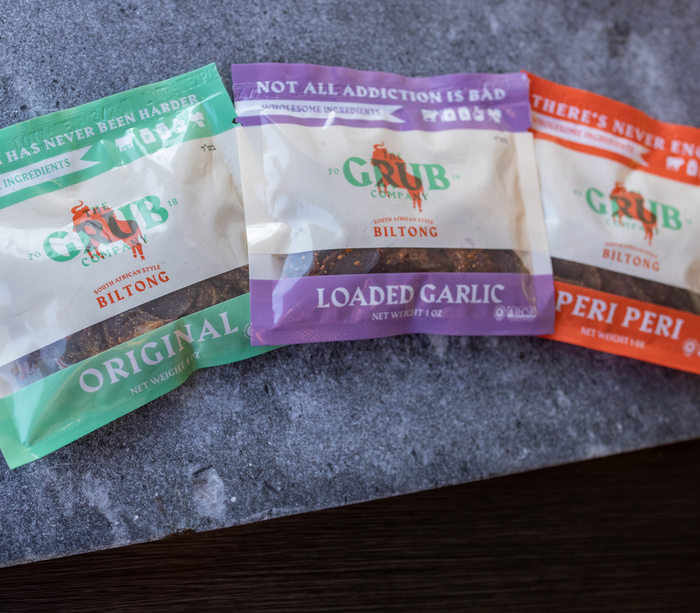
No Grub biltong flavor is fully AIP elimination-phase compliant. Loaded Garlic contains coriander seed, which AIP eliminates as a seed spice, while Original contains both coriander seed and black pepper, which AIP eliminates as a seed spice and a peppercorn respectively. Peri Peri adds red pepper, a nightshade, and brown sugar on top of those same disqualifiers. Loaded Garlic also brings tomato powder, another nightshade. Garlic and salt are allowed on AIP, but the seed spices and nightshade ingredients present across the three flavors mean none of them clears the elimination phase. The flavors are not equally far from the finish line, and the order in which each one becomes viable during reintroduction matters if you're working through the protocol carefully. All three flavors are certified Glatt Kosher, air-dried in Florida from grass-fed kosher beef.
The AIP Compliance Ranking: From Worst to Best
The easiest way to think about this is to rank the three flavors by how many disqualifying ingredients each one carries. Peri Peri has the most. Original has the fewest. Loaded Garlic sits between them, but it carries a disqualifier that most people miss.
Here is how they stack up:
| Flavor | AIP Disqualifiers | AIP-Safe Ingredients | Earliest Viable Phase |
|---|---|---|---|
| Original | Coriander seed, black pepper | Grass-fed beef, garlic, salt, vinegar | Reintroduction (after pepper and coriander cleared) |
| Loaded Garlic | Coriander seed, tomato powder | Grass-fed beef, garlic, roasted garlic, salt, vinegar | Reintroduction (after both cleared) |
| Peri Peri | Coriander seed, black pepper, red pepper, brown sugar | Grass-fed beef, garlic, salt, vinegar | Reintroduction (last, after nightshades and sugar cleared) |
None of them pass the elimination phase. What the table tells you is which one you can reasonably reach for first as you advance through reintroduction, and which one requires the most complete recovery of tolerance before it belongs in your rotation.

Flavor-by-Flavor Breakdown
Peri Peri: Three Disqualifiers Plus Sugar
Peri Peri is the furthest from AIP compliance of the three. The full ingredient list builds on Original and then adds red pepper and brown sugar. Red pepper is a nightshade, which AIP removes in the elimination phase alongside chili, paprika, and tomatoes. Peri Peri carries every disqualifier Original carries, then adds two more on top.
If you're in elimination, Peri Peri is off the table entirely. If you're in reintroduction, you would need to have successfully cleared black pepper, coriander seed, and nightshade peppers before Peri Peri becomes an option, and no AIP ruling on brown sugar was confirmed here. That puts it last in the reintroduction sequence among the three Grub flavors. There's no shortcut here. The spice blend that gives Peri Peri its character is the exact list of ingredients AIP is most cautious about.
For a closer look at exactly what goes into the Peri Peri blend and why the spices are built the way they are, the spice blend behind Peri Peri biltong piece walks through it in detail.
Loaded Garlic: Two Spice Disqualifiers Plus a Nightshade
Loaded Garlic is interesting because it looks cleaner than Peri Peri at first glance. There is no red pepper. There is no added sugar. The primary flavor additions are roasted garlic and more garlic, both of which are AIP-safe. Garlic is explicitly allowed on the elimination phase, so the garlic-forward character of this flavor is not the problem.
The problem is tomato powder. The full Loaded Garlic ingredient list is grass-fed kosher beef, coriander, garlic, roasted garlic, salt, tomato powder, and vinegar. Tomato powder is a nightshade. AIP eliminates tomatoes and all tomato-derived ingredients during the elimination phase. That disqualifier, combined with the coriander seed it shares with Original and the tomato powder in its ingredient list, gives Loaded Garlic multiple things to clear before it becomes viable in reintroduction.
Tomato powder is easy to miss because it does not read as spicy or obviously inflammatory the way red pepper does. But the nightshade restriction on AIP is not about heat. It applies to the entire botanical family, which includes tomatoes. This is one of those ingredients where label scrutiny really matters, and it's the kind of thing that gets overlooked when someone scans quickly for peppers and sugar.
Original: Two Spice Disqualifiers, Nothing Else
Original has the shortest road to AIP viability. The full ingredient list is grass-fed kosher beef, coriander, black pepper, salt, garlic, and vinegar. No nightshades. No added sugar. No tomato derivatives. The two things standing between Original and AIP compatibility are coriander seed and black pepper.
Black pepper is one of the first spices reintroduced in the AIP reintroduction phase. It's generally considered lower-risk than nightshades, and many people working through the protocol find they tolerate it without issue. So Original becomes viable earliest among the three Grub flavors, once both black pepper and coriander seed are cleared.

There is no added sugar in Original. If you're tracking sugar for any reason beyond AIP, Original is the flavor to choose in the Grub lineup. Peri Peri includes brown sugar, and that distinction matters whether the concern is AIP, keto, or simply keeping sweeteners out of a savory snack.
You can try Original alongside the other flavors without committing to a full-size bag. The Biltong Sampler Pack includes one mini bag each of Original, Peri Peri, and Loaded Garlic, which is the lowest-commitment way to taste all three before deciding which direction you're heading in reintroduction.
The Overlooked Disqualifier: Coriander Seed
AIP eliminates peppercorns, including black pepper, in the first phase. Every AIP resource flags nightshades. What almost nobody mentions when they talk about biltong and AIP is coriander seed, and that is exactly the ingredient that eliminates even the cleanest Grub flavor from the elimination phase.
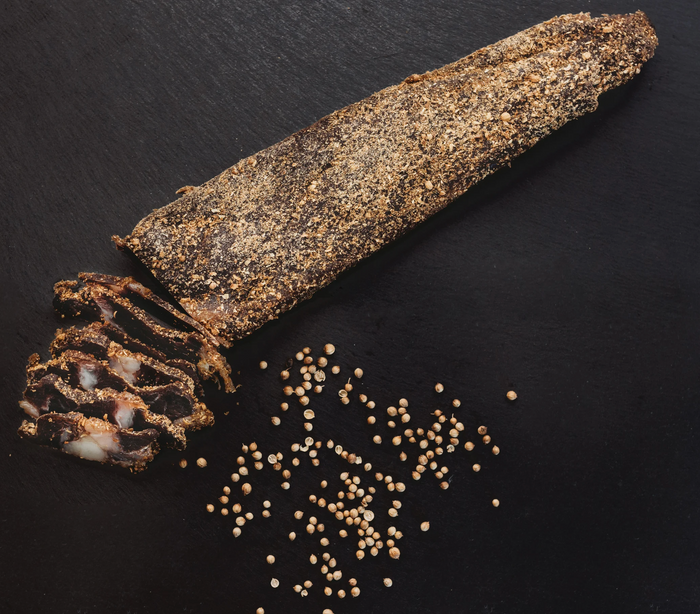
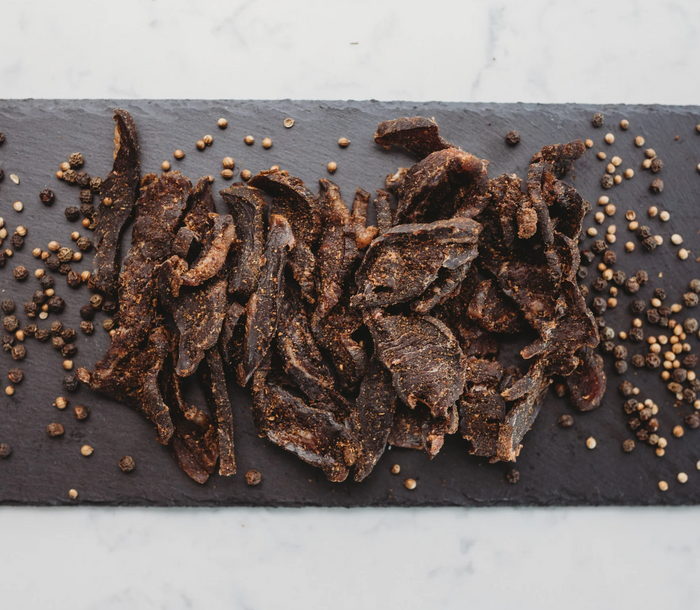
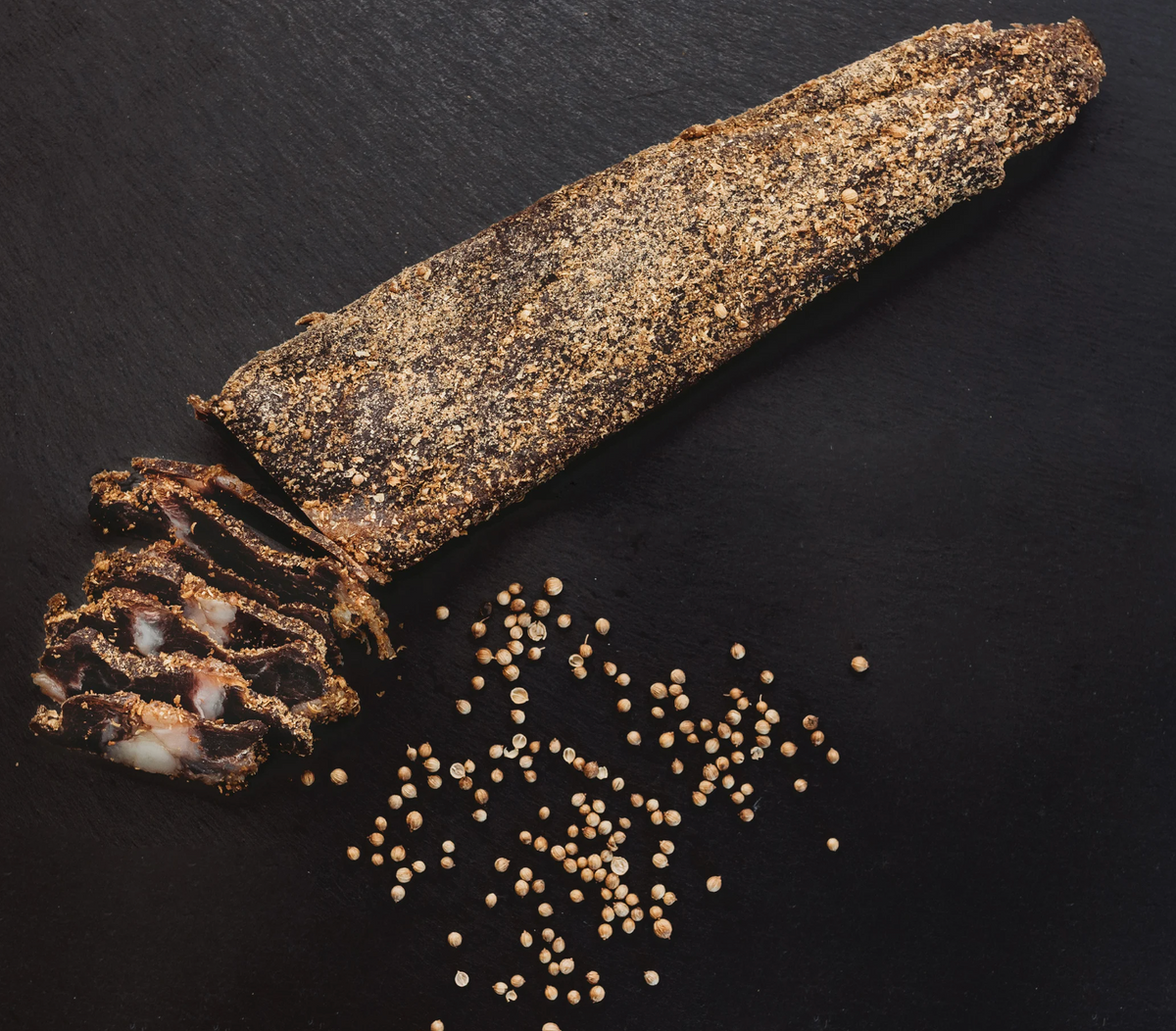
Biltong's coriander is coriander seed. That is the form used in the cure. And seed spices are removed during AIP's elimination phase along with other seeds. This is not a gray area or a technicality. The AIP elimination phase removes seed spices as a category, and coriander seed fits squarely in that category.
The reason this matters so much is that Original looks, on the surface, like a candidate for AIP compliance. The ingredient list is short. There are no nightshades, no sugar, no additives beyond garlic, salt, vinegar, and spice. Someone scanning for red flags without knowing the seed-spice rule would read that label and conclude it's probably fine. It isn't, during elimination. Coriander seed is the silent disqualifier.
This also explains why no traditional biltong, regardless of brand, passes the AIP elimination phase as-is. Coriander seed is so fundamental to the flavor profile of biltong that a product made without it would not really be biltong in the traditional sense. The spice and the product are inseparable. That means AIP during elimination and traditional biltong are genuinely incompatible, and the gap is specifically the coriander.
If you're curious about what grass-fed beef quality brings to the cured meat beyond the AIP question, the piece on grass-fed vs grain-fed biltong gets into why the beef source matters for flavor and texture.
The Reintroduction Roadmap: Which Grub Flavor Becomes Viable First
Once you move past the elimination phase, the question shifts from "which flavor passes" to "which flavor can I add back, and when." The order here follows directly from which ingredients appear in each flavor and which categories AIP reintroduces first.
Black pepper is one of the easiest spices to add back in AIP reintroduction. It's generally among the less-reactive spices for most people working through the protocol. If you've cleared black pepper and you're working on seed spices, Original is the next logical flavor to test. It has exactly two things to clear: black pepper and coriander seed. Once both are tolerated, Original is viable.
Loaded Garlic requires clearing two things: coriander seed as a seed spice and tomato powder as a nightshade. Nightshades are typically introduced later in reintroduction than seed spices. So Loaded Garlic sits in the middle of the sequence, reachable once you've worked through seeds and at least some nightshades.
Peri Peri contains the most AIP-flagged ingredients of the three flavors. Black pepper and coriander seed appear in both Original and Peri Peri. Red pepper is a nightshade, and AIP removes nightshades during the elimination phase. Peri Peri is the last of the three Grub flavors to become viable, and how far out that is depends on individual tolerance and how the reintroduction phase goes for each person.
The practical reintroduction order for Grub biltong looks like this:
- Original - viable after black pepper and coriander seed are cleared
- Loaded Garlic - viable after coriander seed and tomato powder are cleared.
- Peri Peri - viable after black pepper, coriander seed, and red pepper are cleared.
One thing worth knowing: the Sampler Pack is particularly useful here. Rather than ordering a full pound of Original on the assumption it will work in reintroduction, starting with the Sampler lets you confirm tolerance at the smallest possible portion before scaling up. You can buy biltong online in formats ranging from small bags up to a full pound, which means you're not locked into any particular commitment when you're still testing.
It is also worth understanding what makes biltong different from other cured and dried meats at a structural level. Biltong is cured with vinegar and spices, then air-dried. That process is what gives it a short, readable ingredient list and a texture that holds up over time. The vinegar does meaningful work in the cure before the meat ever starts drying, which is part of why the finished product is shelf-stable unopened. For people on AIP who are already reading labels carefully, the transparency of a short ingredient list is genuinely useful. You can see exactly what is in each Grub flavor without having to decode a long list of additives or preservatives. The disqualifiers on AIP are real, but they are also specific and nameable, which means you can track your reintroduction progress against a clear list rather than guessing. That clarity is one of the reasons biltong tends to come up in AIP discussions even though no traditional flavor passes the elimination phase outright. The beef itself, the vinegar, the garlic, and the salt are all compatible. The gap is narrow and defined, and for most people working through reintroduction, it closes in a predictable order.
The other angle worth considering at this stage: Grub's Meat Candy jerky line is a different story entirely. Biltong is air-dried and savory. Jerky is cooked and usually sweeter. If you're navigating AIP, the biltong line is where to focus, not the jerky side of the catalog.
Grub's air-dried, grass-fed, certified Glatt Kosher biltong shares a lot of qualities that align with the spirit of AIP eating: whole cuts of real beef, a short and readable ingredient list, no added heat in the air-drying process, and no additives or fillers. The coriander seed and black pepper in the cure are the specific points where the protocol and the product part ways, and that gap is real. Knowing it clearly puts you in a better position to time your reintroduction choices accurately.
For a broader look at the Grub biltong range, including formats, sizes, and which cuts work best for different eating styles, the Kosher Biltong page covers the full lineup. And if you're comparing biltong to other high-protein options while working through a restricted diet, the kosher beef jerky collection gives you a sense of what else is on the shelf and what the ingredient differences look like across formats.
The honest bottom line: none of the three Grub biltong flavors passes the AIP elimination phase, and coriander seed is the specific reason. Original is the flavor to watch as you move into reintroduction, because it has the fewest disqualifiers and two of the most reintroduction-friendly ones. Peri Peri is last. Loaded Garlic falls in between, but the tomato powder in the ingredient list is easy to miss and worth knowing before you make assumptions about how clean it is.
These are the questions that really matter before you buy, so here are the ones we hear most often.
Frequently Asked Questions
Are any Grub biltong flavors AIP elimination-phase compliant?
No. None of the three Grub biltong flavors clears the AIP elimination phase. Original contains coriander seed and black pepper, both eliminated in the AIP first phase, and Loaded Garlic contains coriander seed, also eliminated in that phase. Peri Peri adds red pepper, a nightshade, and brown sugar on top of those same disqualifiers. Garlic, salt, and vinegar are AIP-safe across all three, but the shared disqualifying spices mean none of them passes elimination. The closest to viable is Original, which becomes an option earliest once reintroduction begins.
Why does coriander seed disqualify biltong on AIP when it seems like a minor spice?
The AIP elimination phase removes seed spices as a category, and coriander used in biltong is coriander seed, not the leaf. This is the most commonly missed disqualifier in biltong, because most AIP discussions focus on black pepper and nightshades. But coriander seed is fundamental to traditional biltong's flavor profile. No traditional biltong recipe omits it, which means coriander seed is the specific ingredient that keeps even the most minimal biltong flavor off the table during elimination. It is not a gray area under the protocol.
Which Grub biltong flavor becomes AIP-compatible first during reintroduction?
Original becomes viable first. Its only disqualifiers are black pepper and coriander seed. Black pepper is one of the easiest spices to add back in AIP reintroduction, and coriander seed follows as a seed spice. Once both are individually cleared, Original is compliant. Loaded Garlic adds a nightshade (tomato powder), which is generally introduced later. Peri Peri adds both a nightshade (red pepper) and brown sugar, making it the last of the three to become viable in reintroduction.
Does Loaded Garlic contain any nightshades?
Yes. Loaded Garlic contains tomato powder, which is a nightshade. AIP removes tomatoes and all tomato-derived ingredients during the elimination phase. The garlic and roasted garlic in Loaded Garlic are both AIP-safe, which can make this flavor look cleaner than it is on a quick scan. But the tomato powder is a real disqualifier that puts Loaded Garlic behind Original in the reintroduction sequence, because nightshades are typically introduced after seed spices.
Is brown sugar in Peri Peri a problem specifically for AIP, or just for keto and low-carb diets?
Both, but for different reasons. Peri Peri is non-compliant during the AIP elimination phase because of its nightshade ingredients and seed spices, and no AIP ruling on brown sugar was confirmed here. Original contains no added sugar, making it the right choice if sugar is the primary concern regardless of which protocol you're following. Peri Peri is the only Grub biltong flavor with sugar on the ingredient list.
Can I test just one flavor at a small portion before committing to a larger bag?
Yes, and the Sampler Pack is the right way to do that. It includes one mini bag each of Original, Peri Peri, and Loaded Garlic, which is the smallest format that actually tells you how each flavor tastes and how the texture sits with you. For someone working through AIP reintroduction, starting with the Sampler lets you try Original at a minimal portion before scaling up to a full bag, without buying more than you need while you're still testing tolerance.
Is Grub biltong processed with heat, or is it truly air-dried?
Grub biltong is air-dried, not cooked. The meat is cured with vinegar and spices, then hung to dry without added heat. This is the traditional South African method, and it is what distinguishes biltong from jerky, which is cooked. For people tracking how a protein was processed, not just what is in it, the air-drying method is a meaningful difference from heat-processed meat snacks.