Is Biltong Cooked? What 'Air-Dried' Actually Means
What "Air-Dried" Actually Means
Biltong is not cooked. It's raw beef that's cured with vinegar and spice, then air-dried until enough moisture is gone to make it shelf-stable and safe to eat without any heat involved. Air-dried means exactly that: the meat hangs in a room with controlled airflow and low humidity, and moisture leaves the meat slowly over days until it reaches a texture and moisture level that's safe to store and eat.
No oven touches it, no smoker touches it, and no boiling water touches it either. The entire preservation job is handled by the vinegar cure and the drying, not by heat killing anything off the way cooking would.
How Curing and Drying Do the Job Heat Would Normally Do
Cooking preserves food partly by using heat to reduce moisture and by directly affecting bacteria through temperature. Curing and drying get to a similar end point through a different route. The vinegar cure lowers the pH on the surface of the meat, which creates conditions that are hard for a lot of bacteria to grow in. The slow air-dry then pulls water out of the meat over time, and less available moisture means bacteria have a much harder time growing at all, regardless of temperature.
This is a genuinely old method. People were curing and air-drying meat for storage long before refrigeration existed, in South Africa and in plenty of other places, because it worked without needing heat, ice, or electricity. Biltong is a direct descendant of that tradition, not a shortcut around it.
Is That the Same as Eating Raw Meat?
This is the question people actually have when they hear "not cooked," and it's a fair one. Biltong is not the same as raw steak or raw ground beef sitting on a counter. The cure and the drying process change the meat in ways raw meat hasn't gone through. The vinegar changes the surface chemistry, and the extended drying time removes the moisture bacteria need to grow. By the time a piece of biltong is ready to eat, it has gone through a preservation process specifically designed to make it safe without heat, not just sat around raw.
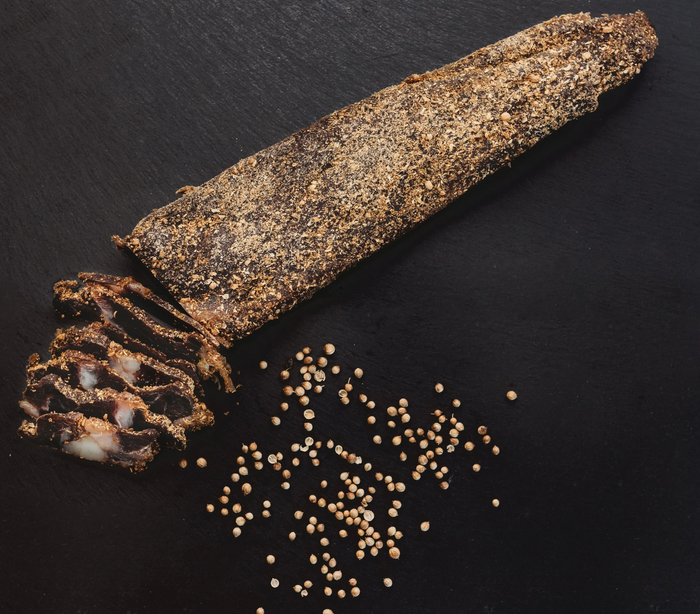
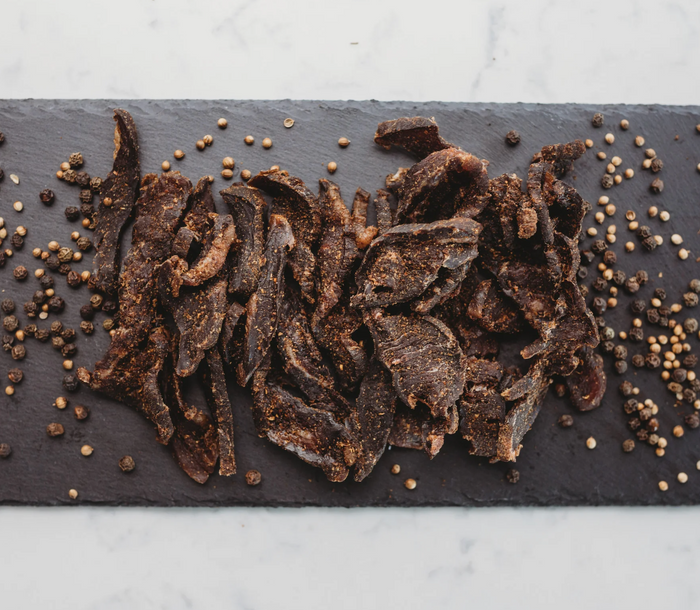
Say you're holding a piece of Sliced Biltong next to a raw steak. They look like they could be related, since neither one has grill marks or a cooked crust. But one has spent days going through a controlled cure and dry cycle, and the other hasn't been preserved at all. Judging biltong by how a raw steak behaves misses what actually happened to the meat in between.
Why the Process Matters as Much as the Label
"Air-dried" only means something if the process behind it is done right, with a real cure, controlled conditions, and enough time. Grub Company starts with grass-fed, kosher beef and runs the same cure and dry process across every batch, because cutting corners on time or conditions is exactly how a preservation method like this stops working. We won't rush a batch to move product faster, and we won't hand you something that skipped a step just because it would look the same in the bag.
Once you understand that "not cooked" doesn't mean "not safe," the next thing worth deciding is which cut fits how you eat. Sliced Biltong Mini's work well for quick snacking, while Biltong Slabs suit someone who wants to cut their own thickness at home.
Frequently Asked Questions
Is biltong raw meat?
Not in the way raw steak on a counter is raw. Biltong goes through a vinegar cure that changes the surface chemistry of the meat, followed by a slow air-dry that removes moisture over days. That combination is a real preservation process, not just meat sitting around uncooked. It's a traditional method that predates refrigeration and was specifically designed to make meat safe to eat without heat.
Why isn't biltong cooked like jerky?
Biltong comes from a South African tradition built around curing and air-drying rather than smoking or cooking. The vinegar cure and the drying process handle preservation on their own, so heat was never part of the method. Jerky, especially the kind sold in the US, typically uses heat as part of the process, which is one of the biggest differences between the two products.
How does biltong stay safe without being cooked?
Two things do the work. The vinegar cure lowers the pH on the meat's surface, which makes it harder for bacteria to grow. Then the slow air-drying process removes moisture from the meat over several days, and bacteria need moisture to grow, so less available water means a much safer product. Together, those two steps replace what heat would normally do in a cooked product.
Does air-dried mean the same thing as dehydrated?
They're related but not identical. Dehydrating often just means removing moisture, sometimes with added heat from a machine. Air-drying biltong specifically means drying at room temperature with controlled airflow and humidity, with no heat source involved at all. The vinegar cure that happens before drying is also a key part of biltong that a basic dehydration process wouldn't necessarily include.
Can I tell if biltong is properly cured just by looking at it?
Not entirely, though texture is a decent clue. Properly cured and dried biltong should feel firm but not brittle, with even color throughout rather than a wet or slick center. A piece that feels tacky or overly soft in the middle may not have finished the drying process properly. Buying from a source that's consistent about its cure and dry process matters more than trying to judge it by eye alone.
Is air-dried biltong kosher?
Yes, Grub Company biltong is kosher certified, starting from the grass-fed beef used and carrying through the entire cure and air-dry process. Certification and the preservation method are separate things, but both are part of how every batch is made.
If you want to taste the difference the method makes, this is what we make and what each format costs. Nothing is ever heated, which is the whole point of the page above.