Healthy Road Trip Snacks: A Practical List
The healthiest road trip snacks are whole foods you can eat one-handed with no mess, no cooler and no cleanup: fruit, nuts, dried beef, raw vegetables and plain crunchy things. We make certified Glatt Kosher biltong and jerky, so here is the list we pack ourselves, including where our own product is the wrong choice.
Related: The Healthiest Beef Jerky: How to Read the Label
Our biltong is certified Glatt Kosher, and a lot of our customers eat on the road because there is rarely a kosher option at the exit. That shapes this list. Every item below works without a kitchen, and most work without a fridge.
What makes a snack good for the car
"Healthy" is only half the test. A snack that is healthy at home can be a bad idea at 70 miles an hour. Judge each one on four things:
- Can you eat it with one hand? If you need a fork, a lap and both hands, it is a stop-and-eat food, not a driving food.
- Does it survive the heat? A parked car gets hot fast. Anything that melts, sweats or spoils is a gamble.
- Does it hold you? Sugar gives you twenty good minutes and then a slump. Protein and fiber keep you steady for the next stretch.
- Is it quiet and clean? Crumbs, sticky fingers and strong smells are shared with everyone in the car.
Hold every snack up against those four questions and the list sorts itself. Anything that fails two of them stays home.
Snacks that need no cooler
This is the backbone of any road trip bag. Nothing here needs ice, and everything here can sit in a bag on the back seat.
Dried beef
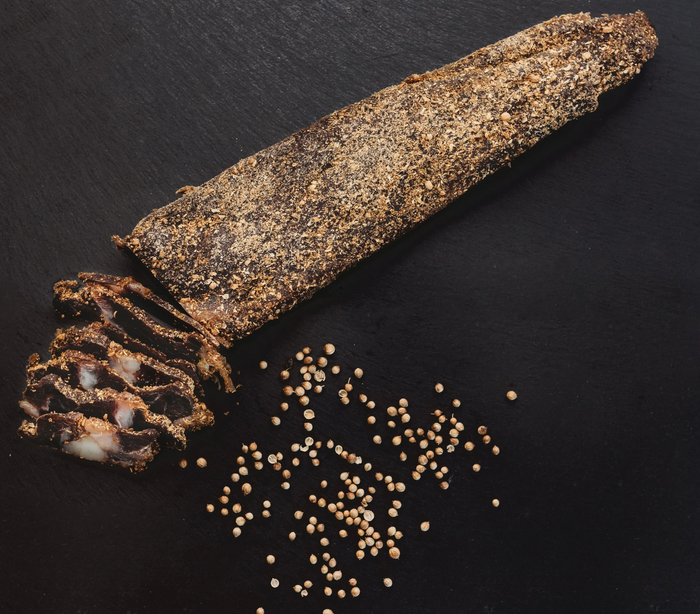
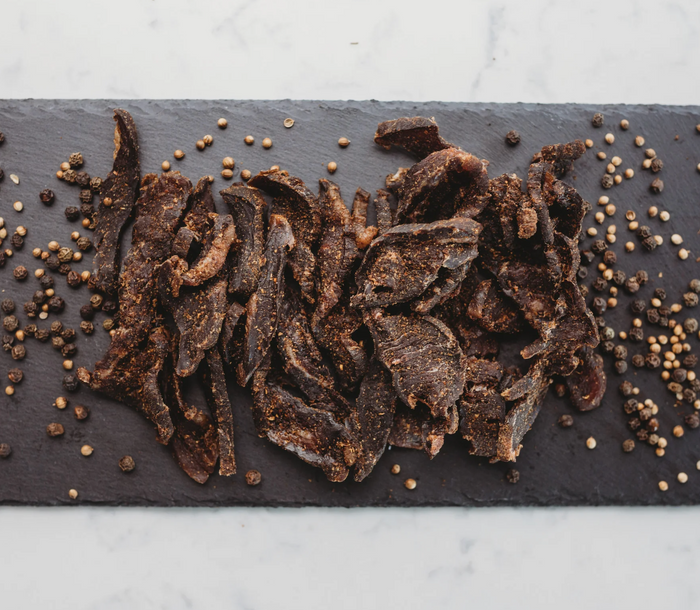
Protein is the point, and it keeps. Biltong is air-dried, sliced thin and ready to eat straight from the bag. Nothing to cut, nothing to chill. We cover how it handles heat and a sealed bag in what happens to biltong in a hot car, and the full case in biltong for road trips.
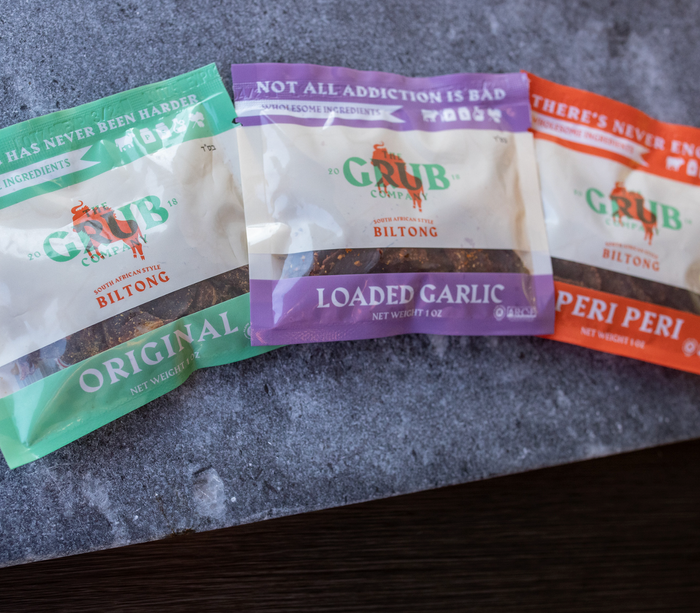
For the car, we would buy the one-ounce Sliced Biltong Mini's. A small sealed bag is easy to open, easy to finish and easy to hand to a passenger. They come in Original, Peri Peri and Loaded Garlic. Original is the safe choice for a mixed car. Peri Peri has real heat, so check with your passengers first. If you want a sweeter, jerky-style chew, Meat Candy comes in Hickory Kickory Dock and Baa-Baa BBQ Sheep.
Honest trade-off: biltong is salty, and it is chewy enough that you will be chewing for a while. On a long drive that is a feature, because it gives you something to do. But if you are watching your sodium, read the label and ask your doctor. It is also the wrong pick for kids who do not like savory food. They will leave it in the bag.
Nuts and seeds
Almonds, walnuts, pistachios and sunflower seeds all travel well. They are filling, and the fat keeps you full. They are also dense. A small handful is a snack, and a whole canister on a long drive is far more than you meant to eat. Portion them into small bags before you leave. Shelled is better than in-shell in a car, unless you enjoy a floor full of shells.
If anyone in your group has a nut allergy, skip them entirely. A car is a small space, and a nut-free car is a kindness to everyone in it.
Whole fruit
Apples, bananas, clementines, grapes and pears all handle a few hours in a bag. Apples are the most forgiving. Grapes are easy to eat one-handed. Bananas bruise and go soft in heat, so buy them a little green. Clementines are tidy if you peel them at a stop. Wash fruit at home and dry it before it goes in the bag, so nobody is fishing out a wet apple on the highway.
Dried fruit
Raisins, apricots, dates and apple chips are easy and light. They are also concentrated sugar. Eat them in small amounts and pair them with nuts or dried beef so you are not just riding a sugar wave. Check the label for added sugar, since many dried fruits are coated.
Roasted chickpeas and other crunchy things
Roasted chickpeas, edamame snacks and plain popcorn give you crunch without the grease of chips. They are good in the car because they are dry and they do not melt. Read the ingredient list and pick the plain or lightly salted ones. The shorter the list, the better the snack.
Snacks that need a cooler
If you have a small cooler and a few ice packs, your options open up. Only bring these if you will actually keep them cold.
- Hard-boiled eggs. Peel them at home. Keep them cold, and eat them within a few hours of taking them out of the cooler.
- Raw vegetables. Carrots, cucumbers, snap peas, cherry tomatoes and sliced peppers. Crunchy, clean and nearly impossible to overdo. Pack hummus in a small container if you want a dip.
- Cheese and yogurt. Good protein, but they are dairy. If your meal on the road is meat, keep dairy separate and wait between meat and dairy according to your family's custom. The easy fix is to pick one lane for the day.
- Sandwiches. A real sandwich is a meal, not a snack. If you pack one, keep it cold and keep it simple.
What to skip
Some foods are fine at home and miserable in a car.
- Anything that melts. Chocolate, yogurt-coated anything and soft candy turn into a stain.
- Anything that crumbles. Crackers, chips and pastries scatter across the seat and into the vents.
- Strong smells. Tuna, egg salad and anything with raw onion. Your passengers did not agree to this.
- Big sugary drinks. They taste good for ten minutes and then you are hungry again. Water is the best road trip drink.
- Anything you cannot eat without looking at it. If you are the driver, pick food you can open and eat with your eyes on the road.
How to pack it
A little organization makes the difference between a good snack bag and a messy one.
- Portion it before you leave. Small bags of nuts, fruit and dried beef stop you from eating a whole container out of boredom.
- Use two bags. One for the driver, within reach, and one in the back for everything else. The driver's bag should only hold things that open easily.
- Bring wipes and a trash bag. Every road trip needs both. A small bag for trash keeps wrappers out of the cup holders.
- Keep the cooler out of the sun. Put it on the floor of the back seat, not next to a window.
- Plan the order. Eat the perishable things early in the day. Save the shelf-stable snacks for the late stretch.
If you are traveling for a Shabbos, a Yom Tov or a long weekend away, see our note on flying with kosher jerky and eating kosher in a hotel. If you are stocking up before you leave, our kosher beef jerky and biltong collection carry every size we make. US orders over $50 ship free.
One more habit worth having: eat on a schedule rather than when you are bored. Most people snack in the car out of restlessness, not hunger. Decide on a rough rhythm, such as a snack every two hours or at each stop, and the bag lasts the whole trip. Pair something with protein and something with crunch, a few slices of biltong and an apple for example, and you will feel steadier than you would on either one alone. Drink water with anything salty, and keep a refill bottle where the driver can reach it.
A sample snack bag for a full day in the car
Here is what a sensible bag for two adults and two kids looks like, with no cooler:
- Four small bags of mixed nuts (skip if there is an allergy)
- A bag of apples and a bag of clementines
- Four one-ounce bags of biltong, mixed flavors
- A small bag of roasted chickpeas
- A small bag of raisins or dried apricots, to share
- Water for everyone, plus a refill bottle
Add a cooler and you can add carrots, cucumbers, hummus and hard-boiled eggs. That is a full day of eating on the road without a single drive-through.
Bottom line
Good road trip snacks are simple: protein, fiber, water and nothing sticky. Pick a few items from the no-cooler list, portion them before you leave and skip anything that melts or crumbles. Dried beef earns a spot because it is protein you can eat one-handed and it holds up in a bag. It is not the only answer, and it is not for everyone. But it is one of the easiest things to pack and one of the hardest to ruin.
Frequently Asked Questions
What are the healthiest snacks for a road trip?
Whole foods that are mostly protein, fiber or both: fruit, nuts, raw vegetables, roasted chickpeas and dried beef. Avoid candy, pastries and sugary drinks. They taste fine at the start and leave you hungrier an hour later.
What road trip snacks do not need a cooler?
Apples, bananas, clementines, nuts, seeds, dried fruit, roasted chickpeas, popcorn and dried beef such as biltong. All of them do fine in a bag for the length of a normal drive, provided the car is not baking in the sun.
What is a good high-protein snack for the car?
Dried beef is one of the easiest, because it is high in protein and needs no preparation. Hard-boiled eggs work if you have a cooler. Nuts and roasted chickpeas add some protein too, though less per bite.
What are good healthy snacks for kids in the car?
Grapes, apple slices, clementines, plain popcorn, cheese sticks (in a cooler) and small bags of nuts if there are no allergies. Pack small portions in separate bags. Kids make more mess when they are handed one huge container.
Is biltong a good road trip snack?
For most adults, yes. It is ready to eat, easy to open and does not need a fridge. It is salty and chewy, so pack water. If someone in the car does not like savory food or is watching their sodium, bring other options too.
What should I avoid eating in the car?
Anything that melts, crumbles or smells strong. Chocolate, chips, crackers, egg salad and tuna are the usual offenders. If you are the driver, skip anything that takes two hands or a long look to eat.
How do I keep kosher snacks organized on a long trip?
Keep meat and dairy snacks in separate bags so there is never a question. Pack by meal rather than by food type, and bring more shelf-stable options than you think you need. If you are unsure whether a packaged snack is kosher, check the label, and ask your rabbi about anything you are not sure of.