Kosher Biltong Use Cases: 7 Real Reasons People Buy It
Kosher biltong fills more roles than most people expect from a dried meat. It answers kashrut observance, it fits a low carbohydrate way of eating, it has a short enough ingredient list to work around common allergens, it keeps on a shelf without a refrigerator, it travels without melting or leaking, and it carries a culinary tradition that a lot of families grew up inside. That is why the same product turns up in gym bags, in synagogue kitchens, in trail packs and in office desk drawers.
Ready to try it? Buy Glatt Kosher biltong online. Made in Florida, free US shipping on orders over $50.
What follows is seven reasons people actually buy it, each one on its own terms, plus the practical questions that come after the decision: which format fits which reason, what to check before you order, and where kosher biltong is genuinely inconvenient. The last one matters. A page that lists only advantages is a sales sheet rather than an explanation.
What makes a dried beef kosher in the first place
Worth getting straight before the reasons, because the answer is not the same as it is for most packaged food. A kosher dried beef depends on the animal and the slaughter, on shechita, and on the handling of the meat afterward under rabbinical supervision. That supervision covers the whole chain rather than the recipe alone.
Biltong happens to sit unusually close to that process already. Salting is a step in kosher meat preparation in its own right, and biltong is a method built on salt, vinegar and air. The overlap is not a coincidence of marketing, it is two traditions that both take drawing moisture out of meat seriously.
What none of that tells you is whether a specific bag on a specific shelf meets your own community's standard. Certification is specific, and the place to confirm it is the certification stated on the product page rather than an article like this one.
Reason 1: kashrut observance without settling on the snack shelf
The plain reason, and the one that drives most of the buying. The shelf stable protein snack aisle is not a friendly place for someone who keeps kosher. A lot of what is there is either not certified at all or certified in a way that does not match a given household's standard, and the substitutes tend to be sweet rather than savory.
A certified dried beef closes that gap without asking anyone to compromise on what the snack actually is. It is not a workaround or a near miss, it is the same category of food everyone else is eating from that shelf. For a lot of households, that is the entire purchase decision, and every other reason below is a bonus rather than a motive.
Reason 2: keto and low carbohydrate eating
Air dried whole muscle beef loses moisture during curing and keeps its protein and fat, which leaves a food with essentially no carbohydrate in it. For someone tracking macros on a ketogenic or carnivore plan, that is a genuinely useful property in a snack that does not need a kitchen.
The distinction from a sweetened dried meat is real and it is the only place this article needs to mention the comparison. A glazed or marinaded jerky can carry added sugar, soy and fillers that put carbohydrate back on the panel. Traditional biltong does not have those in the recipe. Check the panel on whatever you buy rather than assuming, because recipes vary and the label is the authority.
Reason 3: allergen restricted eating
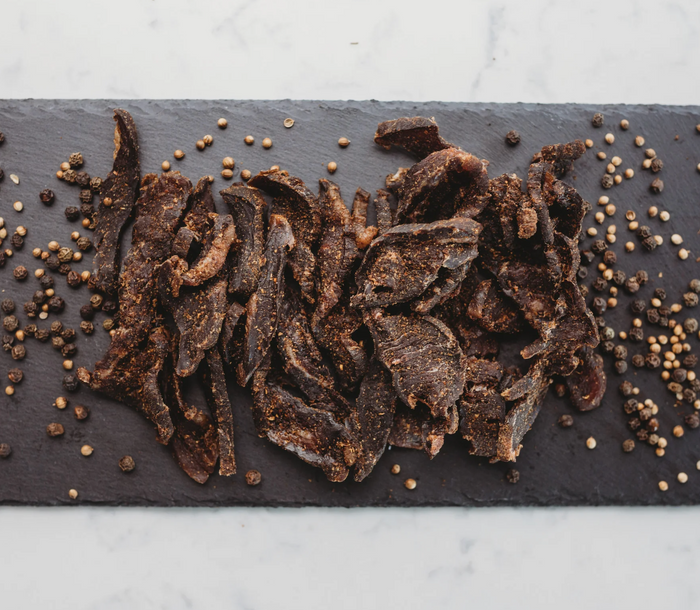
The ingredient list on a traditional biltong is short: beef, coriander, black pepper, salt, garlic, vinegar. There is no gluten, no dairy and no soy in that base recipe, which is unusual among savory shelf snacks and very unusual among savory shelf snacks that are also certified kosher.
For a household managing celiac disease or a dairy allergy alongside kashrut, the search space is small. Most candidates fail one filter or the other. A short ingredient list clears several filters at once, which is why this reason shows up far more often in questions from customers than we expected when we started selling it.
One honest caveat. A short recipe is not the same as a controlled facility. Cross contamination is a separate question from ingredients, and if it matters for your household, confirm the handling controls on the specific product rather than reading the ingredient list and stopping there.
Reason 4: shelf stable storage and emergency kits
Biltong is dried far enough that the moisture left inside it is largely unavailable, which is what water activity describes and why the product keeps at room temperature. No refrigeration, no freezing, no cold chain. That is the property that puts it in emergency kits.
Protein is the hard part of any home preparedness store. Grains, beans and canned goods are straightforward, and shelf stable protein that people will actually eat without cooking is not. Dried beef solves that without a stove, without water and without a can opener, which is three fewer dependencies at exactly the moment dependencies are a problem.
Bulk Biltong at $58.00 for a pound of sliced is the format that suits this use, since a kit is bought once and rotated rather than opened and grazed. Slabs at $58.00 work too and hold up better once opened, because a whole piece has far less surface exposed to air than a bag of slices does.
Reason 5: hiking, camping and long travel days
The same shelf stability makes biltong a good trail and travel food, and for a set of practical reasons rather than nutritional ones. It does not melt. It does not leak. It does not need cooling, and it does not need to be eaten within an hour of being taken out of somewhere cold. It compresses into a jacket pocket, and it does not shatter into crumbs at the bottom of a pack the way a brittle snack does.
For anyone who keeps kosher and travels, that stacks with the first reason on this list. Finding certified food on the road is the recurring problem of kosher travel, and a bag of dried beef in a carry on removes at least one meal from the list of things to solve on arrival. Sliced Biltong Mini's at $4.99 are the format built for that, since a single portion bag is easier to pack and easier to finish than a large one you then have to reseal in a tent.
Reason 6: cultural and traditional eating
Biltong comes from South Africa, and communities with South African heritage eat it the way other food cultures eat cured fish or charcuterie. It is not a novelty snack in those homes, it is a familiar thing that belongs on a table when people come over.
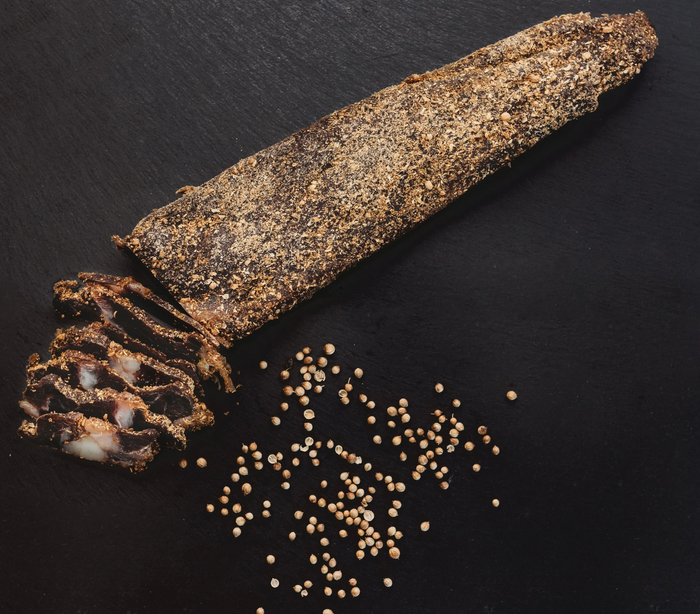
Jewish South African families sit at the exact intersection of that tradition and kashrut observance, which is a large part of why kosher certified biltong exists as a category at all. For those households, the purchase is about the food they grew up with rather than about macros or shelf life, and the format usually matters as much as the product. A slab, cut fresh at the table with a proper cutter, is a different experience from a bag of pre-sliced pieces. Biltong Slabs at $58.00 are what that occasion asks for.
Reason 7: hosting a table where every guest keeps a different standard
This one rarely gets written down and it comes up constantly. Put out a board for a mixed group and you are catering to several sets of rules at once. Someone keeps kosher. Someone else avoids dairy. Someone else is not eating carbohydrate this month. A single certified dried beef with a four ingredient recipe satisfies all three without anyone having to ask what is in it, which is the part that makes a host relax.
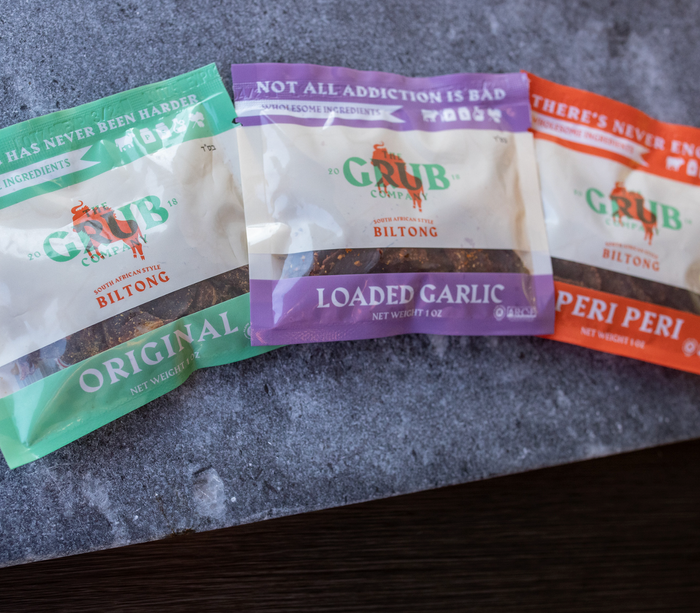
It also solves the office version of the same problem, where a shared snack drawer has to work for people who never discussed their dietary rules with each other. The Biltong Sampler Pack at $12.99 is the sensible way to do this the first time, because you find out which profile the room actually reaches for before you commit to a larger quantity of one thing.
The overlap that explains the whole category
Read those seven reasons together and a pattern falls out. Each one is a constraint, and biltong happens to satisfy several constraints at once with a single short recipe. Kashrut is a constraint. Carbohydrate is a constraint. Allergens are a constraint. No refrigerator is a constraint. No kitchen is a constraint. Every additional constraint knocks candidates off the list, and the list of foods that survive four or five of them simultaneously is very short.
That is the honest explanation for why one product ends up in situations as different as a preparedness kit and a Shabbat table. It is not that dried beef is remarkable. It is that a food made of four things, needing no cold chain, tends to be the last one standing when the filters stack up.
Which format fits which reason
- Trying it, or a mixed table. Biltong Sampler Pack, $12.99. More than one profile, and no need to settle on a size before you know what you like.
- Pocket, gym bag, carry on. Sliced Biltong Mini's, $4.99. One portion, one sitting, nothing to reseal.
- The regular household bag. Sliced Biltong, $11.99. The default if biltong has become a normal part of the week.
- Storage, kits and volume. Bulk Biltong, one pound of sliced, $58.00. Bought to sit and be rotated rather than grazed.
- Tradition, hosting, cutting fresh. Biltong Slabs, $58.00. Dried whole and sliced when you want it, which is the older way to serve it and keeps better once opened.
- The jerky option. Meat Candy, $7.99. A different process from biltong, and worth knowing that before you buy it expecting the same texture.
What to check before you buy
Four things, and none of them take long. The certification, confirmed against your own community's standard rather than against the presence of a symbol in general. The ingredient list, read all the way down, because that is where added sugar or an unexpected allergen would be. The panel, read on the basis it is printed, per serving or per hundred grams. And the format, matched to how fast you will actually get through it, since an open bag of sliced product drifts in texture faster than a slab does.
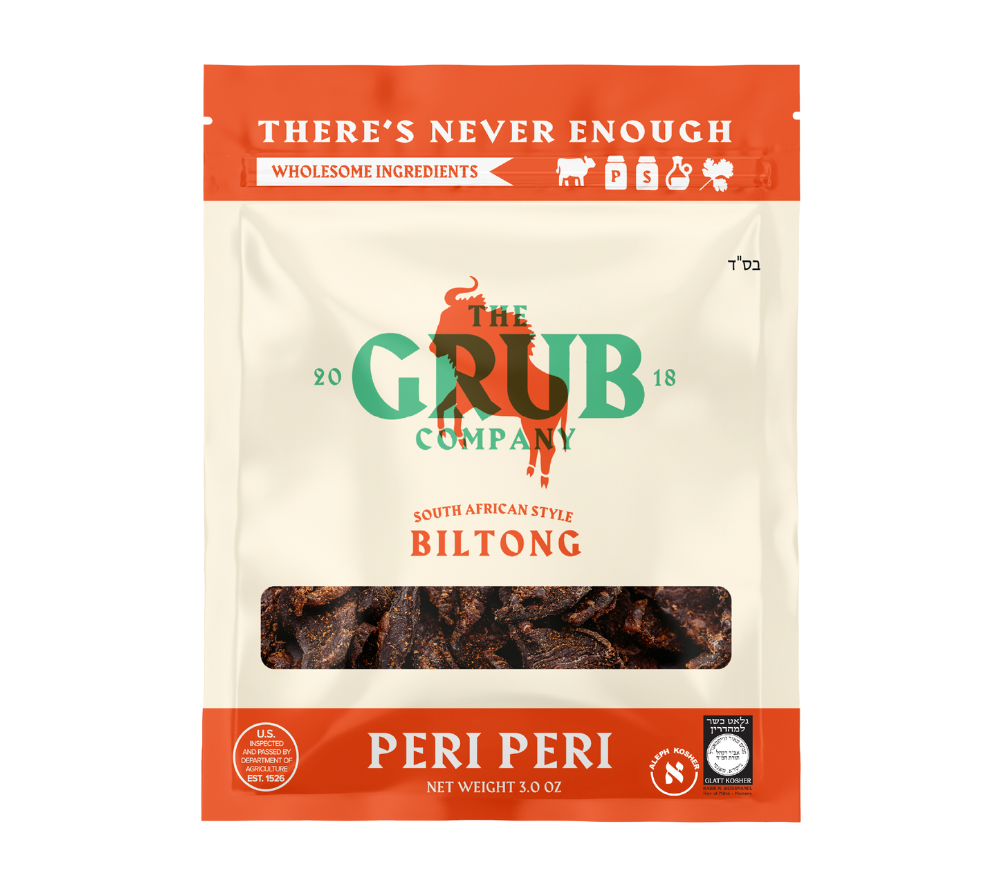
If kashrut compliance is the primary concern, the certification details on the product page are the thing to read, and they are stated there so you can check them against your own standard rather than take a label on trust.
Where kosher biltong is genuinely inconvenient
Two honest drawbacks, because they exist. The first is price. A certified supply chain and a whole muscle cut dried down to a fraction of its starting weight both cost money, and a pound of finished product started as several pounds of beef. That arithmetic is why bulk sits at $58.00 rather than at the price of a bag of chips, and no amount of explaining makes it cheaper.
The second is availability. The overlap of biltong and certification is a narrow category by definition, which means fewer options, fewer flavors and fewer places to buy it than a mainstream snack has. If you want twelve varieties on a shelf, this is not that category, and it is not going to become that category soon.
Bottom line
People buy kosher biltong because it clears several unrelated filters at the same time. Certification, carbohydrate, allergens, shelf life, portability and tradition are six different problems, and a dried beef made from four ingredients answers all six without needing a kitchen or a refrigerator.
Pick the format by the reason you are buying rather than by price alone. A pocket sized bag at $4.99 and a pound at $58.00 are the same food solving very different problems, and the mismatch between format and use is the most common reason someone ends up disappointed with a product that was made correctly.
Frequently Asked Questions
What makes biltong kosher?
It depends on the animal and the slaughter, on shechita, and on how the meat is handled afterward under rabbinical supervision. That supervision covers the whole chain rather than the recipe alone, which is why a short ingredient list on its own is not the answer. Biltong sits unusually close to kosher meat preparation already, since salting is a step in that preparation and biltong is a method built on salt, vinegar and air. What none of that tells you is whether a specific product meets your own community's standard. Certification is specific, so check the certification stated on the product page against your own standard.
Is biltong suitable for a keto or low carbohydrate diet?
Air dried whole muscle beef loses moisture during curing and keeps its protein and fat, which leaves essentially no carbohydrate in the finished food. That makes traditional biltong straightforward for someone tracking macros, and it does not need a kitchen or a refrigerator to be useful. The distinction worth knowing is against sweetened dried meats, where a glaze or a marinade can put sugar, soy and fillers back on the panel. Traditional biltong does not carry those in the recipe. Recipes vary between makers, so read the panel on the bag you are actually buying rather than assuming.
Does biltong contain gluten, dairy or soy?
A traditional biltong recipe is beef, coriander, black pepper, salt, garlic and vinegar, which contains none of the three. That is unusual among savory shelf snacks and more unusual still among ones that are also certified kosher, which is why households managing celiac disease or a dairy allergy alongside kashrut find the search space so small. One caveat that matters: a short recipe is not the same thing as a controlled facility. Cross contamination is a separate question from ingredients, so if it matters in your household, confirm the handling controls on the specific product rather than stopping at the ingredient list.
Does kosher biltong need refrigeration?
No. Biltong is dried far enough that the moisture remaining inside it is largely unavailable, which is what water activity describes, and that is what lets it keep at room temperature without a cold chain. This is the property that puts it in emergency kits and in carry on bags. Protein is the difficult part of any home preparedness store, since grains and canned goods are easy and shelf stable protein that people will eat without cooking is not. Dried beef needs no stove, no water and no can opener. Bulk Biltong at $58.00 for a pound suits that use, since a kit is rotated rather than grazed.
Which biltong format should I buy for travel?
Sliced Biltong Mini's at $4.99 are built for it. A single portion bag is easier to pack and easier to finish than a large one you then have to reseal somewhere inconvenient, and biltong travels well for practical reasons rather than nutritional ones. It does not melt, it does not leak, it needs no cooling, and it does not shatter into crumbs at the bottom of a pack. For anyone who keeps kosher and travels, it also removes at least one meal from the list of things to solve on arrival, which is the recurring problem of kosher travel.
Why is kosher biltong more expensive than other snacks?
Two reasons, and both are structural. A certified supply chain costs money to maintain, and certification covers the whole chain rather than a single step. On top of that, a whole muscle cut dried down loses a large share of its starting weight as water, so a pound of finished product began as several pounds of beef. That arithmetic is why bulk sits at $58.00 rather than at snack aisle pricing. The second drawback worth stating is availability. The overlap of biltong and kosher certification is a narrow category, which means fewer options and fewer places to buy it.
What is the difference between slabs and pre-sliced for kosher buyers?
Practical rather than religious. A slab is dried whole and cut when you want it, which gives you control over thickness and keeps better once opened because far less surface is exposed to air. That is also the traditional way to serve it, cut fresh at the table, which is why it suits a household buying for the food they grew up with. Pre-sliced is more convenient and more consistent, and it is what you want for a lunchbox or a desk drawer. Slabs are $58.00, Sliced Biltong is $11.99, and the Sampler Pack at $12.99 is the low commitment way to start.