Why Biltong Has a Soft Core and Firm Exterior — And What That Does to Texture
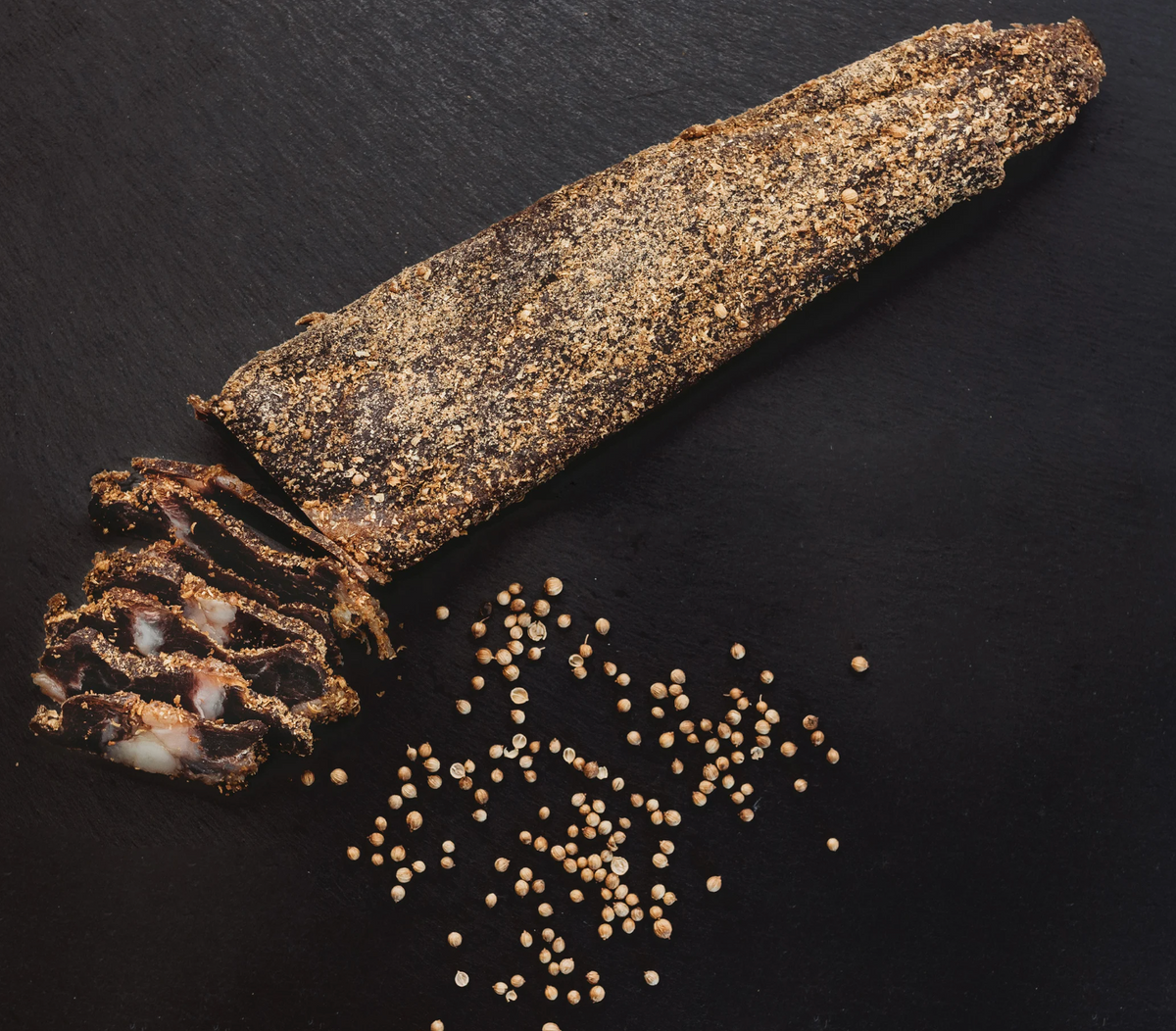
Biltong develops a moisture gradient because whole-muscle drying is rate-limited by diffusion through dense meat tissue, not by air exposure alone. The exterior loses water rapidly, reaching a water activity below 0.85 within 6 to 8 days of drying with weight loss as high as 60%, while the core stays protected by the meat's natural density and the surface crust that forms early in curing. That crust acts as a moisture barrier, slowing interior drying. The result is a gradient from firm, cured exterior to soft, yielding core that determines whether a slice tears or shears cleanly: when the gradient is intact, you get a clean shear, when it collapses, either from over-drying or from slicing exposing interior surface area to continued drying, the fibers separate instead of cutting.
Shop the real thing: buy biltong online, Glatt Kosher and made in Florida. US orders over $50 ship free.
That last part is what most conversations about biltong skip. The format you buy, slab, pre-sliced, vacuum-sealed, is not a convenience decision. It is a texture decision. It determines whether the gradient that makes biltong texturally distinct from jerky ever reaches your mouth intact. We will get to that. First, the physics of how the gradient forms in the first place.
How the Moisture Gradient Actually Forms
Whole-muscle drying works from the outside in. When a thick cut of beef hangs in a curing room, the surface is exposed to circulating air and begins shedding moisture almost immediately. The interior, separated from that air by centimeters of dense protein fiber, can only release moisture as fast as water molecules can migrate outward through the meat itself. That movement is driven by diffusion, and diffusion through whole muscle is slow relative to the rate at which air can carry moisture away from the surface.
The practical consequence is that the exterior and interior of a slab never dry at the same rate. By the time the surface has cured down to a low water activity, the core is still sitting at a noticeably higher moisture level. This is not a defect. It is the intended outcome of traditional curing, and it is what gives biltong its signature bite: firm on the outside, soft and yielding at the center, with the transition happening in the space of a few millimeters.
Early in the drying process, a surface crust begins to form. This crust, sometimes called case hardening when it goes too far, functions as a moisture barrier in the ideal case. It slows further moisture loss from the interior by adding a layer of resistance between the core and the surrounding air. When the curing process is calibrated correctly, this crust is firm but not brittle, and it locks in the gradient rather than collapsing it. The vinegar used in traditional curing contributes a low pH environment, and the salt binds water molecules, both of which work together with the low ambient humidity to bring water activity down to a level that controls microbial growth while preserving the interior's texture.
The combination of low pH, bound water, and controlled low-humidity drying is what makes biltong shelf-stable. The gradient is not incidental to that process. It is evidence that the process worked the way it was supposed to.
Why Grass-Fed Beef and a Simple Spice Blend Change the Gradient's Shape
Not all beef responds to whole-muscle drying the same way. Grass-fed beef has a denser muscle structure than grain-finished beef, and that density matters during drying. A denser muscle resists rapid surface moisture loss. The water does not release from the outermost layer in a sudden flush, so the transition from exterior to interior happens gradually rather than sharply. The result is a more even moisture gradient, one that runs from firm to soft across a wider internal distance rather than snapping from hard crust to wet center.
That is one of the reasons we source grass-fed beef for everything we make. The texture outcome is different in a way you can feel in the bite. It is not just a sourcing principle. It changes the mechanical behavior of the cured meat at the moment you eat it.
The spice blend compounds this. A heavy salt-and-sugar crust, the kind used in some commercially made cured meats, creates an aggressively thick surface layer that dries hard and fast. That can produce a sharp, almost brittle exterior over a still-wet core, which is a version of the gradient, but a poorly shaped one. Our blend is simple, and deliberately so. A lighter crust allows the drying to proceed more gradually and the gradient to build across a longer internal distance. The exterior firms without going brittle. The core softens without staying wet. When the two meet at the right ratio, that is when a slice shears clean rather than tearing apart at the fibers.
Here is what that means in practice. Take a freshly sliced piece from one of our slabs. The knife passes through with a clean drag, and the slice holds its shape. The fibers are still structurally intact at the cut face because the gradient is doing its job: the exterior provides resistance, the core provides give, and the transition zone between them is where the interesting mechanical behavior lives. That is the thing customers are describing when they say melt-in-your-mouth. They are not describing wet or mushy. They are describing a piece of meat that yields at exactly the right moment and does not require effort to eat.
Format Is a Texture Decision, Not a Convenience Decision
This is where the conversation usually stops, and it should not. Understanding how the gradient forms is only useful if you understand how quickly it can be destroyed.
Slicing biltong exposes interior surface area to ambient air. The moment a cross-section of the core is open to the environment, it begins drying at the same rate the exterior originally did. The moisture barrier that the surface crust was providing is gone. The gradient, which took days to build through the slow mechanics of diffusion-limited drying, begins collapsing from the cut face inward. If you slice a slab and leave the slices sitting out for any meaningful length of time, what you eventually eat is a piece with no real gradient remaining. The exterior is dry, the cut faces are dry, and the center, if there is still a soft zone, is a thin remnant of what was there when the knife went through.
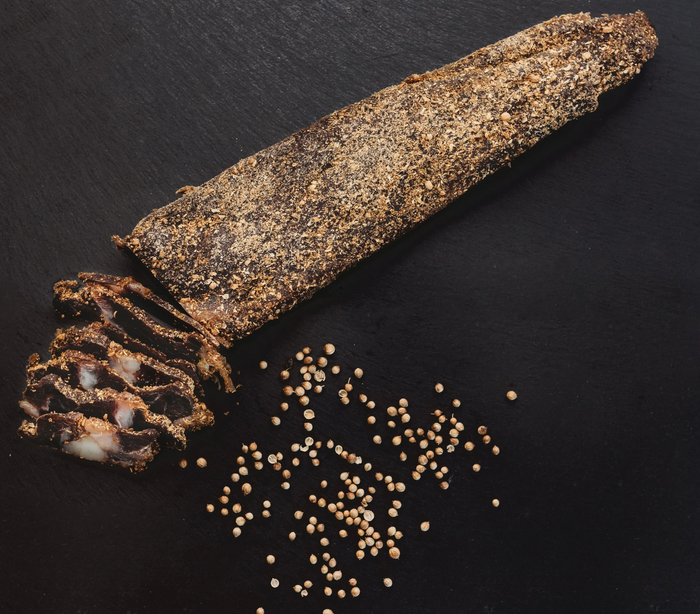
This is why the slab format exists as a distinct product and not just a novelty. Slicing fresh off the slab immediately before eating preserves the gradient almost entirely. The exposed interior is consumed before it has time to equalize with the surrounding air. You are eating the piece at the moment the gradient is most intact, which is the moment the texture is exactly what we cured it to be.
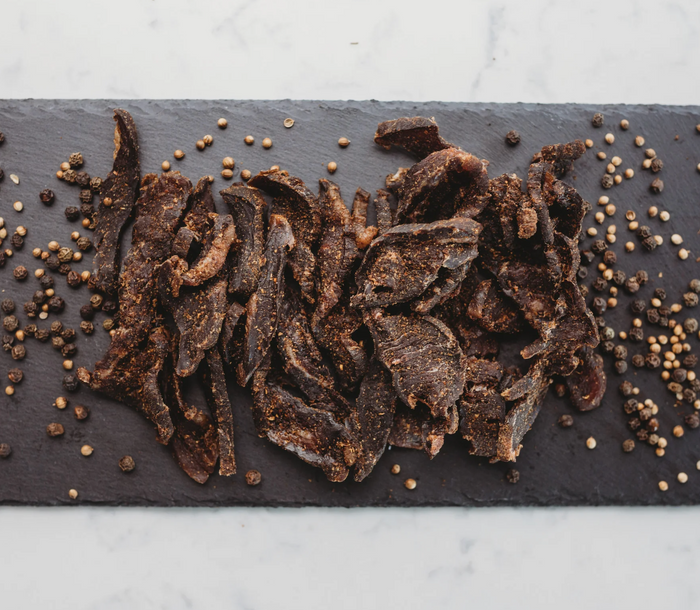
Pre-sliced biltong is a different product in a meaningful way. It is convenient. It is also a format where the interior surface area has been exposed for longer, and some degree of gradient equalization has already occurred by the time you open the bag. This is not a criticism of pre-sliced. It is a real trade-off worth naming honestly. Our sliced biltong is calibrated for the format: the drying is managed so that the gradient holds well enough through slicing and packaging that the texture is still worth eating. But it is not the same as slicing fresh from a slab.
Vacuum-sealed sliced biltong is a third category. The sealed plastic prevents air exchange entirely, which means the moisture inside the package cannot escape. That sounds like it would preserve the gradient, but it does not quite work that way. The gradient cannot re-equilibrate inside a sealed environment because re-equilibration requires air movement to carry water vapor away from the cut surfaces. What happens instead is that the moisture redistributes within the sealed package, which is not the same as a fresh cut off the slab. The texture you get when you open a vacuum-sealed bag of pre-sliced biltong reflects what the product was at the moment of sealing, held roughly in that state, but without the sharp exterior-to-interior differentiation that a freshly sliced slab delivers.
For someone who wants biltong for snacking throughout a week, pre-sliced is the practical choice. For someone who wants to understand what biltong can actually be at its textural peak, the slab is the answer. One pound of slab, sliced as you go, is a meaningfully different eating experience from a pound of pre-sliced held in a bag. We stock both because both serve different needs. But when people ask us which format is the real thing, the slab is the honest answer.
Worth knowing: slab inventory is limited because we put aside only a small allotment from each batch. Wait times for slab orders can run two to three weeks. That is not a shipping issue. It is a production reality. Each batch is a fixed yield, and the slabs are the last format we cut to order, which means they are genuinely small-batch. If you want them, order when they are in stock.
What a Collapsed Gradient Feels Like at the Bite
The difference between an intact gradient and a collapsed one is not subtle once you know what to feel for. An intact gradient produces a clean shear. The fibers cut through rather than pulling apart. The slice holds its structure right up to the moment it yields, and then it yields all at once, which is what gives biltong that melting quality. The firmness of the exterior provides the initial resistance that the jaw registers as texture, and the softness of the core provides the payoff that the palate registers as tenderness.
A collapsed gradient, whether from over-drying or from prolonged post-slice exposure, does something different. The whole piece has equalized to a uniform moisture level somewhere in the middle range. It is neither the firm exterior nor the soft core. The fibers do not shear. They tear. The piece resists and then gives unevenly, and the eating experience is work rather than pleasure. This is what happens to biltong that has been sitting out too long, or to a poorly made batch where the surface dried too fast and the core was never given time to catch up.
Over-drying is a real failure mode. If the surface hardens aggressively early in the drying process, what you end up with is a thick moisture barrier that traps the core at a higher water activity than intended. The exterior is hard, the core is under-cured, and the gradient is steep but unstable. That piece will eventually collapse to the over-dried state as the core slowly migrates water outward through the crust. The eating window for a piece like that is narrow, and it is easy to miss.
Getting the gradient right requires calibrating the drying rate against the thickness of the cut, the density of the beef, the humidity in the drying environment, and the thickness of the spice and vinegar crust. There is no shortcut. Thicker cuts need more time, and more time means more opportunity for the gradient to develop properly. This is one of the reasons that the slab format, which is the thickest cut we produce, is also the format with the most developed gradient and the most dramatic exterior-to-interior texture difference. Thin chips dry so fast and so completely that there is almost no gradient at all. They are uniform in texture by design. The gradient becomes progressively more pronounced as the cut gets thicker, which is why the slab is the format people describe as a completely different experience from sliced.
If you have only ever eaten pre-sliced biltong, the slab will reframe what you thought biltong was. That is not marketing language. It is a real thing that happens, and the physics behind it are the gradient mechanics described above. The slab lets you eat the piece at the moment the gradient is most intact, which is the moment it was made to be eaten.
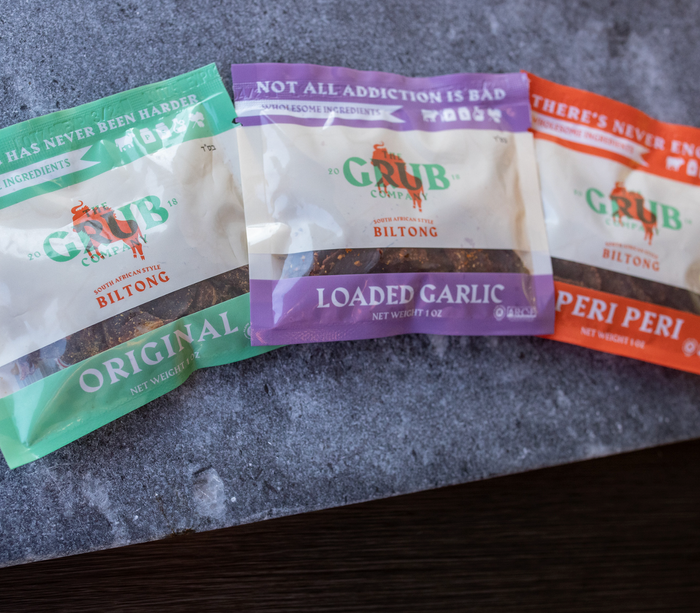
The bottom line: the gradient is the texture. Format determines whether the gradient survives. If you want the full biltong experience, slice fresh from a slab and eat immediately. If you want convenience without sacrificing too much, pre-sliced works well, and our sliced biltong is calibrated for it. If you are new and not sure which direction to go, the Sampler Pack at $12.99 is the right starting point. It will not teach you about gradients, but it will tell you which flavor is yours before you commit to a pound of anything.
There is a lot of nuance in how format and format decisions interact with texture in biltong. Here are the questions people actually ask us about this before they buy.
Frequently Asked Questions
Why does biltong feel soft in the middle but firm on the outside?
The exterior of a biltong slab dries much faster than the interior because drying is limited by how quickly water can diffuse outward through dense muscle tissue. Air carries moisture away from the surface rapidly, but the core can only release water as fast as it can migrate through the meat. By the time the surface has cured to a firm, low-moisture state, the core is still holding a noticeably higher moisture level. A surface crust forms early and acts as a barrier that slows further core drying. The result is a firm exterior and a soft, yielding center, and that contrast is what gives biltong its distinctive bite.
Does buying a slab actually taste different from pre-sliced biltong?
Yes, in a specific way. A slab sliced fresh immediately before eating preserves the moisture gradient at its most intact. The cut face is exposed for seconds before you eat it, so the interior has not had time to equalize with the surrounding air. Pre-sliced biltong has already been cut, which means the interior surface area has been drying since the moment of slicing. Some gradient equalization has occurred by the time you open the bag. The slab delivers a more dramatic exterior-to-interior texture contrast. Pre-sliced is more convenient and still good, but the gradient is less pronounced by design.
Why does biltong sometimes tear instead of cutting cleanly?
A clean shear happens when the moisture gradient is intact, giving the exterior enough firmness and the core enough give that the fibers cut through under pressure. When the gradient has collapsed, either from over-drying, prolonged post-slice exposure to air, or an aggressively hardened surface crust, the whole piece equalizes to a uniform moisture level. At that point the fibers do not shear. They pull apart unevenly. Tearing is the signal that the gradient is gone. It is most common in biltong that has been sitting out too long after slicing or was dried too fast in production.
Does vacuum-sealing preserve the moisture gradient in sliced biltong?
Not fully. Vacuum sealing prevents air exchange, which means the moisture inside the package cannot escape. That keeps the biltong from drying out further, but the moisture inside the bag redistributes rather than staying locked in the original gradient. Re-equilibration, the process by which the gradient would stabilize, requires air movement to carry water vapor away from cut surfaces. A sealed bag prevents that. What you get is the product held roughly in the state it was at sealing, but without the sharp exterior-to-interior differentiation you would get from slicing a slab fresh. It is a useful preservation method. It is not the same as fresh-sliced.
Why does grass-fed beef matter for biltong texture specifically?
Grass-fed beef has a denser muscle structure than grain-finished beef. That density affects how quickly the surface sheds moisture during drying. A denser muscle resists rapid surface moisture loss, so the exterior does not harden in a sudden flush. The moisture gradient builds gradually across a wider internal distance rather than snapping from a hard crust to a wet center. The result is a more even gradient that produces a better texture outcome: firm but not brittle on the outside, soft but not under-cured in the core. This is one concrete reason we source grass-fed beef, not just a sourcing principle.
How long does the moisture gradient last once I open a bag of sliced biltong?
Once sliced biltong is exposed to ambient air, the cut faces begin drying at roughly the same rate the exterior originally dried during production. In a dry environment, you will notice the texture shifting toward more uniform firmness within a day or two. In a humid environment, the reverse can happen and the exterior softens. Neither direction preserves the original gradient. The practical answer: eat pre-sliced biltong within a day or two of opening for the best texture. For slabs, slice only what you plan to eat immediately, and store the rest uncut so the crust continues protecting the core.
Is the slab format worth the higher price and potential wait time?
If texture is your priority and you want to experience biltong the way it is meant to be eaten, yes. Slabs are the format where the moisture gradient is most intact at the moment of consumption, because you control the slicing. Slab inventory is limited to a small allotment per batch, which means there can be a two to three week wait on orders. If you want the full experience and can plan ahead, the slab is the honest answer. If you want something you can eat immediately without any prep, the pre-sliced or the Sampler Pack is the right starting point.
Ready to pick one? Browse Biltong Bulk & Wholesale.