What the Vinegar Wash Actually Does to the Meat Before Drying Starts
A vinegar wash does three distinct things to raw meat before biltong drying begins: it lowers the surface pH to create an inhospitable environment for spoilage bacteria, it draws out surface moisture while setting the exterior so the meat can air-dry rather than rot, and it opens the outer muscle fiber layer so that spices applied immediately after penetrate deeper than surface seasoning ever could. It is a preservation and surface-prep step, not a flavor step, which is why premium biltong uses minimal vinegar and lets the meat and spice blend carry the taste.
Ready to try it? Buy Glatt Kosher biltong online. Made in Florida, free US shipping on orders over $50.
If you have ever wondered why biltong tastes nothing like vinegar but still relies on it during production, that is the answer. The wash does its job and gets out of the way. What stays is the structure it created, and you taste that structure every time you bite into a slice.
The Three Mechanisms, In the Order They Actually Happen
The first thing the vinegar wash does is drop the pH at the surface of the raw beef. Spoilage bacteria and certain pathogens need a hospitable surface environment to establish themselves. A more acidic surface makes that harder. This is not about soaking the meat in vinegar or marinating it. It is a surface microbiology intervention, applied at a specific moment in the process, before any drying begins and before any spice touches the meat. The timing is the point. You are creating an unfavorable environment for the microorganisms that would otherwise compete with the drying process and potentially compromise the product.
The second mechanism is what most people find counterintuitive. The vinegar wash both pulls moisture toward the surface and firms the outer layer of the meat at the same time. Those two things sound like they should contradict each other, but they do not. The acidity causes a light protein change at the surface that tightens the exterior, while osmotic pressure draws surface moisture out. The result is a meat exterior that is no longer wet, slick, and vulnerable, but set, slightly firm, and ready to air-dry evenly. This is the structural reason biltong uses air-drying rather than relying on salt alone. The wash preps the surface so that moving air can do the actual preservation work. Without this step, air-drying raw beef is a risk. With it, air-drying becomes the method.
The third mechanism is the one that explains why our biltong has layered flavor rather than a surface coating of spice. Vinegar opens the outermost muscle fiber layer. It does not penetrate deep into the muscle, and it is not a tenderizer, which we will come back to. But it does create a slightly more porous surface than raw, untreated beef presents. When spices go on immediately after the wash, while the surface is still slightly acidic, they are going into a receptive substrate rather than sitting on top of a closed, waxy surface. That is the physical reason our Original, Peri Peri, and Loaded Garlic flavors taste like they are coming from inside the meat rather than dusted on top of it. The wash made room for them.
Why Grass-Fed Beef Changes the Equation
Here is something that generic dried-meat content never addresses, and it matters if you care about where your beef comes from. Grass-fed beef and grain-finished beef carry different native surface microbial populations. The surface of a grass-fed animal is not the same biological environment as the surface of a grain-finished one. That difference means the vinegar wash is not a universal, one-size-fits-all step that performs identically regardless of sourcing. Its effectiveness, and the precise way it interacts with the surface, is beef-source dependent.
Grass-fed beef also tends to have a lower fat content distributed differently across the muscle, which has a direct consequence for how the wash behaves. Fat is hydrophobic. Where there is more intramuscular fat distributed across the surface, the vinegar has less direct contact with the muscle fiber itself, and the acidification at the fiber level is shallower. Leaner grass-fed cuts present more exposed muscle surface, which means the wash reaches the fiber more directly and the pH drop is more consistent across the exterior. That is not a disadvantage; it is actually part of why grass-fed biltong responds so well to the process when the wash is applied correctly for what the surface actually is.
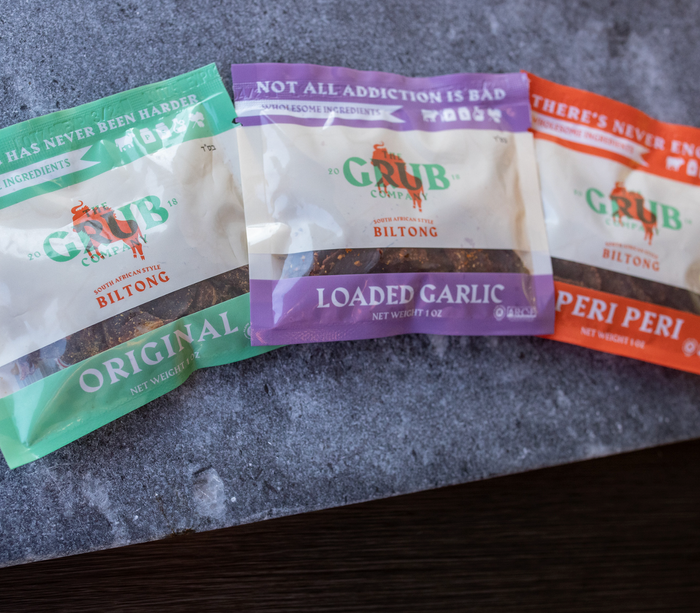
Our biltong starts with grass-fed beef across every SKU we make. The Sliced Biltong at $11.99, the Sliced Biltong Mini's at $4.99, the Bulk Biltong at $58, the Biltong Sampler Pack at $12.99 covering Original, Peri Peri, and Loaded Garlic. All of it starts with the same sourcing standard. That consistency matters because the vinegar wash in our process is calibrated to what grass-fed beef actually presents, not to the surface characteristics of commodity grain-finished meat. When you read generic explanations of the biltong curing process, they treat all beef as interchangeable. It is not. The microbial environment on the surface is one of the variables that makes the wash more or less effective, and sourcing is the input that sets that variable before the process even begins.
This is also why changing the beef source mid-process is not a neutral decision. It is not just a flavor or ethics choice. It changes the surface microbiology the wash has to work against, and anyone serious about producing consistent biltong should understand that. We stay with grass-fed beef because consistency at the sourcing level produces consistency in the curing process, not just consistency in the flavor profile.
What the Vinegar Wash Is Not, and Why That Matters
The vinegar wash does not tenderize the meat. This is a persistent misunderstanding, and it leads people to conflate biltong production with marinade-based preparations where acid is used specifically to break down muscle fiber over time. That is a different process, applied for different reasons, producing a different result. The vinegar wash in biltong is brief, surface-level, and aimed at pH reduction and exterior setting. It is not trying to change the structural integrity of the muscle below the surface.
The distinction matters in practice because the two processes produce opposite results at scale. An acid marinade left on meat long enough will denature the proteins progressively deeper into the muscle, eventually making the exterior mushy before the interior is affected at all. That degraded surface does not dry cleanly. It stays tacky, it holds too much moisture in the wrong places, and it gives the drying air nothing firm to work against. A biltong wash is timed to avoid that outcome entirely. The window is short on purpose, and pulling the meat out of that window before protein degradation moves past the outermost layer is what separates a set, dryable surface from one that will cause problems in the drying cabinet.
Tenderness in our sliced biltong comes from mechanical slicing. That is the honest answer. When you open a bag of our Sliced Biltong and the pieces are easy to pull apart and melt into a chew without resistance, that is the slice doing the work. The wash created the conditions for a well-dried exterior and good spice adhesion. The knife created the tenderness. Conflating the two gives the vinegar wash credit for something it is not responsible for, and it also makes people think that longer or more aggressive vinegar treatment would make biltong more tender. It would not. It would just alter the surface pH more dramatically and potentially affect how the spices interact with the surface during the drying window.
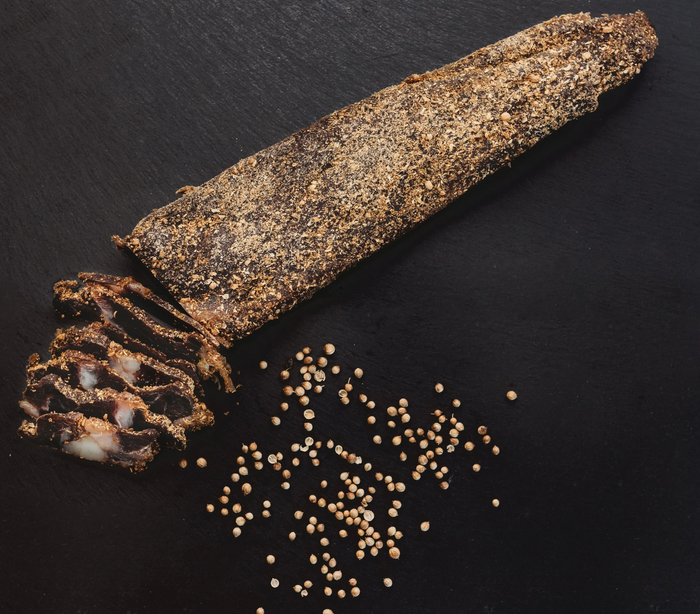
The wash is also not a flavor contributor in the way people assume. This is probably the most important clarification for anyone who is new to biltong and has been eating jerky their whole life. Jerky is a fundamentally different product with fundamentally different preservation chemistry. Our Meat Candy line is jerky, and it is made the way jerky is made. Biltong is not jerky with a different name. The structural difference between them starts at this step. Biltong uses the vinegar wash and air-drying to preserve and develop the product. Jerky relies on different methods, different moisture targets, and a different final texture. The reason a biltong slab retains enough structural integrity to be sliced fresh, the way our Biltong Slabs are meant to be used, is directly tied to how the surface was treated at the start of the process. The wash is part of why the slab holds together at all.
When you buy the Biltong Sampler Pack and taste Original, then Peri Peri, then Loaded Garlic, what you are tasting is the spice work. The vinegar did its job before any of that flavor existed. By the time the product reaches you, the wash has already served its purpose, exited the flavor profile, and left behind a surface that held the spices and dried the way it was supposed to. That is what a functional preservation step looks like when it is done correctly. You taste the absence of it going wrong, not its presence going right.
The Timing Detail That Separates Craft Biltong From Commodity Dried Meat
There is one craft detail worth understanding if you want to know what actually separates biltong made with care from biltong made to a minimum standard. Spice application timing, relative to the wash, matters. Spices applied immediately after the vinegar wash, while the surface is still in that slightly acidic window, interact with the meat differently than spices applied after the surface has had time to neutralize. The acidic surface creates a locking condition. Seasoning applied into that window binds at the surface fiber level rather than resting on top of a closed, neutralized exterior.
How quickly that acidic window closes depends on temperature and airflow in the production environment. At cooler ambient temperatures, the window stays open a bit longer. At warmer temperatures, surface neutralization happens faster and the window is tighter. In a controlled production environment this is manageable, but it is one of the reasons biltong made in humid, warm conditions is harder to execute well than the same recipe made in drier, cooler air. The window is not forgiving if you miss it. Spices applied five or ten minutes too late land on a surface that has already begun to re-close, and the difference shows up in the finished product as seasoning that tastes like it is sitting on the meat rather than part of it.
This is the process detail that produces the rich, layered flavor our customers describe. It is not the spice blend alone. A good spice blend on a poorly prepped surface gives you surface-only seasoning. The same blend applied into an acidic surface window, on a grass-fed beef exterior that has been properly set by the wash, gives you flavor that seems to come from inside the meat. That is not a marketing description. It is what actually happens when the timing is right, and it is why attention to this step produces a product that tastes different from dried meat that just had spices shaken over it.
The wash is not the part of biltong that gets talked about. The spices get talked about. The beef gets talked about. The air-drying gets talked about. But the wash is the step that makes all of those other steps work the way they are supposed to. Get it wrong, and you are managing the consequences for every step that follows. Get it right, and it disappears entirely, the way a good foundation disappears into a building you never think about because nothing is shifting or cracking.
That is the honest bottom line. The vinegar wash is infrastructure. It is not the flavor. It is the reason the flavor is possible.
If you want to taste what that infrastructure produces, the Biltong Sampler Pack at $12.99 is the right starting point. Three flavors, one order, and you will understand immediately why the process matters in a way that no explanation fully replaces.
Ready to pick one? Browse Meat Candy.