Chewy vs Tender Beef Jerky: What Decides the Texture
Jerky is chewy or tender because of how much water is left in the meat, how thick it is sliced, and which way the slice runs against the grain. Fix those three and you control the chew. We make certified Glatt Kosher jerky and biltong, and we choose a different texture for each on purpose.
Most people blame "bad jerky" when a strip fights back for two minutes. Sometimes that is fair. Often it is just a style of jerky you did not want. This guide explains what actually sets the texture, how to read a bag before you buy, and why a chewy strip is not automatically a worse one. Everything we make is certified Glatt Kosher, so the kosher shopper can follow along too.
The chew starts with water
Fresh beef is mostly water. Every dried beef snack is a decision about how much to take out.
Take out a little, and you get a soft strip that bends and gives. Take out more, and you get a firm, leathery pull. Take out nearly all of it, and the meat turns brittle and snaps. The same beef can land anywhere on that line.
This is why two jerkies from the same cut can feel nothing alike. One was pulled from the heat early. The other stayed in until it was dry all the way through. Neither is wrong. They are aimed at different bites.
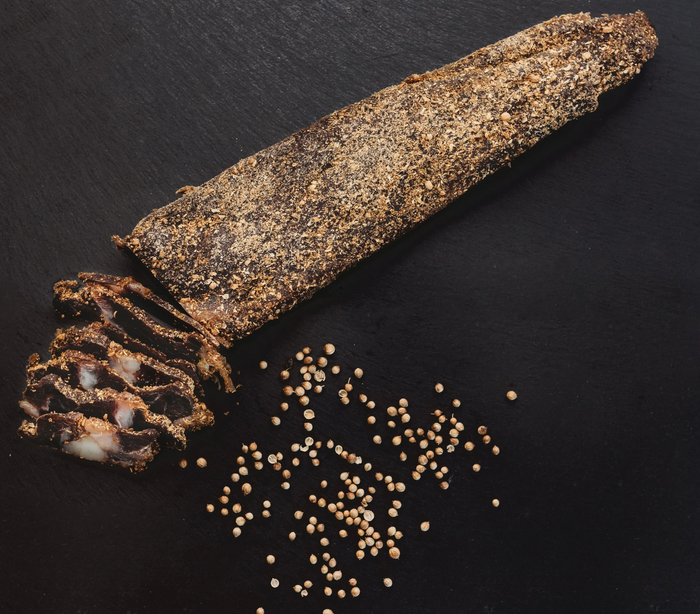
The drying method matters as well. Cooked jerky and air-dried biltong lose their water in different ways, and the texture shows it. We break down that difference in our biltong vs beef jerky comparison, but the short version is this. Jerky is cooked and dried, so it tends to be uniformly firm. Biltong is air-dried, so it often keeps a softer middle.
Thickness decides how long you chew
Water is the dial. Thickness is the multiplier.
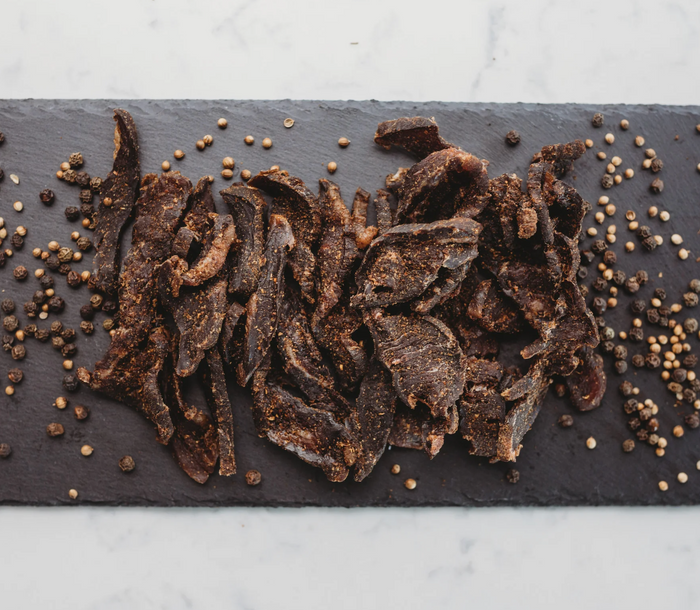
A thin slice dries fast and evenly. You bite through it quickly, even when it is fairly dry. A thick strip dried to the same point takes far more work, because there is simply more meat to get through. Thick and dry is the combination people mean when they say "it was like chewing a boot."
Thickness also changes how the jerky feels in your mouth. Thin pieces tear cleanly. Thick pieces pull and resist. If you want tender, look for thinner slices. If you want something you can really sit with, thicker slices give you that.
It is one of the easiest things to check before you buy, too. If the bag shows the strips, look at the edge. Thin and even is a good sign for a quick, easy bite.
Slice direction: with the grain or against it
Beef is made of long muscle fibers, all running one way. That direction is the grain, and where the knife goes relative to it changes the chew more than most people realize.
- Cut across the grain. The knife shortens the fibers. Each bite breaks them into short pieces, and the strip tears easily. This is the tender route.
- Cut with the grain. The fibers stay long. You have to pull them apart one at a time, so the strip stays chewy and stringy. This is the long-pull route.
Neither direction is a mistake. Some jerky is cut with the grain on purpose, because that long pull is what the maker wants. If you have ever torn a strip into long threads, that is what you were eating.
Biltong is a good example of how a maker thinks about this. We wrote about it in why biltong is cut with the grain, not against it. The cut direction is part of the design, not an accident.
The cut of beef, and what is in it
Lean muscle dries clean and firm. Meat with a lot of connective tissue or gristle stays tough no matter how carefully you dry it, because those parts do not soften the way muscle does.
This is the other big reason jerky turns out stringy or rubbery. A strip with chewy gristle running through it will be hard going at any moisture level. Good jerky starts with whole, clean slices of real beef. Anything that hides what the meat is, or is vague about it, deserves a second look.
It is also why very soft, mushy jerky is a different problem entirely. That usually points to poor meat or a poor process. We cover how to spot it in why your beef jerky is mushy. Chewy and mushy are far apart, and neither one is the same as tender.
Sugar, marinade and the glaze
What goes on the meat changes how it eats. A sweet marinade or glaze softens the first impression and gives the strip a slightly sticky, supple surface. A dry, salty cure leaves the surface firmer and the flavor more savory.
That is one reason sweet jerky often reads as more tender than a plain savory one, even at a similar level of dryness. The sugar is working on both flavor and feel.
Our own Meat Candy is the sweeter end of the shelf. It is real, whole sliced beef, cooked and glazed, in Hickory Kickory Dock and Baa-Baa BBQ Sheep. Hickory Kickory Dock is smoky hickory with the sweetness behind it. Baa-Baa BBQ Sheep is Korean BBQ, sweet and savory together. Both are certified Glatt Kosher and, being jerky, both give you a real bite rather than a melt.
Chewy or tender: which one do you actually want?
The honest answer is that it depends on the moment, and it helps to know which one you are buying.
Pick chewy when
- You want something to work on. A long pull is satisfying on a drive, at a desk or on a hike.
- You like a firm, classic jerky bite.
- You want a snack that lasts a while per piece.
Pick tender when
- You are sharing with people who find a tough strip tiring, including kids and older relatives.
- You want to eat a handful quickly.
- Jaw fatigue has put you off jerky before.
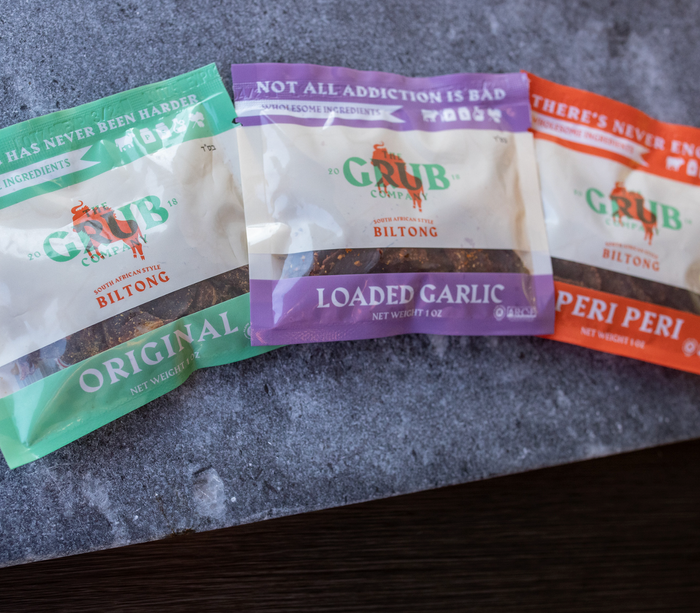
If tender is what you are after, biltong is worth a try. It is air-dried, so it gives way rather than fights back, which surprises people who were trained on jerky. Sliced Biltong comes in Original, Peri Peri and Loaded Garlic, in a ready-to-eat three-ounce bag with nothing to cut. Original is the reference point, with beef first and then the warm citrus note of coriander.
Biltong is the wrong pick if what you love is the stiff, glazed, sweet chew of classic jerky. It is a different food, and plenty of people keep both in the house. If you want to see every size and flavor side by side, Buy Biltong Online lays them out, and US orders over $50 ship free.
How to fix jerky that is too chewy
If you already have a bag that is tougher than you wanted, a few things help.
- Tear against the strip, not along it. Pull the piece across its length into shorter bits, and you shorten the fibers yourself.
- Bite small and let it soften. A small piece warms and loosens in your mouth. Trying to rip off a big mouthful makes the pull worse.
- Pair it with something to drink. A sip between pieces helps a firm strip break down.
- Do not reach for the microwave or oven. Re-heating jerky does not restore moisture. It tends to dry the surface further.
- Next time, change the style. If chewy is not for you, buy a thinner, sweeter jerky or switch to biltong.
Open bags also firm up with time. Air pulls moisture out of dried meat, so reseal the bag after you open it and finish it within a reasonable time rather than leaving it out.
What to look for when you buy
You cannot taste the bag before you order, but you can read it.
- Look at the slice. Thin, even strips are generally the easier bite.
- Read the ingredient list. Beef first, and a short list.
- Check what kind of meat it is. Whole sliced beef is the standard to hold a maker to.
- Look for the certification on the bag. For kosher buyers, the words "Glatt Kosher" should be right on the package. Our kosher beef jerky collection lists what we make under that certification.
- Know the style. Sweet and glazed, savory and cured, or air-dried. Each one chews differently.
The bottom line
Chew comes from three things you can see and one you can taste: water left in the meat, thickness, slice direction against the grain, and the cut itself. Chewy is a choice, not a defect, and tender is a choice too. Decide which one you want, then buy the style built for it.
Frequently Asked Questions
Why is my beef jerky so chewy?
Usually because of how dry it is, how thick the strips are, and whether they were cut with the grain. Thick, dry strips cut with the grain take the most work. Gristle in the meat makes it worse.
How do you make beef jerky more tender?
Start with thinner slices cut across the grain, and do not dry it past the point you want. If you are buying rather than making it, look for thin, even strips, or try a sweeter glazed jerky or air-dried biltong, which tends to give way more easily.
Is chewy jerky bad jerky?
No. Plenty of good jerky is meant to be chewy. The problem is jerky that is tough from poor meat or gristle, or mushy from a poor process. A firm, clean pull from whole sliced beef is a style, not a flaw.
Is biltong more tender than jerky?
Often, yes. Biltong is air-dried rather than cooked, and it can keep a softer middle, so it tends to give way rather than fight back. Jerky is usually firmer and more uniform. Neither is better. They are different bites.
Does sweet jerky chew differently from savory jerky?
It can. A sweet glaze gives the surface a softer, slightly sticky feel, while a dry savory cure leaves it firmer. Our Meat Candy is the sweet, glazed end of the line. Our biltong is the savory, air-dried end.
Is Grub Company jerky kosher?
Yes. Everything we make, including Meat Candy and our biltong, is certified Glatt Kosher.
Can I soften jerky that has gone hard?
Not reliably. Reheating usually dries it further. Tear it into shorter pieces, bite small, and next time reseal the bag after opening, since dried beef loses moisture to the air.