Emergency Food Supply: Shelf Stable Protein for Hurricanes and Outages
A good emergency food supply is mostly water, plus food that needs no power, no cooking and no refrigeration, and protein is the part most kits are missing. We make certified Glatt Kosher biltong and jerky, which are shelf-stable and ready to eat, so they belong in the kit as one part of it, never the whole thing.
Everything we make at Grub is certified Glatt Kosher, and all of it keeps without a fridge. That is why we think about hurricane season, ice storms and long outages more than most food companies do. This guide covers how to build a supply, what to stock, what to eat first when the power goes out, and where dried meat fits.
Start with water and official guidance, not food
Food is the second question. Water comes first. A person can get through a rough few days on very little food, but not on too little water, and salty foods make you want more of it. If you stock one thing generously, stock water.
Official guidance comes before anything we say. Your local emergency management office and national agencies publish how much water to store, how many days to plan for, and when to evacuate. Follow them, not a snack company. We will not quote their numbers here, because they change and because your region and household size change them.
Dried meat is part of a kit. It is not a kit. A bag of biltong does not replace water, a first aid kit, medication, a battery or hand-crank radio, a flashlight, a manual can opener, or a plan for where you will go. Build those first, then think about food.
What makes food "emergency" food
Four tests sort a good emergency item from a bad one.
- It needs no refrigeration. If the outage runs past a day, anything cold becomes a risk.
- It needs no cooking. You may have no stove, no gas and no safe place to light a fire. Anything you can eat straight from the package wins.
- It needs no extra water. Freeze-dried meals and dry pasta are fine, but they spend the water you need for drinking.
- You will actually eat it. A kit full of food nobody likes gets ignored, then thrown out. Stock what your household eats on a normal Tuesday.
That last test matters most. People buy a pallet of something unfamiliar and discover in a crisis that the kids will not touch it. Rotate your kit into normal meals. Eat the oldest items first and replace them, and the kit stays fresh and familiar.
A non-perishable food list that works
Here is a practical list, grouped by what each item does for you. Pick several from each group instead of twelve of one thing.
Protein
- Canned tuna, salmon or sardines, if you have a can opener
- Canned chicken or beans
- Peanut butter or other nut butter, if nobody has an allergy
- Dried meat, such as biltong or jerky
- Nuts and seeds
Carbohydrates and energy
- Crackers, rice cakes and pretzels
- Granola or cereal bars
- Dried fruit
- Instant oats, which taste better with hot water but can be eaten soaked in cold
- Shelf-stable bread, tortillas or pita
Comfort and morale
- Hard candy, plain cookies or chocolate that will not melt in a warm room
- Instant coffee or tea bags, if you can heat water safely
- Powdered drink mix, which makes stored water easier to drink
Things people forget
- A manual can opener
- Paper plates, utensils and napkins, so you do not spend water on dishes
- Baby food, formula and pet food, if they apply to you
- Any special-diet food someone in the house depends on
Check labels on everything for allergens. If someone in your home has a food allergy, our guide to biltong and common food allergies shows how we read a label.
Where shelf-stable protein fits
Protein is the gap in most emergency kits. People stock crackers, cereal and canned vegetables, then realize on day two that none of it holds them for long. Protein keeps you full, and most nonperishable lists underweight it, because the common choices, tuna and peanut butter, are not everyone's favorite.
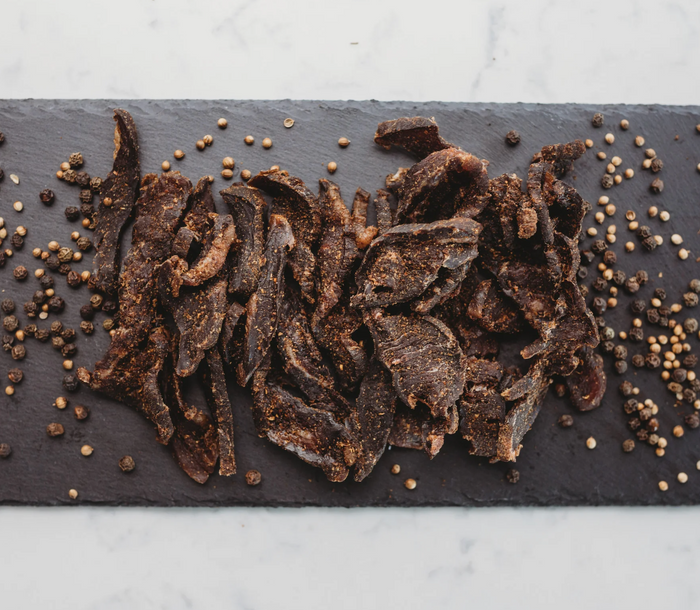
Dried meat helps for a few plain reasons. It is sealed, light and compact. It needs no fridge, no stove and no water. You open a bag and eat. It is high in protein. And it takes little space in a go-bag, which matters if you have to leave.
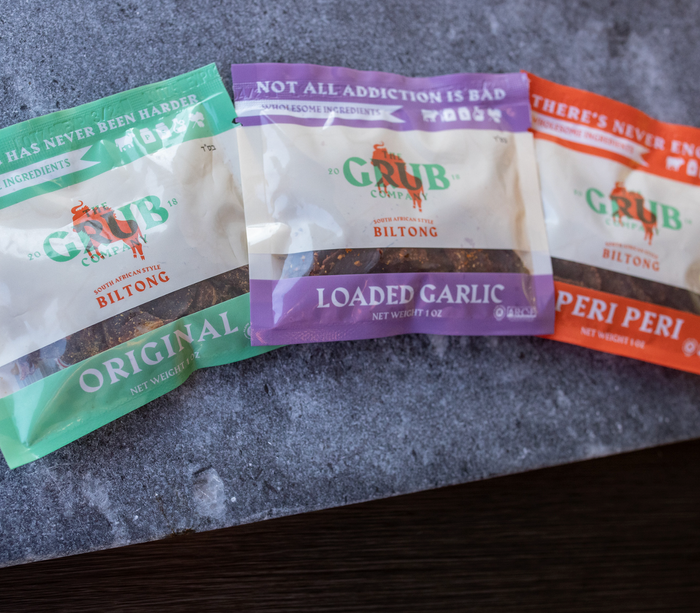
Our Sliced Biltong is the everyday option: three ounces of air-dried, sliced beef in Original, Peri Peri or Loaded Garlic. There is nothing to cut or prepare. For an emergency kit we would pick Original, because it is the mildest and suits the most people. Peri Peri has real heat, and a stressful week is not the time to find out someone cannot take it.
Our Sliced Biltong Mini's are one-ounce sealed bags in the same three flavors. They are the better fit for a go-bag or a car kit, because you can hand one to each person and nothing gets opened and left half-finished. For a larger household staying home, the three-ounce bag is better value.
If your family prefers something sweeter, Meat Candy is our cooked, glazed jerky in Hickory Kickory Dock and Baa-Baa BBQ Sheep. It is a different product from biltong, made by a different method. You can see it in our kosher beef jerky collection, or browse the full range on Buy Biltong Online.
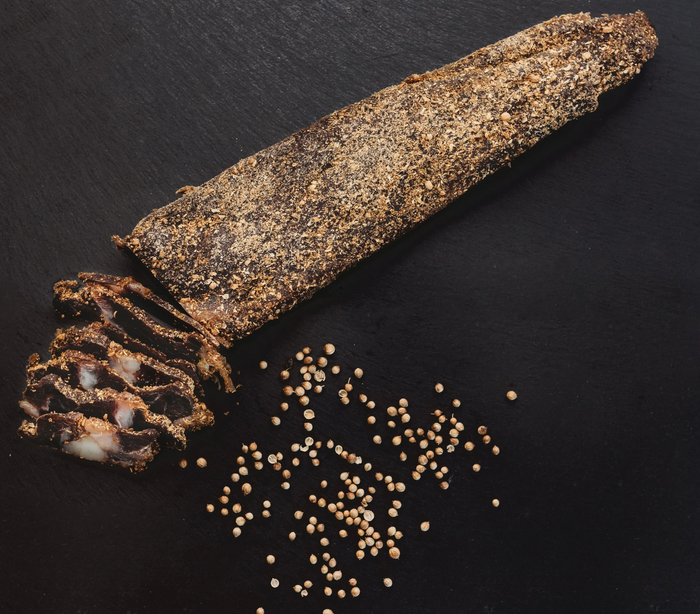
Biltong is air-dried, not cooked, and it is ready to eat as it comes. For how long a bag lasts and how to treat one once it is open, read our biltong shelf life and storage guide. Check the date and the condition of the bag before you rely on it, the same as with any item in your kit.
The honest trade-offs
Dried meat is the wrong pick as your main emergency food. Here is why.
- It is salty. Salt is part of how it keeps. Salty food makes you thirstier, and in an emergency water may be your tightest resource. If your water supply is small, lean on lower-salt items like fruit, oats and nut butter, and use dried meat as a supplement.
- It is a snack, not a meal plan. Biltong gives you protein. It does not give you fiber, variety or the carbohydrates you need for energy. Pair it with crackers, fruit and grains.
- It costs more by weight than canned goods. Cans of beans and tuna feed a household more cheaply. Buy those for volume, and buy dried meat for convenience and for the bag you grab on your way out the door.
- Heat is not your friend. A bag left in a hot car for weeks is not the same as one in a cool pantry. Store it in a cool, dry place and swap it out on a schedule.
If someone in your home has a medical condition that limits salt or protein, ask your doctor what belongs in their kit before you buy anything.
First 24 hours: what to eat when the power goes out
Eating in the right order saves food and protects your health. Official guidance covers food safety in detail, so check it for the specifics. The general order is simple.
- Eat what is already open and cold first. Leftovers and opened dairy go before anything else.
- Then the refrigerator. Keep the door closed as much as you can, and use perishable items first.
- Then the freezer. A full, closed freezer stays cold longer than a half-empty one.
- Last, the pantry and the kit. Shelf-stable food waits, because it will not spoil while you eat the rest.
If you are not sure whether perishable food is still safe, follow official food safety guidance and do not guess. When in doubt, throw it out. That is the one time wasting food is right.
This is where a stocked kit pays off. While the cold food is going, you are not scrambling. You eat the perishables, and the shelf-stable protein sits ready for day two and beyond.
Keeping kosher in an emergency
A kit is easier to live with if it matches your household's habits. If you keep kosher, stock items with a reliable kosher certification, and keep meat and dairy separate as you normally would. Pack separate paper plates and utensils for each, so you are not trying to wash them with limited water. Wait between meat and dairy according to your family's custom.
Questions that come up in a real emergency, such as what is permitted when food is scarce or when an outage overlaps Shabbat or a holiday, are not ours to answer. Ask your rabbi, ideally before the storm, so you know the answer in advance. For Passover, check any item for a Pesach certification.
Build the kit in three layers
A simple way to put this together without feeling overwhelmed:
- The go-bag. Light, one bag per person, ready to leave. Water, a few sealed protein snacks such as Minis, crackers, dried fruit, any medication, and copies of important papers.
- The stay-home shelf. A bin in a cool closet. Cans, nut butter, crackers, cereal, oats, bigger bags of dried meat, a can opener, plates and utensils.
- The rotation habit. Twice a year, such as when the clocks change, check dates, eat the oldest items and replace them. A kit you never check is a kit that fails you.
Hurricane season is the time to do this, before a storm is on the map. Stores empty fast once a warning goes out, and water and protein go first.
The bottom line
Build the kit around water, official guidance and a plan. Then stock food you will actually eat, with protein in the mix, because it is the thing most kits skip. Dried meat is a good, compact part of that. It is not the whole answer. Pick Original for the mildest flavor, Minis for the go-bag, and rotate everything.
Frequently Asked Questions
What is the best shelf-stable protein for an emergency?
There is no single best one. Canned fish and beans give you volume at a low cost, nut butter is easy if nobody is allergic, and dried meat like biltong or jerky is the most compact and needs nothing but opening the bag. A mix of two or three covers different needs and tastes.
Is biltong okay to eat without refrigeration?
Yes. Biltong is air-dried and sold shelf-stable, so a sealed bag does not need a fridge. Keep it in a cool, dry place, and read our guide to how long an opened bag lasts for what to do once it is open.
Do I need to cook biltong or jerky?
No. Both are ready to eat as they come. Biltong is air-dried, and Meat Candy is cooked and glazed before it is packed. Open the bag and eat.
What should I eat first when the power goes out?
Eat opened and cold food first, then the refrigerator, then the freezer, and save shelf-stable items for last. Follow official food safety guidance on what is still safe, and throw out anything you are unsure about.
How much food should I store for a hurricane?
Follow your local emergency management office. They set the recommended number of days and amounts of water for your area and household size, and those figures change. Water comes first, then food.
Is dried meat enough on its own?
No. It is high in protein, but it is also salty and lacks the fiber and carbohydrates you need over several days. Pair it with grains, fruit and plenty of water, and treat it as one part of a kit.
Is your biltong kosher for an emergency kit?
All our biltong and Meat Candy is certified Glatt Kosher. It is beef, so keep it with your meat items and away from dairy. If you have a question about a specific situation, such as Shabbat or a holiday during an outage, ask your rabbi.