Smoked Beef Jerky: What Smoke Actually Does to the Meat
Smoke gives jerky its flavor, its color and a little surface protection. It does not make jerky safe to store. Drying and salt do that. If a bag says "smoked," read it as a flavor choice, and check whether it means real wood smoke or smoke flavoring. Our own biltong and beef jerky are certified Glatt Kosher, made in Florida.
Related: Bacon Jerky and Pork Jerky: The Kosher Alternatives That Hit the Same Spot
We make certified Glatt Kosher biltong and beef jerky, and "smoked" is one of the most misunderstood words on a jerky bag. Here is what smoke does to beef, what the label can mean, how the common woods differ, and when an unsmoked snack is the better pick.
What smoke actually does to the meat
Burning wood makes smoke. Smoke is a cloud of tiny particles and gases, and those settle on wet meat and dissolve into the surface. Three things follow.
- Flavor. Smoke carries aromatic compounds that read as smoky, sweet, woody or bitter, depending on the wood and how hot the fire ran. This is the main reason anyone smokes jerky.
- Color. Smoke darkens the surface to a deep brown or mahogany. It is why smoked strips often look richer than plain dried ones.
- Some surface protection. Compounds in smoke make the outside of the meat a harder place for microbes to grow. This helps. It is a supporting role.
Notice what is missing from the list: smoke does not dry the meat, and it does not season it through. Smoke only reaches the outer layer. The inside of a jerky strip tastes like the meat and the marinade, not the smoke.
Smoke is not what keeps jerky safe
This is the point people get wrong most often. A smoky smell feels like proof of preservation. It is not.
Jerky is shelf-stable because it is dry and salted. Take most of the water out and add enough salt, and bacteria cannot do much. Smoke is a bonus on top of those two. A strip that was smoked but left too moist is still a risky strip. A strip that was never smoked but dried properly is a safe one.
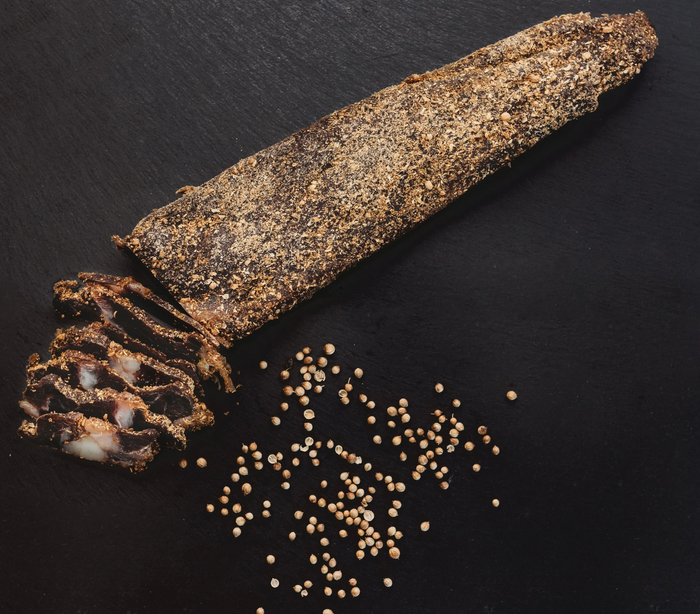
That is why biltong has no smoke at all. It is air-dried with vinegar, salt and spices, and it keeps well on the shelf. We cover the method in Is Biltong Cooked? What "Air-Dried" Actually Means. Smoke is a choice about taste. It is not a requirement for dried beef.
Three things "smoked" can mean on a label
Not every smoked jerky is smoked the same way. Read the ingredient list and the small print near the name.
1. Smoked over real wood. The strips spend time in a smokehouse or smoker with burning wood. Labels often say "naturally smoked" or name the wood. This is the traditional method. The flavor tends to be layered and a little uneven from strip to strip, which is a sign of the real thing.
2. Liquid smoke. Liquid smoke is smoke that has been captured, condensed into a liquid and added to the marinade. It is real smoke chemistry, sold in a bottle. Many good jerkies use it. It gives a steady, even smoky note without a smoker. On an ingredient list it shows up as "natural smoke flavor" or "hickory smoke flavor."
3. A smoky flavor name. Some bags simply call a recipe "smoky" or "hickory" because that is the taste profile they are going for. The name describes how it tastes. It does not tell you how it was made.
None of these is dishonest. They are different routes to a similar result. What matters is that you know which one you are buying. If the process matters to you, the ingredient list and the maker's own page will tell you. If neither says, ask.
Hickory, mesquite, apple, cherry: how the woods differ
The wood sets the tone. These are the ones you will see most.
- Hickory. The classic. Strong, savory, a little sweet, the flavor most people picture when they think of smoked meat. It stands up well to sweet glazes.
- Mesquite. Sharper and earthier than hickory. It can turn harsh when overdone, so it tends to show up in small doses.
- Apple and cherry. Gentle and fruity. They add color and a soft sweetness without much punch.
- Oak. Middle of the road. Steady, mild, and good at taking a back seat to the marinade.
Our Meat Candy (aka Beef Jerky) comes in a flavor called Hickory Kickory Dock. It is smoky hickory with the sweetness sitting behind it rather than in front, and it is the one that tastes closest to what most people mean by jerky. That describes how it tastes. It is a flavor, not a claim about how the smoke gets there.
Why heat and time matter as much as the wood
Two jerkies smoked over the same hickory can taste nothing alike. The difference is how the smoking was run.
Jerky is dried gently. A low, steady temperature removes water without cooking the strip into a tough, dry cracker. Smoke is usually part of that same slow process. A long, cool smoke lays down flavor gradually. A fast, hot one can leave a bitter, acrid edge, the kind that sits on your tongue after you swallow.
Moisture matters too. Smoke sticks best to a surface that is slightly tacky, which is one reason makers often let marinated strips sit before they go in. A strip that is too wet steams. A strip that is too dry takes the smoke poorly. Getting that balance right is craft, and it is hard to judge from a bag. You judge it by taste.
Sugar plays a part as well. Sweet glazes and smoke are old partners, because sweetness softens smoke's bitter side. That is why so many smoky jerkies are also sweet, and why a sweet-and-smoky strip often feels more rounded than a plain smoky one.
The takeaway is simple. "Smoked" tells you very little by itself. The wood, the time, the temperature and the marinade all change what ends up in your mouth. When you find one you love, note the flavor name and buy that one again.
How to pick a smoked jerky you will actually like
Four checks, in order.
- Read the ingredients. Short is good. Beef first. Look for "smoke flavor" if you want to know whether liquid smoke is in there.
- Look at the meat. Real sliced beef has a visible grain. Be cautious of strips that are uniform and rubbery, which can point to formed or reconstituted meat. We wrote about this in why jerky ends up mushy.
- Decide how smoky you want it. Some jerky is a whisper of smoke. Some is a campfire. If you are buying for a group, go for the gentler end.
- Check the certification. If you keep kosher, smoke adds a question that plain biltong does not. Smoke flavorings and liquid smoke are ingredients, and ingredients need to be certified like everything else. A kosher mark on the bag covers the whole product. A bag without one tells you nothing. For the basics, see our kosher beef jerky collection and our guide on what to check on a jerky bag.
When smoked is the wrong pick
We like smoke. We also think it is the wrong choice in a few cases.
- You want to taste the beef. Smoke is loud. It covers a lot. If you want to judge the meat itself, an unsmoked snack is more honest.
- You are serving a mixed table. A strongly smoked strip divides people. A mild, savory one rarely does.
- You want it savory, not sweet. Smoked jerky is often paired with a sweet glaze. If sweet is not your thing, biltong is the better road. Our Sliced Biltong is salty, savory and air-dried, with no smoke. Original is beef first, then the warm citrus note of coriander. If you have never had it, start there.
- You are worried about heavy smoke on the surface. Heavily smoked foods are a matter of taste for some people. If it bothers you, pick a lighter product or skip it.
Biltong is not smoked, and it is not trying to be jerky. It is a different method with a different texture. If you want to see the whole range, Buy Biltong Online lays out every size and flavor.
Bottom line
Smoke is flavor, color and a small amount of surface protection. Drying and salt do the keeping. When you shop, find out whether "smoked" means real wood, liquid smoke or just a flavor name, and make sure the certification covers every ingredient. If you want smoky, sweet-edged jerky, Hickory Kickory Dock is where we would start. If you want savory and smoke-free, try the biltong.
Frequently Asked Questions
Does smoking make beef jerky last longer?
A little, at the surface. The real work is done by drying the meat and adding salt. Smoke supports that work. It cannot replace it.
Is smoked jerky cooked?
It depends on how it was made. Jerky is generally dried at a low temperature, and smoking can be part of that step. The ingredient list and the maker's page are the places to look for the specific process.
What is liquid smoke?
It is smoke that has been captured and condensed into a liquid. Makers add it to a marinade to get a smoky taste without a smoker. It shows up on labels as "natural smoke flavor" or "hickory smoke flavor."
Is "naturally smoked" the same as "smoke flavor"?
Not necessarily. "Naturally smoked" usually points to real wood smoke. "Smoke flavor" usually points to liquid smoke. If it matters to you, ask the maker.
Is smoked beef jerky kosher?
Only if the meat and every ingredient are certified, including any smoke flavoring or liquid smoke. Look for a certification mark on the package. If you are unsure about a specific product, ask your rabbi.
Is biltong smoked?
No. Biltong is air-dried with vinegar, salt and spices. Our biltong has no smoke in it. The smoky flavor in our line comes from the Hickory Kickory Dock flavor of Meat Candy.
Which wood is best for smoking jerky?
Hickory is the classic for a strong, savory-sweet flavor. Apple and cherry are gentler. Mesquite is sharper and works best in small amounts. It comes down to taste.