Types of Biltong: Meat, Dryness, and Flavor Explained
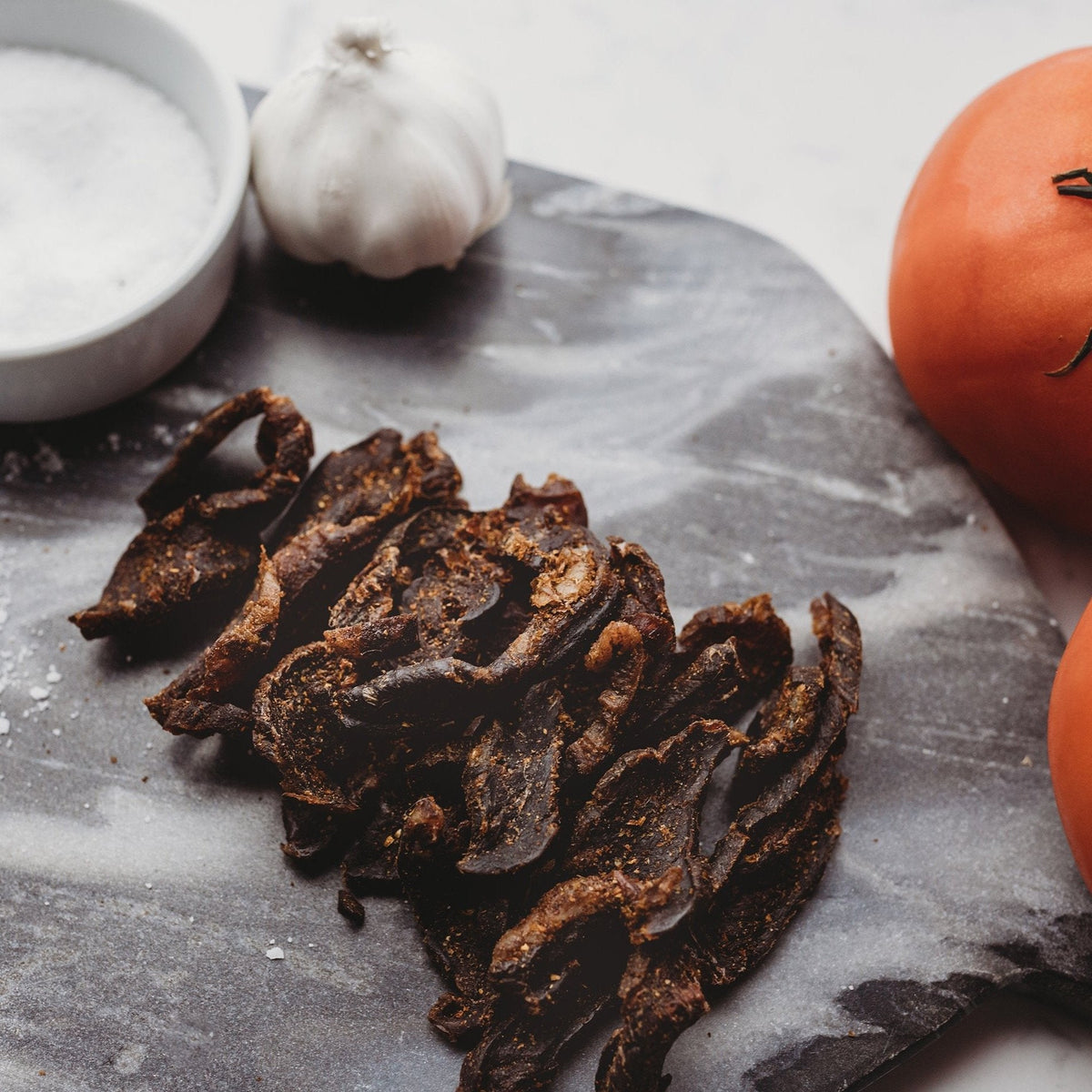
Biltong types break down across three dimensions: the meat it is made from, how much moisture is left in it, and how it is seasoned. Get those three right and you know what is in a package before you open it. A fourth dimension, the format the meat is cut into, decides more about your experience than any of the first three, and almost nobody mentions it.
This is a subject where the vocabulary is a mess. Wet and dry are used loosely, sliced and slab mean different things to different people, and traditional covers about four different spice mixes depending on who is talking. Here is how we use the terms, and more usefully, what each one actually changes about the thing you eat.
By meat type
- Beef biltong is what most people picture and what almost every commercial producer makes. Lean cuts like topside, silverside and eye of round dry cleanly and hold their texture, and the low fat content is the reason. If you are starting anywhere, start here.
- Game biltong is the original. Kudu, springbok and other game were the meats dried in southern Africa long before beef took over commercially. Game is leaner still than beef, which gives a firmer chew and a more mineral, more pronounced flavor.
- Poultry and ostrich biltong is the modern branch. Ostrich is worth knowing about because it is red meat rather than white and it takes to curing far more like beef than chicken does. Chicken biltong is a different proposition again and behaves very differently in the dryer.
We make beef. That is a deliberate narrowing rather than a limitation we are apologizing for, because beef from consistent lean cuts is the version that can be made the same way every single time, and consistency is most of what separates good dried meat from a lottery.
Why the cut matters more than the animal
Within beef, the cut does more work than people expect. Silverside and topside are the traditional choices because they are large, uniform and lean, which means a producer can trim them into pieces of matching thickness with very little waste. Uniform pieces dry at the same rate. Mixed pieces do not, and a batch that dries at different rates is a batch where some of it is right and some of it is not.
Lean is the other half of it. Fat does not release water the way muscle does, so a heavily marbled cut dries unevenly by its nature. That is why nobody makes biltong from the cuts you would choose for a steak. The qualities that make a cut good to grill are close to the opposite of the qualities that make it good to dry.
By dryness
- Wet biltong holds more of its moisture and eats softer, with a yielding center and a shorter window before it changes in storage. A lot of people consider this the better eating version and they have a real case.
- Dry biltong has been taken further. It is firmer, pulls apart more like a dense jerky, keeps longer and travels better.
- Medium is where most commercial product actually lands, because it is the range where a single batch can satisfy most people rather than dividing them.
Dryness is a spectrum rather than three boxes, and this is the axis most likely to make two packages that look identical eat completely differently. It is also the axis that keeps moving after you buy, because a dried product left in dry air keeps drying and a dried product left in damp air does the reverse.
What dryness actually changes
Texture is the obvious one, but the more interesting effect is on flavor concentration. Water leaving the meat leaves everything else behind at a higher concentration, so a drier piece tastes saltier and more intensely of beef and spice than a wetter piece from the exact same batch. Nothing was added. The dilution changed.
Keeping quality moves with it too, for the reason described everywhere in this subject: less available water means fewer conditions for anything to grow. That is the trade being made. Wetter is generally better eating and less forgiving over time. Drier is more forgiving and firmer in the mouth. Neither one is the correct answer and anyone who tells you otherwise is describing their own preference.
By spice profile
- Plain is salt and vinegar with minimal seasoning. You are tasting the beef, which is the point, and it is unforgiving of mediocre beef.
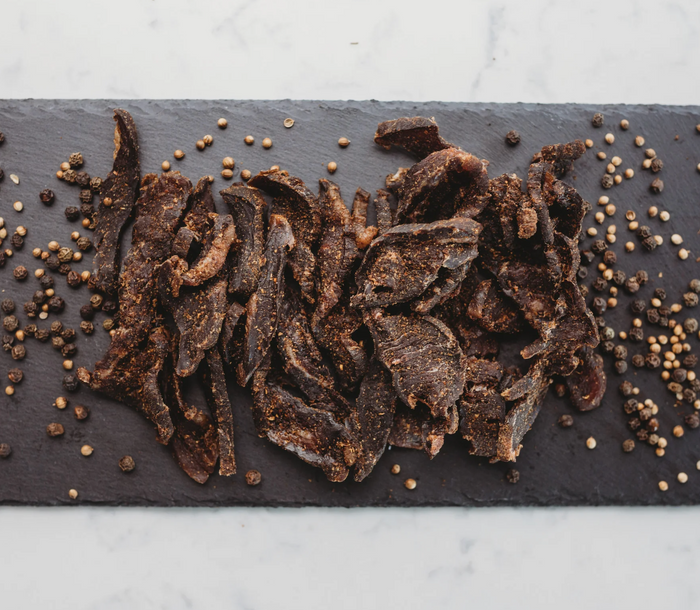
- Traditional or spiced is coriander first, then black pepper, sometimes garlic. Coriander is the backbone of almost every southern African recipe and it works because it sits with the vinegar instead of fighting it.
- Peppered pushes black pepper to the front deliberately. It is not spiced biltong turned up, it is a different balance where the pepper leads and the coriander supports.
- Chili and hot styles are a modern addition and they are exactly what they sound like. Heat covers a lot, so they are a poor way to judge the meat underneath.
Why coriander is the constant
Almost every traditional biltong recipe has coriander in it, and it is not a habit that survived by accident. Coriander is citrusy and slightly sweet, and it lands in the same register as the acetic tang of the vinegar rather than opposing it. Toasted and cracked rather than ground fine, it also gives the surface a texture that you notice in the bite.
Take it out and the vinegar has nothing to lean on, which is why plain biltong reads sharper than people expect. Push it too far and it becomes the dominant flavor and the beef disappears behind it. The band where it is right is fairly narrow, and getting it right is a large part of what makes a spice mix worth keeping.
The fourth axis nobody names: format
Meat, dryness and spice are the axes everybody lists. Format is the one that decides your actual experience, and it splits into three real categories.
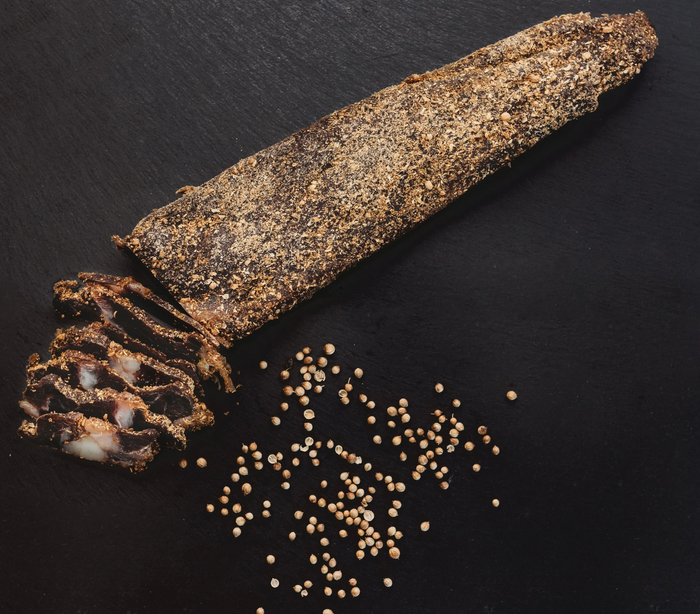
A slab is dried whole and cut later. The interior spent the whole drying period a long way from any surface, which produces a different gradient through the piece and lets you cut it to whatever thickness you want on the day. Sliced product is cut before or soon after drying, which means far more exposed surface and a piece that is uniform all the way through. Small pieces are sliced product taken further, with the highest surface to volume ratio of anything in the category.
Those are not packaging decisions. A slab and a slice from the same beef and the same spice mix are two different eating experiences, and someone who dislikes one may well like the other.
Thickness and the direction of the cut
How thick a piece is cut changes the chew more than most people credit. A thick cut gives you resistance and a long slow bite. A thin cut is immediate and reads much drier even when it is not, because there is less of it between your teeth.
Direction matters as well. Cutting across the grain shortens the fibers and makes a piece easier to bite through. Cutting along the grain leaves long fibers and gives you that stringy pull some people love and others find like work. This is entirely a preference and it is worth knowing which one you have, because it explains a lot of disagreements about whether a particular product is tough.
What the fat edge is doing
Lean cuts still carry a fat border, and what happens to that border is one of the sharper dividing lines in biltong. Fat holds onto what it has while the muscle around it dries, so the fat edge on a finished piece stays softer and richer than everything next to it. Some people cut it away without thinking. Others consider it the whole reason to eat the stuff.
Practically, the fat edge is also the part that changes first in storage, and it is the usual place a white bloom shows up. That bloom is generally surface fat or salt presenting itself rather than anything wrong. Fuzzy growth with real texture is a different matter and a different look entirely.
How much of the beef is left at the end
A finished piece of biltong weighs a lot less than the beef it started as, because water is most of what left. That is worth knowing when you are looking at a package, because it explains both the price and the intensity. Everything that was in the meat other than water is still there, concentrated into a smaller object.
It also explains why drier styles cost more per finished ounce than wetter ones from the same producer. A drier product gave up more weight to the air, so more raw beef stands behind each ounce you buy. Comparing two biltong prices without knowing where each sits on the dryness axis is comparing two different quantities of meat wearing the same label.
Shapes that are really formats, not types
Sticks, chunks, shavings and strips get talked about as if they were types of biltong. They are formats, which is to say decisions about cutting rather than about the meat, the cure or the drying. A shaving and a chunk from the same batch are the same product presented at two different surface areas.
That distinction matters because format is doing the work people attribute to the recipe. Shavings taste more intensely of spice because there is proportionally more seasoned surface in every mouthful. Thick chunks read as meatier for the same reason in reverse. Nothing changed in the cure. The knife changed, and the knife is a bigger lever on your experience than most spice mixes are.
How the types combine in practice
The axes are independent, which means the real number of possible products is large. A dry peppered slab and a wet traditional slice are both beef biltong and they have almost nothing in common in the hand. This is why asking whether someone likes biltong is close to meaningless as a question, and why so many people who say they tried it and did not care for it simply met one point on a four dimensional grid.
If you are working out your own preferences, change one axis at a time. Try two dryness levels at the same spice, or two spice mixes at the same dryness. Changing everything at once tells you which package you preferred and nothing about why.
Reading a package before you buy
- The cut named on the label, since it tells you about leanness and consistency.
- Whole muscle or reformed, which is the biggest single quality fork there is.
- The ingredient list, which should be short and should name the spices.
- Sliced or slab, because that decides your experience more than the words on the front.
- Any description of dryness, and how specific it is.
Where our range sits on the grid
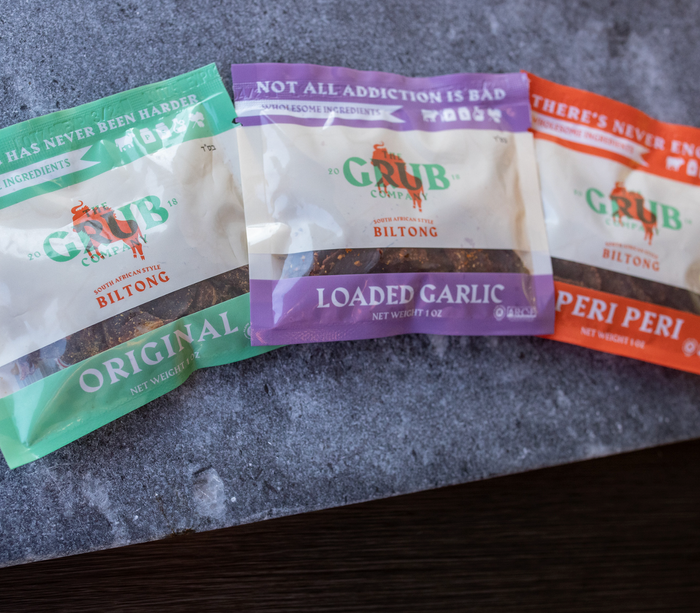
Everything we make is beef, whole muscle, air dried after a vinegar and salt cure. What varies is the format and how much of it you want. Sliced Biltong Mini's at $4.99 is the smallest way to find out what you think. Sliced Biltong at $11.99 is the standard. The Biltong Sampler Pack at $12.99 is the piece of the lineup designed for exactly the experiment described above, tasting across the range rather than committing to one point on it.
Biltong Slabs at $58.00 are the whole dried format for people who want to cut their own thickness and control the eating experience directly. Bulk Biltong at $58.00 is a pound of sliced product for people who already know what they like. Meat Candy at $7.99 is our beef jerky, which is heat dried rather than air dried and is therefore not a type of biltong at all.
Bottom line
Four axes, not three. The meat, the dryness, the spice and the format, and the format is the one that changes your experience most while getting mentioned least. Beef from lean cuts is the reliable center of the category. Dryness is the axis that divides opinion hardest and the one that keeps moving after you buy. Coriander is why traditional tastes the way it does. If you are new, buy small, change one variable at a time, and pay attention to whether you prefer a slab you cut yourself or slices someone else cut for you.
Frequently Asked Questions
What is the difference between wet and dry biltong?
How far the drying was taken, and it changes more than texture. Wet biltong holds more of its moisture, eats softer with a yielding center, and has a shorter window before it shifts in storage. Dry biltong is firmer, pulls apart more like a dense jerky and travels better. The less obvious effect is on flavor concentration. Water leaving the meat leaves the salt, spice and beef character behind at a higher concentration, so a drier piece tastes more intense than a wetter one from the same batch even though nothing was added. Most commercial product lands in the middle.
Which cut of beef makes the best biltong?
Silverside and topside are the traditional choices, along with eye of round, and they win for two reasons. They are large and uniform, so a producer can trim them into pieces of matching thickness with very little waste, and uniform pieces dry at the same rate. They are also lean, which matters because fat does not release water the way muscle does, so a heavily marbled cut dries unevenly by its nature. The qualities that make a cut good to grill are close to the opposite of what makes it good to dry.
Is a slab a different type of biltong or just a bigger piece?
It is a genuinely different product. A slab is dried whole and cut later, so its interior spent the entire drying period a long way from any surface, which produces a different gradient through the piece. It also lets you cut to whatever thickness you want on the day, and thickness changes the chew considerably. Sliced product is cut before or soon after drying, so it is uniform all the way through and has far more exposed surface. A slab and a slice from the same beef and the same spice mix are two different eating experiences.
Why is coriander in almost every biltong recipe?
Because it sits with the vinegar rather than fighting it. Coriander is citrusy and slightly sweet, which lands in the same register as the acetic tang of the cure and rounds it out. Cracked rather than ground fine, it also gives the surface a texture you notice in the bite. Take it out and the vinegar has nothing to lean on, which is why plain biltong reads sharper than people expect. Push it too far and it becomes the dominant flavor and the beef disappears. The band where it is right is narrow, and hitting it is most of what makes a spice mix worth keeping.
What is the white coating on my biltong?
Most often it is surface fat or salt presenting itself, and it turns up around the fat edge more than anywhere else. It looks powdery or waxy, it sits flat against the surface, and it wipes away. Fuzzy growth is a different thing entirely. It has real physical texture, it appears in patches rather than as an even coat, and it means the piece met more moisture than it should have. The smell settles it when the look does not. The fat edge is also simply the part that changes first in storage, because fat holds onto what it has while the muscle around it dries.
Does ostrich biltong taste like chicken biltong?
No, and the grouping under poultry misleads people. Ostrich is red meat rather than white, and it takes to curing far more like beef than chicken does, with a deeper and more mineral character. Chicken biltong is a different proposition again and behaves very differently while drying. Game biltong from animals like kudu and springbok sits closer to ostrich than to beef, leaner than beef with a firmer chew and a more pronounced flavor. Beef remains the commercial center of the category because it is the version that can be made the same way every time.
How do I work out which type I actually like?
Change one axis at a time. Try two dryness levels at the same spice, or two spice mixes at the same dryness, and keep the format constant while you do it. Changing everything at once tells you which package you preferred and nothing about why. The four axes are the meat, the dryness, the spice and the format, and they are independent, so the number of genuinely different products is large. A lot of people who say they tried biltong and did not care for it simply met one point on that grid.
Choosing between those formats is easier with the actual sizes and prices in front of you. Sliced, minis and whole slabs, side by side, with a note on which one suits which situation.