Biltong For High-Protein, Low-Carb Diets: What You Need To Know
If you're eating low-carb or keto, finding a snack that actually fits your macros without tasting like punishment is harder than it should be. Most protein bars are glorified candy. Jerky is loaded with sugar and fillers. Biltong is different, and not in a marketing way, in a how-it's-actually-made way.
Related: Protein Snacks on the Go: What Survives a Bag All Day · Carnivore Diet Snacks: Biltong, Jerky and What to Watch For · Low Carb Snacks: The Short List and the Labels That Mislead
Want some on hand? Order biltong online: Glatt Kosher, air-dried in Florida, free US shipping over $50.
What Makes Biltong Work for Low-Carb Eating
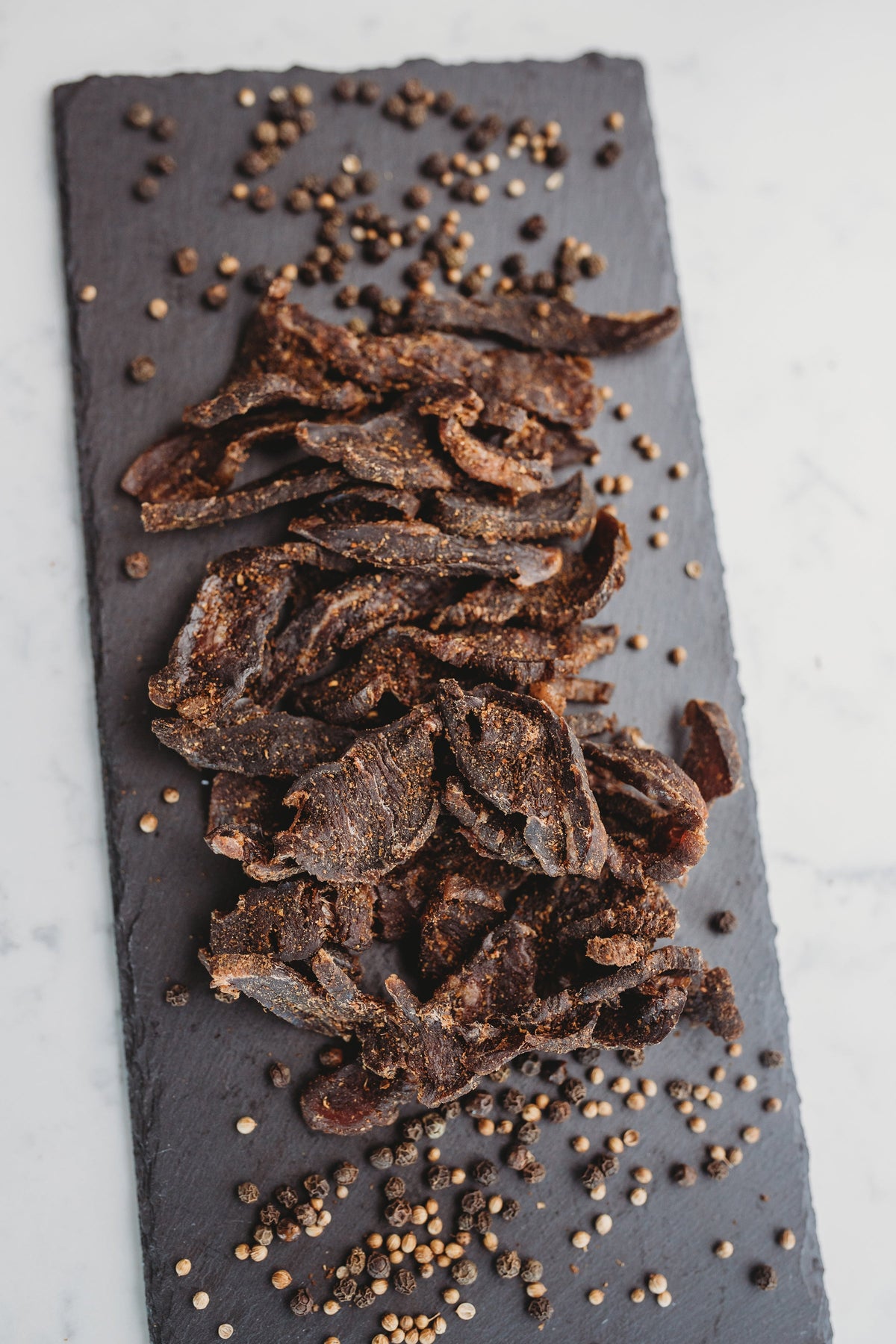
Biltong is air-dried beef cured in vinegar and spices. That's the whole process. No heat, no added sugar, no nitrates, no fillers. The curing is done by the vinegar and salt, and the drying concentrates the beef down to a dense, protein-heavy result.
Our biltong starts with premium grass-fed beef. Grass-fed matters here because the fat profile is meaningfully different from grain-fed beef, a better omega-3 to omega-6 ratio, which is relevant if you're eating low-carb for health reasons and not just weight loss.
Protein per ounce is high. Air-drying concentrates the beef, so you get more protein per gram of snack than you would from fresh meat or most competing formats. A small bag does real nutritional work.
Biltong vs. Jerky vs. Protein Bars: The Honest Comparison
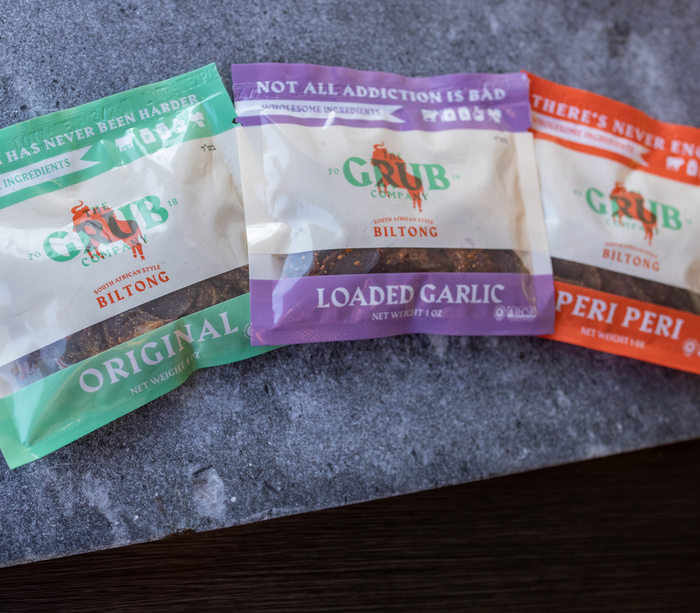
Biltong doesn't need sugar to taste good because the flavor comes from the curing process itself. Vinegar, coriander, salt, and time. Our three flavors, Original, Peri Peri, and Loaded Garlic, get their character from spices, not sweeteners. That's why the carb count stays flat across all three.
Satiety: Why Biltong Keeps You Full Longer
This is the part most snack comparisons skip. Biltong is dense. It takes real chewing. That's not a texture complaint. That's a feature. The chewing process slows consumption and gives your satiety signals time to catch up. You eat less because the snack actually registers before you've finished the bag.
Processed snacks are engineered to disappear fast. That's not an accident. Biltong works against that by being a whole food with intact muscle fiber. It digests more slowly and keeps blood glucose stable, which matters a lot during keto adaptation when your body is still building the metabolic machinery to run on fat.
How to Choose Quality Biltong
Not all biltong is equal. Here's what to look for.
First, the ingredient list should be short. Beef, vinegar, salt, spices. If you see sugar, corn syrup, maltodextrin, or anything you'd need a chemistry degree to recognize, it's not traditional biltong. It's jerky in different packaging.
Second, look for grass-fed beef. It's not just a marketing label here. It changes the fat profile and the flavor. Grass-fed beef has a cleaner, slightly more mineral finish that grain-fed beef doesn't have.
Third, color and texture tell you something. Good biltong is deep red to burgundy on the outside with a slightly lighter interior. It should be firm but not brittle, and it shouldn't be uniformly brown all the way through. If it looks and smells like dried cardboard, something went wrong in the drying process.
Our Biltong Sampler Pack is a good starting point if you're new to it. You get Original, Peri Peri, and Loaded Garlic in one order, which lets you figure out which flavor works best for your meal prep before committing to a larger format. The 1LB bulk bag is where the economics make sense once you know what you like.
Biltong isn't a trend food dressed up with keto branding. It's a centuries-old preservation method that happens to produce exactly the macro profile low-carb dieters are looking for. The fact that it also tastes genuinely good is not a coincidence. It's what happens when you use real ingredients and a process that's been refined over generations.
If you're serious about low-carb eating and tired of snacks that compromise somewhere, biltong is worth making a staple. Start with the sampler, find your flavor, and go from there.
A few questions come up a lot when people are switching to biltong from jerky or protein bars. Here are the honest answers.
A Day of Eating With Biltong in It
Whatever diet you follow, the useful question is not "is biltong allowed?" but "where does it earn a spot in my day?" Biltong is ready to eat, needs no refrigeration and is high in protein, which makes it a convenient tool in a few specific places. It is not a meal, and it should not be treated as one. Here is how people tend to fit it in.
Morning
Breakfast is where most people struggle to get protein without cooking. Put a few slices of Original beside eggs or avocado. Keep dairy away from the plate if you keep kosher, since meat and dairy are not eaten together. Biltong beside breakfast is a snack on the side, not a replacement for a proper meal.
Mid-morning and mid-afternoon
This is the gap where hunger usually wins. A 3 oz bag of Sliced Biltong in a desk drawer beats a vending-machine run. A small Mini is a built-in portion, which helps if you find it hard to stop at a handful.
Around exercise
Biltong fits in a gym bag because it needs no cooler. We make no performance or recovery claims; it is simply a high-protein snack that travels. See our guide to biltong at the gym.
Evening
Later in the day, a small portion with raw vegetables is a satisfying wind-down for people who tend to snack at night. Choose a flavor you will actually enjoy slowly, rather than something you will wolf down.
How to Read the Label Before You Buy
Any dried meat snack, ours included, should pass this check. The label tells you more than the front of the bag does.
- Start with the ingredient list. Shorter is easier to understand. Ours for Original biltong is grass-fed kosher beef, coriander, black pepper, salt, garlic and vinegar.
- Look for added sugar. Some flavors include it for balance. Peri Peri lists brown sugar, for example. Our Original lists no sugar in its ingredients. If sugar matters to you, read the list for each flavor rather than assuming.
- Find the Nutrition Facts panel. Protein, carbohydrate, sodium and serving size are printed on the bag. We do not quote numbers in this guide, because the bag is the source of truth and you should read the one you are holding.
- Check the serving size. It is easy to eat more than one serving of something this tasty. Compare like with like when you compare two products.
- Watch the glaze. Meat Candy is sweet and glazed, so it behaves very differently from biltong on a low-carb plan. Read its label before you decide.
- Do not rely on one claim. We do not call any Grub product gluten-free or allergen-free. If you have an allergy or sensitivity, check the label and ask us.
Our guide to reading a jerky label goes further.
What to Pair It With
Biltong is concentrated, savory and salty. It works best beside something fresh, crunchy or watery that balances it.
- Raw vegetables: cucumber, celery, peppers, radishes. Crunch and water against salt and chew.
- Fruit: a few berries or a sliced apple, if your plan has room for them.
- Nuts and seeds: check labels, and keep any nut allergy in mind for the household.
- Eggs: hard-boiled eggs and biltong make a no-cook pairing.
- Avocado: good fats against lean protein.
- Something to drink: plain or sparkling water. Biltong is salty, so have water nearby.
Avoid pairing it with a pile of refined starch just because it is convenient; that defeats the point of reaching for it. For more combinations, see low carb snacks.
Honest Limits: When Biltong Is the Wrong Pick
- It is not a meal. A bag of biltong is a snack. Treating it as dinner leaves out fiber, variety and plenty else.
- It is salty. If you have been told to limit sodium, talk to your doctor before making it a daily habit.
- It is easy to overeat. Portion it out. Minis help.
- It is not a substitute for medical advice. We are a snack maker. If you follow a diet for a medical reason, your doctor or dietitian decides what belongs in it.
Questions to Ask Yourself Before You Make It a Habit
- What is it replacing? If it replaces a pastry or a bag of chips, you have made a swap. If it is added on top of everything else, you have added a snack.
- When do I actually get hungry? Put the biltong where the craving lands, not where the plan says it should be.
- Which flavor will I still like in a month? Original is the easiest to live with day after day. Peri Peri and Loaded Garlic are the ones people rotate in for variety.
- Do I need the sugar question answered? Read each flavor's ingredient list. Do not assume one flavor tells you about all of them.
If you eat kosher, one practical note: biltong is a meat product, so plan your day around that. Keep dairy at its own meals, and follow your family's custom on waiting between meat and dairy.
Keeping It Simple on Busy Weeks
The best plan is the one you will follow on your worst day. Some habits help:
- Keep a few bags where you will reach for them: car, desk, gym bag.
- Decide the portion in advance. A Mini or half a 3 oz bag is a decision made once.
- Store opened bags properly. See how to store biltong.
- Try before you commit. The Sampler Pack lets you find a flavor you like before you buy more.
If you want the numbers side of this story, we cover it separately in Is Biltong Actually Good for Keto?. Ready to stock up? Browse all biltong. US orders over $50 ship free.
The Bottom Line
Biltong is a convenient, high-protein snack that fits a few moments in a day. Read the label on the bag you hold, pair it with something fresh, portion it, and treat it as a snack, not a meal.
Frequently Asked Questions
Is biltong actually keto-friendly?
Yes. A serving of sliced biltong comes in around 1g of carbohydrates per ounce, which fits comfortably within a strict ketogenic protocol. The curing process uses vinegar and spices, no added sugar, so the carb count stays low across all flavors. It's one of the few shelf-stable snacks that genuinely works for keto without any macro compromise.
How much protein does biltong have per serving?
Biltong is one of the more protein-dense shelf-stable snacks available. Air-drying concentrates the beef, so you're getting a high protein yield per ounce compared to fresh beef or most packaged snack formats. A small serving does real nutritional work. Check the label on whichever format you order, sliced, mini bags, or bulk, for the exact figures per serving.
Can I eat biltong every day on a low-carb diet?
It fits daily use well from a macro standpoint. The main thing to be aware of is sodium. Cured meats are naturally higher in salt, and if you're eating multiple servings a day you'll want to account for that in your overall intake. One to two servings daily as a snack or protein top-up is a reasonable pattern for most people eating low-carb.
What's the difference between sliced biltong and biltong slabs for keto snacking?
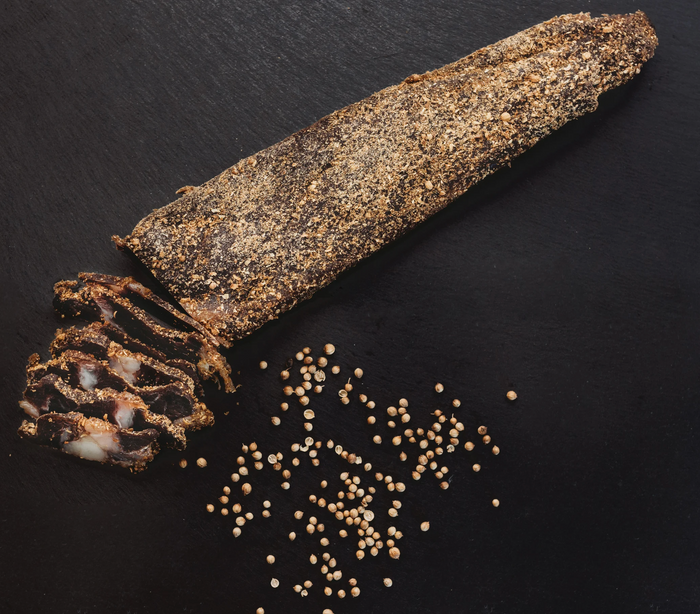
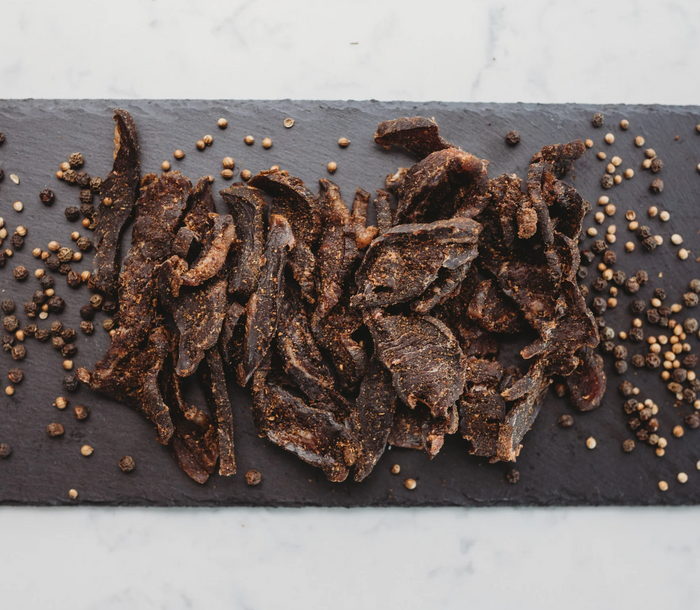
Sliced biltong is ready to eat straight from the bag, convenient for on-the-go snacking, gym bags, travel, or desk snacking. Biltong slabs are the whole dried piece, unsliced, which lets you control thickness and portion size yourself. Thicker slices retain more moisture and take longer to eat, which some people find more satisfying. Slabs are also the freshest format since you're cutting as you go. Both work equally well from a macro standpoint.
Is grass-fed beef biltong meaningfully different from regular biltong?
The fat profile is different. Grass-fed beef has a higher omega-3 to omega-6 ratio compared to grain-fed beef, which matters if you're eating low-carb for metabolic or anti-inflammatory reasons rather than just calorie control. The flavor is also slightly different. Grass-fed beef tends to have a cleaner, more mineral character. Our biltong uses premium grass-fed beef as the standard, not as an upgrade tier.
Where can I start if I've never tried biltong before?
The Biltong Sampler Pack is the right move. It's $12.99 and includes one mini bag each of Original, Peri Peri, and Loaded Garlic. You get to try all three flavors before committing to a larger format. Once you know which one you like, the 1LB bulk bag brings the per-serving cost down considerably and is the most economical way to keep biltong as a regular part of your diet.