Craft Beef Jerky: What Small-Batch Really Means
Craft beef jerky is jerky made by a maker who controls the meat, the seasoning and the drying, in runs small enough to watch. "Small-batch" is a claim about how it was made, not a grade, so judge the bag by its ingredients and its texture, not its label. Our own biltong and beef jerky are certified Glatt Kosher, made in Florida.
We make certified Glatt Kosher biltong and beef jerky in small batches in Florida, from grass-fed beef. So we use these words ourselves, and we know how loosely they get used. This guide explains what "craft" can honestly mean, what "small-batch" does and does not tell you, and how to check any bag in about a minute.
What "craft" actually means on a jerky bag
Nobody certifies it. There is no inspector who signs off on the word "craft," and there is no number that tells you when a batch stops being small. Nothing printed on a bag can prove either claim.
That sounds cynical. It is just how the words work. They describe an intention, and the only way to test an intention is to look at what the maker did.
So here is a working definition. A craft jerky maker does four things you can check:
- Chooses the meat on purpose. Whole sliced beef, not chopped and formed scraps.
- Writes a short recipe. Beef, then seasonings you recognize.
- Controls the drying. Time and airflow are set by the maker, not by a line that has to keep moving.
- Stands behind a name. You can find out who made it and where.
A bag can be loud about all of this and fail every one. A plain bag can pass every one. The label is a lead, not a verdict.
What small-batch gets you, and what it does not
Small batches matter for one reason: attention. When a run is small, a person can look at the meat during the process and change something when it is off.
Drying is where this shows. Meat does not dry on a schedule. It dries on the weather in the room, the thickness of the slice and the moisture in that particular piece of beef. A maker who handles the meat can tell when a batch is ready. A process that runs on a fixed clock cannot. We wrote about that judgment call in how long real biltong curing takes, and why rushing it ruins the meat.
Here is what small-batch does not get you:
- It does not guarantee better meat. A small batch of poor beef is still poor beef.
- It does not guarantee a better recipe. Small runs can be badly seasoned too.
- It does not guarantee consistency. This is the honest trade-off. Hands-on drying means a bag can differ a little from the last one. If you want every bag identical, a big automated line does that better than any craft maker.
Craft is the wrong pick if what you value most is sameness. It is the right pick if you value flavor and texture and can live with a little variation.
Five checks that beat the word on the front
Turn the bag over. These are in order of how much they tell you.
1. The first ingredient
It should say beef. Not "beef trimmings," not "meat," not a blend of species. The first ingredient is the largest by weight. If the first word is sugar, you are holding candy that happens to contain some beef.
2. The length of the list
Short is a good sign. Our Original sliced biltong is grass-fed kosher beef, coriander, black pepper, salt, garlic and vinegar. That is the whole list. A long list is not automatically bad, but every extra line should have a job you can name.
3. Whole muscle or formed meat
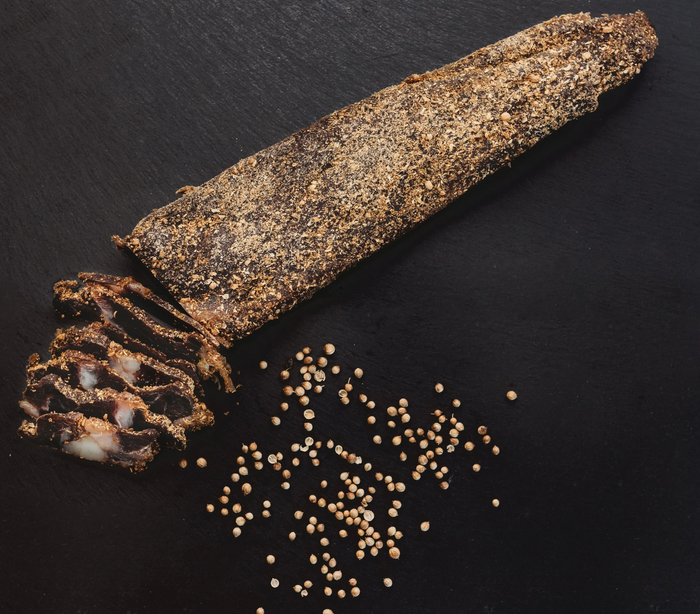
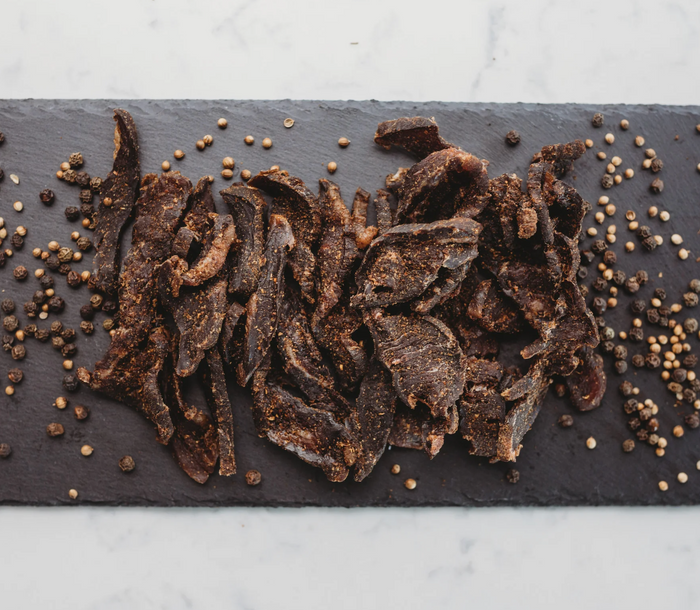
Look at the jerky itself. Whole-muscle jerky shows grain running in one direction, with uneven edges where the knife followed the meat. Formed jerky looks too uniform, like the same strip stamped out of a sheet. Uniform is not proof on its own, but it is a reason to read the ingredients harder.
4. A named source
"Grass-fed" is a start, and it is a claim you can ask about. A real company in a real place, willing to say what it uses, is better. A bag that tells you nothing about who made it or from what is asking for trust it has not earned. We go into why the beef decides so much in the meat is the product.
5. The bite
This is the check no label can fake. Good dried beef gives way when you bite it. It should not fight you for a minute, and it should not crumble like a cracker.
Biltong is a clear example. It is air-dried, so it has a firmer edge and a softer center, and it tears cleanly. If it is hard as wood all the way through, it was over-dried. If it is wet and rubbery, it was under-dried.
Craft in jerky and craft in biltong are different jobs
People shopping for craft jerky usually mean one thing. We make two, and they are made in opposite ways.
Jerky is cooked in hours, sliced thin and usually marinated with sugar. Our Meat Candy is the sweeter end of the shelf: whole sliced beef, cooked and glazed, in two flavors. Hickory Kickory Dock is smoky hickory with the sweetness sitting behind it. Baa-Baa BBQ Sheep is Korean BBQ, sweet and savory together. The craft in jerky is in the glaze and the cook. It has to be sweet without drowning the beef.
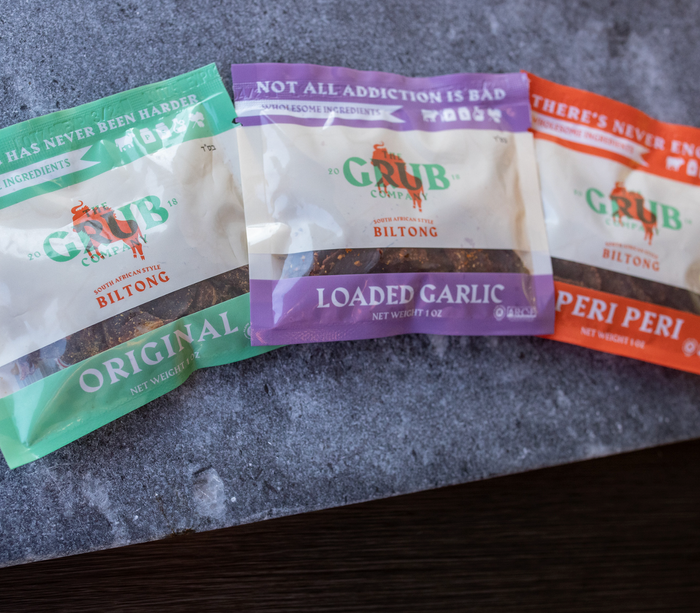
Biltong is cured and then air-dried, savory and salty, with no cooking at all. Our sliced biltong comes in Original, Peri Peri and Loaded Garlic, ready to eat. The craft in biltong is patience. The beef has to dry slowly enough to dry evenly, and you cannot hurry that and still end up with the same meat.
If you have never had biltong, here is the honest framing. It is not jerky with a different name. The texture is softer, and the flavor is coriander and pepper instead of sugar and smoke. Plenty of people like both and keep both in the house.
Why craft and kosher go well together
Kosher beef comes from an animal slaughtered and inspected under rules that are not optional. Our biltong and jerky are certified Glatt Kosher, which means that standard is met and checked, not just claimed on the front of a bag.
That discipline is close kin to what makes craft food good. Someone is accountable for each step, and shortcuts are not available.
It also has a practical edge. Many classic jerky marinades lean on ingredients that are not kosher, Worcestershire sauce being the common one, so a kosher maker has to build the flavor from scratch. If you want to see the full range, browse our kosher beef jerky collection.
One limit worth stating. Kosher certification tells you about the supervision and the ingredients. It does not tell you how the jerky tastes. You still use the five checks above.
How to try craft jerky without wasting money
The most common mistake is buying a large bag of something you have never tasted. Craft food has a stronger point of view than mass-market food, and a strong point of view is a gamble at full size.
Start small instead:
- Try a single 3 oz bag first. If you are curious about biltong, begin with Original, which is the reference point for everything else we make.
- Pick the flavor family before the flavor. Do you want sweet and smoky, or savory and spiced? That one decision matters more than the brand.
- Check the bag against the five checks, even ours. A maker who is confident in the product should not mind.
When you know what you like, the full range is on our buy biltong online page. US orders over $50 ship free.
The bottom line
"Craft" is a word, not a grade. What it should point to is real: whole beef, a short ingredient list, a maker you can name and drying that someone watched. Check those on the bag, then check the bite. A bag that passes all five has earned the word, whether or not it prints it.
Frequently Asked Questions
Is craft beef jerky better than regular jerky?
Not automatically. It can be, because small makers often pay closer attention to the meat and the drying. But the word alone proves nothing. Judge it by the ingredient list, whether the beef is whole muscle, and how it bites.
What does small-batch mean for jerky?
It means the maker produces limited runs instead of continuous production. There is no standard size, so the term is a description, not a measurement. What it makes possible is closer attention to each batch.
Is craft jerky more expensive?
Usually, yes. Whole-muscle beef, slow drying and small runs all cost more than formed meat on a fast line. A higher price does not prove quality, though. Read the ingredients before you pay for the word.
How can I tell if jerky is made from whole muscle?
Look at the pieces. Whole-muscle jerky shows visible grain and uneven edges. If every strip looks identical, check the label for ground or formed meat. The ingredient list should start with plain beef.
Is Grub's jerky craft jerky?
We make it in small batches in Florida from grass-fed beef, and it is certified Glatt Kosher. We would rather you hold us to the five checks than take our word for it. Our Meat Candy is whole sliced beef, and our biltong is air-dried with a short ingredient list.
Is craft jerky kosher?
Only if it is certified. Craft and kosher are separate questions, and a craft label says nothing about kosher status. Look for the certification on the bag. Ours is certified Glatt Kosher.
Does craft jerky need refrigeration?
Our biltong needs no refrigeration. For any other brand, follow the storage notes on its bag, since that depends on how it was made. After opening, fold the bag closed and keep it somewhere cool and dry.