How Biltong Is Made, and Why Kosher Biltong Is Hard to Make at Home
Biltong is beef that is cut into strips, cured with salt, vinegar and spices, then air-dried until firm on the outside and tender inside. You can make a version at home, but a home batch cannot be certified Glatt Kosher, and that is the whole reason a certified product exists.
Related: How to Make Beef Jerky at Home (and What Changes If You Keep Kosher)
We make certified Glatt Kosher biltong in small batches in Florida, so this is the process we know. Below is how biltong is made, a home recipe with real quantities, and an honest look at what changes when the beef has to be kosher. Learn more about kosher biltong and what certification covers.
How biltong is made, step by step
Every biltong, from a backyard batch to a drying room, follows the same five steps.
1. Choose the meat. Biltong uses lean whole muscle from the round: silverside and topside are the classic cuts. Lean matters because fat does not dry the way muscle does. It stays soft and can turn rancid. A thin fat cap on the outside is fine. Fat marbled through the meat is not what you want here.
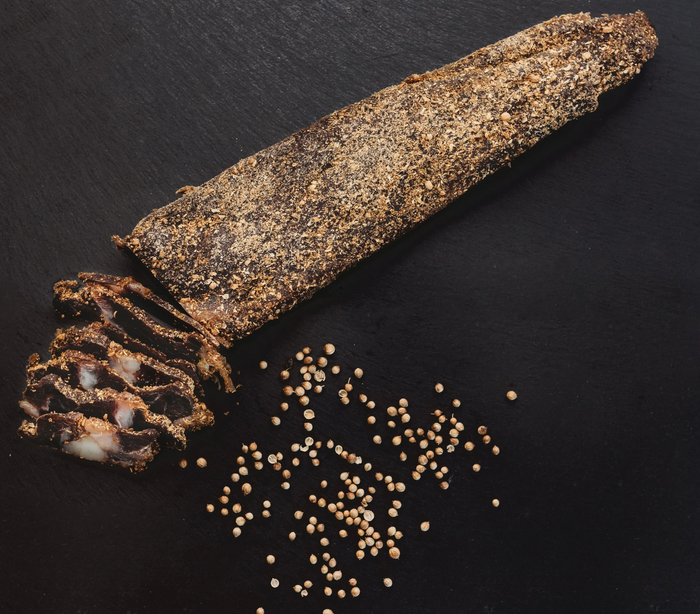
2. Cut with the grain. The beef is cut into long strips, following the direction of the muscle fibers. Strips are usually about an inch thick and an inch or two wide. Cutting with the grain keeps the strip in one piece as it dries and gives the finished biltong its pull. Slicing happens later, against the grain, when the dried strip is ready to eat.
3. Vinegar and salt. The strips are rinsed or sprayed with vinegar, then salted. Salt draws out moisture and starts the preservation. Vinegar lowers the surface pH, which makes the surface a poor place for bacteria to start.
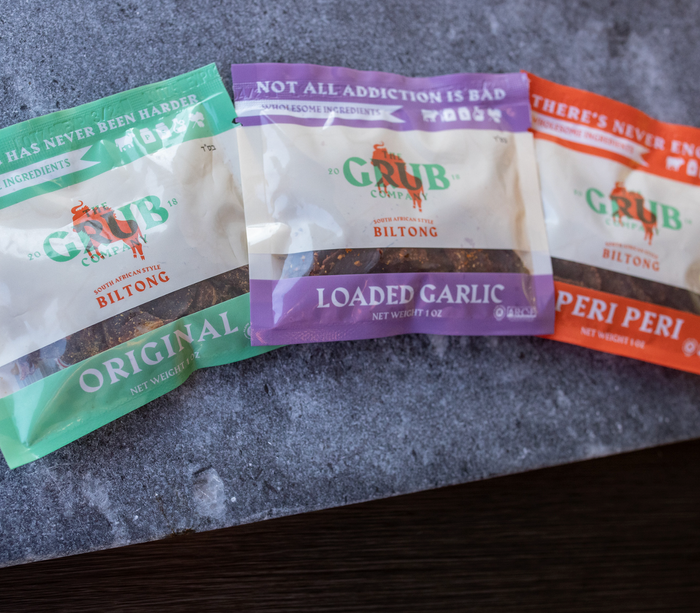
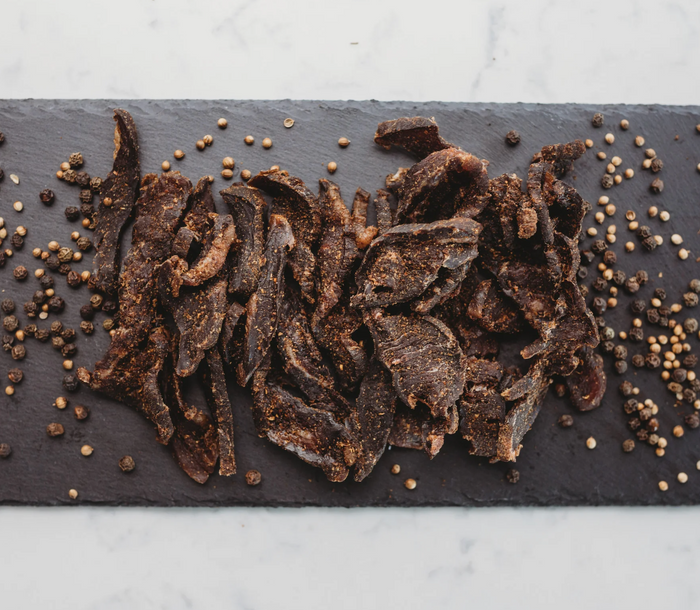
4. Spice. Coriander is the signature. Toasted, cracked coriander seed plus black pepper is the traditional base. Our Original uses beef, coriander, black pepper, salt, garlic and vinegar. Peri Peri adds red pepper and a little brown sugar. Loaded Garlic adds roasted garlic and tomato powder.
5. Hang and dry. The strips hang in moving, dry air for days. No smoke. No cooking. The meat loses water slowly until it reaches the texture you want. This is the step that cannot be rushed, which we cover in how long real biltong curing takes.
That is the full method. It is simple to describe and unforgiving to execute, because the drying step depends on air, temperature and humidity that you do not fully control.
A home biltong recipe (non-kosher, with quantities)
If you want to try the process, here is a conservative recipe. Read the kosher section below before you start if you keep kosher. A home batch of ordinary supermarket beef is not kosher, and this recipe is for readers who are not keeping kosher or who are learning how the method works.
You need:
- 2 pounds lean beef round (silverside or top round), in one piece
- 1/2 cup brown malt vinegar or apple cider vinegar, plus more for rinsing
- 2 tablespoons coarse salt (about 36 grams; weigh it if you can)
- 2 tablespoons whole coriander seed
- 1 tablespoon whole black peppercorns
- 1 teaspoon brown sugar
- Optional: 1 teaspoon garlic powder
- A kitchen scale, S-hooks or skewers, and a drying box with a small fan
Method:
- Trim most of the outer fat. Cut the beef with the grain into strips about 1 inch thick and 8 to 10 inches long.
- Toast the coriander and peppercorns in a dry pan for 2 to 3 minutes until fragrant. Crack them coarsely in a mortar or with the flat of a knife. Stir in the salt, sugar and garlic powder.
- Lay the strips in a glass or stainless dish. Pour the vinegar over them and turn each strip so every surface is wet. Pour off the excess.
- Rub the spice and salt mix over every side of every strip. Cover and refrigerate for 12 to 24 hours.
- Take the strips out. Dip each one briefly in fresh vinegar and let the excess drip off. Pat dry. Weigh each strip and write down the weight.
- Hang the strips with space between them, so air reaches every side. Nothing should touch.
- Dry in a cool, low-humidity spot with steady airflow. Many home makers aim for roughly 65 to 75 degrees F, with a small fan moving air across the meat. Dry for about 4 to 7 days, depending on thickness and conditions.
- Weigh again. Biltong is commonly considered ready when it has lost around 35 to 50 percent of its starting weight, depending on how wet or dry you like it. Squeeze a strip: it should feel firm outside with some give in the center.
- Slice thin against the grain. Store in a paper bag or a container with airflow, in a cool place.
Food-safety rules that are not optional:
- Keep the meat cold until it goes in the drying box. Never cure at room temperature.
- Do not dry in a humid room, a basement in summer, or anywhere without airflow. Slow drying is how mold gets ahead of the salt.
- Weigh the meat. Judging by feel alone is how people eat underdried meat.
- Discard any strip with fuzzy, green, black or pink mold, a slimy surface or a sour or off smell. When in doubt, throw it out.
- Home biltong has no lab testing behind it. If you are cooking for children, pregnant guests or anyone with a weak immune system, buy a commercial product instead.
Be realistic about yield. Two pounds of beef becomes roughly a pound or a little more of finished biltong. That is the water leaving. It is also why the finished product costs what it does.
Why kosher biltong is hard to make at home
The method above is not the hard part. The hard part is that every input has to be kosher, and ordinary supermarket beef is not.
The beef. Kosher beef comes from a kosher animal, slaughtered by a trained shochet, inspected, and prepared according to the laws of kashrut. For Glatt Kosher, the lungs are also checked for adhesions. The meat is then porged, which means certain forbidden fats and veins are removed, and it is salted and rinsed to draw out blood, or it is processed within the time limits that kashrut allows. The packaging has to be sealed and traceable. You cannot reconstruct any of this from a grocery store cut.
The salt, vinegar and spices. Plain salt is generally fine. Vinegar is not always: some vinegars are made from wine or grain sources that need certification. Spice blends can carry additives and carriers. Each ingredient needs a reliable hechsher or a ruling from your rabbi. Our recipe is short on purpose, because every added ingredient is another line to verify.
The equipment. Knives, boards, dishes, hooks and a drying box that have touched non-kosher meat, or that are used for both meat and dairy, are a problem. A meat-only set that has never touched dairy or non-kosher food is the standard approach. Whether and how a surface can be made kosher is a question for your rabbi, not a blog.
The drying room. The longer the process, the more places something can go wrong. A drying room is a controlled environment that a certification program can inspect, track and seal. A closet with a fan cannot be certified in the same way.
The honest part. Some households do source kosher beef from a butcher and make biltong in a dedicated meat kitchen. If you keep a kosher home and have kosher meat, kosher spices and meat-only equipment, it is possible. If you are missing any one of those, a certified product is the cleaner answer. And biltong is the wrong project if you want it fast, cheap, or on a schedule. It takes days, careful weighing, and the right weather.
Making it yourself versus buying it
Making biltong at home is a good weekend project for someone who likes process, owns a scale and has a spot with dry air. Expect your first batches to be uneven. Some strips will be too wet, some too dry, and the flavor will not match what you have tasted from a professional drying room.
Buying makes sense in these cases:
- You keep kosher and want a certified product with a traceable chain from slaughter to bag.
- You live somewhere humid, where home drying is risky for much of the year.
- You want consistent texture and flavor every time.
- You would rather spend the time eating it than watching it dry.
If you would like to taste a professional version before committing to a hobby, start with a Biltong Sampler Pack. It has one mini bag each of Original, Peri Peri and Loaded Garlic. For an everyday bag, our Sliced Biltong comes in a 3 oz bag, sliced and ready to eat, with no refrigeration needed. The full range is on Buy Biltong Online, and US orders over $50 ship free.
If you are more of a jerky person, Meat Candy is our sweeter, cooked-and-glazed cousin. You can see the whole shelf in our kosher beef jerky collection. For a wider look at the home-versus-store trade-offs, see how to make biltong at home vs buying pre-made.
Bottom line
Biltong is simple in theory: lean beef, salt, vinegar, spice and slow air. Home biltong is a fun, patient project with real food-safety rules. Kosher biltong is harder, because the beef, ingredients, equipment and drying all have to meet kosher standards. If you keep kosher and want it done reliably, buy certified Glatt Kosher biltong and skip the guesswork.
Frequently Asked Questions
How do you make biltong at home?
Cut lean beef round into strips with the grain, rinse with vinegar, rub with salt, toasted coriander and black pepper, and refrigerate overnight. Then hang the strips in a cool, dry, ventilated space for several days until they have lost about a third to half of their weight. Weigh the meat so you are not guessing.
How long does biltong take to dry?
Plan on roughly 4 to 7 days for strips about an inch thick, depending on temperature, humidity and airflow. Thicker strips and damp weather take longer. Go by weight loss and texture, not the calendar.
What is the best meat for biltong?
Lean beef round, most often silverside or topside. It dries evenly and slices cleanly. Fatty cuts do not dry well, and the fat can go off.
Can you make kosher biltong at home?
Possibly, but only if every input is kosher: kosher-slaughtered, properly prepared beef, certified ingredients including the vinegar and spices, and meat-only equipment. Ordinary supermarket beef is not kosher. If you are unsure about any part of it, ask your rabbi.
Is biltong cooked?
No. It is cured and air-dried, which is a different process from cooking. It is ready to eat as is, and you should not cook it through.
Is homemade biltong safe to eat?
It can be, when you keep the meat cold, use enough salt and vinegar, dry with good airflow and low humidity, and check weight loss. Throw out anything with mold or an off smell. Commercial biltong is made under controlled conditions that a home setup cannot match.
What is the difference between biltong and jerky?
Biltong is cured with vinegar and salt and air-dried at room temperature, in thicker strips. Jerky is usually marinated, often with sugar, and dried with heat in thinner strips. Our jerky, Meat Candy, is the sweet one. Biltong is the savory one.