Is Beef Jerky Kosher? What Makes Jerky Kosher, and What to Check
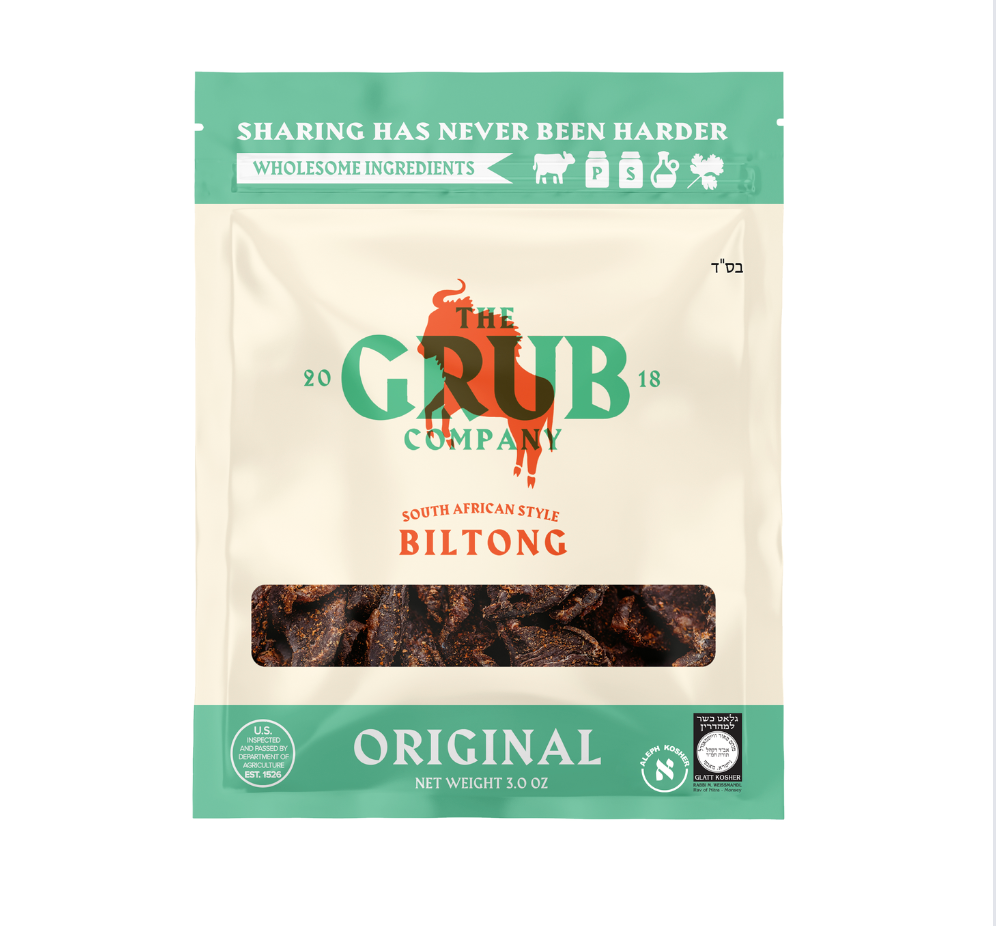
Is beef jerky kosher? Almost never, unless the bag carries a kosher certification, and the reason is usually the marinade rather than the meat. Certified kosher beef jerky does exist; ours is Meat Candy, whole sliced beef, certified Glatt Kosher, in two flavors. This guide covers what makes a jerky kosher, what to check on any package, and how to tell a real certification from a claim.
Related: Is Venison Jerky Kosher? Deer, Hunting and Kosher Slaughter Explained
Quick answers
- Is beef jerky kosher? Only if it carries a kosher certification. The great majority does not.
- Are the big national brands kosher? Generally no. Look for an agency symbol rather than assuming.
- Is "kosher-style" jerky kosher? No. "Kosher-style" is not a standard and nobody supervises it.
- Does "all natural" or "no pork" mean kosher? No. Those claims have nothing to do with kashrut.
- Is kosher jerky meat or pareve? Meat (fleishig), always. Keep it away from dairy.
- Where do I buy it? From kosher grocers, or directly from a certified maker. It is rarely in the ordinary snack aisle.
- Is Grub's jerky kosher? Yes. Meat Candy is certified Glatt Kosher, like everything we make, and the certificates are published.
Why so little jerky is kosher
Four separate things have to go right, and mass-market jerky fails at least one of them almost every time.
| Requirement | What it means | Where mainstream jerky fails |
|---|---|---|
| The animal | A kosher species, slaughtered by a trained shochet and inspected afterward | Commodity beef from conventional processing |
| The cut | Forequarter, or hindquarter properly porged | Whatever is cheapest, almost never porged |
| The marinade | Every ingredient certified | Worcestershire, soy sauce, undefined flavorings |
| The facility | Supervised equipment, dedicated or properly kashered | Shared lines running non-kosher product |
The marinade is the one people miss, and the facility is the one that decides the economics. A plant running conventional jerky cannot add a kosher batch on a Tuesday. It would need dedicated equipment or kashering between runs, and at national volume that is a capital decision, not a scheduling one. That is why certified jerky tends to come from small producers who built for it.
The marinade problem
A jerky can start with impeccably kosher beef and still fail on a sauce. These are the ingredients that cause it:
| Common jerky ingredient | The kashrut question |
|---|---|
| Worcestershire sauce | Traditionally contains anchovies, which raises a fish-and-meat question entirely separate from the beef |
| Soy sauce | Frequently uncertified; fermentation and equipment both need supervision |
| "Natural flavors" | An umbrella term covering a great deal. Exactly what supervision exists to inspect |
| Smoke flavoring | Usually fine, occasionally not, depending on the carrier it is dissolved in |
| Wine or wine vinegar | Raises its own questions in halacha |
| Glycerin, mono- and diglycerides | Can be animal-derived |
What to check on a package
- An agency symbol (hechsher), not the word "kosher." A brand printing "kosher" on its own packaging is making a claim about itself. A symbol from an agency you can look up is a claim someone else checks.
- A meat designation. Beef jerky is fleishig. Look for "meat" or an "M" beside the symbol. If a package suggests otherwise, something is wrong.
- Whether your community accepts that agency. Standards vary. That is a question for your rabbi, not for a label or a website.
- What the certification covers. Certified beef processed in an uncertified facility is not a certified product. You want the finished product certified.
- A current certificate you can see. Certificates are renewed. A producer confident in its certification publishes the one in force.
- The sauces in the ingredient list: soy sauce, Worcestershire, "natural flavors" and "smoke flavor" are the usual problems.
The phrase to ignore entirely is "kosher-style." It describes a kind of food, like deli pastrami, not how it was made. There is no supervision behind it.
Questions worth asking a producer
How readily a maker answers matters as much as what they say.
- Which agency certifies the finished product, and can I see the current certificate?
- Is the certification on the meat only, or on the product as it leaves your facility?
- Is the equipment dedicated, or kashered between runs?
- Are all the marinade ingredients certified, including flavorings?
- What cut do you use?
- Can you tell me the batch date on what I would receive?
A producer doing this properly answers all six without hesitating, because its supervising agency asks the same questions every year. A reseller will need to check with someone else, and that is itself the answer.
Our kosher jerky, against that checklist
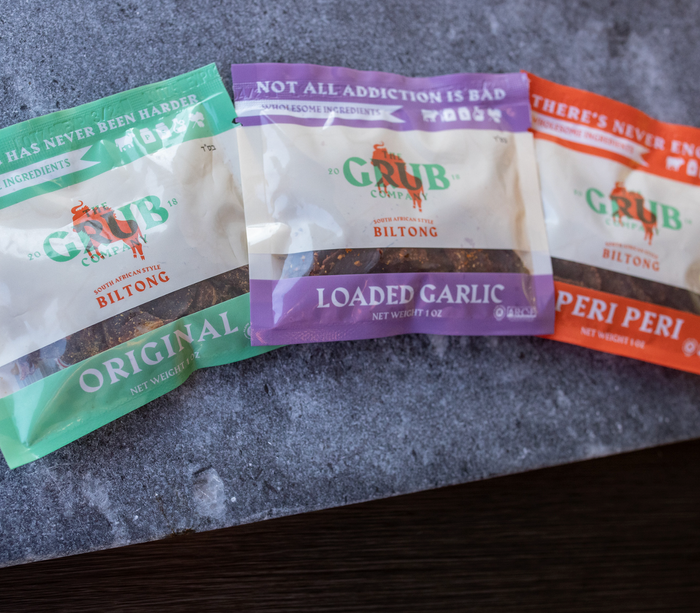
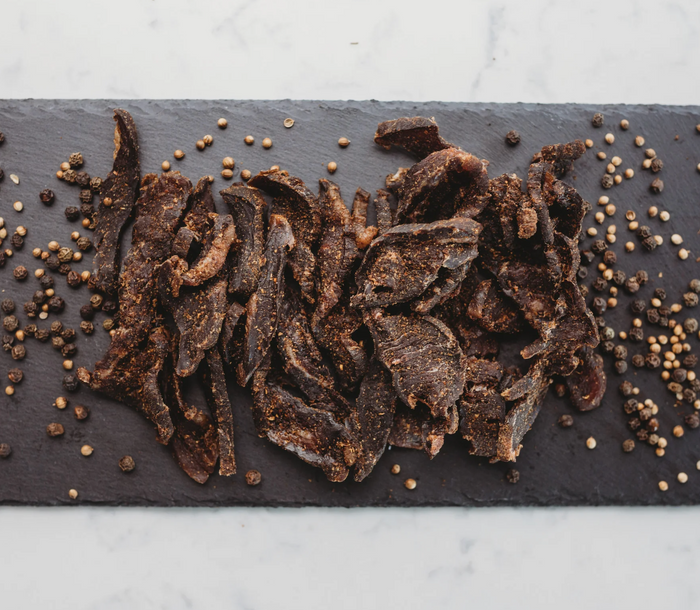
Meat Candy is our jerky: the sweet end of the shelf, cooked and glazed, where our biltong is savory and air-dried.
| The check | Meat Candy |
|---|---|
| Agency certification | Certified Glatt Kosher. Read the certificates and check them against your community's list |
| Meat or pareve | Meat |
| The beef | Real, whole sliced beef. Not ground, not reformed, not mechanically separated chicken, all of which turn up in cheaper jerky |
| Flavors | Hickory Kickory Dock (smoky hickory, the one closest to classic jerky) and Baa-Baa BBQ Sheep (Korean BBQ, sweet and savory) |
| Sugar | Yes. The glaze is what makes it candy. Full nutrition facts are on every bag |
| Storage | Sealed with an oxygen absorber: three to six months in a cool, dry cupboard. Reseal once opened and finish within a few days |
Judge it as what it is: a treat with real protein in it, not a health food. If you want dried beef without the sugar, read on.
Kosher jerky or kosher biltong?
Both are dried beef, and that is where the similarity stops. Biltong happens to be unusually well suited to kosher production.
| Kosher beef jerky | Kosher biltong | |
|---|---|---|
| Method | Marinated, then cooked with heat | Vinegar-cured, air-dried for days, never heated |
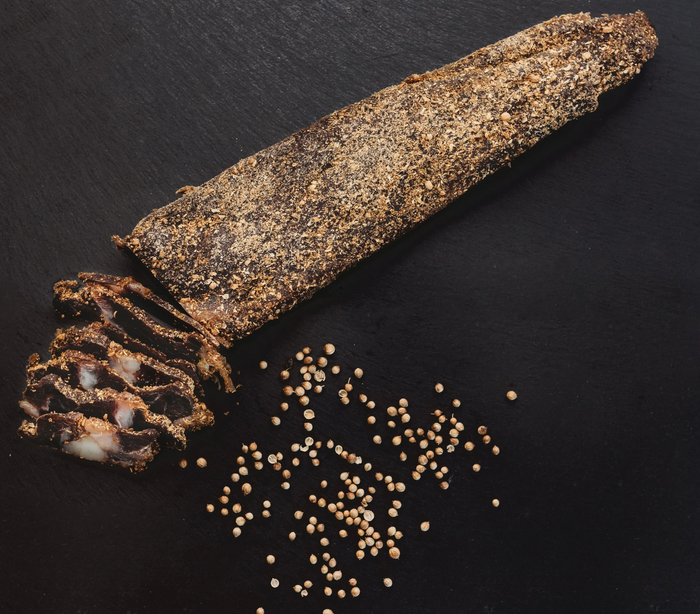
| Ingredients needing certification | Many: sauces, flavorings, glazes | Few: our Original is beef, coriander, black pepper, salt, garlic, vinegar |
| Added sugar | Usually, and a lot in sweet styles | None in our Original |
| Nitrites | Common in mass-market jerky | None in ours |
| Protein | Varies by brand | Around 36 g per 3 oz bag of our Original |
| Taste | Sweet, smoky, chewy | Savory, beefy, tender |
If someone has never had either, jerky is the more familiar first bag and biltong is the more interesting one. Plenty of kosher households keep both.
Where certified jerky is actually sold
Not where jerky is normally sold, which is why so many people conclude it does not exist.
| Where | Likelihood | What to expect |
|---|---|---|
| Kosher grocers and markets | High | The reliable channel. Usually one or two brands |
| Direct from a certified maker | High | Full range, freshest, certificate on the site |
| Kosher sections of large supermarkets | Occasional | Thin, and often only around Yom Tov |
| Health and supplement stores | Low | Protein-marketed brands, rarely certified |
| Mainstream snack aisle, gas stations | Very low | Check for a hechsher before assuming |
Our products are stocked by kosher grocers in several states; see the shops near you. Or order direct: US orders over $50 ship free. If your local kosher grocer does not carry it, ask them to. Shops stock on expected demand, and one regular customer naming a product works more often than people expect.
For Shabbos, travel and Yom Tov
Certified dried meat solves a specific problem: substantial protein that needs no kitchen, no heating, no refrigeration and no cutlery. It sits out on a Shabbos afternoon, survives a Yom Tov away from home, and packs for a flight without a cold pack.
One practical difference: sweet jerky's glaze draws moisture, so in a humid room it goes tacky and pieces stick together. Unsweetened biltong just keeps drying and gets firmer. For a bowl that will be out on a hot Yom Tov afternoon, biltong holds up better. For a car or a bag, keep either one out of the sun.
Turkey, chicken and other jerky
The same four requirements apply. The bird must be kosher-slaughtered, and the cut, marinade and facility rules are unchanged. One thing to know: "Glatt" describes lung inspection in cattle and other ruminants, so it has no literal meaning on poultry. Seeing it on a turkey jerky is a reason to read the certification rather than the adjective. The marinade problem is often worse for poultry jerky, which leans harder on teriyaki and sweet sauces.
The short version
Almost no mass-market jerky is kosher, and usually because of the marinade. Look for an agency symbol rather than the word "kosher," check that the certification covers the finished product, and confirm the agency is one your community accepts. Expect certified jerky to come from small makers and kosher grocers, not the gas station.
See our certified Glatt Kosher jerky, or our kosher biltong if you want it without the sugar.
Try it: Is This Jerky Kosher? Label Checker. Answer five questions about the bag in your hand.