The Science and History of Meat Curing Across Cultures
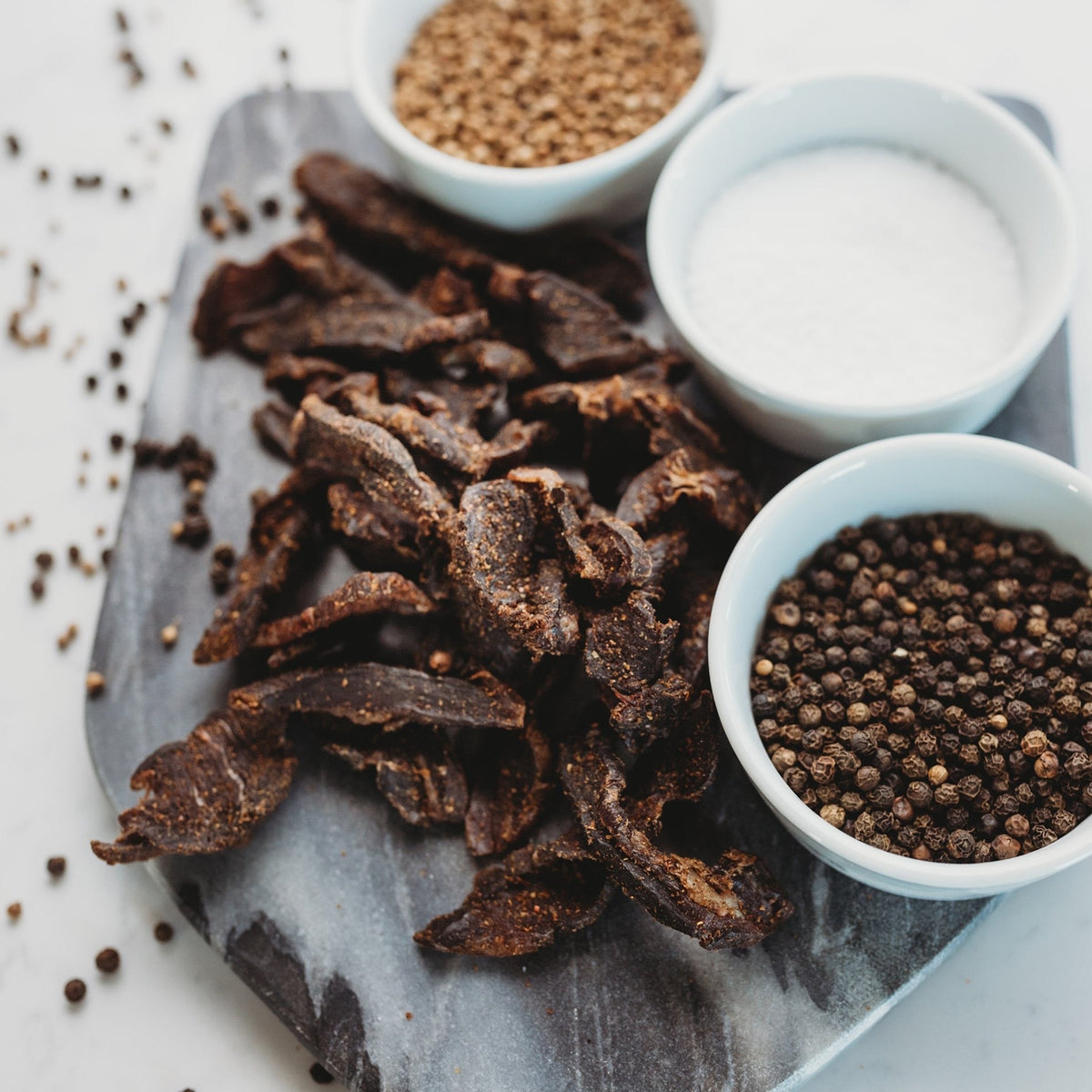
Meat curing is any method that preserves meat by making it inhospitable to the bacteria that spoil it, and across human history, nearly every culture reached for some combination of the same four tools to do it: salt, acid, smoke, and air. What's striking isn't that these methods work. It's that they were invented independently, over and over, by cultures that had no contact with each other, because the underlying chemistry is universal and the problem, meat spoils fast without refrigeration, is universal too.
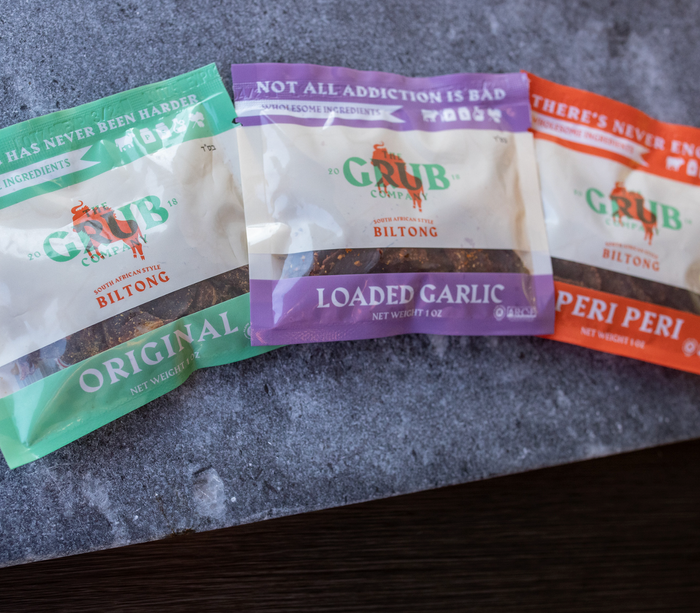
Ready to try it? Buy Glatt Kosher biltong online. Made in Florida, free US shipping on orders over $50.
Why Salt Works
Salt preserves meat mainly through osmosis. Packed onto or into meat, salt draws water out of the muscle fibers, and less available water means bacteria have a much harder time surviving and multiplying, since most spoilage organisms need a fairly wet environment to grow. Salt curing doesn't just remove water either. It also favors halophiles, salt-tolerant bacteria that produce lactic acid, which further protects the meat and helps keep more dangerous bacteria from taking hold.
This isn't a modern discovery. Salt-curing meat and fish goes back to at least Sumerian Mesopotamia, around 4,000 BCE, and by roughly 900 BCE, Greek "salt gardens" were producing salt specifically for curing. By the second century BCE, the Roman senator Cato the Elder was writing detailed instructions for dry-curing hams, instructions specific and careful enough that food historians still cite them today. Salt curing was refined further over the following centuries. Saltpeter, recognized for helping meat keep its red color during curing, was in common use by medieval times, well before anyone understood the chemistry behind why it worked. That understanding, tied to nitrates and nitrites, wasn't formalized until the late 1800s and early 1900s.
Why Acid, Smoke, and Air Also Work
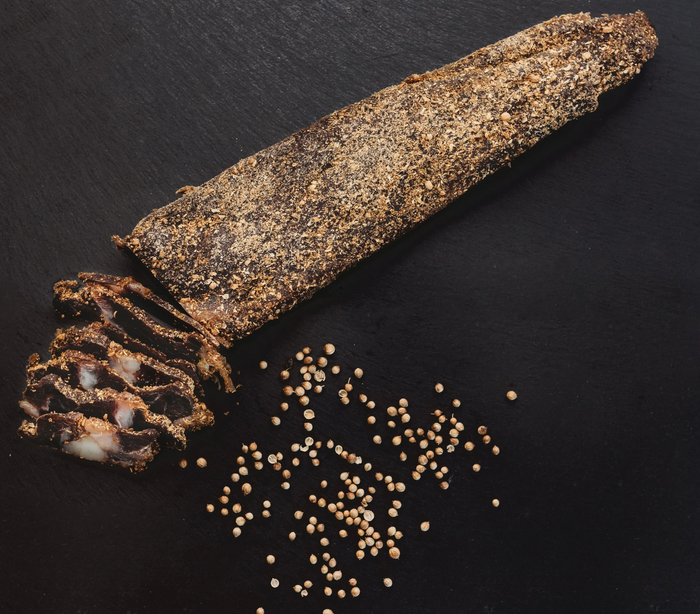
Vinegar and other acids preserve meat by lowering its surface pH, which creates conditions most spoilage bacteria can't tolerate. That's the mechanism behind biltong's characteristic vinegar cure, applied before the meat is air-dried.
Smoke adds a second layer of protection on top of drying. Wood smoke contains phenolic compounds with real antimicrobial properties, and the heat involved in smoking also drives off additional moisture. That's the basic idea behind smoked, cooked jerky styles, where heat and smoke do a lot of the preservation work that vinegar and cold air-drying do for biltong.
Air-drying on its own, without salt, acid, or smoke, can also preserve meat, but it depends heavily on climate. Dry, low-humidity air with steady airflow pulls moisture out of meat over time, which is why cultures in arid or cold, dry regions were able to rely on drying alone or drying with only a light cure, while humid regions needed to lean more heavily on salt, smoke, or both.
The Same Idea, Invented Independently
What makes this genuinely interesting isn't any single technique. It's how many unconnected cultures landed on strikingly similar solutions. In Southern Africa, indigenous meat-drying combined with Dutch salt-and-vinegar curing to produce biltong. In the Andes, the Inca cured llama and alpaca into ch'arki using cold mountain air and strong sun, the origin of the word "jerky." In Italy, whole legs of pork are dry-salted and aged for months to produce prosciutto. Along the Atlantic coast of Europe, Basque fishermen in the 13th century developed wet-salting techniques for cod that the Portuguese later adopted at scale after reaching Newfoundland's fishing grounds in 1497, producing what's known today as bacalhau or salt cod.
None of these traditions borrowed directly from each other in their early stages. They're separated by oceans and centuries. What connects them is that any culture without refrigeration facing the same problem, meat and fish spoil fast, tends to arrive at some version of the same answer: pull the water out, change the chemistry of the surface, or both. Salt, acid, smoke, and dry air are really just four different ways of doing that.
What This Means for the Cure in Your Hand
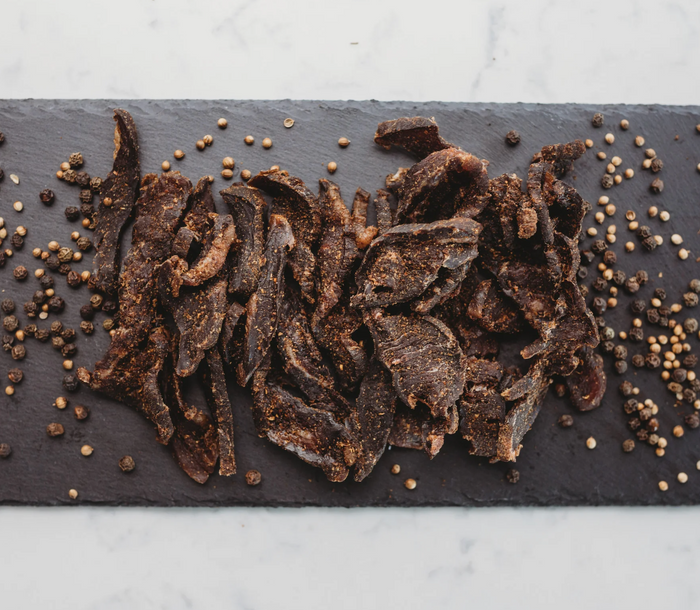
When you're comparing something like biltong to a cooked, smoked jerky, you're looking at two different branches of this same tree. Biltong leans on salt, vinegar, and cold air-drying without heat. Cooked jerky styles lean more on smoke, heat, and moisture reduction through cooking. Both work. Both descend from traditions that predate refrigeration by thousands of years, and both are still made, at their core, the same way they always were.
Grub Company's product line actually reflects both branches directly: the biltong is salt-and-vinegar cured and air-dried in the traditional Southern African style, while the Meat Candy jerky line is cooked and smoked, and both are made under kosher certification.
Frequently Asked Questions
Why does salt actually preserve meat?
Salt draws water out of meat through osmosis, and with less available water, bacteria struggle to survive and multiply because most spoilage organisms need a moist environment to grow. Salt curing also encourages salt-tolerant bacteria that produce lactic acid, which adds another layer of protection against the harmful bacteria that cause spoilage.
Does vinegar preserve meat the same way salt does?
Not exactly the same way, but with a similar effect. Vinegar lowers the pH on the meat's surface, creating an acidic environment that most spoilage bacteria can't tolerate. It's a different mechanism than salt's moisture removal, but both end up making the meat inhospitable to bacteria, which is why they're often used together, as in biltong.
How old is meat curing as a practice?
Very old. Salt-curing meat and fish can be traced back to Sumerian Mesopotamia around 4,000 BCE, and by the second century BCE the Roman writer Cato the Elder was recording detailed dry-curing instructions for ham. Different cultures developed their own versions independently over thousands of years, without needing to borrow the idea from each other.
What's the difference between curing and smoking?
Curing typically refers to using salt, acid, or both to change the meat's chemistry and draw out moisture. Smoking adds heat and wood smoke on top of, or instead of, that process, both drying the meat further and depositing antimicrobial compounds from the smoke itself. Many traditional methods, including some jerky styles, combine curing and smoking together.
Why do biltong and jerky taste and feel so different if they're both cured meat?
They rely on different combinations of the same basic tools. Biltong is salt-and-vinegar cured and air-dried without heat, which tends to leave it thicker and slightly softer in the center. Cooked, smoked jerky uses heat and smoke to dry and preserve the meat, which usually produces a thinner, chewier texture. Same underlying science, different execution.
Did different cultures really invent meat curing separately, or did the idea spread?
Both happened, depending on the region. Some curing knowledge did spread through trade and colonization, like Dutch curing techniques arriving in Southern Africa. But the deeper pattern is separate invention: cultures as disconnected as the Andes, Southern Africa, and coastal Europe each developed salt, acid, smoke, or air-drying methods largely on their own, because they were solving the same basic problem with the same limited set of tools available in nature.
The South African branch of that history is still being made the old way, and you can buy the result. Air-dried, never heated, six ingredients — the method in this article, in a bag.