South Africa's Jewish Community and the Kosher Biltong Tradition
South Africa is home to one of the world's most distinctive Jewish communities, a population overwhelmingly descended from Litvak, or Lithuanian, Jewish immigrants who arrived mostly between the 1880s and the years leading up to World War II. It's a genuinely significant chapter of Jewish diaspora history, and it left its mark on South African Jewish food culture in ways that are well documented, alongside some connections, like biltong's specific role in Jewish households, that are better described as strong tradition than hard historical record.
Want some on hand? Order biltong online: Glatt Kosher, air-dried in Florida, free US shipping over $50.
How a Lithuanian Community Ended Up in South Africa
Individual Lithuanian Jews began arriving in South Africa as early as the 1860s, many after first being stranded in, or living for a time in, England. The real surge came later. Between 1880 and 1914, South Africa's Jewish population grew from around 4,000 to over 40,000, driven largely by two economic events: the discovery of diamond fields at Kimberley in 1869 and gold on the Witwatersrand in the Transvaal in 1886. Those discoveries created opportunity in a country that, for many Litvak Jews facing poverty and restriction in the Russian Empire, looked considerably better than home.
One name that comes up repeatedly in this history is Sammy Marks, regarded as a pioneering figure in Lithuanian Jewish emigration to South Africa. He became a successful industrialist and a personal friend of Paul Kruger, the president of the South African Republic, and his early success is often credited with helping draw more Litvak immigrants to follow. By the time of the first countrywide Union of South Africa census in 1911, the Jewish population stood at 46,919, the large majority of Lithuanian descent.
That Litvak identity never really diluted. Today, an estimated 90 percent of South African Jews trace their ancestry to Lithuania, one of the highest concentrations of Litvak descent anywhere in the world. The community's Jewish population peaked around 1970 at an estimated 118,200 people, about 0.6 percent of South Africa's total population at the time. It has declined significantly since, mostly through emigration to Israel, Australia, Canada, and the United States rather than through assimilation, with more recent community surveys estimating the population at roughly 50,000 today.
What's Well Documented, and What's Tradition
The South African Jewish community's size, its Litvak origins, its immigration timeline, and its ongoing emigration pattern are all well established in demographic surveys and historical scholarship. Biltong's specific place inside Jewish households is a different kind of claim, and it's worth being honest about the difference.
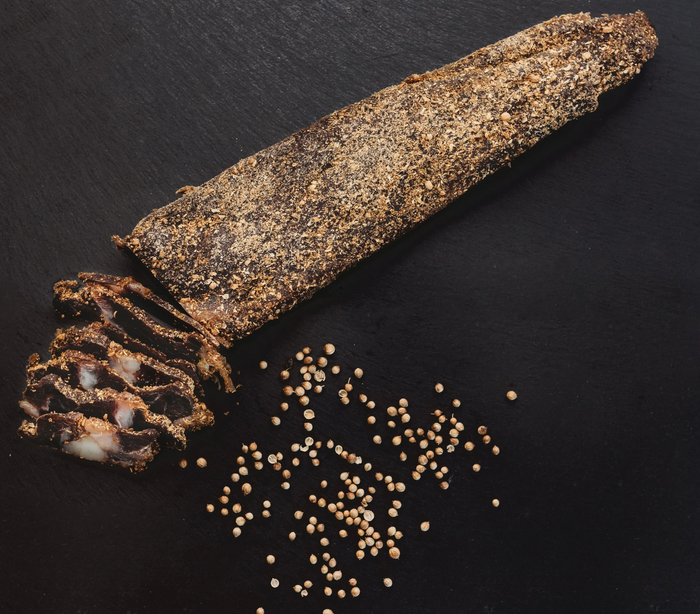
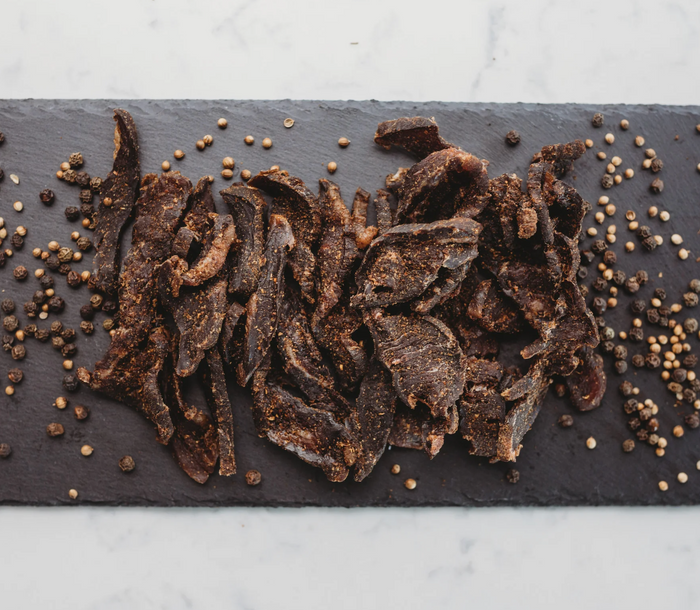
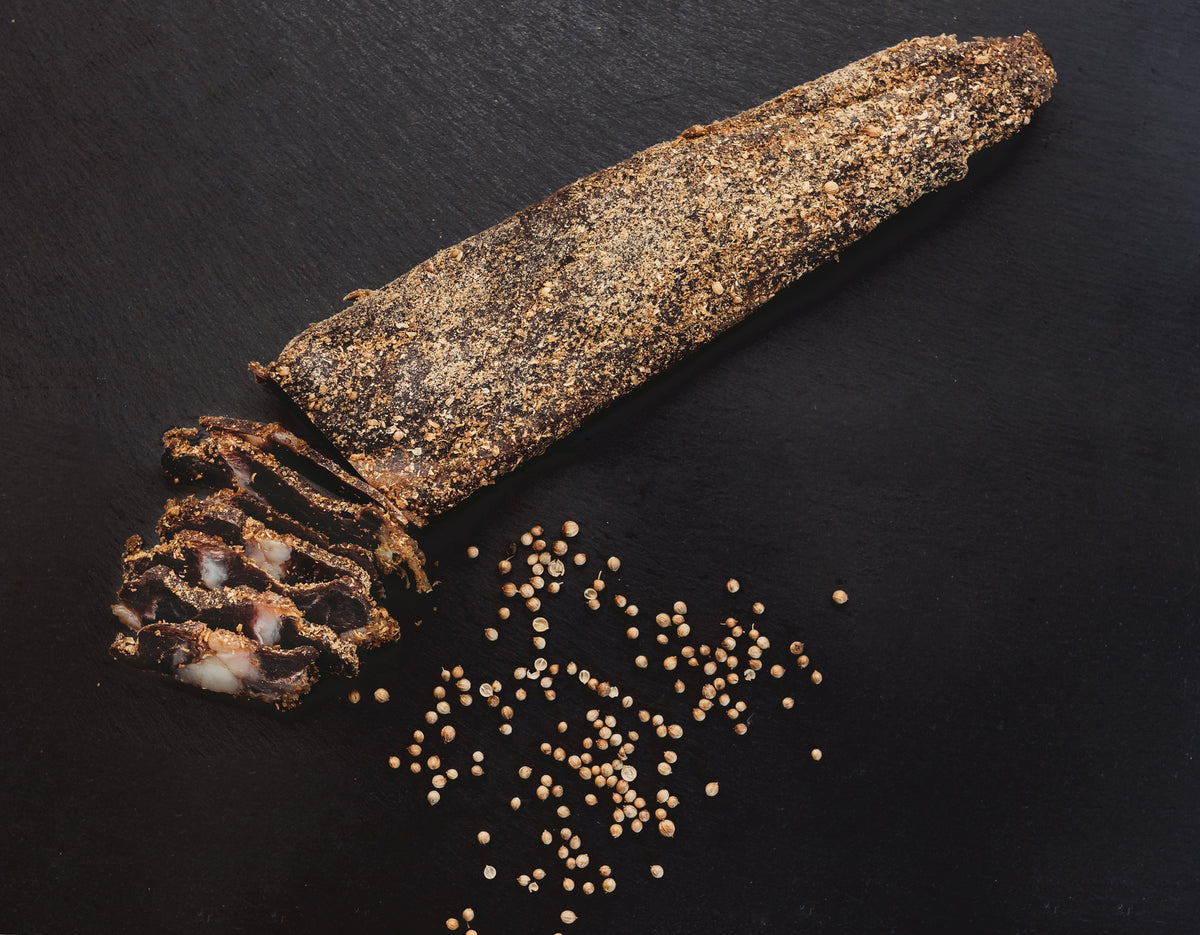
What's documented is that South African Jewish cuisine, broadly, is a genuine fusion. Litvak families held onto Lithuanian food traditions across generations while absorbing the food culture around them, including Dutch and British colonial influences and South Africa's meat-forward diet. Because South African cooking centers so heavily on beef, keeping kosher in South Africa was never in tension with eating like a South African, and biltong, as one of the country's most common beef products, fits naturally into that picture. Jewish butcheries in South Africa have long produced kosher biltong as standard stock, and the tradition of home butchers making biltong for their own families has been documented as something families carried with them even after emigrating, with some who had been butchers in South Africa continuing the practice for their households abroad.
What's more anecdotal, drawn from personal essays and community food writing rather than formal historical research, is exactly how central biltong became to Jewish family life specifically, as opposed to South African life generally. Community writers describe things like bagels topped with biltong as a beloved, specifically Jewish South African combination, but that's closer to lived food culture and oral tradition than documented history. The honest summary: South African Jewish identity and biltong both run deep in that community's food life, and they clearly overlap, but the overlap is better understood as culture than as a traceable, dated historical event.
A Living Connection, Not Just a Certification
That's the tradition Grub Company's kosher biltong sits inside, made under kosher certification, alongside its Purim gift basket (Shalach Manos) and its program donating biltong to Israeli soldiers, a real, ongoing connection to Jewish and kosher community identity rather than a label alone.
Frequently Asked Questions
Why are most South African Jews of Lithuanian descent?
A large wave of Lithuanian Jewish emigration to South Africa took place mostly between 1880 and 1914, driven by economic opportunity from the diamond discoveries at Kimberley in 1869 and gold on the Witwatersrand in 1886, combined with poverty and restrictions many Jews faced in the Russian Empire at the time. That wave was large and concentrated enough that an estimated 90 percent of South African Jews today trace their ancestry to Lithuania.
How large is the South African Jewish community today?
It's much smaller than its historical peak. The community peaked around 1970 at roughly 118,200 people. More recent community surveys estimate the population at around 50,000 today, with the decline driven mainly by emigration to countries including Israel, Australia, Canada, and the United States rather than by intermarriage or assimilation.
Is biltong actually a Jewish food, or just eaten by Jewish South Africans?
Biltong is a South African national food eaten across the whole population, not a Jewish food in origin. What is well documented is that South African Jewish households, largely of Litvak descent, have long incorporated biltong into their kosher kitchens and food culture, since South Africa's beef-forward cuisine and kosher observance were never in real tension with each other.
Who was Sammy Marks?
Sammy Marks is regarded as a pioneering figure among early Lithuanian Jewish immigrants to South Africa. He became a highly successful industrialist and a personal friend of Paul Kruger, president of the South African Republic, and his prominence is often credited with encouraging further Litvak Jewish emigration to the country.
Did South African Jewish families take biltong-making traditions with them when they emigrated?
There's documented evidence that some did. Community accounts describe South African Jewish butchers who continued making traditional biltong for their families after relocating abroad, carrying the practice into new countries as a way of preserving a piece of South African Jewish food identity.
Is kosher biltong widely available in South Africa?
Yes. Kosher biltong is standard stock at Jewish butcheries across South Africa, and it's common enough that most South African Jewish households have easy access to it as part of ordinary kosher grocery shopping rather than as a specialty item.