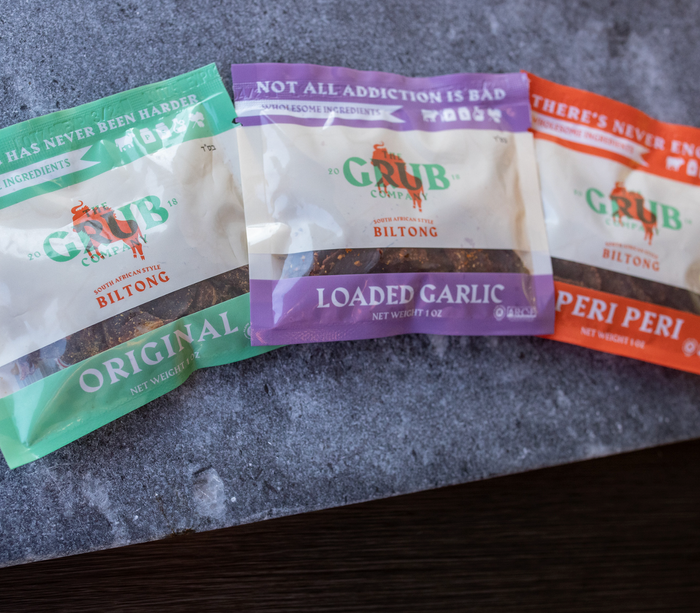
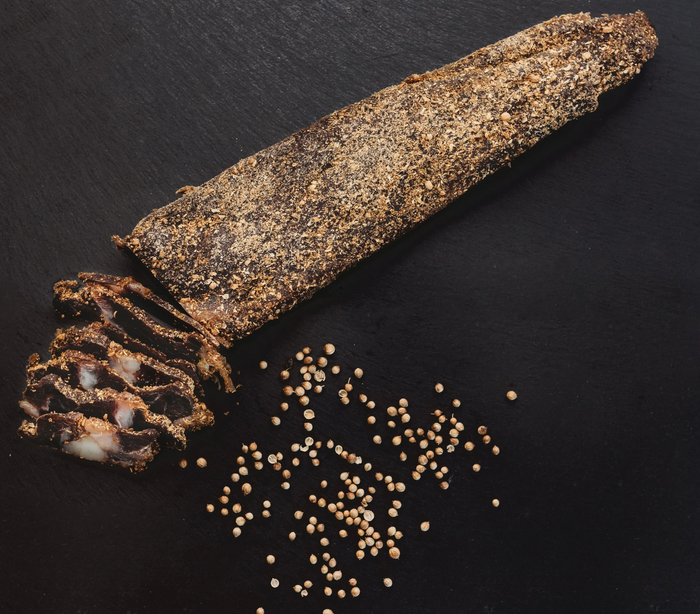
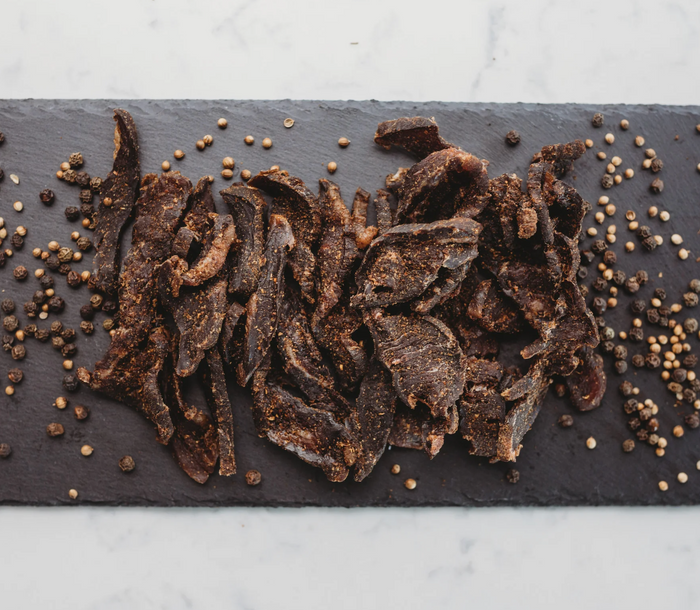
The History of Beef Jerky: From Ch'arki to the Snack Aisle
Beef jerky is meat, usually beef, that has had its fat trimmed away, been cut into strips, and been dried or smoked until so little moisture remains that it no longer needs refrigeration. The word itself is a much longer trip than the meat. It came out of the Andes mountains, passed through Spanish colonization, got mangled by English speakers, and ended up on a gas station shelf.
A Word from the Andes
"Jerky" traces back to the Quechua word "ch'arki," meaning dried, salted meat. Quechua is the language family of the Inca Empire and is still spoken by millions of people in the Andes today. The Inca made ch'arki mostly from llama and alpaca, using a freeze-drying process that took advantage of the mountains' cold nights, strong sun, and thin dry air, cycling the meat between freezing and drying until the moisture was gone. It wasn't a minor household trick, either. Ch'arki was distributed to travelers at tampu, the inn-and-storehouse network built along the Inca road system, which means dried meat was functioning as organized travel provisioning centuries before anyone called it jerky.
When Spanish colonizers arrived in the 1500s, they picked up the word and respelled it as "charqui" or "charque." English speakers who encountered the word later flattened it into "jerky," the version that stuck. The production tradition didn't disappear with the name change either. Ch'arki-making continues today in Peru, Bolivia, and Chile, largely from alpaca and llama, and Peru remains the largest producer in the world, turning out roughly 450 tons a year.
A Parallel Tradition North of the Andes
Drying and smoking meat wasn't unique to the Andes. Indigenous peoples across North America, including the Cree, Métis, Ojibwe, Blackfoot, and Lakota Sioux, were independently drying bison, deer, and elk over low fires and in open sun long before European contact. One of the more sophisticated versions of this tradition is pemmican: dried meat pounded into powder, mixed with rendered fat and often dried berries, then pressed into dense, calorie-packed cakes. The word comes from the Plains Cree "pimîhkân," rooted in "pimî," meaning fat or grease.
It's worth being clear about a common myth here: American cowboys did not invent jerky. What actually happened is that European explorers, fur traders, and later cowboys learned meat-drying and pemmican-making from Native peoples, and from Spanish charqui-makers further south, and carried those techniques west. Pemmican in particular became essential to explorers and fur traders because of its density: at roughly 3,000 calories per pound, a small amount could sustain a person for a long stretch with no way to resupply.
Onto the Ration List
Dried meat's practicality made it a natural fit for military logistics. The Continental Army carried salted meat and jerky-style rations during the Revolutionary War when fresh food wasn't available. That relationship between dried meat and military supply lines continued for well over a century: shortly after World War I ended in 1918, the US Army formally added beef jerky to its reserve rations, and by 1922 a standard ration included around 16 ounces of meat, often jerky, alongside hardtack, coffee, and sugar. The same basic idea, calorie-dense meat that survives without refrigeration, shows up today in modern Meals Ready-to-Eat.
From Ration to Snack Aisle
Jerky's shift from survival food and army ration to convenience-store snack happened as refrigeration and food processing matured through the 20th century, turning what was once a necessity into a choice. Commercial production scaled up in South America through charqueadas in Brazil and saladeros in Argentina and Uruguay, industrializing what had been a household or small-batch craft. Today jerky is a global snack category worth billions of dollars, made from beef, wild game, and increasingly other proteins, but the core method hasn't moved far from what the Inca were doing with llama meat centuries ago: salt it, dry it, and let time and dry air do the preserving.
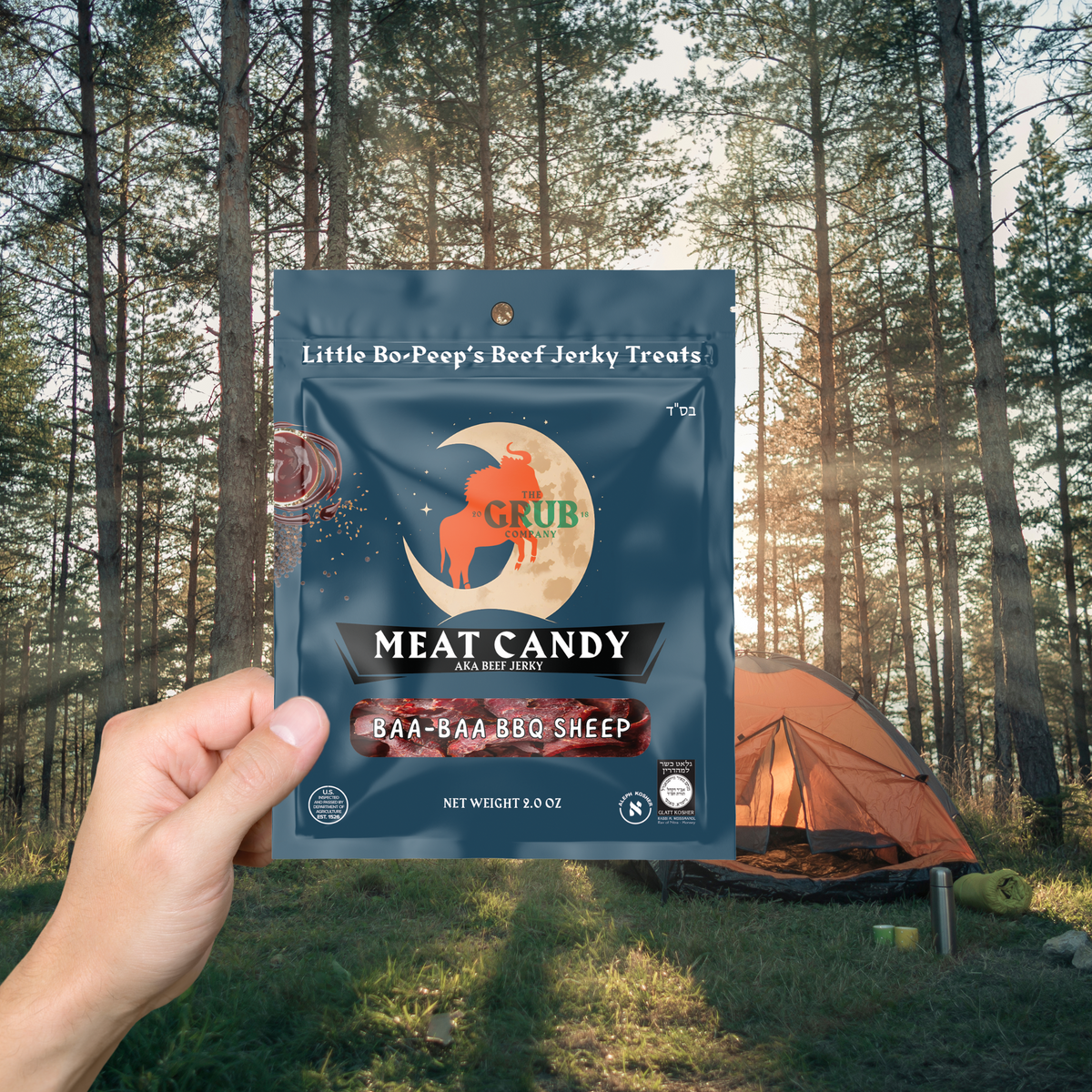
Grub Company's Meat Candy line sits in the cooked-and-smoked branch of that same jerky tradition, made Glatt Kosher and certified by Harav Weissmandl and Aleph K, in Hickory Kickory Dock and Baa-Baa BBQ Sheep.
Frequently Asked Questions
Where does the word "jerky" actually come from?
It comes from "ch'arki," a Quechua word meaning dried, salted meat. Quechua was the language of the Inca Empire and is still spoken across the Andes today. Spanish colonizers respelled the word as "charqui" in the 1500s, and English speakers later shortened and anglicized it into "jerky," which is the version that survived into modern English.
Did Native Americans invent jerky?
Dried meat traditions developed independently in multiple places, including among Indigenous peoples across North America who dried bison, deer, and elk long before European contact, and separately among Andean peoples who made ch'arki from llama and alpaca. The specific word "jerky" comes from the Andean tradition by way of Spanish, but drying meat for preservation was a broadly shared practice across the Americas, not a single invention.
Is it true that cowboys invented beef jerky?
No, that's a myth. American cowboys and frontier settlers learned meat-drying and preservation techniques from Native American peoples and from Spanish charqui-makers, then carried those methods west as they traveled. Cowboys helped popularize jerky as a symbol of frontier travel, but they adapted an existing tradition rather than starting one.
What's the difference between jerky and pemmican?
Jerky is dried meat in strip form, generally eaten as-is. Pemmican is a further step: dried meat pounded into a powder, then mixed with rendered fat and often dried berries and pressed into dense cakes. Pemmican was developed by Indigenous peoples of North America, particularly the Cree, and was prized by fur traders and explorers for its extremely high calorie density.
When did beef jerky become part of US military rations?
Dried meat rations go back to the Continental Army during the Revolutionary War, but beef jerky was formally added to US Army reserve rations shortly after World War I, in 1918. By the early 1920s, a standard ration included roughly a pound of meat, often jerky, alongside hardtack, coffee, and sugar.
Is modern beef jerky made the same way as ancient ch'arki?
The core idea is the same: salt the meat and remove moisture until it's shelf-stable without refrigeration. The specific method has diversified a lot since then, with modern jerky commonly marinated and cooked or smoked rather than freeze-dried in mountain air the way the Inca made ch'arki, but the underlying preservation principle hasn't changed.