Premium Beef Jerky: What Actually Makes It Premium
Premium beef jerky is whole sliced muscle meat from a named source, with a short ingredient list you can read aloud, dried to a texture that gives way when you bite it. Everything else on the bag is marketing. Our own biltong and beef jerky are certified Glatt Kosher, made in Florida.
We make certified Glatt Kosher biltong and beef jerky, so we look at the back of a bag the way a baker looks at a loaf. "Premium," "high quality" and "best rated" are not regulated terms. Anyone can print them. This guide gives you the checks that actually separate a good bag from an expensive one, and tells you where those checks stop being useful.
Start with the first ingredient
Turn the bag over before you read the front. The first ingredient is the largest by weight.
You want to see beef. Not "beef trimmings," not "beef, chicken," not "meat." Plain beef, and ideally a hint about what kind: sliced whole muscle, a named cut, or a feed claim you can follow up on.
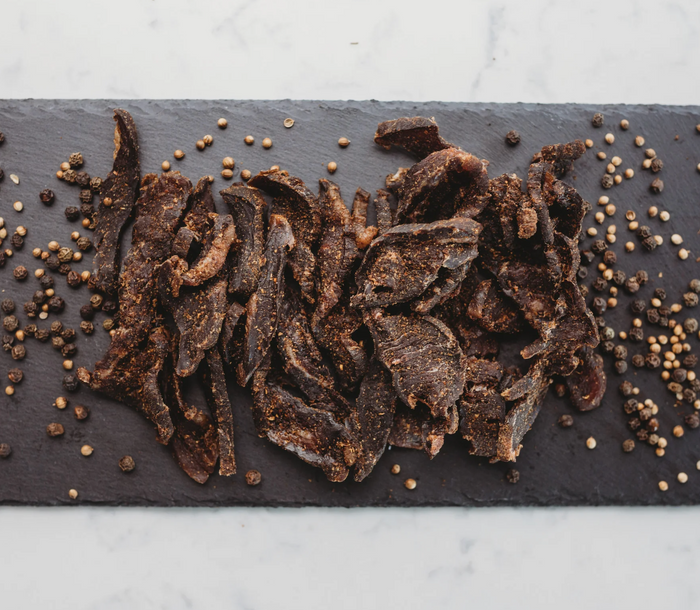
Here is why this matters. Cheaper jerky is often made from chopped and formed meat. Scraps are ground or pressed together, flavored heavily and cut into strips. It can look like jerky and still bite like a sausage stick. Whole-muscle jerky is sliced from one piece of meat, so you can see the grain running through it.
Our Meat Candy is the second kind. It is real, whole sliced beef, with no mechanically separated chicken and no ground scraps. We say that out loud because, in this category, it is not a given.
Read the whole ingredient list, then count
A short list is a good sign. A long one is a question, not a verdict.
Here is what to look for:
- Beef, then seasonings. Salt, spices, vinegar, a sweetener. You should recognize nearly every word.
- Sugar position. Sweet jerky is a legitimate style. But if sugar or syrup sits second on the list, you are eating candy with some beef in it. Know which one you are buying.
- Vague flavor words. "Natural flavors" can hide a lot. It is not a red flag by itself. Several of them stacked together is worth a second look.
- Fillers. Anything that is not meat, a seasoning or a cure has to justify its place on the list.
Our sliced biltong is a good example of how short a list can be. The Original is grass-fed kosher beef, coriander, black pepper, salt, garlic and vinegar. Six things. That is the whole recipe.
Check the source of the beef
The meat decides most of the flavor. Seasoning cannot rescue a poor cut.
Look for a plain statement of where the beef comes from and how the animal was raised. "Grass-fed" is the claim you will see most. Our beef is grass-fed, and we explain what that does to flavor, and when it matters less, in Grass-Fed vs Grain-Fed Beef Jerky.
A caution. A feed claim on its own is not a quality guarantee. It tells you about the animal's diet. It does not tell you how the meat was cut, trimmed or dried. Treat it as one point in the bag's favor, not the whole case.
Also watch for the opposite problem. If a bag says nothing at all about the beef, you have learned something.
Judge the texture, not the price
Once the bag is open, your hands and teeth tell you more than the label.
- Look at the surface. You should see long muscle fibers, not a uniform, molded sheen.
- Bend a piece. Good jerky flexes and may crack at the fold. It should not snap like a cracker or bend like a rubber band.
- Bite it. It should tear cleanly and chew with some effort. Mushy means the meat was poor or the drying was rushed. Leathery and dry all the way through means it was overdone.
- Smell it. Beef and spice. A sour or gamey edge is a warning.
We wrote two longer guides on this. Why Your Beef Jerky Is Mushy covers jerky that disappoints. How To Spot High-Quality Biltong does the same for the air-dried style.
Price is a weak signal. A high price can mean good meat. It can also mean packaging, a famous name or an ad budget. A low price can mean a good deal, though with meat it usually means something was cut somewhere. Read the bag, not the number.
Jerky or biltong: pick the style first
"Premium" means different things for different styles, so decide which one you want.
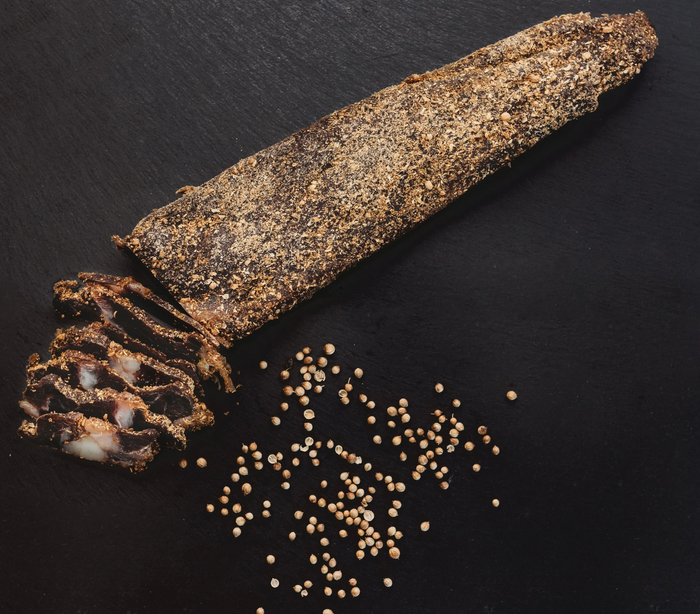
Jerky is cooked in hours, sliced thin across the grain and marinated, often with sugar. It is sweet or smoky and usually chewy. Biltong is air-dried, savory and salty, with a texture that gives way instead of fighting back.
If you want the sweet, glazed kind, our Meat Candy comes in Hickory Kickory Dock, smoky hickory with the sweetness behind it, and Baa-Baa BBQ Sheep, a Korean BBQ flavor that is sweet and savory together.
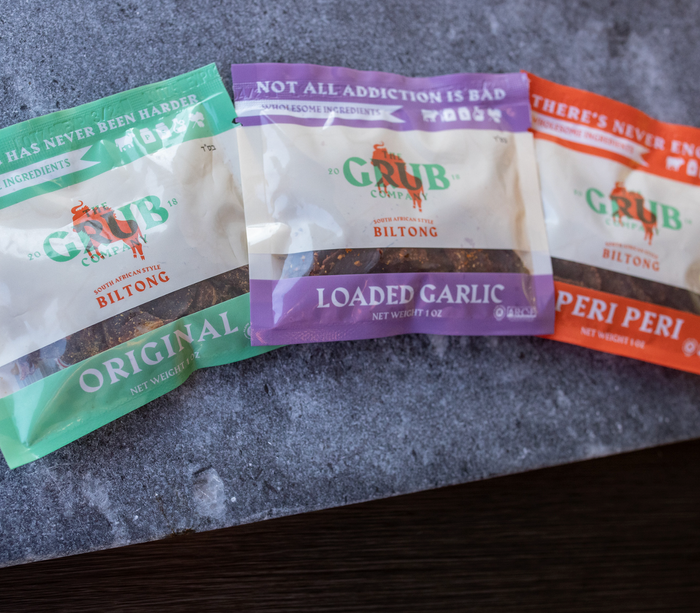
If you want savory, start with the Sliced Biltong in Original, Peri Peri or Loaded Garlic. It is sliced and ready to eat, with nothing to cut and no refrigeration. For the full range, see our biltong shop.
Here is the honest trade-off. Biltong is the wrong pick if you want a sticky, sweet, candy-like chew. It is salty and savory, and some people who grew up on teriyaki jerky find it a strange first bite. If that is you, buy the jerky.
One more point on format. Bite size changes how a bag eats. Sliced pieces are easy to share and easy to carry. A big piece you tear into yourself chews slower and holds its moisture longer. Neither is better. Match the format to where you will eat it: the car, the desk drawer, a long afternoon, a table full of guests.
If you keep kosher, "premium" has one more test
For many shoppers, the first question is not flavor. It is whether the bag is kosher at all.
Jerky is harder to get right than it looks. The meat has to be kosher, and so does everything that touches it: marinades, seasonings, sauces and equipment. Two common marinade ingredients, Worcestershire and soy sauce, are traps. Many store-bought versions are not kosher, so check before you assume.
A label that says "kosher-style" does not settle it. Look for a real certification on the bag. Ours is certified Glatt Kosher. If you are comparing options, our kosher beef jerky collection is the place to start.
What "best rated" actually tells you
Many shoppers look up the best rated jerky and take the top result on a ranking list. That is a reasonable start. It is not a reliable finish.
Star ratings measure how much people liked a bag. They do not say why. One reviewer loves a sweet bag. The next one marks it down for being sweet. A five-star average on a candy-style jerky tells you nothing about whether you want candy.
Here is how to read ratings so they help:
- Read the three-star reviews first. They are usually the most specific. People say what they liked and what they did not.
- Look for texture words. "Tender," "chewy," "dry," "mushy," "tough." Those match what you will feel in your hand.
- Look for repeat buyers. A person who ordered again tells you more than a person who ordered once.
- Ignore one-line praise. "Great product, fast shipping" says nothing about the meat.
Then go back to the bag itself. A good rating plus a short ingredient list and a stated beef source is a strong combination. A good rating on a bag with a vague list is a bag that is well marketed and popular. That can still be a decent snack. It is not the same as premium.
The same goes for taste tests you read online. They are one person's mouth on one day. Use them to narrow a list, then judge for yourself.
A quick checklist for any bag
Run through this in the aisle or on a product page:
- Is beef the first ingredient, and is it plain beef?
- Is the list short enough to read aloud?
- Is sugar well down the list, if you want savory?
- Does the bag say where the beef comes from?
- Is it whole sliced muscle, with visible grain?
- Is there a real certification, if you keep kosher?
- Does the texture bend and tear rather than snap or smear?
If a bag fails two or three of these, put it back, whatever the front says.
The bottom line
Premium jerky is not a price tier. It is a bag where the meat is real, the list is short and the source is stated. You can check all of that in under a minute. Be careful with "best rated" lists too. They reward popularity, and popular is not the same as well made.
If you are not sure which style you like, buy small. Try the Original biltong or one flavor of Meat Candy before you commit to a pound. US orders over $50 ship free.
Frequently Asked Questions
What makes beef jerky high quality?
Whole sliced muscle meat, a short ingredient list that starts with plain beef, a stated source for the beef, and a texture that bends and tears cleanly. Chopped and formed meat, long lists and vague claims point the other way.
Is expensive jerky always better?
No. Price can reflect good meat, but it can also reflect branding and packaging. Judge the ingredient list, the cut and the texture. Those tell you more than the price tag.
Does grass-fed mean premium?
It is a point in a bag's favor, not proof. Grass-fed describes the animal's diet. It does not tell you how the meat was cut or dried. Look at the rest of the checklist too.
How can I tell if jerky is made from whole muscle?
Look at the surface. Whole-muscle jerky shows long fibers running in one direction, like the grain in wood. Formed jerky looks uniform and smooth, with a pressed, molded appearance.
Is biltong higher quality than jerky?
They are different products, not rungs on a ladder. Biltong is air-dried and savory. Jerky is cooked and usually sweeter or smokier. Either can be excellent or poor. Choose the style you like, then run the same checks.
Does "kosher-style" jerky count as kosher?
No. It is a marketing phrase, not a certification. If you keep kosher, look for an actual certification on the bag. If you are unsure whether a product fits your standards, ask your rabbi.
Does Grub ship outside the US?
No. We ship within the United States only, and US orders over $50 ship free.