How to Compare Biltong Brands in the USA: A Buyer's Checklist
To compare biltong brands in the USA, check seven things in order: the meat, the ingredient list, the drying method, the cut, the certification, the shipping and return terms, and who actually makes it. We make certified Glatt Kosher biltong, air-dried in small batches in Florida, so we have a stake here. This checklist works on any brand, ours included, and it names no one. Read the label, not the review count.
Why reviews and rankings are the wrong place to start
Search for the best biltong online and you will find lists, ranked ratings and star counts. Most of it tells you what someone liked, not what is in the bag. Taste is personal. Ingredients, method and certification are checkable.
So we do not rank brands here. We give you the questions that let you rank them yourself, in about ten minutes, with nothing but the product page and the label. If you want the longer version of this argument, read how to judge any biltong brand.
The seven-point checklist
1. What is the meat?
Biltong is a whole-muscle product. The page should say what cut it is and what kind of beef. Grass-fed is a stated choice, not a guarantee of anything else, so look for the plain words on the ingredient line. Ours reads "grass-fed kosher beef."
Be careful with any page that is vague about the meat. "Beef" with no more detail is not a red flag on its own. But if everything else about the product is vague too, take the hint. For more on spotting off flavors that point to low-grade meat, see why biltong tastes gamey.
2. How long is the ingredient list?
Traditional biltong is short: beef, salt, vinegar, coriander, pepper, and whatever the flavor adds. Our Original lists grass-fed kosher beef, coriander, black pepper, salt, garlic and vinegar. Six items.
A longer list is not automatically bad. A flavored product may need more. The question is whether you can explain each line. If an item has you reaching for your phone, that is useful information. Read the whole list, top to bottom, and note any line you cannot explain.
3. Was it air-dried or cooked?
Biltong is cured and air-dried. Jerky is cooked in hours, usually with a sugary marinade. They are different products, and a shop selling one as the other is telling you something. Look for words like air-dried, cured, and hanging. If the page says only "dried," ask which way.
The method also sets the texture. Air-dried biltong gives way rather than fighting back, and it often has a softer middle and a firmer outside.
4. What cut and thickness are you getting?
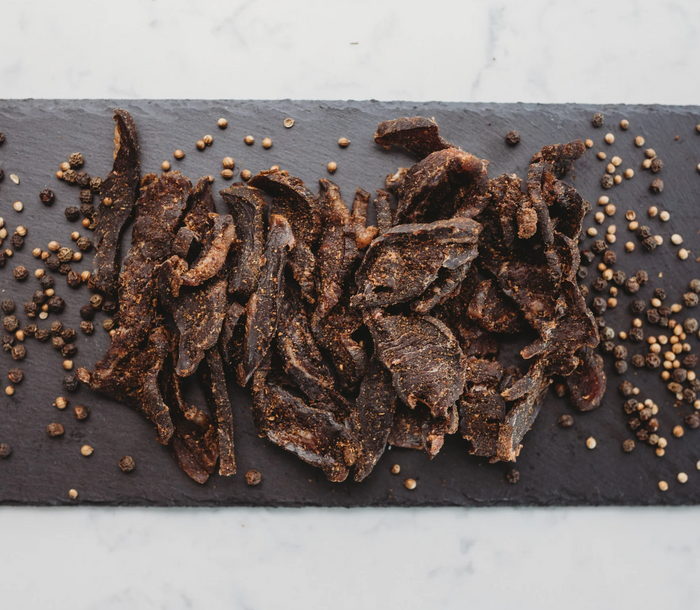
Sliced, slab, stick or bites: each is a different way to eat it. Sliced is ready to eat from the bag. A slab is uncut, so you slice it yourself. If a brand only sells one format, ask whether that is the format you want, not whether it is the best brand.
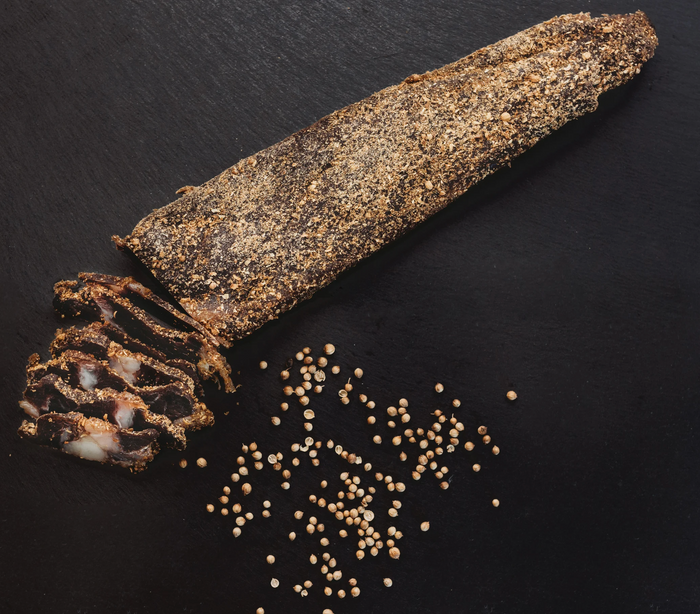
We make Sliced Biltong in 3 oz bags, one-ounce Minis, one-pound bags and Biltong Slabs, so we can say plainly that a slab is the wrong choice if you want to eat from the bag. The same honesty should apply to any brand you consider.
5. Is there a certification, and can you read it?
If kosher matters to you, a vague claim is not enough. Words like "kosher style" or "kosher ingredients" are not the same as a certified product. Look for a plain statement of certification and a certificate you can view. Our biltong is certified Glatt Kosher, and the details are on our kosher biltong page.
If kosher does not matter to you, this item drops off the list. Do not pay for what you will not use.
6. What are the shipping and return terms?
Read them before you read the flavor list. How does the brand ship, and to where? Is shipping free over a threshold? What happens if a package arrives damaged? Grub ships to US addresses only, and US orders over $50 ship free. A brand that is plain about its terms is usually plain about the rest.
Biltong is shelf-stable and needs no refrigeration, but a package should still come inside promptly. If a delivery is damaged, contact the seller.
7. Who makes it, and where?
Look for a plain statement of who makes the product and where. "Air-dried in small batches in Florida" is the kind of sentence you want to see: a place and a method. A product that reads like a story with no address is worth another look.
Then ask a fair question. Is this the brand that makes the meat, or a label on someone else's product? Neither answer is automatically wrong. You just want to know which you are buying.
Quick red flags you can spot without buying
Some problems show up on the page before you spend anything.
- No ingredient list at all. A product page that hides the ingredients is asking you to trust it blind.
- Jerky words on a biltong page. If the page says "cooked," "smoked" and "marinated" and still calls it biltong, ask what that means.
- A certification claim with no certificate. If kosher is in the headline, you should be able to find the proof in a click or two.
- Shipping terms buried or missing. If you cannot tell where it ships, it may not ship to you.
- Only one flavor, with no way to try a small size. Not fatal, but it raises the cost of a wrong guess.
None of these proves a brand is bad. They tell you where to ask questions before you pay.
How to score a brand in ten minutes
Open two product pages side by side. Go down the seven points. Give each brand a yes, a no or a not stated.
- A yes is a plain statement you can check.
- A no means the page says the opposite of what you want.
- A not stated is not a no. But it is not a yes either. If it matters, ask the seller. A good one will answer in a sentence.
Then weigh the points that matter to you. A kosher household treats point five as a gate: no certification, no sale. A heat-lover cares about the spice list. An office buyer cares about format and shipping.
A worked example, using a brand you can read for yourself
Take our Original sliced biltong and run the list, so you can see how the scoring works.
- Meat: stated. Grass-fed kosher beef.
- Ingredients: stated. Coriander, black pepper, salt, garlic and vinegar. Six lines in total, and each one has a job.
- Method: stated. Air-dried in small batches.
- Cut: stated. Sliced, in a 3 oz bag, ready to eat.
- Certification: stated. Certified Glatt Kosher.
- Shipping: stated. US addresses only, free over $50.
- Maker and place: stated. Florida.
That is seven yeses, and it still does not tell you whether you will like it. Original may be too mild for you, or Peri Peri too hot. That is why the last step is always a small purchase. Apply the same seven lines to any other brand and compare the columns, not the marketing.
What the checklist cannot tell you
Honesty belongs in a buyer's guide. The checklist cannot tell you which brand tastes best to you. It cannot tell you whether the texture suits you. Some people want it drier, some want it wetter, and some want it thicker. Neither can it tell you whether a brand will be consistent from batch to batch.
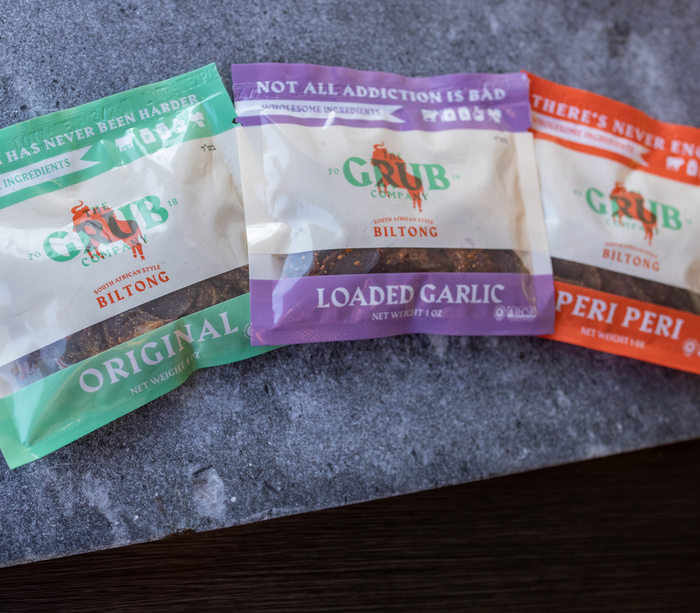
The cheapest way to settle taste is to buy small. Start with a sampler, not a pound. Our Biltong Sampler Pack is one mini bag each of Original, Peri Peri and Loaded Garlic: the whole range in the smallest amount that tells you anything. Whatever brand you try, buy the smallest size first.
If you are buying biltong because you want kosher snacks that are not biltong, our kosher beef jerky page covers Meat Candy too. Or browse the full range at Buy Biltong Online to see every size and flavor in one place.
One last habit helps. Save the product page or take a screenshot of the ingredient list when you order. Recipes and suppliers change, and a record lets you compare the bag in your hand with what the page said on the day you bought.
Bottom line
Do not compare biltong brands by their star ratings. Compare them by the meat, the ingredient list, the method, the cut, the certification, the shipping terms and the maker. Score each as yes, no or not stated. Then buy small, taste, and decide.
Frequently Asked Questions
How do I know which biltong brand is best?
There is no single best brand. The best one for you passes the checklist points you care about and tastes right to you. Use the seven points to narrow the field, then buy a small size of each finalist.
Is more expensive biltong better?
Not automatically. Price reflects the meat, the cut, the method and the size of the batch, among other things. It is a reason to ask questions, not an answer. Compare what is stated on the page.
Should I trust online reviews of biltong?
Treat them as one input. Reviews tell you about someone's taste on one day. The ingredient list, method and certification are things you can check yourself.
What should I check if I keep kosher?
Look for a plain statement that the product is certified, and a certificate you can view. "Kosher style" is not certification. Grub biltong is certified Glatt Kosher. If you have a question about a specific product or practice, ask your rabbi.
What size should I buy first?
The smallest that tells you something. A sampler or a Mini lets you try flavors before you commit to a pound.
Does Grub ship biltong outside the US?
No. Grub ships to US addresses only, and US orders over $50 ship free.
Is biltong the same as jerky?
No. Biltong is cured and air-dried. Jerky is cooked, usually with a sweet marinade. If you want the sweeter option, Meat Candy is our beef jerky.