Grass-Fed vs Grain-Fed Beef Jerky: Why Your Muscle Meat Source Matters
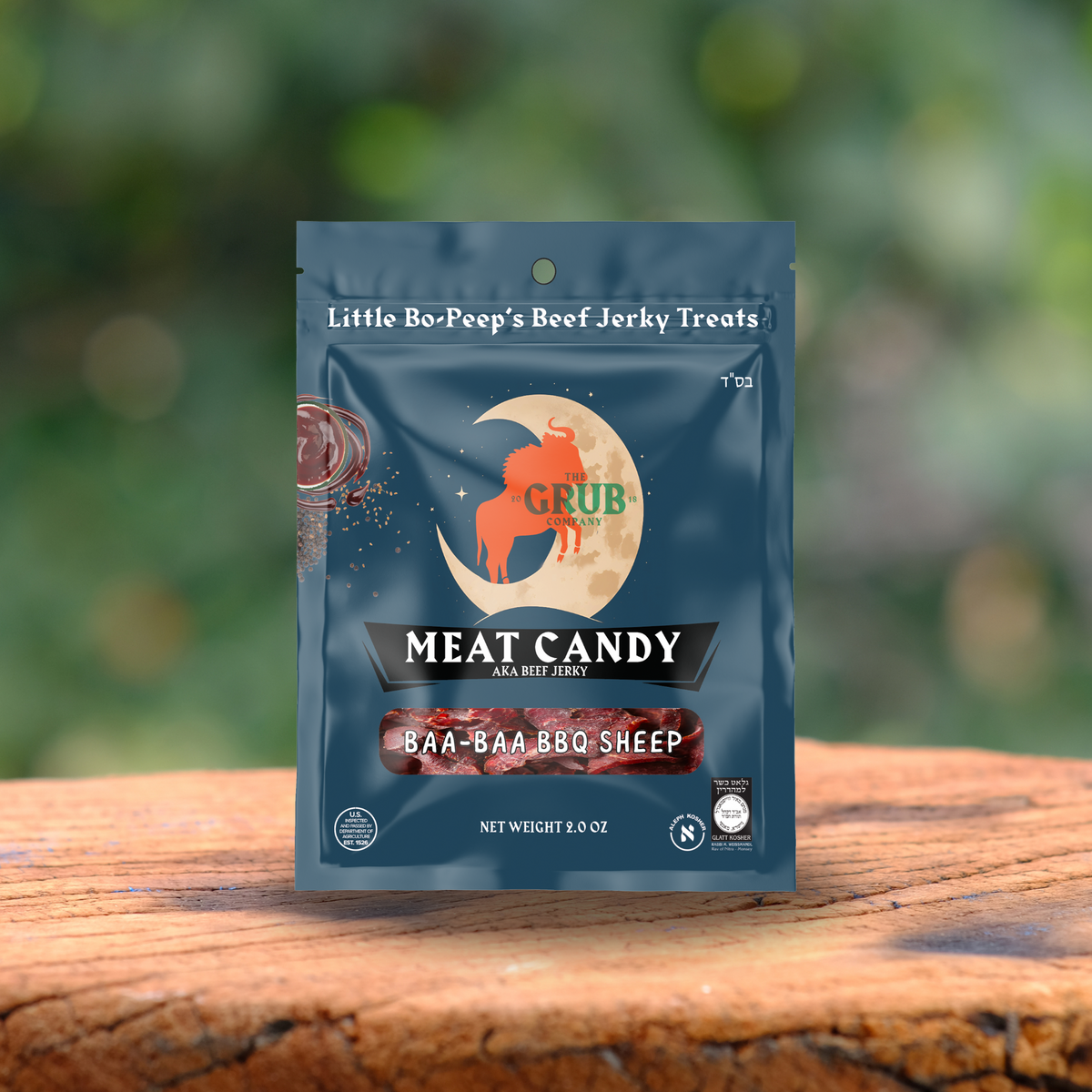
The beef in your jerky or biltong matters more than most snack brands want you to think about. When you're reading an ingredient label and it just says "beef," that word is doing a lot of heavy lifting. It could mean cattle that spent their lives on open pasture eating grass, or it could mean cattle finished in a feedlot on corn and soy for the last few months of their lives. The end product looks similar in the bag. It tastes different, it has a different nutritional profile, and if you care about what goes into your body, it's worth understanding the gap before you buy.
Related: The Best Cut of Beef for Jerky (and for Biltong)
Where to get it: Glatt Kosher biltong for sale, made in Florida and shipped anywhere in the US (free over $50).
What Grass-Fed and Grain-Fed Actually Mean
Most beef cattle in the US start on pasture. They graze on grass, grow at a natural pace, and then something splits the road. Grass-fed cattle (and grass-finished, which is the more precise term) stay on pasture for their entire lives. Grain-fed cattle get moved to a feedlot and finished on a high-energy grain diet, usually corn and soy, designed to bulk them up fast before slaughter.
The "grass-fed" label on a product can mean different things depending on how the producer defines it. Pure grass-fed and grass-finished means the animal never ate grain. "Grass-fed" without the "grass-finished" qualifier often means the animal spent part of its life on pasture but was grain-finished. For beef snacks, this distinction matters because the finishing diet is what shapes the fat profile you actually eat.
The Feedlot Model and What It Optimizes For
Feedlot finishing produces heavier cattle faster. That's the point. A corn-based diet pushes rapid weight gain, and the marbling it creates gives the beef a flavor profile that American consumers have been trained to associate with quality. That's not inherently evil, but it does change the meat in ways worth knowing about. The fat in grain-finished beef skews higher in omega-6 fatty acids. The cattle grow faster, yes, but they also need more intervention to stay healthy at that density and pace.
What Pasture Finishing Changes in the Meat
Grass-finished beef tends to be leaner. The fat that does develop has a higher ratio of omega-3 to omega-6 fatty acids, which is the direction most nutrition research points toward as healthier for long-term cardiovascular and inflammatory health. Grass-finished beef also tends to have higher levels of conjugated linoleic acid (CLA), a fatty acid associated with some positive metabolic effects, and more fat-soluble vitamins like vitamin E and beta-carotene.
The flavor is different too. Grass-finished beef has a more distinct, slightly gamey quality that people either come to love or never quite warm up to. Grain-finished beef is milder, fatter-tasting, and more uniform across batches. Neither is wrong. But if you're eating a high-protein snack regularly, the cumulative difference in what you're consuming adds up.
Why This Matters More in Dried Meat Than in Cooked Beef
When you grill a steak, there's a lot happening. The Maillard reaction, the fat rendering, the sauce or seasoning you add. The source quality matters, but it gets some cover from the cooking process. With jerky or biltong, you're concentrating the beef. Moisture leaves. What's left is a much more direct expression of what the animal was made of.
Think about it this way. A one-ounce serving of biltong might represent two to three ounces of raw beef before drying. The fat composition, the protein density, the micronutrient content, all of it gets concentrated into a smaller package. If you're eating this as a regular high-protein snack, you want what's being concentrated to actually be good.
This is why quality biltong made from grass-fed beef is a different product from jerky made from commodity beef, even if both are marketed as "protein snacks." The ingredient list tells you a lot, but understanding where the muscle meat came from tells you more.
Grass-Fed Beef and Kosher Snacking
For kosher consumers, the sourcing question intersects with the certification question. Glatt Kosher certification requires that the animal's lungs are free of adhesions, which means the animal has to be inspected post-slaughter with a level of care that commodity feedlot operations don't always accommodate well. Quality kosher beef operations tend to work with better-sourced cattle anyway, not always grass-finished, but generally from more carefully managed herds than the bottom of the commodity market.
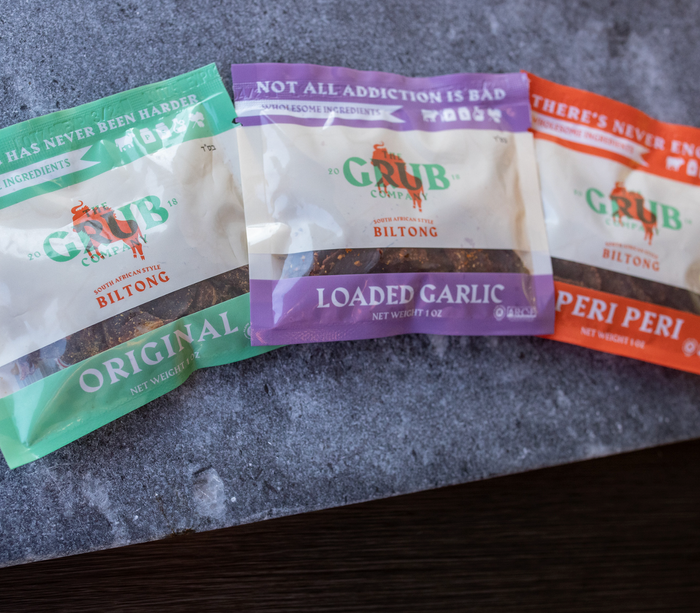
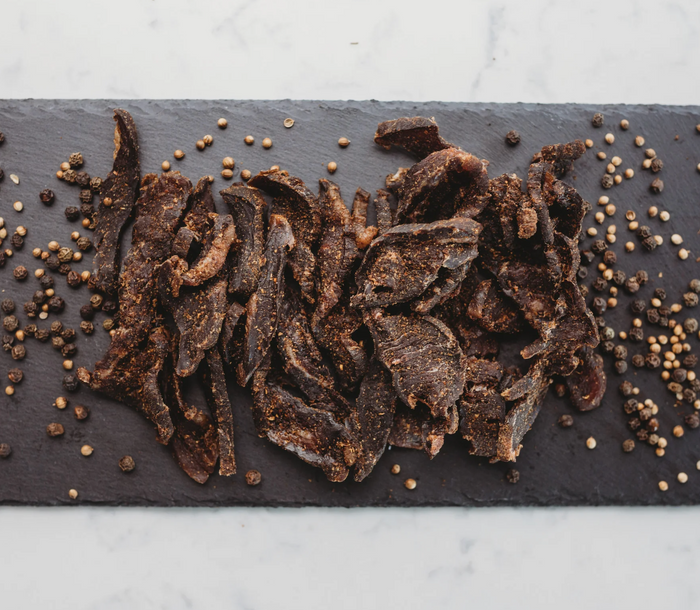
The Sliced Biltong from The Grub Company starts with premium grass-fed kosher beef. It's certified Glatt Kosher by the R.C.F. and the Aleph K. The ingredients are simple: grass-fed kosher beef, coriander, black pepper, salt, garlic, and vinegar. That's the Original. The Peri Peri adds red pepper and a little brown sugar. The Loaded Garlic version brings in roasted garlic and tomato powder. No mechanically separated chicken. No mystery fillers. No ground "beef" that's really trim and byproduct run through a grinder. Actual sliced muscle meat from grass-fed cattle.
That specificity matters, especially if you're feeding kids, eating this at the gym, or snacking on the road and want to know what's actually going into your body between meals. You can browse the sliced biltong options if you want to see the full lineup.
Omega-6 and Omega-3: The Ratio That Actually Matters
American diets are already heavily skewed toward omega-6 fatty acids. Processed seed oils, grain-fed meat, packaged snacks, they all push omega-6 consumption up. The ideal dietary ratio of omega-6 to omega-3 is somewhere around 4:1. Most Americans eat closer to 15:1 or even 20:1. That imbalance is linked in a lot of nutritional literature to chronic inflammation, though the exact mechanisms are still being studied.
Grass-finished beef has a ratio closer to 2:1 omega-6 to omega-3. Grain-finished beef can run 7:1 or higher. If you're snacking on beef products regularly, as many gym-goers, carnivore dieters, and keto eaters do, those numbers matter. Every bag you eat is either pushing the ratio in a better direction or a worse one.
This isn't a claim that eating grass-fed jerky cures anything. It's a simple nutritional reality: the fat you eat in your snack reflects the fat the animal was built from. If the animal was built from corn, your snack contains corn-influenced fat. If it was built from grass, you get a different fat profile.
The Protein Argument: Both Are High, But Not Equal
Both grass-fed and grain-fed beef are high in protein. A one-ounce serving of biltong can carry 16 to 18 grams of protein, sometimes more depending on moisture content. The grass-fed version won't necessarily hit higher protein numbers. What it does tend to have is a slightly different amino acid profile, with marginally higher levels of certain amino acids that support muscle repair, though the differences here are small enough that most people shouldn't make their buying decision on this alone.
The bigger protein-quality argument for grass-fed jerky is what's absent. Less total fat means the protein is a higher percentage of the calorie load. For athletes, this is relevant. You're not eating a high-protein snack and accidentally loading up on excess saturated fat from a feedlot-fattened carcass. The muscle-to-fat ratio in the dried product is cleaner.
Biltong vs. Jerky: A Brief Note on Process and What It Changes
This is a comparison article about beef sourcing, but biltong and jerky differ enough in process that it affects how the sourcing shows up in the final product. Traditional American jerky is made by marinating thin slices of beef and then drying them at low heat, often with added sugar, liquid smoke, and preservatives to extend shelf life and build flavor.
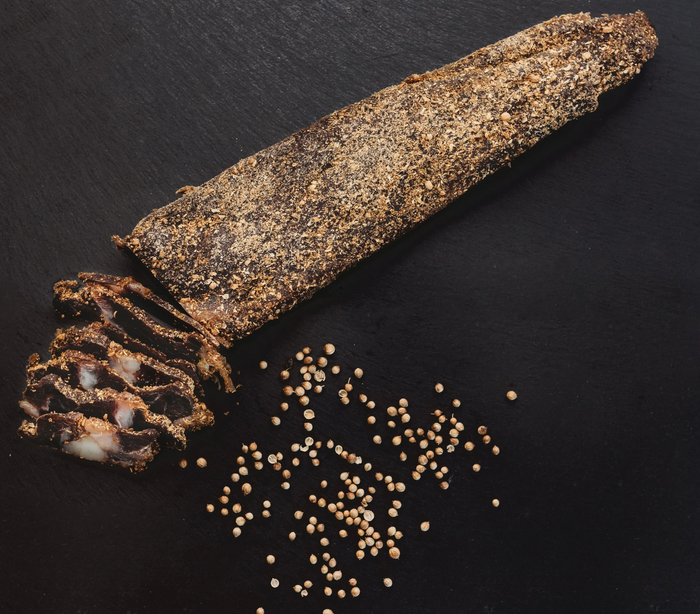
Biltong is air-dried. No heat. The beef is marinated in vinegar and spices, hung, and dried over days. That slower process without cooking means the fat in the meat doesn't render out or oxidize the same way. You taste the beef more directly. The spice rub does its job without a long list of additives doing the heavy lifting.
This is part of why the source beef matters more in biltong than in many commercial jerky products. Jerky can hide behind smoke flavor and high-sugar marinades. Biltong, made the right way, is mostly just beef and spice. The quality of the beef is right there in every bite.
If you've only had jerky and want to understand what beef actually tastes like in dried form, the Biltong Sampler Pack is the lowest-risk way to find out. You get Original, Peri Peri, and Loaded Garlic in one pack, all made from grass-fed beef, for $12.99.
Reading the Label: What to Look For
If you're standing in a store or reading a product page, here's what to actually check:
- Ingredient one: It should say "beef" or "grass-fed beef," not "mechanically separated beef" or "beef and pork blend."
- Sugar content: A small amount in certain flavor profiles is fine. Twenty grams of sugar per serving means you're eating candy with beef flavoring.
- Sodium nitrate or sodium nitrite: Traditional biltong doesn't need them. Their presence usually signals a shortcut in the drying process.
- "Natural flavors": This phrase covers a lot of ground. In a high-quality beef snack with simple ingredients, you shouldn't need natural flavors doing mystery work.
- Serving size manipulation: Some brands list a serving size as half an ounce to make the protein numbers look better per serving. Check per 100g for an honest comparison.
Who Should Care Most About Grass-Fed Sourcing
Practically speaking, grass-fed beef jerky or biltong matters most to a few specific groups. People eating high-protein, animal-based diets where beef snacks are a daily or near-daily thing. Kosher consumers who want clean sourcing aligned with their standards. Parents buying snacks for kids where ingredient quality is a non-negotiable. Athletes who are tracking macro and nutrient quality, not just calories and protein grams.
If you eat one stick of jerky at a gas station once a month, the grass-fed question is mostly academic. But if beef snacks are part of how you actually fuel your days, whether that's at the gym, at the office, in the car, or packing for travel, the sourcing decision compounds over time.
For regular buyers, a biltong subscription means you always have grass-fed, kosher-certified biltong on hand without having to think about reordering. It's the kind of setup that makes eating well on autopilot actually work.
Frequently Asked Questions
Does grass-fed beef jerky actually taste different from grain-fed beef jerky?
Yes, and the difference is more noticeable in biltong than in heavily seasoned commercial jerky. Grass-finished beef has a slightly more pronounced, earthy beef flavor. Some people call it gamier, though that word has a bad reputation it doesn't always deserve. Grain-finished beef is milder and more uniform. If you're used to mainstream jerky made from grain-fed commodity beef, grass-fed biltong from The Grub Company might taste richer or more complex at first. Most people who try it don't go back.
Is all kosher beef automatically grass-fed?
No. Kosher certification and grass-fed sourcing are separate things. Kosher certification covers the slaughter process, the animal inspection, and how the meat is handled and prepared. An animal can be Glatt Kosher certified and still be grain-finished in a feedlot. The Grub Company uses grass-fed beef specifically, which is a sourcing choice on top of the kosher certification, not a byproduct of it. Always check the ingredient list for "grass-fed" if this matters to you.
How much more protein does grass-fed beef jerky have compared to grain-fed?
The protein count per ounce is not dramatically different. Both grass-fed and grain-fed beef are protein-dense. The real nutritional difference is in fat profile, specifically the omega-3 to omega-6 ratio and CLA content, not protein grams. Grass-fed beef is generally leaner, so in a dried product like biltong, the protein represents a higher percentage of total calories. If you're tracking macros precisely, that leanness matters. But don't buy grass-fed expecting a massive protein jump over grain-fed on a per-ounce basis.
What does "mechanically separated beef" mean and why should I avoid it in jerky?
Mechanically separated beef is produced by forcing bones and attached tissue through a sieve under high pressure. The result is a paste-like protein slurry that gets used as a filler or base ingredient in lower-cost meat products. It's not the same as sliced muscle meat. In jerky, it's a way to cut costs by bulking up the product with lower-grade material. Biltong made from whole sliced beef, like The Grub Company's Sliced Biltong, uses actual muscle cuts from start to finish. The texture and flavor difference is obvious once you compare them side by side.
Is biltong a better choice than jerky for people eating keto or carnivore?
For most keto or carnivore eaters, biltong is the cleaner option. Traditional biltong uses minimal ingredients, no added sugar (or very little in flavored versions), no nitrates, and no artificial preservatives. Mainstream American jerky often carries significant sugar in the marinade, which works against ketosis and adds unnecessary carbs. The Grub Company's Original and Loaded Garlic biltong flavors use no added sugar at all. Peri Peri adds a small amount of brown sugar for balance. Check the label and pick the flavor that fits your targets.
Can I eat grass-fed biltong every day as a protein snack?
Most people eating it as a regular snack do exactly that without issue. It's high in protein, low in carbs, and made from real whole-food ingredients. The main thing to watch is sodium, which runs higher in cured and dried meats generally. If you're managing sodium intake for medical reasons, factor that in and talk to your doctor about appropriate amounts. Otherwise, as a between-meal snack or gym fuel, daily biltong from quality grass-fed beef is a reasonable and convenient choice.
Why does the omega-6 to omega-3 ratio matter in a snack food?
Because snack food adds up. If you eat biltong or jerky three to five times a week, those calories and that fat profile are a real part of your diet, not a rounding error. Most Western diets are already heavily skewed toward omega-6 fatty acids from seed oils and processed food. Adding grain-finished beef snacks on top of that pushes the ratio further in the wrong direction. Grass-fed beef has a much better omega-6 to omega-3 ratio, typically around 2:1 versus 7:1 or higher in grain-finished beef. Over weeks and months of regular snacking, that difference adds up in your overall fat intake.