Beef Snacks Made in the USA: Grub's Florida-Made Biltong
If you want to know where your beef snack was made, here is the plain answer for Grub. Grub's biltong is made in Florida, in small batches, from grass-fed beef, and certified Glatt Kosher before it ships. That combination is rare enough that it's worth explaining what it actually means for the meat in the bag, the process, the ingredients, the formats, and how to figure out which size to start with.
At a glance
- Grub biltong is made in Florida from grass-fed beef and certified Glatt Kosher.
- Biltong is air-dried whole in vinegar and spices. It is never cooked, which makes it fundamentally different from jerky.
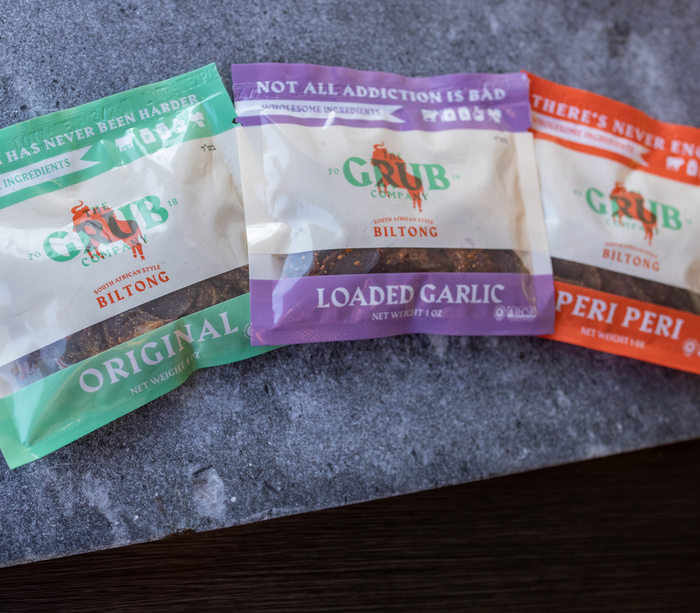
- Three flavors are available: Original, Peri Peri, and Loaded Garlic, across multiple size formats from minis to a full-pound slab.
- A Biltong Sampler Pack lets first-timers try all three flavors before committing to a larger bag.
- Bulk sliced biltong by the pound suits regular buyers.
Why 'Made in Florida' Matters for a South African Snack
Biltong is South African by origin, but origin of a recipe and origin of a product are two different things. Grub makes its biltong in Florida, in small batches, from grass-fed beef. That matters for a few reasons that go beyond regional pride.
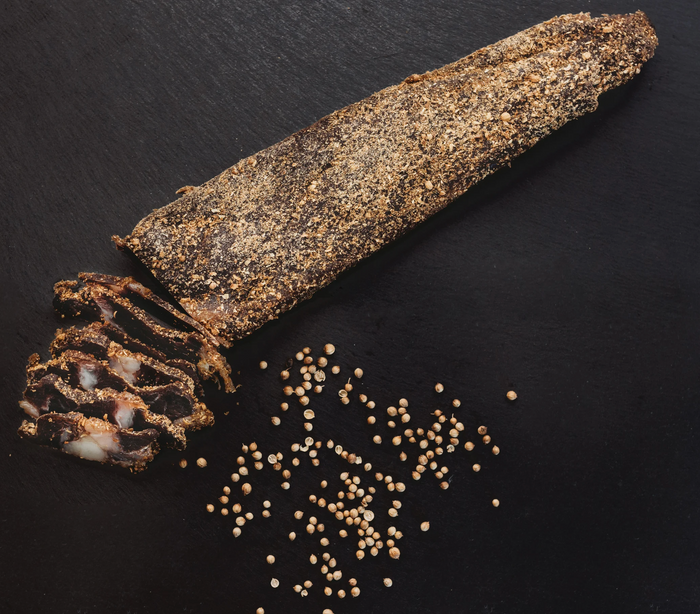
The process itself is air-drying, not cooking. Whole cuts of beef go into a vinegar and spice cure, then hang in controlled air until the moisture drops to the right level. No heat. The result is a fundamentally different product from beef jerky, which is sliced thin and cooked. That distinction is real, and it shows up in the texture, the flavor, and the ingredient list.
Grub's biltong is made in the US, not imported. Every bag is made in Florida. Grub's biltong is made from grass-fed beef, air-dried in small batches in Florida. For kosher buyers, Grub's biltong is certified Glatt Kosher, and the Kosher Biltong page has the details.
For people who keep kosher, the Glatt Kosher certification is the whole point. For people who don't keep kosher, the short ingredient list and the air-drying process are the main story.
None of this makes Grub's biltong South African in the sense of a product made in Cape Town. What it makes it is a South African process, applied seriously, in Florida, with grass-fed beef, and certified Glatt Kosher. That is the whole idea.
The Ingredients Behind Each Flavor
The ingredient list is short on every flavor, and that's by design. Grass-fed kosher beef, vinegar, salt, and a handful of spices, with no MSG, no preservatives, no nitrates or nitrites. What changes between flavors is which spices, and in one case, whether there's any sugar at all.
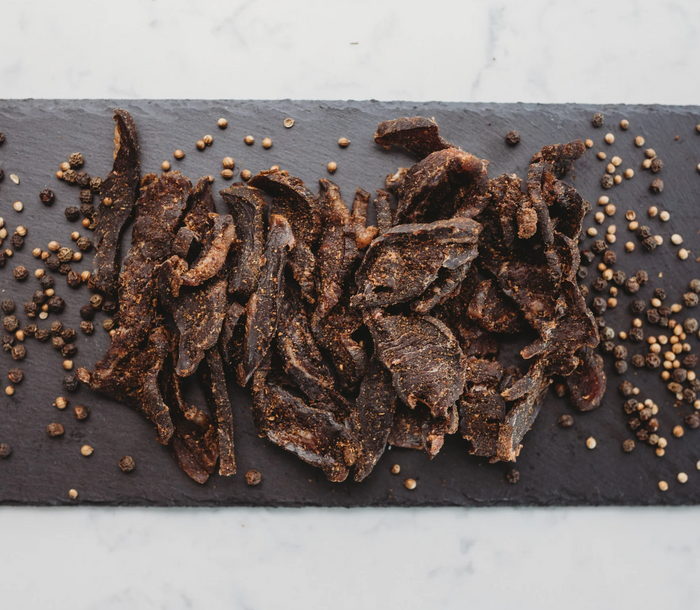
Original is the baseline: grass-fed kosher beef, coriander, black pepper, salt, garlic, vinegar. That's it. The coriander is coriander seed, which is the spice that gives traditional biltong its characteristic warm, slightly citrusy note. If you've never had biltong before, Original is where the flavor profile makes the most sense, beef first, then the spice, with no sweetness in front of or behind it.
Peri Peri adds red pepper and brown sugar to that foundation. The full list is grass-fed kosher beef, coriander, red pepper, black pepper, salt, garlic, vinegar, brown sugar. The heat is real, and so is the sugar. Which matters if you're watching carbs, eating on a specific protocol, or just prefer savory without any sweetness. It's not a sweet snack, but it does contain brown sugar. Worth knowing before you order a pound of it.
Loaded Garlic goes in a different direction entirely. The ingredient list there is grass-fed kosher beef, coriander, garlic, roasted garlic, salt, tomato powder, vinegar. No brown sugar. The garlic is doubled, fresh and roasted, which gives it more depth than the heat-forward Peri Peri and more character than Original. If you want something savory and a little bold without the chili heat, Loaded Garlic is the one.
A quick way to think about the three:
- Original, beef and warm spice, no added sugar, no heat
- Peri Peri, heat-forward, contains brown sugar
- Loaded Garlic, doubled garlic, savory, no brown sugar
All three are certified Glatt Kosher and made from the same grass-fed beef. What separates them is purely the spice blend and whether sugar shows up in the mix.

It's also worth drawing the line between biltong and Meat Candy, because they're on the same shelf but they are not the same product. Biltong is air-dried and savory. Meat Candy is cooked and glazed, giving it a sweet profile that sets it apart from air-dried biltong. If you're browsing the catalog and wondering why one bag looks so different from the other, that's why. Grub biltong is certified Glatt Kosher, and the process sets it apart from cooked snacks like jerky. You can explore the full Kosher Beef Jerky range if the cooked-and-glazed style sounds more like what you're after, or stick with biltong if you want the air-dried, savory end of the shelf.
For anyone who wants to taste all three biltong flavors before committing to a larger bag, that's exactly what the Sampler Pack exists for. One mini of each, so the decision gets made with actual information rather than guesswork.
Formats: Which Size Actually Makes Sense for You
Once you've settled on a flavor direction, the next question is almost always about size. Here's how each format in the catalog actually works, and who it's genuinely for.
Sliced Biltong Mini's
The mini bags are for two specific situations: trying a flavor before committing to a larger bag, or controlling how much you eat in one sitting. Sealed, in Original, Peri Peri, or Loaded Garlic. If you already know your flavor and you're eating at home, the larger sliced bag makes more sense. But if you're still figuring out whether you like biltong at all, or which of the three flavors you'd want a full bag of, the minis are the right entry point. They're also the lowest-stakes way to share with someone who's skeptical.
Sliced Biltong
This is the everyday format. Pre-sliced, ready to eat. Nothing to cut, nothing to prepare, no refrigeration needed. The slicing is already done, which means you get consistency. But you give up control over thickness. If you're the kind of person who wants paper-thin pieces or thick, jaw-workout cuts, this isn't the format for that. If you just want to eat biltong without any setup, it is. It fits neatly into a gym bag or a desk drawer without any thought.
Bulk Biltong, 1 lb Sliced
A full pound of biltong, available for those who go through it quickly or want to portion and freeze. This is the format for people who've already picked a favorite and want more of it. It suits regular snackers, people feeding a small household, or anyone who's done with sampling and just wants to stock up.
Biltong Slabs (1 lb, uncut)
A pound of biltong that you slice yourself, as you go. This is the format for texture control. Thin and translucent, thick and chewy, or somewhere in between. You decide every time. The trade-off is obvious: you need a knife and a cutting board, and you have to do the work. If that sounds like a chore, get the sliced bags. If the idea of cutting it exactly how you want it sounds like the point, the slab is the right call.
Biltong Sampler Pack
One mini bag of each flavor, Original, Peri Peri, and Loaded Garlic, in a single order. This is the right first order for most people who've never tried biltong. Once you know what you like, the sliced bag is a natural next step, and the bulk pound is where buying more at once makes sense. You can browse the full range at Buy Biltong Online.
Beef Crisps and The Starter Box
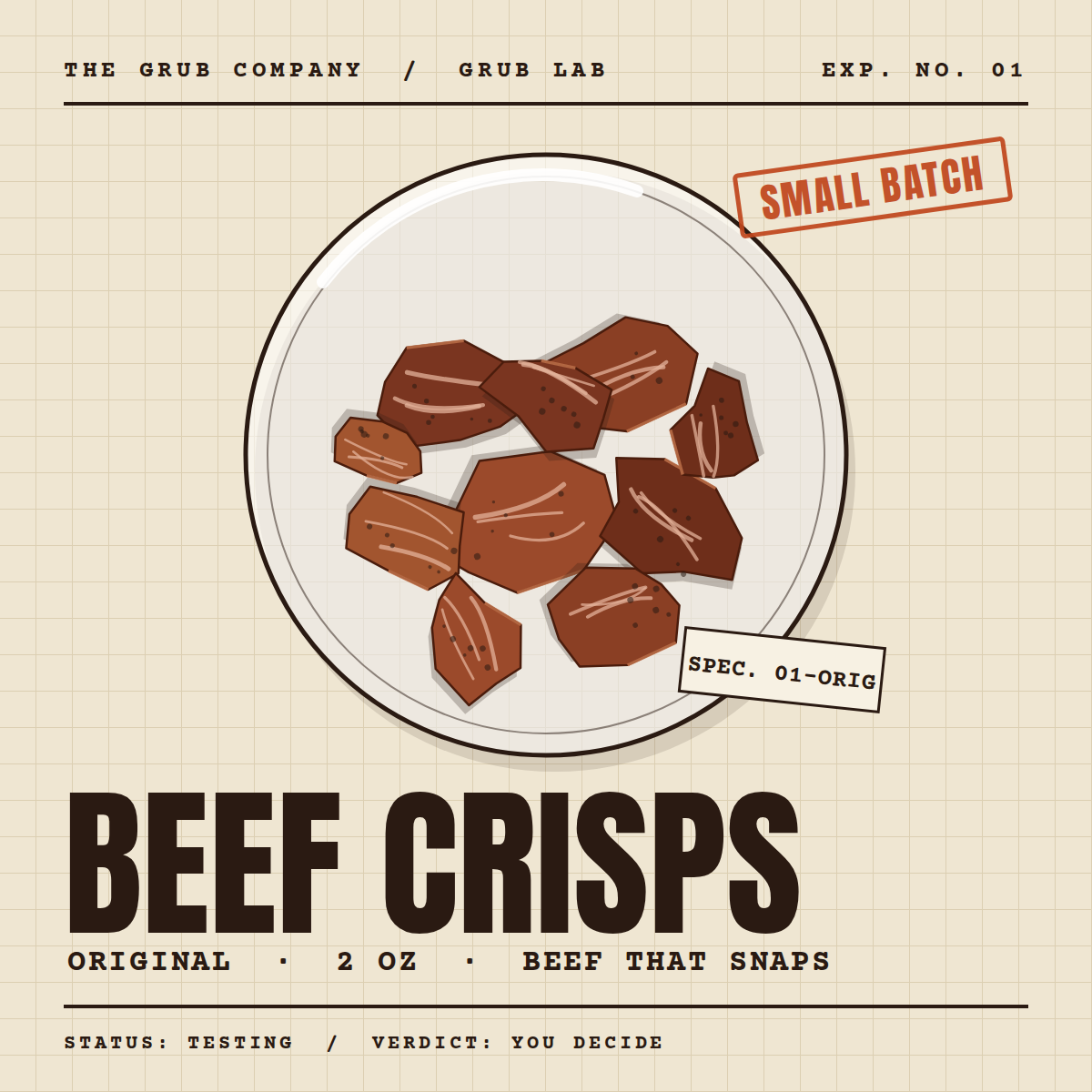
Two formats that don't fit neatly into the biltong-only progression, but are worth knowing about. The Beef Crisps offer a different texture from the usual biltong chew. If your sticking point with biltong is the texture rather than the flavor, Beef Crisps solve that differently. The Starter Box puts several Grub snacks in one shipment. It's a reasonable way to figure out whether you're a biltong person, a jerky person, or both.
How to Store It Once the Bag Is Open
Whichever format you land on, the question that follows is the same: what do you do with the rest of the bag? Unopened biltong is shelf-stable because the air-drying and the vinegar cure do most of the preserving before the bag leaves Florida. Once you break the seal, air and moisture get in every time you reach for a piece, and that's what limits how long it stays good, not a fixed label number, just the reality of how often the bag gets opened and what your kitchen is like.
There's no single answer for how many days an opened bag lasts. It depends on moisture in the air, warmth in the room, and how frequently the bag gets opened. What you can do is slow the process down with a few straightforward habits.
- Press the air out and reseal tight after each use. A loose seal invites moisture in faster. If the bag's zipper isn't holding well, move what's left into an airtight container.
- Keep it away from heat. A bag near the stove or left in a hot car goes off sooner than one sitting in a cool cabinet at room temperature. Heat speeds spoilage, so the coolest spot on your counter is better than the warmest.
- Refrigerate if you're eating slowly. The fridge extends how long it stays good past what the counter will do. If you're working through a pound bag over time rather than a few sittings, the fridge is the right call.
- Freeze for longer storage. Freezing extends it further still. Freeze in small portions rather than one large block, because thawing and refreezing isn't ideal for texture.

As biltong sits, it tends to firm up. That's normal and not a sign anything is wrong. What you're actually looking for is an off or sour smell, visible mold, or a slimy texture. Any of those, and the bag is done.
The format you picked also plays into this. Mini bags are one sitting by design, so air exposure is minimal. The sliced bag gets finished quickly enough that storage is rarely an issue. The bulk pound or a slab is where it matters most. Those formats make the most sense if you're eating through them steadily, or if you're willing to use the fridge. Slow eaters are better served by smaller bags, not because biltong goes bad quickly, but because good storage habits are easier when there's less to manage.
Bottom line
If you want a beef snack made in the US, certified Glatt Kosher, and built on an air-drying process that has nothing to do with cooking or glazing, Grub's Florida-made biltong is made for you. Start with the Biltong Sampler Pack if you have never tried biltong before. It covers all three flavors in a single small order. Move to the sliced bag once you know your flavor. If you want control over thickness, the Biltong Slabs are the format for that. And if you already know you eat a lot of it, the bulk pound is the one to buy. Pick the format that fits how you eat, and go from there.
If you still have a question before you order, these come up more than almost anything else.
Frequently Asked Questions
Is Grub's biltong actually made in the USA?
Yes. Grub's biltong is made in Florida, in small batches, from grass-fed beef. The production is domestic. It is also certified Glatt Kosher.
What is the difference between biltong and beef jerky?
Biltong is air-dried whole muscle beef, cured in vinegar and spice and never cooked. Jerky is sliced thin and cooked, often with heat and a glaze. The result is completely different in texture and flavor. Biltong is savory and dense. Jerky tends to be sweeter and chewier in a different way. Grub sells both: the biltong range and Meat Candy, which is cooked and glazed and unashamedly sweet. They are not the same product.
Which flavor should I try first?
Original is the most straightforward starting point, grass-fed beef, coriander, black pepper, salt, garlic, and vinegar, with no added sugar. It gives you the clearest read on what biltong actually tastes like. Peri Peri adds red pepper and brown sugar, so it's warmer and slightly sweet. Loaded Garlic leads with garlic and roasted garlic, with tomato powder rounding it out. If you are genuinely unsure, the Biltong Sampler Pack has one mini bag of each flavor, which is exactly what it's designed for.
Are all the products in the catalog certified Glatt Kosher?
Grub biltong is certified Glatt Kosher. If you have a question about a specific item, check the individual product page or contact Grub directly before ordering.
Can I control how thick the slices are?
Only with the Biltong Slabs. A slab is a full pound of uncut biltong. You slice it yourself, to whatever thickness you like, as you eat it. Thin and translucent or thick and chewy, the choice is yours every time. All the other formats, the sliced bag, the minis, the bulk pound, come pre-sliced, which is more convenient but removes that control. If texture is something you care about and you already know you like biltong, the slab is the right format.
How long does an opened bag of biltong last?
There is no fixed number of days. It depends on moisture in the air, kitchen temperature, and how often the bag is opened. What you can control: press the air out and reseal tight after each use, keep the bag away from heat sources, and move to an airtight container if you want it to last longer. Refrigeration extends storage past the counter, and freezing extends it further, best done in small portions. Signs a bag is done: an off or sour smell, visible mold, or a slimy texture. Getting firmer over time is normal and not a problem.
What is the best way to order if I've never tried biltong before?
Start with the Biltong Sampler Pack. One mini bag each of Original, Peri Peri, and Loaded Garlic. It's the smallest amount that actually tells you something about each flavor and about the texture of biltong in general. Biltong is a texture experience as much as a flavor one, and people are often surprised by it. Once you know which flavor works for you, the sliced bag is the everyday format, and the bulk pound suits fast eaters or those who prefer to freeze portions.