How To Spot High-Quality Biltong: What Separates Good From Bad
Most biltong looks fine in the bag. The real differences show up the moment you open it, and if you know what to look for, bad biltong is hard to hide.
Shop the real thing: buy biltong online, Glatt Kosher and made in Florida. US orders over $50 ship free.
The Meat Is Everything, Start There
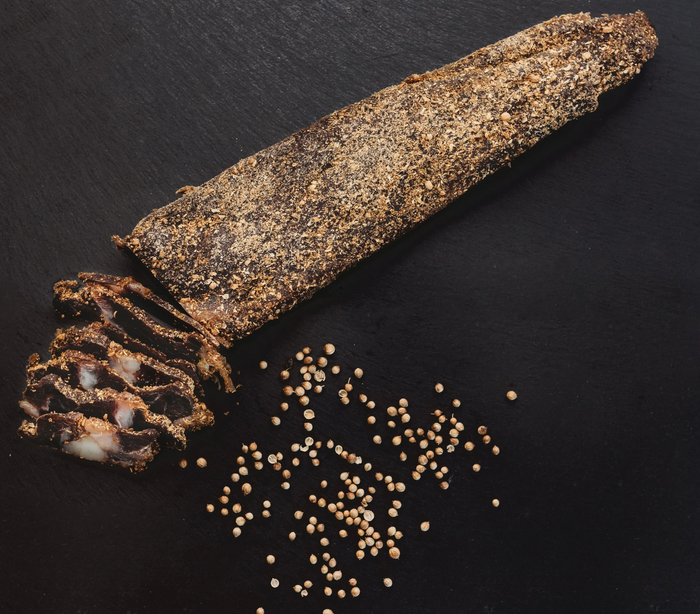
Good biltong starts with full-muscle beef. That means an intact cut, whole, uncompressed, with visible muscle fibers running through every slice. Hold a piece up and look at the grain. If you can see it, that's a real cut of beef. If the interior looks uniform, dense, and pressed, like a deli loaf, you're looking at reformed or mechanically separated meat, and no amount of spicing fixes that.
Grass-fed beef makes a measurable difference in flavor. The curing process concentrates whatever the meat already has. Pasture-raised beef develops a richer, more complex depth during air-drying. In a plain Original biltong with nothing to hide behind, you'll taste that difference clearly.
The ingredient list is the fastest quality filter available. Quality biltong lists beef, vinegar, salt, coriander, and pepper. That's it, or close to it. When modified starch, dextrose, color additives, and artificial flavorings start appearing, those ingredients are compensating for something the beef isn't delivering. Added sugar in a traditional biltong is a particular red flag. It's a shortcut that masks flat-tasting meat. A short list means the meat is doing the work.
One honest trade-off worth naming: grass-fed full-muscle biltong costs noticeably more than commodity alternatives. The inputs are more expensive. Proper air-drying over days takes more time than accelerated heat-drying. Small-batch quality control costs more than scaled industrial output. If a price looks too good, something in that chain was cut. That's not cynicism. It's arithmetic. High price alone guarantees nothing, but price significantly below the market rate almost always means a compromise somewhere.
What Your Eyes and Nose Tell You
Slice into a slab and look at the interior color. Quality biltong is deep mahogany or burgundy inside. The outer crust darkens naturally from air-drying. That's expected. But the interior should hold a rich red tone. Pale gray or washed-out pink inside means the cure didn't penetrate properly, the beef quality is low, or both. Very dark throughout with no red visible usually means over-dried. The target is a dark exterior crust with a deep red interior.
Texture is the other visual tell. A properly cured piece holds together cleanly. It doesn't crumble at the edges, it doesn't fall apart when you pick it up, and it doesn't look compressed in that processed-meat way. When you run a knife through a slab, the blade should move through cleanly. The meat should flex slightly rather than snap. Enough residual moisture to give, not so much that it's wet or soft.
Smell it when you open the bag. Good biltong has a strong, savory, slightly tangy aroma from the vinegar cure and spice. That's a strong smell and it's supposed to be. What you don't want is anything musty, ammonia-like, or sour in a wrong way. A bold smell is a good sign. Off is off, trust your nose immediately.
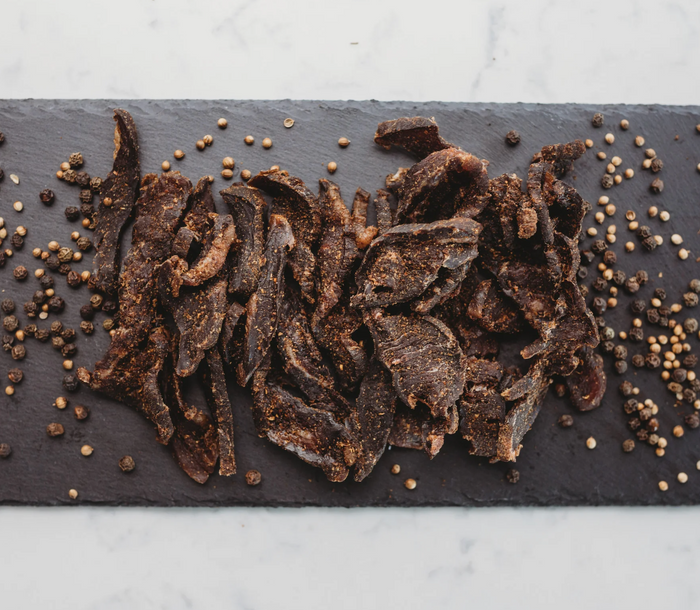
Spicing should be integrated, not decorative. Coriander and pepper ground into the cure become part of the outer muscle layer during drying. The flavor develops as you chew, savory notes build rather than hit once and disappear. Cheap biltong loads the surface with seasoning to cover thin marinade time. It tastes intense for one second, then flat. Quality biltong builds across the whole bite.
Consistency Is the Real Producer Signal
Dryness level is personal preference, not a quality marker. Wetter biltong is more tender, closer to a cured meat experience. Drier biltong has a firmer chew and keeps longer. Neither is wrong. What is a problem is inconsistency within a single batch, some pieces noticeably wetter, others almost brittle, in the same bag. That's a process control failure. It means the drying environment isn't managed closely. A good producer hits the same moisture target piece to piece and batch to batch.
Buying a slab instead of pre-sliced biltong is the most transparent way to assess quality. Nothing is hidden behind pre-portioning. You can inspect the grain on the surface, check the color at the cut, control your own slice thickness, and decide your own dryness level, thick for more moisture, thin for a firmer result. Pre-sliced is convenient, but a slab shows you exactly what you're getting.
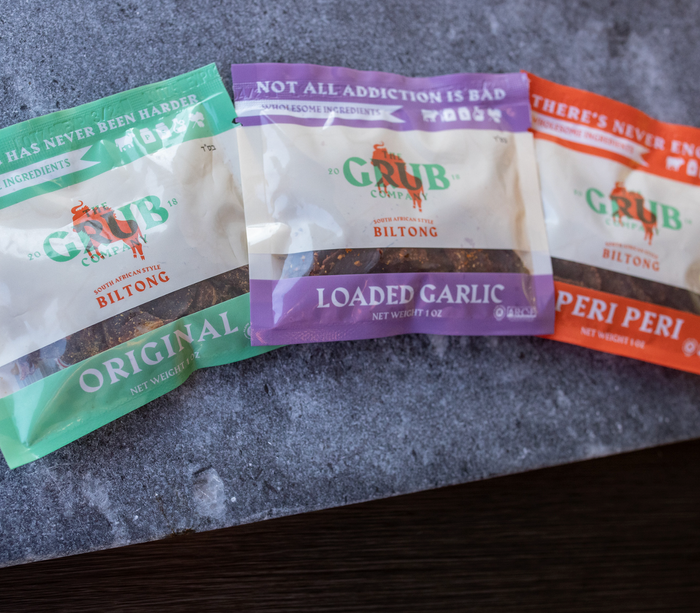
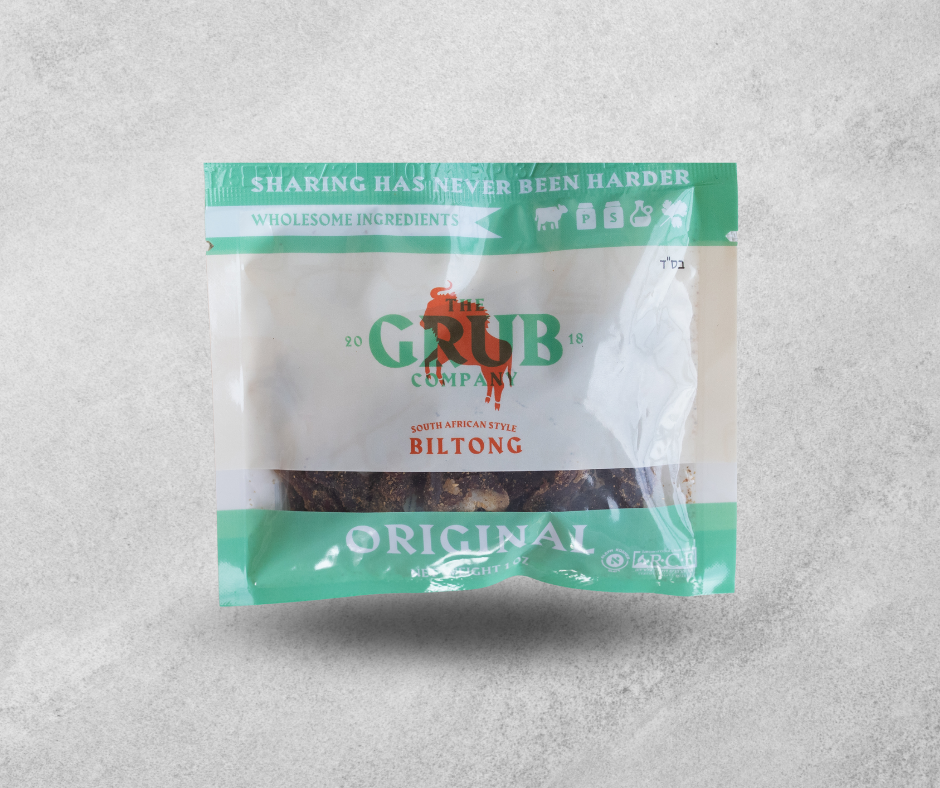
If you want to compare flavor profiles and assess quality across more than one variety, trying an Original alongside a spiced option is useful. The beef underneath needs to hold up across all three. If it does, that consistency tells you something real about what the producer is working with.
For more on what to expect from different styles and cuts, our guide to what biltong actually is covers the basics of how it's made and how it differs from jerky, worth reading if you're newer to it.
The Bottom Line
Five things tell you more about biltong quality than any packaging claim: visible muscle grain in every slice, a short and clean ingredient list, a deep red-to-burgundy interior color, spicing that builds through the bite rather than fading after one second, and consistent moisture across the whole batch. Use those. Let price be one signal among several, not the first one. And if a producer is confident in what they're making, they'll let you see the product clearly, grain, color, and all, before you commit to a full bag.
Common questions before buying are answered below.
Frequently Asked Questions
How can I tell if biltong is made from real whole-muscle beef?
Look at the grain pattern when it's sliced. Real whole-muscle beef has visible muscle fibers running in a consistent direction through the cut. Reformed or mechanically separated meat looks uniform and compressed, with no clear grain. If you're buying slabs rather than pre-sliced, the grain is even easier to see on the uncut surface. When in doubt, check the ingredient list, if anything other than beef, vinegar, salt, and spices appears early in the list, ask why.
What does good biltong actually taste like?
Quality biltong has a savory depth that builds as you chew rather than hitting fast and fading. The beef flavor should be present and distinct, not hidden behind heavy spicing or sweetness. Original biltong has a clean, slightly tangy note from the vinegar cure with earthy coriander and pepper. Spiced variants like Peri Peri or Loaded Garlic add heat or aromatic depth on top of that base. If the beef tastes flat, the spicing is doing cover work.
Is darker biltong better than lighter colored biltong?
Generally yes, for the interior. The outside darkens naturally during air-drying, so a dark exterior crust is normal. The interior when sliced should be deep red or burgundy. Pale gray or pink inside suggests the cure didn't penetrate properly or the beef quality is lower. Very dark throughout with no red interior can indicate over-drying. The ideal is a dark crust with a rich red-to-burgundy interior slice.
Should biltong have a strong smell when you open the bag?
Yes. Quality biltong has a distinct savory, slightly tangy aroma from the vinegar cure and spices. It should smell like seasoned cured meat, assertive and strong. What you don't want is anything sour in an unpleasant way, musty, or ammonia-like. A strong biltong smell when you open the bag is a good sign. If it smells off rather than just strong, trust your nose immediately.
How do I know if the dryness level is right?
Right depends on your preference. Wetter biltong is tender, with more residual moisture, closer to a cured meat than a dried snack. Drier biltong has a firmer chew and longer shelf life. What shouldn't happen is significant variation within the same bag. That inconsistency is a process problem. Buying a slab and slicing it yourself gives you the most control over your own dryness level.
Is the Sampler Pack a good way to test quality before buying a full bag?
That's exactly what it's for. The Sampler Pack puts Original, Peri Peri, and Loaded Garlic in one box at $12.99 so you can try all three flavors before committing to a full bag. If the beef holds up consistently across three different flavor profiles, that tells you something real about the quality underneath the spicing. Most people find their preferred flavor on the first try, but a few surprises happen too.