Is Biltong Healthy? A Straight-Talking Nutrition Breakdown
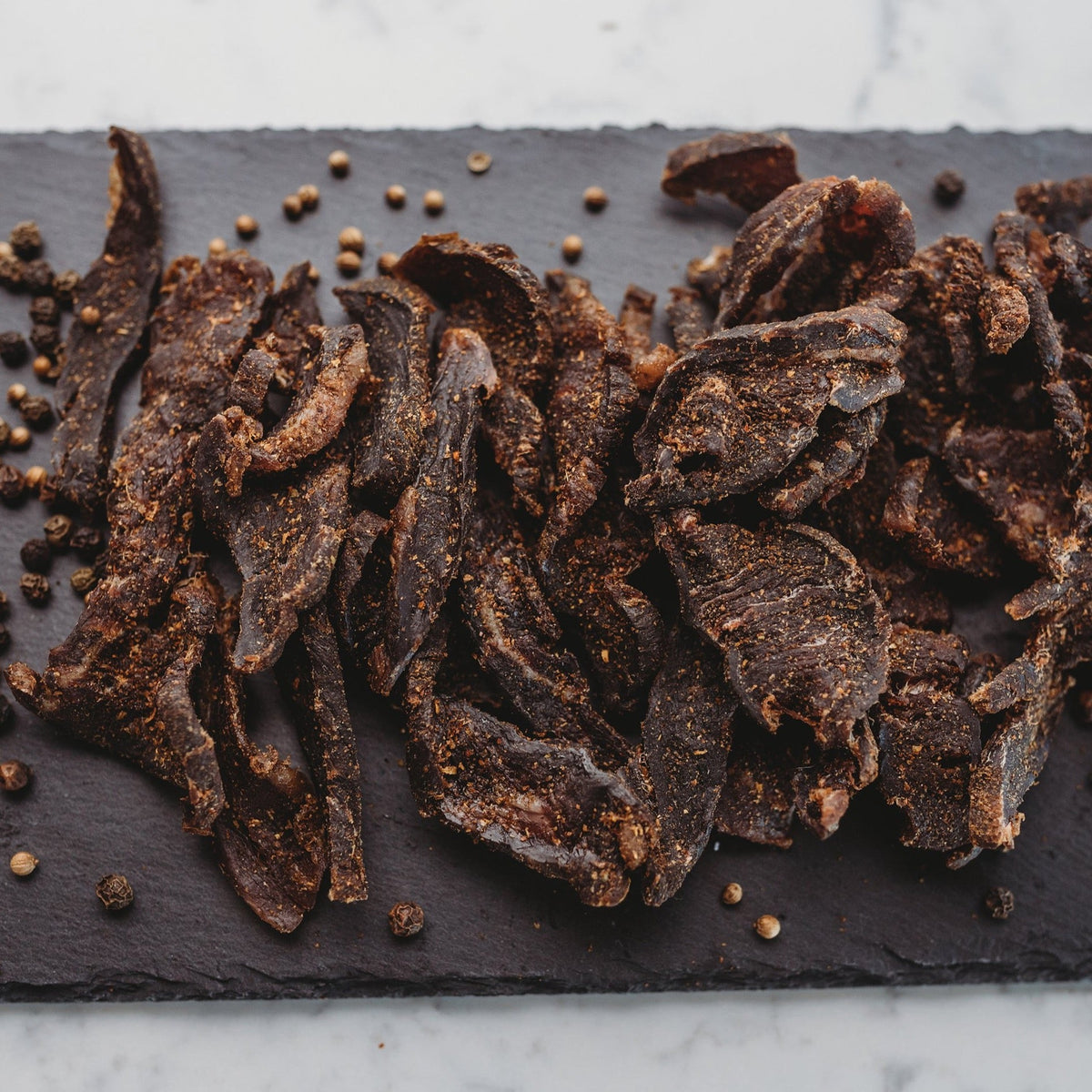
Biltong is dried beef, salt, vinegar and spice. In a traditional recipe there is nothing else in it, and that short ingredient list is the honest answer to the question in the title: what you are eating is beef with most of the water taken out, plus the salt and acid that made the drying possible in the first place.
Want some on hand? Order biltong online: Glatt Kosher, air-dried in Florida, free US shipping over $50.
The interesting part is what drying does to the numbers on the panel. Remove most of the water from a piece of meat and everything that was in that meat is still there, packed into a much smaller and lighter piece. Protein concentrates. So does salt, so does fat, and so do the calories. Below is what is actually in the product, what varies between one bag and another, and what a label can and cannot tell you. We are not going to tell you what it does for you. We are going to tell you what is in it and let you decide.
What is in the bag
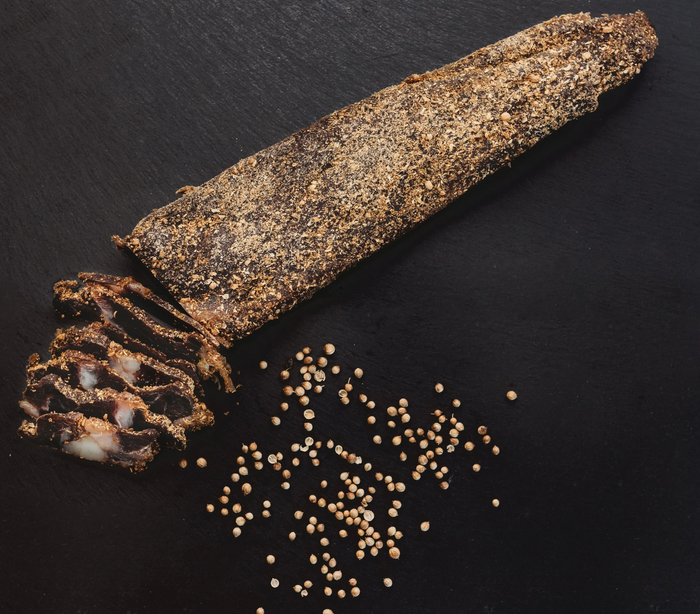
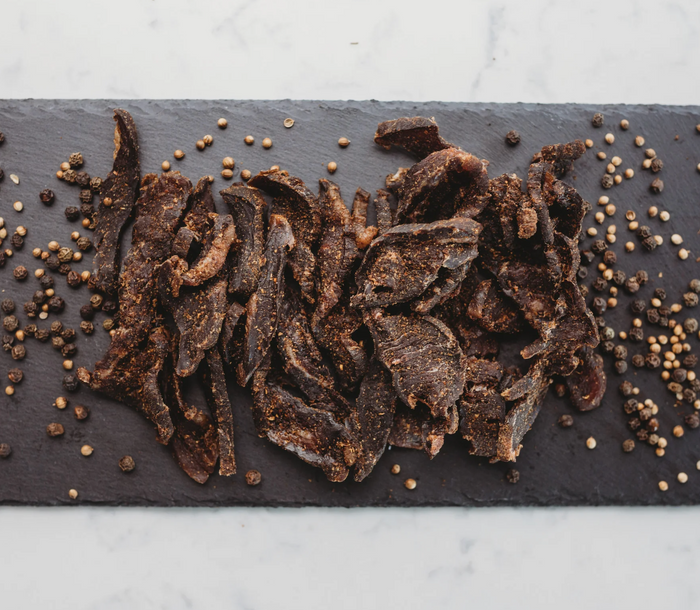
A traditional biltong recipe is beef, salt, vinegar, coriander and black pepper, with variations from there. Some styles add garlic, chili or cumin. The vinegar wash and the salt cure are not seasonings that got added for taste, they are the reason the meat can be dried in open air at all, and the flavor they leave behind is a consequence of the method rather than the point of it.
Everything else on an ingredient list is optional and worth reading. Sugar shows up in some dried meat recipes, and a glaze or a sweet marinade puts it there deliberately. Preservatives, tenderizers and flavorings show up in others. None of that is hidden. It is printed on the back of the bag, and the length of the list tells you most of what you need to know about how the product was made.
What drying does to the numbers
This is the fact that makes sense of everything else on the label. Fresh beef is mostly water. Air drying removes a large share of that water and removes nothing else, so an ounce of finished biltong started life as several ounces of raw beef.
Everything that was in the original piece is now in a smaller piece. Protein per hundred grams goes up, because the denominator shrank. Sodium per hundred grams goes up for the same reason, with the salt from the cure on top of it. Calories per ounce go up. Fat per ounce goes up. Nothing about the meat changed, only the water content, and the whole nutrition panel moves as one result of that single fact.
Read a panel with that in mind and the numbers stop looking dramatic. A dried food and a fresh food are not being measured on the same basis, and a per-ounce comparison between them is comparing a concentrate to a dilution.
Protein by weight
Biltong is high in protein by weight. That is a statement about composition, and it follows directly from the paragraph above: strip out the water from lean beef and protein becomes the dominant share of what is left.
How high depends on the cut and on how far the drying ran. A leaner cut dried firm sits at the top of the range. A fattier cut, or a wetter style taken down earlier, sits lower, because fat and residual water both occupy weight that protein would otherwise fill. Two bags of biltong from two different makers can differ meaningfully on this, and the panel is the only place you will find out which one you are holding.
The number that matters to you is the one per serving, not the one per hundred grams. Panels are printed both ways and the two look very different. Check which basis you are reading before you write anything down.
Complete protein is a statement about amino acids
Beef protein contains all nine of the amino acids that the human body does not make for itself. That is what the phrase complete protein means, and it is a compositional description rather than a promise. Drying does not change it, because the amino acid profile of the meat is not something that leaves with the water.
It is worth saying plainly that this is not unique to biltong or to dried meat. It is a property of beef, and biltong inherits it because biltong is beef. Any claim that goes further than that, into what the protein will do for you, is not one we are going to make on a product page or anywhere else.
Sugar and carbohydrate in a traditional recipe
A traditional biltong recipe contains no added sugar. Beef contains essentially no carbohydrate to begin with, and the cure adds salt and acid rather than anything sweet, so the carbohydrate line on a plain biltong panel sits at or very near zero.
That changes the moment a recipe changes. A sweet glaze, a teriyaki style marinade or a honey finish puts sugar in deliberately, and the panel will show it. This is not a claim about all dried meat, it is a claim about a specific recipe, and the only way to know which recipe you are holding is to turn the bag over. Our Meat Candy at $7.99 is jerky rather than biltong and belongs to a different tradition of preparation, so read its panel on its own terms.
Salt is the process, not a seasoning afterthought
Sodium is the number people notice, and it deserves a straight explanation rather than a defense. Salt is one of the two things that makes air drying meat possible. It draws water out of the meat and it lowers the water activity, meaning the amount of moisture actually available inside the piece, and that is what allows a dried beef to sit on a shelf at room temperature.
Take the salt out and you do not get a lower sodium biltong, you get a piece of meat that cannot be dried this way. The salt is load bearing. What that means for the panel is that any real biltong carries meaningful sodium, and the figure varies with the recipe, the cure time and the cut.
If sodium is a number you track, read it per serving, decide your own portion, and hold the product to that. We are not going to tell you what your number should be. That is between you and whoever advises you on your own diet.
Fat comes from the cut
Fat content varies more between biltong products than almost anything else on the panel, and it comes down to two decisions made long before the meat goes on a rack: which cut was used, and how much of the fat was trimmed.
Silverside and topside are the traditional cuts for a reason. They are lean, they carry a consistent grain, and they dry evenly. A biltong made from them, trimmed close, sits at the lean end. Leave a fat cap on the edge, or work with a fattier cut, and the finished product is richer, softer to bite and higher in fat per ounce.
Fat also behaves differently from lean during and after drying. Lean tissue gives up water and firms. Fat does not dry in the same sense, it stays soft, and over time it can come to the surface and set there. Neither version is wrong. They are different products, and the panel and the look of the meat will both tell you which one you are buying.
Calories per ounce, and what a serving actually is
Biltong is calorie dense per ounce, and that is a direct consequence of the water being gone. This is where a bag can get away from someone, not because the food is unusual but because the format is. A bag with no crunch, no wrapper per piece and no obvious stopping point is easy to eat past the point you intended.
The practical response is to buy in the size that matches how you eat. Sliced Biltong Mini's at $4.99 are a portion with a built in end. Sliced Biltong at $11.99 is a bag for a few sittings. Bulk Biltong at $58.00 for a pound is a shelf item, and if it lives on your desk it will be eaten like a shelf item. None of that is a nutritional statement, it is a statement about human behavior around an open bag.
What the nutrition panel is telling you
Three things to check, in order. First, the basis: per serving or per hundred grams, because the same product looks like two different foods depending on which one you read. Second, the serving size itself, which is a number chosen by whoever printed the label and may bear no relationship to how much you will actually eat. Third, the sodium and fat lines, since those are the two that vary most from one maker to another.
A panel is a description of a specific batch of a specific recipe. It is not a description of biltong in general, and any article that hands you a single set of figures for the whole category, this one included, is generalizing. The bag in your hand is the authority.
What the ingredient list is telling you
The ingredient list is the more revealing half of the label. A short list of beef, salt, vinegar and spice describes the traditional method. A long list describes a manufacturing process with more steps in it, and there is nothing sinister about that, but it is a different product and you should know which one you bought.
Order matters too, since ingredients are listed by weight. Sugar appearing high in the list is a very different thing from sugar appearing last. So is a spice blend listed by name versus a generic flavoring. None of this requires expertise to read. It requires turning the bag over, which most people do not do.
The minerals that come with beef
Beef contains iron, zinc and vitamin B12 as ordinary constituents of the meat. Drying removes water and does not remove those. That is the whole of what we will say on the subject, stated as composition, because anything past it becomes a claim about what those constituents do inside a person, and that is not a claim a beef snack company should be making.
If you want to know what any of that means for your own diet, the person to ask is a doctor or a dietitian who knows your situation. We know how to dry beef properly. We do not know your bloodwork.
What biltong is not
Biltong is not a supplement, not a meal replacement and not a functional food. It is dried beef sold as a snack. We think it is a good one, made carefully, from a method with a couple of hundred years behind it, and that is the whole of the pitch.
Treating a snack as a health intervention is how people end up disappointed in both directions, either expecting something from a bag of dried meat that no bag of dried meat is going to deliver, or avoiding it on the strength of a rumor about processed food that does not describe how this is made. It is beef, salt, vinegar and spice, dried in air. Judge it as food.
Where our own formats sit
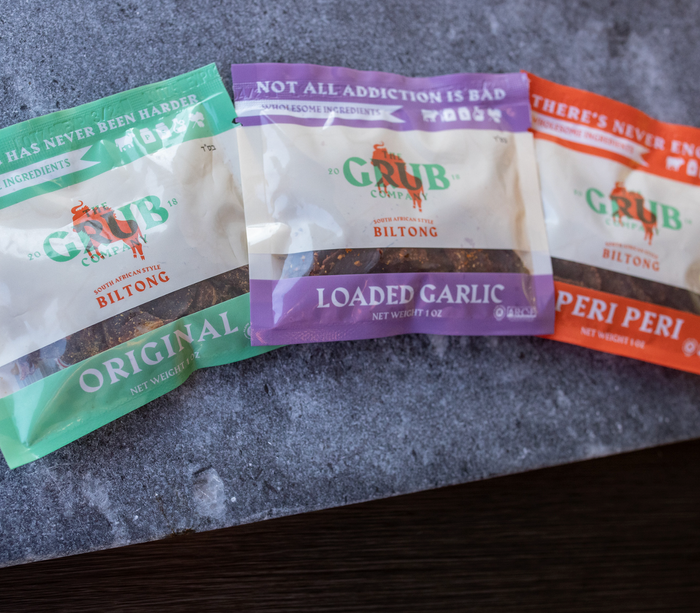
All the biltong we sell is the same product in different shapes, so the composition does not change between formats. What changes is portion and price. Sliced Biltong Mini's at $4.99 is a single serving format. Sliced Biltong at $11.99 is the standard bag. The Biltong Sampler Pack at $12.99 gives you more than one profile to try before you commit to a size. Biltong Slabs at $58.00 and Bulk Biltong at $58.00 for a pound of sliced are volume buys, and volume is a storage decision as much as a price one.
Meat Candy at $7.99 is our jerky. Different process, different tradition, different panel, and it should be read on its own label rather than by inference from anything above.
Bottom line
Biltong is beef with the water taken out, cured with salt and vinegar and dried in air. That gives you a food that is high in protein by weight, near zero in carbohydrate in its traditional form, meaningful in sodium because the salt is what makes the method work, and variable in fat depending entirely on the cut.
Those are the facts of composition, and they are the ones we are prepared to stand behind. What they add up to for you depends on what else you eat and what you have been advised, which is genuinely not something a maker of dried beef can answer from here. Turn the bag over, read the panel on the basis it is printed, and decide for yourself.
Frequently Asked Questions
What is actually in traditional biltong?
Beef, salt, vinegar and spice, usually coriander and black pepper, with garlic, chili or cumin appearing in some styles. The vinegar wash and the salt cure are not seasonings added for taste, they are what makes air drying the meat possible, and the flavor they leave is a consequence of the method. Anything beyond that short list is optional and printed on the back of the bag. Sugar, preservatives, tenderizers and flavorings all appear in some dried meat recipes and not in others. The length of an ingredient list tells you most of what you need to know about how a given product was made.
Why is biltong high in protein by weight?
Because the water is gone. Fresh beef is mostly water, and air drying removes a large share of it while removing nothing else. An ounce of finished biltong started as several ounces of raw beef, so everything that was in the original piece is now packed into a smaller and lighter one. Protein per hundred grams rises because the denominator shrank. The same arithmetic raises sodium, fat and calories per ounce. Nothing about the meat changed, only its water content, and the entire panel moves as one consequence of that single fact.
Does biltong contain sugar or carbohydrates?
A traditional biltong recipe contains no added sugar, and beef carries essentially no carbohydrate to start with, so the carbohydrate line on a plain biltong panel sits at or very near zero. That changes the moment the recipe does. A sweet glaze, a teriyaki style marinade or a honey finish puts sugar in on purpose and the panel will show it, often high in the ingredient list since ingredients are ordered by weight. This is a fact about a specific recipe rather than about all dried meat. The only reliable way to know is to turn the bag over and read it.
Why is biltong salty?
Salt is one of the two things that makes air drying meat possible. It pulls water out of the meat and lowers the water activity, meaning the moisture actually available inside the piece, which is what lets a dried beef sit at room temperature without refrigeration. Remove the salt and you do not get a lower sodium biltong, you get meat that cannot be dried this way at all. So any real biltong carries meaningful sodium, and the exact figure varies with the recipe, the cure time and the cut. If you track sodium, read the number per serving and set your own portion against it.
How much fat is in biltong?
It varies more than almost anything else on the panel, and it is decided long before the meat goes on a rack. Silverside and topside are the traditional cuts because they are lean and dry evenly, and a biltong made from them and trimmed close sits at the lean end. Leave a fat cap on the edge, or start from a fattier cut, and the finished product is richer and higher in fat per ounce. Fat also behaves differently from lean during drying. Lean tissue gives up water and firms, while fat stays soft and can come to the surface and set there.
What should I check on a biltong label?
Three things, in order. First the basis, since panels are printed either per serving or per hundred grams and the same product looks like two different foods depending on which you read. Second the serving size, which is a number the label printer chose and may not match what you will eat. Third the sodium and fat lines, because those vary most between makers. Then read the ingredient list, which is the more revealing half. A short list of beef, salt, vinegar and spice describes the traditional method. A long one describes a process with more steps in it.
Is biltong a health food?
It is dried beef sold as a snack, and that is the whole of what we will call it. We can tell you what is in it, which is beef with most of the water removed, the salt and vinegar that made the drying possible, and spice. We can tell you that drying concentrates everything the meat already contained, including its protein, its minerals, its fat and its sodium. What any of that means for your own diet depends on what else you eat and what you have been advised, and the person to ask is a doctor or dietitian who knows your situation rather than a company that dries beef.