Water Activity, Not Moisture Percentage: Why the Number That Matters in Biltong Is Rarely Printed on the Label
Water activity (aw) measures the fraction of moisture actually available for microbial growth, not the total water content in the product. Two biltong products can share an identical moisture percentage yet have radically different shelf stability, texture, and food-safety profiles depending on their water activity levels. Which is why moisture percentage printed on a label tells you almost nothing useful about whether your biltong is safe to store, how it will chew, or how long it will last after opening.
Want some on hand? Order biltong online: Glatt Kosher, air-dried in Florida, free US shipping over $50.
That gap between what labels show and what actually governs your biltong is something we think about every time we put a product out. It shapes how we approach Slabs, how we think about our Bulk 1LB bags, and why the Sliced Biltong Mini's are a genuinely different product from a food-science standpoint, even when they come from the same batch of grass-fed beef. The label is not lying to you. It is just answering a question nobody should be asking.
Why Moisture Percentage Is the Wrong Number to Trust
Moisture percentage measures one thing: how much total water is in a product by weight. What it does not measure is how much of that water is free to do anything. Bound water, water locked into proteins and fiber structures, is not available to bacteria or mold. Free water is. Water activity isolates that free fraction, expressed as a decimal between 0 and 1. The closer aw gets to 1, the closer a product is to pure water, and the more hospitable it becomes to microbial growth. The general threshold below which most spoilage bacteria cannot grow sits well below the levels associated with fresh or lightly dried meat, and shelf-stable dried meats typically need to stay meaningfully below that line.
Here is where moisture percentage becomes actively misleading. A biltong slab and a pre-sliced bag can clock the same moisture percentage reading while sitting at different water activity levels. That happens because water activity depends on how tightly water molecules are bound to the surrounding protein matrix, not on a raw count of water molecules present. Grass-fed beef, the beef we use across every product in the catalog, absorbs and retains moisture differently than grain-fed alternatives because the intramuscular fat distribution and protein density are different. That is not a marketing point. It is a reason why water activity tracking becomes more essential here, not less. When you start with a leaner, more structurally distinct cut of beef and cure it traditionally, the relationship between moisture content and water activity is not a straight line. Assuming it is means you are flying blind on the metric that actually governs safety and shelf life.
The practical consequence for you as a buyer is this: a label that reads, say, 35% moisture content tells you something about weight. It tells you nothing about whether that product is stable at room temperature for two days after opening, whether it needs refrigeration once the bag is cut, or whether the texture you are expecting, that particular chew or give that makes biltong what it is, will actually be there when you bite into it. Those outcomes are all driven by water activity. They are just not communicated by moisture percentage.
And virtually no biltong label prints water activity.
How Format Changes Everything Across the Same Product Line
This is where the conversation gets specific, and where the standard explainer articles fall short. Water activity is not a single fixed property of a brand. It shifts across formats within the same brand's own lineup, even when those formats start from the same batch of beef. Let us walk through exactly how that plays out across the products we make.
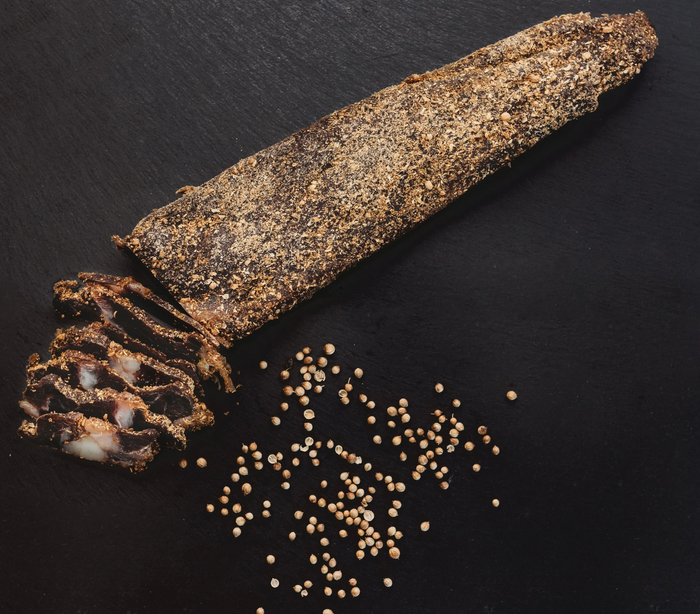
The Biltong Slabs are the clearest example. When you buy a Slab, you receive a whole, uncut piece of dried beef. The outer surface has equilibrated with ambient air during the drying process, but the interior has not experienced the same air exposure. When you slice the Slab yourself. Which is the whole point, the reason the product exists and why the texture is what it is. You open up fresh surfaces that have never been exposed to air. Those newly cut faces begin exchanging moisture with the environment immediately. Depending on the humidity in your kitchen, you might be driving moisture in or pulling it out. Either way, the equilibrium water activity of the product you are eating is different from what it was before you touched it with a knife. No label accounts for this, because no label can. The slicing happens on your end, not ours. But understanding that the act of cutting reintroduces moisture variables means you know why slicing fresh and eating promptly produces that melt-in-your-mouth result the Slabs are known for. That texture is not a moisture percentage outcome. It is a water activity outcome, specifically, the result of catching the product at the right aw before post-cut re-equilibration has a chance to run in either direction.
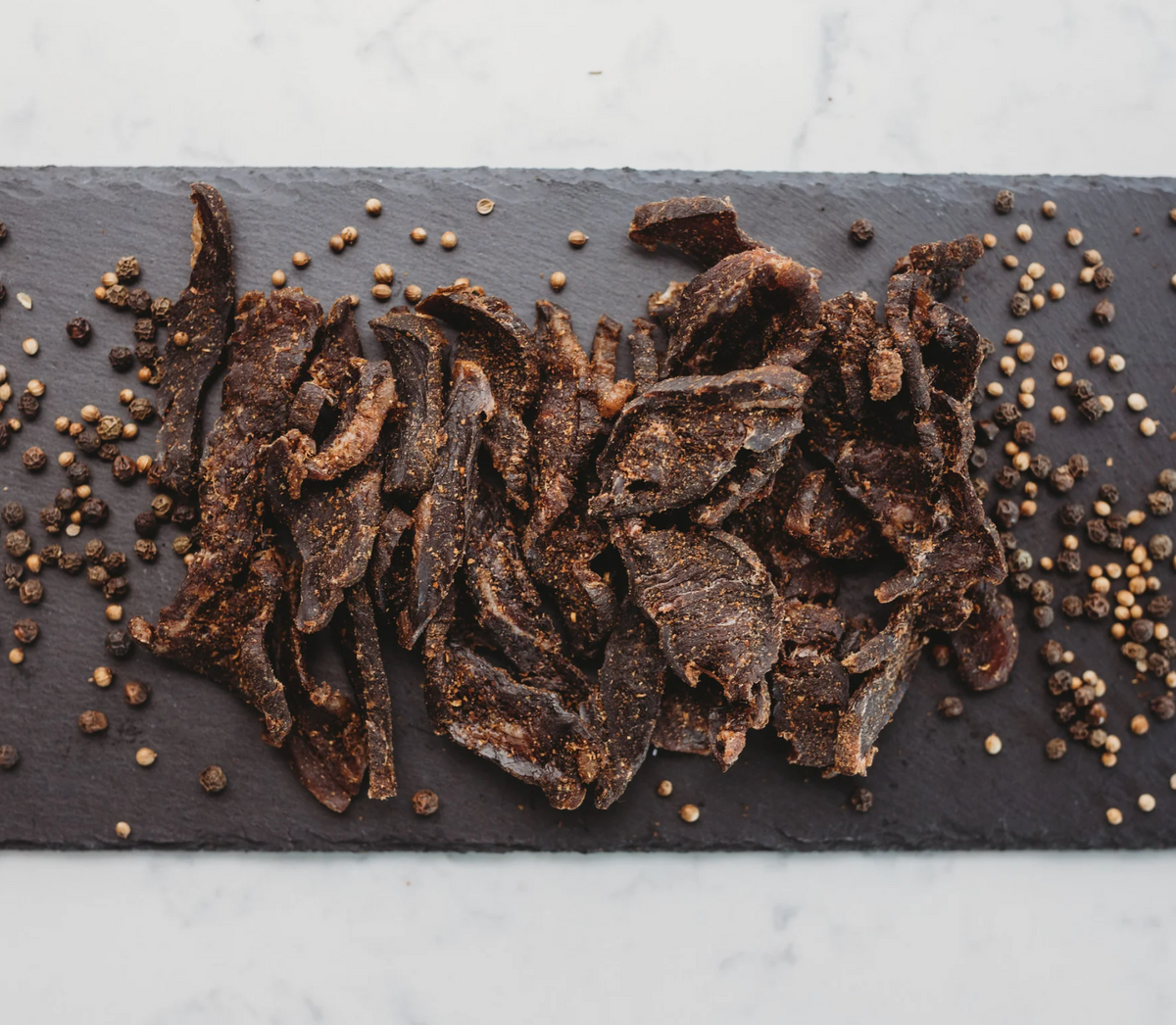
The Sliced Biltong Mini's sit at the other end of the format spectrum. Small portions, high surface-area-to-mass ratio relative to a full slice or a slab. A higher ratio means the product equilibrates faster with ambient air. It reaches its equilibrium water activity more quickly after packaging, which in a controlled, sealed environment is fine. The moment that bag opens, the Mini's respond to the surrounding humidity faster than a full-size slice would. The flavor and texture window is narrower. This is not a quality complaint. It is just physics, and it is something a moisture percentage label cannot tell you because the surface-area variable is not part of the moisture percentage calculation at all.
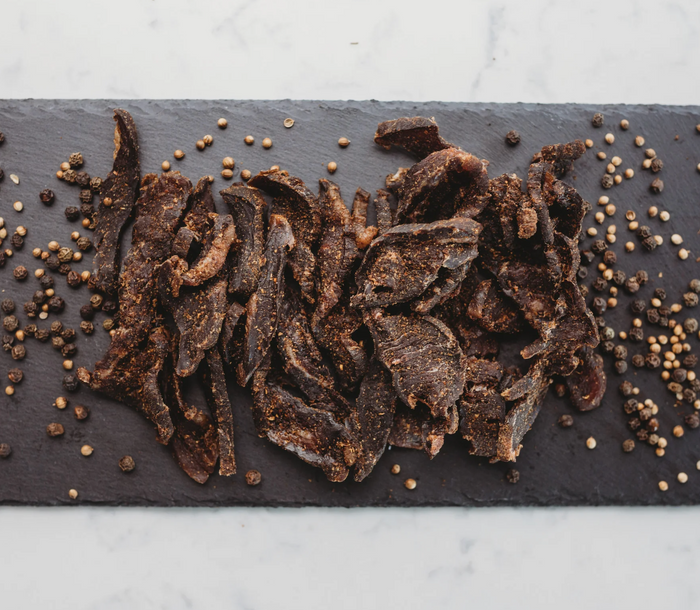
The Bulk 1LB of Sliced Biltong is a different kind of exposure risk. When you open a one-pound bag and work through it over time, on a charcuterie board, at a party, or across several days of snacking, the remaining biltong in that bag is cycling through repeated air exposure every time you reach in. Water activity drift is cumulative. Each exposure pulls the product further from where it was when it left the drying room. A single-serving bag reaches an empty bag. A bulk bag reaches the bottom of a pound, and the product at the bottom has seen more air cycles than what you ate on day one. None of this is reflected in any label claim, because the label captures a snapshot of the product as-packaged, not as it behaves over the life of a large-format bag. For bulk buyers, this is not a hypothetical concern. It is the practical reality of buying biltong at volume, and it is worth knowing before you assume you can treat a 1LB bag the same way you treat a mini.
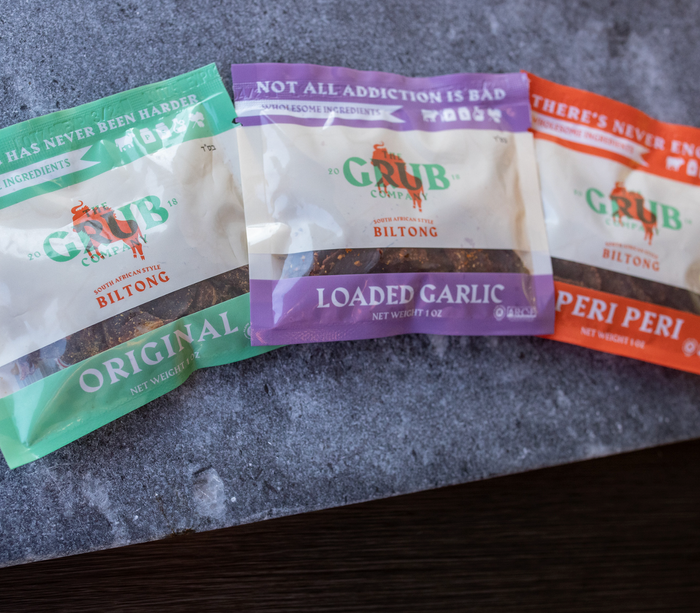
The Biltong Sampler Pack, three mini bags of Original, Peri Peri, and Loaded Garlic, introduces a different wrinkle. The three flavors carry different spice loads. Original is simple. Peri Peri adds chili heat. Loaded Garlic layers in a complex, aromatic compound that is itself somewhat hygroscopic, meaning it has its own relationship with moisture in the surrounding environment. A spice blend that actively interacts with ambient moisture can influence the equilibrium water activity of the finished product differently than a plain-salt cure would. That matters for the flavored variants in a way that goes beyond taste preference. Complex spice blends can mask early spoilage signals, off-odors that would be obvious in a plainly cured product can be harder to detect when you are already smelling garlic or chili. When water activity is properly controlled, this is not a problem. When it is not, the aromatic complexity of the spice works against your ability to notice. That makes water activity control a food-safety concern for flavored biltong, not just a quality metric. It is not the kind of thing a moisture percentage tells you.
Meat Candy, our sweetened jerky, sits in a different category entirely, even though it shares shelf space with our biltong. Sweetened dried meat products have a fundamentally different water activity profile than traditionally cured biltong. Sugar is hygroscopic. It draws moisture and holds it in ways that a salt-and-spice cure does not. The result is a product that can register a higher moisture percentage than unsweetened biltong while potentially sitting at a different water activity level, because the sugar is binding and holding that moisture rather than leaving it free. Consumers treat Meat Candy as interchangeable with biltong on a snack board because both are dried meat. From a water activity standpoint, they are different products that behave differently in storage, after opening, and over the life of the bag. The label does not make this distinction. The moisture percentage certainly does not.
What Water Activity Actually Tells You at the Point of Eating
Pulling this out of the food-science framing and into the moment of actually eating: water activity is the reason biltong from a freshly opened Slab feels different from biltong that has been sitting in an open bag on the counter. It is the reason a Mini feels different from a full slice even when they came from the same batch and carry the same spice blend. And it is the reason texture and chew. The attributes you are actually evaluating when you decide whether a biltong is good, track water activity far more closely than they track moisture percentage.
When someone describes our Biltong Slabs as melt-in-your-mouth, they are describing a specific water activity range. Too high, and the product is soft or tacky in a way that reads as undercooked. Too low, and you get a product that is dry, crumbly, and hard to chew through, which is a common complaint about mass-market beef jerky. The ideal chew, the pull and give that traditional biltong delivers, exists in a window of water activity that a skilled producer learns to target through hang time, air circulation, and batch monitoring. That is what we mean when we say there is nothing to it except attention to detail. That attention is mostly invisible to the buyer. It does not appear on the label. But it is the entire difference between a product you want to eat and one you finish out of obligation.
The same principle applies to why our grass-fed beef matters here in a way that goes beyond a sourcing claim. Grass-fed beef has a different protein and fat structure than grain-fed alternatives. That structure interacts differently with the salt cure and the air-drying process, which means the path from raw beef to a target water activity level is genuinely different. You cannot simply apply the same hang time or the same drying room parameters and expect the same result across different beef sources. Knowing that, and adjusting for it, is how you consistently hit the water activity window that produces the texture the product is supposed to deliver. A moisture percentage reading, taken at the end of that process, tells you none of this. It is a single number at the end of a chain of decisions that actually control the outcome.
The chew you get when you take a slice off one of our Slabs is the output of all those invisible decisions landing right. Water activity is the language those decisions are written in. Moisture percentage is the translation that loses everything in the process.
What a Useful Label Would Actually Say
If a biltong label were genuinely informative, it would print water activity alongside, or instead of, moisture percentage. It would differentiate that value by format, because a Slab, a pre-sliced bag, a Mini, and a bulk bag are not the same product even when they start from the same beef. It would note, for flavored products, that spice complexity changes how spoilage signals register for the consumer and that water activity control is not optional for those variants. It is the mechanism that keeps the masking effect of complex spice from becoming a hazard. And for sweetened variants like Meat Candy, it would acknowledge that sugar-held moisture behaves differently from free moisture, which is the only thing a consumer needs to understand to store and use the product correctly.
Almost no label does any of this. The regulatory minimum for dried meat products does not require water activity disclosure. Moisture percentage is the standard because it is easy to measure, easy to print, and easy to defend from a compliance standpoint. It is not printed because it is useful to the buyer. Water activity is harder to measure, harder to communicate without a brief explanation, and much harder to standardize across formats that behave differently by design.
None of that is a reason to ignore it. If anything, it is a reason to ask for it. To look for producers who understand the distinction and whose products consistently deliver the texture and shelf stability that only come from actually hitting the right water activity target, not just the right moisture number. The label as it exists today is not lying to you. It is answering a simpler question than the one you should be asking.
If you have been buying biltong based on moisture content alone, or choosing between formats without thinking about how slicing, bag size, and spice load all shift the water activity equation independently, then you have been working with incomplete information. The good news is that a well-made product solves for all of this before it reaches you. The label just does not tell you that it did.
Here is the bottom line. Buy Slabs if you want the texture that only comes from slicing fresh and catching the product at its peak water activity window, then actually slice and eat it promptly rather than leaving it exposed. Treat the Bulk 1LB bags as the high-volume option they are, and manage them accordingly: reseal aggressively, minimize air cycles, and do not assume the last portion will behave the same as the first. Use the Minis and the Sampler Pack for quick consumption and format comparison rather than extended storage. And understand that Meat Candy occupies a different water activity category than any of the biltong formats, period. None of that shows up on the current label. But now you know what to look for, and why it matters.
Before you go, here are a few questions we hear regularly from people working through exactly this.
Frequently Asked Questions
Why doesn't the biltong label just print the water activity number?
Regulatory standards for dried meat products require moisture percentage disclosure, not water activity. Water activity is harder to measure consistently across formats and harder to communicate without context, so most producers default to what compliance requires rather than what buyers actually need. Moisture percentage satisfies the standard. Water activity would satisfy the buyer. Very few labels bridge that gap, and until either regulation or consumer pressure changes, most won't.
Does slicing a Biltong Slab myself change the water activity of what I'm eating?
Yes, and this is one of the most underappreciated parts of the Slab format. When you cut into a Slab, you expose interior surfaces that have never contacted air. Those fresh-cut faces begin exchanging moisture with the environment immediately. In normal household humidity conditions, this process can shift the water activity of the exposed surface meaningfully within an hour or two. The practical instruction is simple: slice only what you plan to eat right away. The melt-in-your-mouth texture the Slab format is known for is a water activity outcome you catch at its peak, not a property that holds indefinitely after cutting.
Are the Sliced Biltong Mini's less shelf-stable than full-size slices?
In a sealed package, they perform the same. Once the bag is opened, the smaller portions respond to ambient humidity faster than full-size slices because the surface-area-to-mass ratio is higher. More surface exposed relative to the mass of the piece means faster moisture exchange with the surrounding air. This does not make them lower quality. It means the window for optimal texture after opening is narrower. Eat Minis sooner after opening than you might with a standard slice, and reseal the bag between servings.
Why does the Bulk 1LB bag need more careful storage than a single-serving pack?
Every time you open the bulk bag and reach in, the remaining biltong is exposed to ambient air. Water activity drift is cumulative, each air exposure moves the product incrementally away from where it was when packaged. A single-serving bag is opened once and emptied. A pound bag might be opened a dozen times over several days or a week. The biltong at the bottom has seen more air cycles than what you ate on day one, and its texture and stability will reflect that. Aggressive resealing between uses, ideally with as much air pressed out as possible, slows the drift significantly.
Is Meat Candy stored and handled the same way as biltong?
Not exactly. Meat Candy is a sweetened jerky, and sugar changes the moisture dynamics compared to a traditionally cured biltong. Sugar is hygroscopic, meaning it attracts and holds moisture, which produces a different water activity profile than a salt-and-spice cure even when the total moisture percentage looks similar. In practical terms, Meat Candy can feel softer and may respond to humidity changes differently than the biltong formats. Treat it as its own product category when it comes to storage rather than assuming it behaves identically to your Slabs or sliced biltong.
Does the Peri Peri or Loaded Garlic biltong need different storage than Original?
The core storage principles are the same: cool, dry, resealed after opening. The additional consideration with complex spice blends is that the aromatics can make it harder to detect early spoilage by smell, because garlic and chili are powerful enough to mask subtle off-notes that would be obvious in a plainly cured product. This is not a reason to avoid flavored biltong. It is a reason to rely on shelf life and storage conditions rather than smell alone when assessing whether a flavored product is still at its best. When water activity is properly managed during production, this is not a safety concern. The flavors are what they should be, and you will know it when you taste them.
Does grass-fed beef make water activity harder to control in biltong production?
It makes it more important to get right, not necessarily harder. Grass-fed beef has a different protein and intramuscular fat profile than grain-fed alternatives. That means the way moisture binds during curing and releases during drying follows a different curve. You cannot simply apply the same drying parameters across different beef sources and expect the same water activity endpoint. It requires more attentive monitoring and adjustment. Which is exactly why the quality difference in the finished product is real and consistent. Once you understand what is being controlled for, the sourcing choice and the production approach connect in a way that makes sense beyond the marketing framing.
Ready to pick one? Browse Biltong Bulk & Wholesale.