How to Choose Biltong: What to Look For
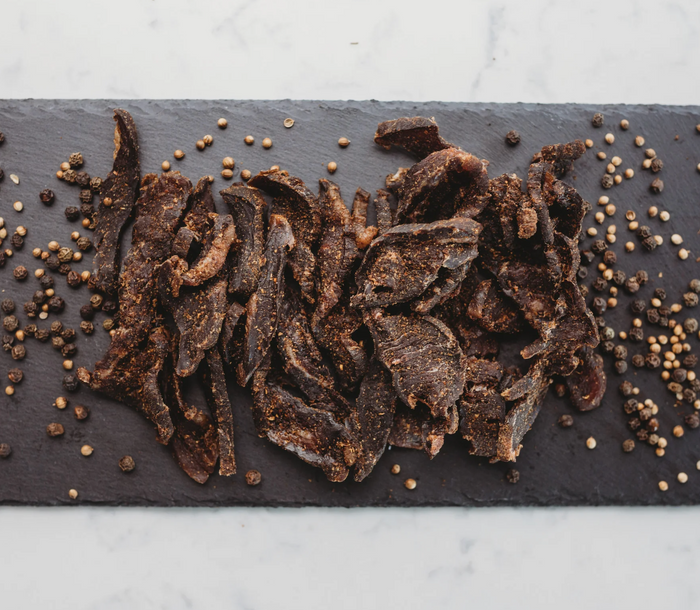
Good biltong has a dark mahogany to deep brown surface, feels completely dry to the touch, and smells clean and savory with no off notes. Those three signals screen out most bad product before you have tasted anything, and they work in a shop, through a window in a package, or on a piece someone hands you at a table.
Ready to try it? Buy Glatt Kosher biltong online. Made in Florida, free US shipping on orders over $50.
Everything after that is preference rather than quality. How dry you like it, how much heat you want, whether you buy a slab and cut it yourself or take it pre-sliced. What follows separates the two, because a lot of buying advice mixes them together and leaves people thinking their preference is a defect.
Start with the color
Proper biltong looks dark on the outside, close to dried bark, with a deep brown to near black surface depending on the spice used. That color comes from the meat drying and from the cure working on it over days, and it is the first thing that separates a finished piece from an unfinished one.
Pale is the warning. A piece that looks light brown or grayish on the outside has not dried far enough, or has picked moisture back up since it did. Uneven color across a single piece is a different signal and points at an uneven dry, where one face saw more air than the other. That piece is not dangerous, it is inconsistent, and it will eat differently from one end to the other.
Cut faces tell you the rest. On a sliced product the interior should show a deeper red toward the middle with a darker rim, and the gradient between them should be gradual. A hard line between a dark rim and a much softer, paler center is the signature of a dry that ran too fast at the front.
The feel test
Pick a piece up. It should feel dry, firm and slightly springy under pressure, and it should not leave anything on your fingers. Dry is the word that matters. Not brittle, not damp, dry.
Tacky is the fault to catch. A piece that feels sticky or slightly wet has moisture available at the surface, and moisture at the surface is what every storage problem starts from. Soft spots on an otherwise firm piece are the same warning in a smaller area, usually where two pieces touched during the dry or where a fat seam ran through.
At the other end, a piece that snaps clean when you bend it has gone past biltong and into something closer to a cracker. Some people prefer that, and it is a legitimate preference rather than a fault, but know that you are buying a dry style rather than a standard one.
Smell before you taste
Good biltong smells of beef, vinegar and whatever spice went on it, in roughly that order. Coriander gives a warm, slightly citrus note. Black pepper is obvious. The vinegar should sit underneath as a clean sharpness rather than announcing itself.
What you are listening for is anything sour, ammoniac or musty. Sour past the point of the vinegar, or a smell with any mustiness in it, means something went wrong before the piece reached you, and there is no version of that story where the answer is to eat it anyway. Trust your nose over a date printed on a label. The date is a prediction. Your nose is a measurement.
Thickness, and why it changes everything
Premium biltong is cut somewhere in the range of half an inch to an inch thick before drying. That window exists for a reason at both ends.
Thinner than that and the piece dries too fast, turning brittle and losing the chewy interior that separates biltong from a snack you crunch. There is not enough interior left to be an interior. Thicker than an inch and the center may not have dried fully, which is a shelf life question and a texture question at once, since a piece with a wetter core will not keep the way the rest of the batch does.
If you buy slabs and cut them yourself, that same window is the target for your knife. It is also the reason a slab and a bag of slices behave so differently in your kitchen, and why the cut you make at home has more influence on the eating experience than most people expect.
The cut and the grain
Silverside and topside are the traditional cuts, and they are traditional because they work. Both are lean, both have a consistent grain running through them, and both dry evenly without a lot of connective tissue to fight.
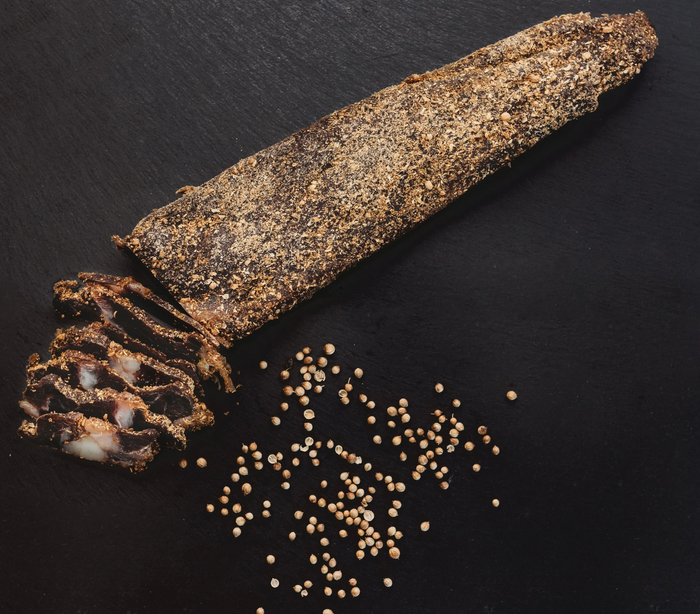
Grain direction is the part worth looking for on a finished piece. Slices cut across the grain shorten the muscle fibers and eat more tenderly. Slices cut with the grain hold together in longer strands and take more chewing, which some people want and others do not. Look at the surface of a slice and you can see which one you are holding: visible parallel fibers running the length of the piece means it was cut with the grain.
Neither is a quality signal on its own. It is a texture decision, and knowing which one you prefer will do more for your satisfaction than any other single thing on this page.
Fat, and what it does after drying
Fat behaves differently from lean during and after a dry, and it changes the product in ways worth choosing deliberately. Lean tissue gives up water and firms up. Fat does not dry in that sense. It stays soft, it carries flavor, and over time some of it can migrate to the surface and set there as a waxy or chalky film.
A piece with a fat cap on the edge eats richer and softer. A closely trimmed lean piece eats firmer and cleaner, and it keeps its texture more predictably over time because there is less soft material in it to move around.
The film that surface fat leaves is the thing most often mistaken for a defect. It is flat, dull, and softens between warm fingers. Anything fuzzy that stands up off the surface is a different matter entirely, and a piece like that is not one to buy or to eat.
How dry do you want it
Wet, medium and dry are the three broad styles, and they are the single biggest driver of whether someone likes what they ordered. A wetter style is taken down earlier, keeps a deeper red center, eats soft and tastes more strongly of beef. A dry style has run further, is firmer through to the middle, and concentrates the spice and the salt more sharply.
Neither is better made. What is true is that a wetter style has more moisture available in it, which means it keeps for less time and is less forgiving of a warm shelf or an open bag. A drier style keeps longer and asks less of your storage. That is the actual trade, and it is worth choosing on the basis of how quickly you get through a bag rather than on which one sounds more premium.
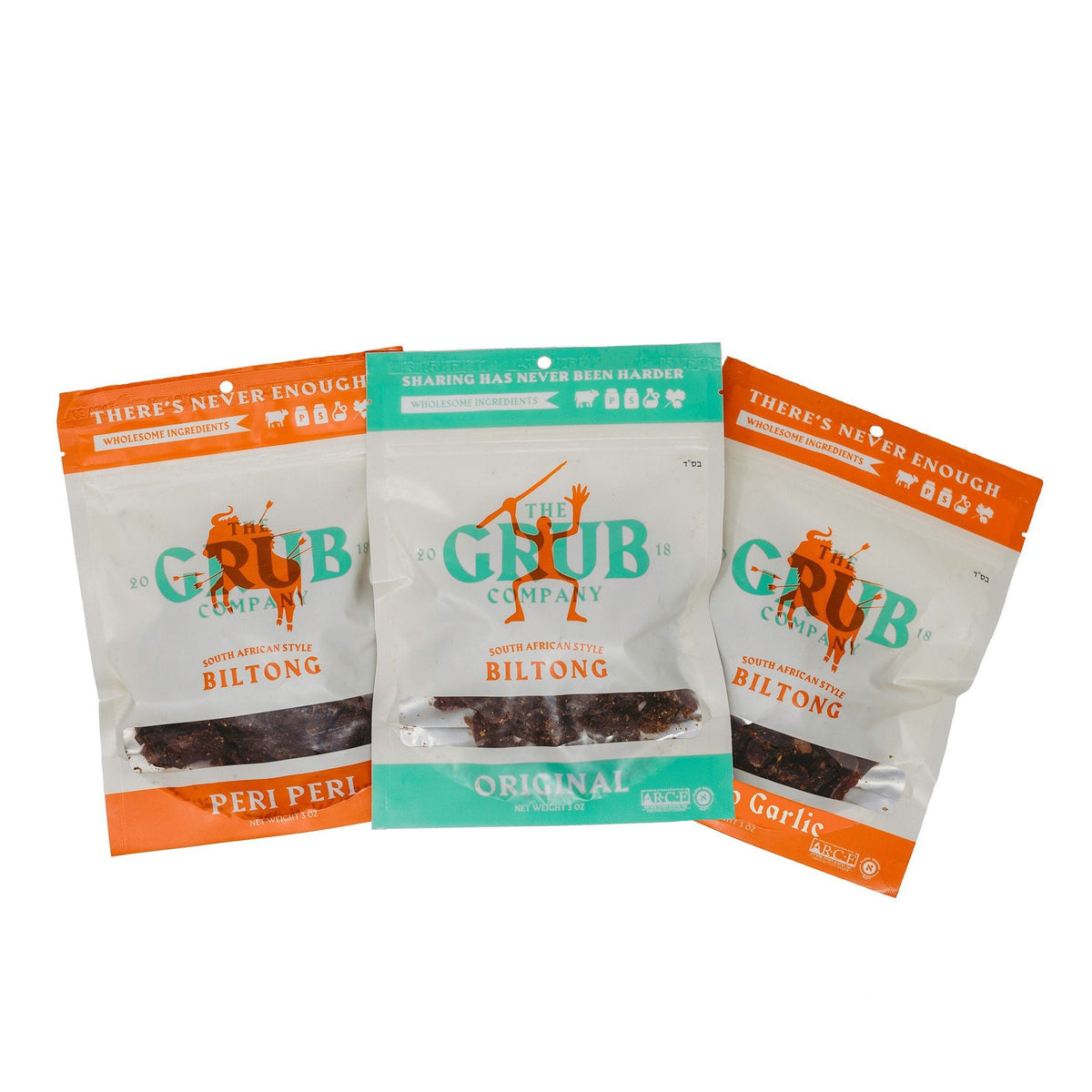
If you have no idea which you prefer, that is exactly what the Biltong Sampler Pack at $12.99 is for.
Spice profile
Cape style biltong is coriander seed, black pepper and salt. That is the traditional baseline: earthy, slightly floral, warm rather than hot. Everything else is a variation on it, and the variations mostly add chili, garlic or cumin, which change both the heat level and how loudly the spice sits over the beef.
New buyers are almost always better served starting at the baseline, for a plain reason. If you start on a heavily spiced version you learn what that spice tastes like rather than what biltong tastes like, and you have no reference point for the next thing you try. Start plain, decide what you want more of, then move.
The seal and the packaging
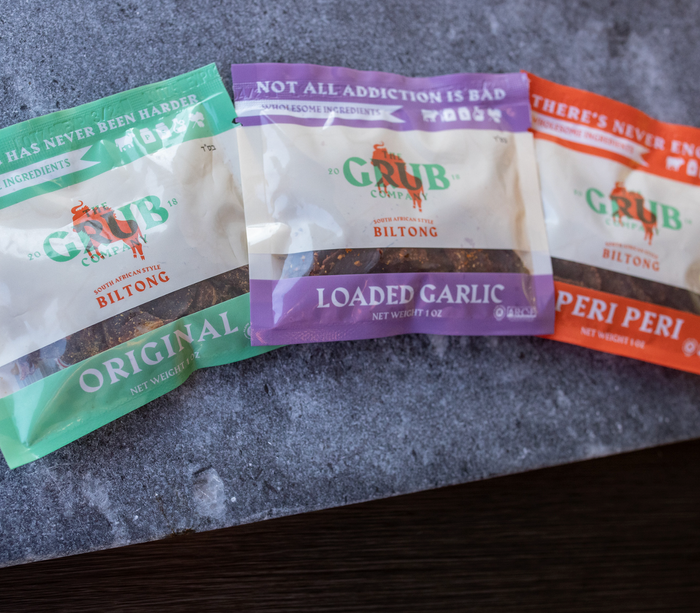
For packaged product, the seal is the part to inspect. A vacuum seal should be intact and tight against the meat, with no air pockets and nothing pooling inside the bag. A puffed or loose bag means air got in or gas was produced inside, and neither is a bag to buy regardless of what the printed date says.
Look through the window if there is one. Condensation on the inside of the film is a moisture signal, and it means the product was packed with more available moisture than it should have had, or that it has been through a temperature swing since. Discoloration inside a sealed bag is the same kind of signal.
A resealable bag is a convenience rather than a preservation method. It slows moisture exchange once opened, it does not stop it, and no closure returns an opened bag to the condition it was in before you opened it. Buy the size you will finish.
Slab or pre-sliced
This is a real decision rather than a packaging detail. A slab is dried whole and cut when you want it. That gives you control over thickness, and it keeps better once opened because a whole piece has far less surface area exposed to air than a bag of slices does. It also asks something of you: a sharp knife or a cutter, and the willingness to do the work each time.
Pre-sliced is consistent and immediate. Every piece is the same thickness, and there is nothing between the bag and eating it. What you give up is control and a little longevity once opened, because the same slicing that makes it convenient also exposes more surface.
Biltong Slabs at $58.00 are the slab option. Sliced Biltong at $11.99, Sliced Biltong Mini's at $4.99 and Bulk Biltong at $58.00 for a pound of sliced are the pre-sliced side, at three different scales.
Comparing price honestly
Dried meat pricing confuses people because the weight on the bag is the finished weight, and finished weight is a fraction of what went in. A pound of biltong started as several pounds of beef, and that is the whole explanation for why it prices where it does relative to fresh meat.
Compare like with like by working out price per ounce and then checking the style. A wetter product carries more water, which means more of what you paid for by weight is moisture rather than beef. That is not a trick, it is a consequence of the style, and it is a real thing to hold in mind when a wet style looks like better value on the shelf.
Our range runs from Sliced Biltong Mini's at $4.99 up to $58.00 for a pound of sliced or for slabs, and the per ounce math flattens out considerably as you move up. Buy the size that matches your consumption anyway. A cheaper ounce that goes stale in a cupboard is not cheaper.
What to ignore
A few things carry less information than their prominence suggests. Words like premium, artisan and authentic appear on packaging with no definition behind them and no way to check them. A long list of accolades tells you about marketing rather than about the piece in your hand.
Color intensity is another one to hold loosely. A very dark surface can mean a long careful dry, and it can also mean a heavy spice coating doing the work. Look at a cut face rather than at the outside if you want to know what the drying was like.
The signals that actually carry information are the ones you can verify yourself: color at the cut, feel in the hand, smell, thickness, and the state of the seal. Everything else is somebody's claim.
Buying for someone else
Buying biltong as a gift or for a shared table has one common failure, and it is picking a heavily spiced style for someone whose taste you do not know. Heat is the most polarizing variable in the category and the hardest to walk back once the bag is open.
The safer approach is the Sampler Pack at $12.99, which lets the recipient find their own preference, or the plain Cape style baseline, which almost nobody dislikes even if it is not their eventual favorite. For a household that already knows what it likes, volume is the useful gift rather than variety, and that is where the pound at $58.00 or a slab at $58.00 earns its place.
Bottom line
Judge quality on four things you can check without buying: a dark, even color, a dry firm feel with no tackiness, a clean beef and spice smell, and a cut in the half inch to one inch range. Those four separate well made biltong from poorly made biltong, and they do it every time.
Everything else on this page is preference. Wet or dry, plain or spiced, slab or sliced, with the grain or across it. Nobody can tell you which of those is correct, which is exactly why a sampler exists. Work out your preference first, then buy the size that matches how fast you actually eat, and the rest takes care of itself.
Frequently Asked Questions
How can I tell if biltong is good quality before I taste it?
Four checks, none of which need a purchase. Color first: a dark mahogany to deep brown surface, even across the piece, with a gradual gradient on any cut face rather than a hard line between a dark rim and a pale center. Feel second: dry, firm and slightly springy, leaving nothing on your fingers. Smell third: beef, vinegar and spice, with nothing sour, musty or ammoniac underneath. Thickness fourth, which should sit in the half inch to one inch range. Those four separate well made biltong from poorly made biltong reliably. Everything past them is preference rather than quality.
Why does thickness matter when choosing biltong?
Because it decides the texture and the shelf life at once. Cut thinner than about half an inch and the piece dries too quickly, turning brittle and losing the chewy interior that makes biltong different from a snack you crunch. There is simply not enough interior left. Cut thicker than an inch and the center may not dry fully, which affects how the piece keeps as well as how it eats, since a wetter core does not hold up the way the rest of the batch does. If you buy slabs and cut them yourself, that same window is what to aim for with your knife.
What is the difference between wet and dry biltong?
How far the dry was allowed to run. A wetter style comes down earlier, keeps a deeper red center, eats soft and tastes more strongly of beef. A drier style has run longer, is firmer through to the middle, and concentrates the spice and salt more sharply. Neither is better made. The real trade is that a wetter style has more moisture available in it, so it keeps for less time and is less forgiving of a warm shelf or an open bag, while a drier style asks less of your storage. Choose on how fast you get through a bag.
Should I buy biltong slabs or pre-sliced?
It is a genuine trade rather than a packaging detail. A slab is dried whole and cut when you want it, giving you control over thickness and keeping better once opened because a whole piece exposes far less surface to air than a bag of slices. It asks for a sharp knife or a cutter and a little effort each time. Pre-sliced is consistent and immediate, with nothing between the bag and eating, at the cost of control and some longevity once opened. Slabs are $58.00. Sliced Biltong is $11.99, Mini's are $4.99, and a pound of sliced is $58.00.
What should I check on a sealed package of biltong?
The seal should be intact and tight against the meat, with no air pockets and nothing pooling inside. A puffed or loose bag means air got in or gas was produced inside, and neither is worth buying whatever the printed date says. If there is a window, look for condensation on the inside of the film, which signals the product was packed with more available moisture than it should have had or has been through a temperature swing since. Treat a resealable closure as convenience rather than preservation. It slows moisture exchange once opened and does not stop it.
Which biltong spice profile should a beginner start with?
Cape style, which is coriander seed, black pepper and salt. That is the traditional baseline and it tastes earthy, slightly floral and warm rather than hot. Everything else is a variation, usually adding chili, garlic or cumin, which change the heat and how loudly the spice sits over the beef. Starting at the baseline matters for a practical reason. If your first biltong is heavily spiced, you learn what that spice tastes like rather than what biltong tastes like, and you have no reference point for the next one. The Sampler Pack at $12.99 is the low commitment way to find your preference.
Is the white film on biltong a problem?
Usually not, but the distinction is texture rather than color. Salt from the cure travels to the surface as water leaves the meat and dries there as fine crystalline specks that brush off as powder. Beef fat that has come to the surface and set looks chalky or waxy, sits flat against the meat, and softens between warm fingers. Both are ordinary. What is not ordinary is anything with loft, meaning something fuzzy that stands up off the surface in patches with soft edges. A piece like that is not one to buy or to eat, and no amount of trimming changes that.