The Best Cut of Beef for Jerky (and for Biltong)
The best cut of beef for jerky is a lean, whole muscle with long, even grain: top round, bottom round or eye of round. Biltong wants the same thing, plus a thin cap of fat on the outside. Our own biltong and beef jerky are certified Glatt Kosher, made in Florida.
We make certified Glatt Kosher biltong and beef jerky, so cuts are not trivia to us. They decide how the bag eats. Most "best meat for jerky" lists name the same few cuts and stop. This guide goes further: why those cuts win, what goes wrong with the others, and what changes when you keep kosher.
What makes a cut good for jerky
Jerky is meat with the water taken out. Four things in the raw meat decide how that goes.
- Lean. Fat does not dry. It softens, turns rancid first and shortens shelf life. The leaner the muscle, the longer the jerky keeps.
- Long, even grain. A muscle with fibers running one way slices cleanly into strips. You can see where to cut and which way the bite will tear.
- Little connective tissue. Gristle and silver skin do not soften as they dry. They turn into rubber.
- A uniform shape. Even thickness means even drying. A lumpy cut leaves some strips brittle and others still damp.
Flavor matters too, but it comes last. Marinades and spices can add flavor. Nothing can fix fat that goes off or gristle that will not chew.
The cuts, ranked
Top round
This is the default answer, and it earns it. Top round is lean, large and shaped like a flat loaf, so one piece gives you a lot of uniform strips. The grain is clear. It takes a marinade well and dries evenly. If you are buying one cut for your first batch, buy this.
Bottom round
Slightly tougher and a little less tender than top round, with a bit more connective tissue to trim. It is usually cheaper at the counter, and it makes good jerky if you trim it well. A fair second choice.
Eye of round
The most consistent of the three. It is a small, round, very lean muscle with almost no fat or gristle. The strips come out uniform. The trade-off is size: you get fewer strips per piece, and it can chew drier than top round.
Flank and sirloin tip
Both work. Flank has a pronounced grain and big flavor, but it is thin and uneven, so the strips vary. Sirloin tip is lean and tender but a bit pricey for what it gives. Treat both as good alternatives, not first picks.
Brisket and chuck
Great for the smoker. Poor for jerky. These cuts are marbled and full of connective tissue. They taste rich, and the fat is exactly what you do not want in a long-drying strip. Save them for something that cooks low and slow in moisture.
Ground and formed meat
Not a cut at all. It is chopped trimmings pressed into strips. It can taste fine. It just does not tear like jerky. It is the usual reason a bag of jerky turns out mushy.
What to ask for at the counter
The names change from store to store, so say what you want in plain words.
- Ask for a whole piece, not pre-cut strips. You want to see the grain and choose where to slice.
- Ask for the leanest piece they have. Look for a deep red color and almost no white streaks running through the meat.
- Ask for it trimmed. A good butcher will take off the outer fat and silver skin for you. It saves you the slowest job in the kitchen.
- Buy a little extra. Trimming and drying cut the weight a lot. Plan on a fraction of what you bought ending up in the bag.
A note on grass-fed. Grass-fed beef is leaner and tastes more of the animal, which suits jerky and biltong well. It also has less fat to forgive mistakes, so slice evenly and do not overdry it.
How the cut changes for biltong
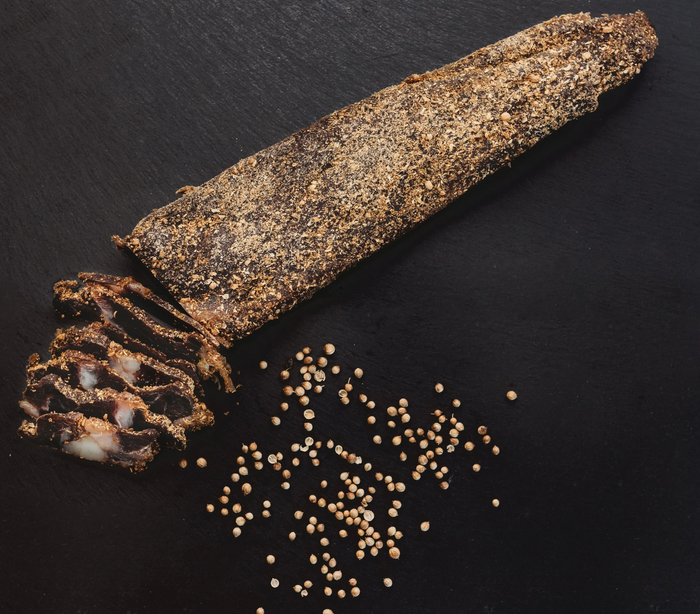
Biltong is air-dried, not cooked, and it is cut differently. Jerky is sliced thin across the grain. Biltong is traditionally dried as a thick strip or slab, then sliced afterward.
That changes what you want from the meat.
- A thicker piece. Because the strip is thick, the outside firms first and the center stays softer. Even, lean muscle gives you a predictable result.
- A thin fat cap. A little fat on the outside is welcome in biltong. It slows the surface drying and adds flavor. In jerky you trim it all off.
- Muscles from the round. Traditional biltong uses lean muscles from the back leg of the animal, most commonly named silverside and topside. We go through how they differ in Silverside vs Topside.
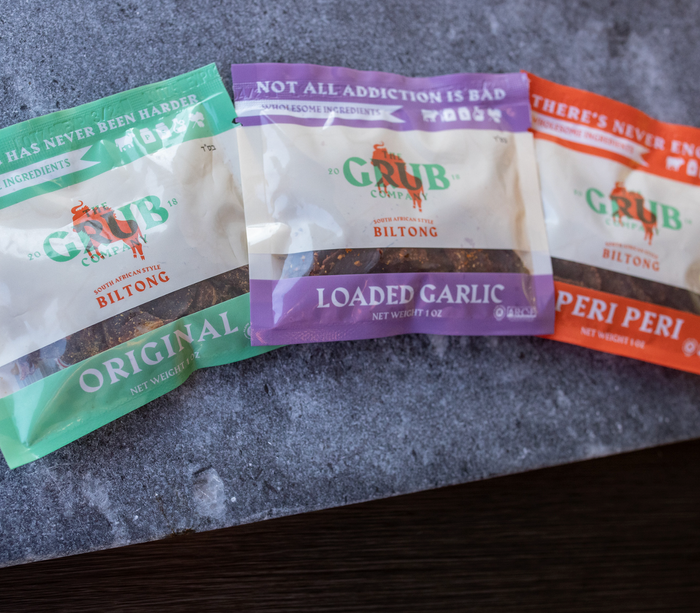
You can see the result in the bag. Our Sliced Biltong in Original, Peri Peri and Loaded Garlic is made from grass-fed kosher beef, sliced and ready to eat. The cut is a big part of why the chew gives way instead of fighting back.
Slicing: with the grain or against it
The cut is only half the choice. The direction of the knife is the other half.
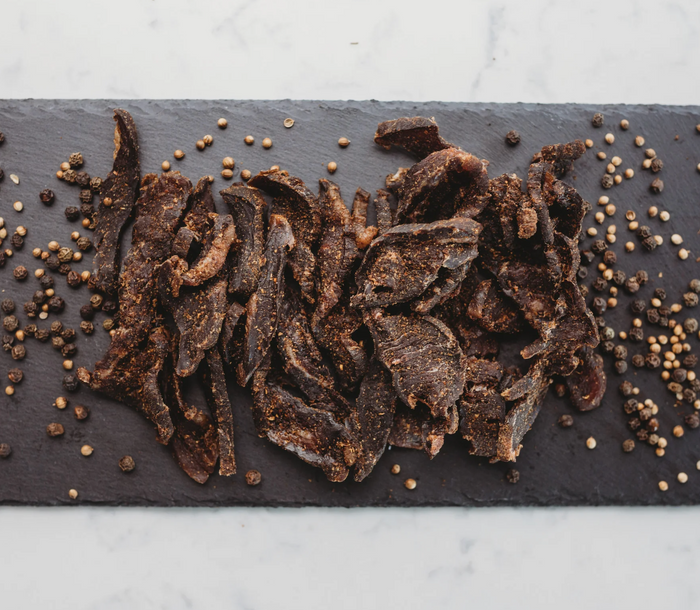
- Against the grain gives you a tender jerky that tears easily. Short fibers, less pull.
- With the grain gives you a chewier jerky that you work at. Long fibers, more resistance. Some people want exactly this.
Home cooks get cleaner slices if the meat is partly frozen first. An hour or two in the freezer firms it enough for a thin, even cut. About a quarter inch is a common thickness for jerky. Thinner dries faster and chews crisper. Thicker stays chewier but takes longer, and uneven strips dry unevenly.
Biltong goes the other way. It is traditionally cut with the grain before drying.
If you keep kosher, the cut has a second question
For a kosher shopper, "best cut" is not only about texture. The beef has to be kosher meat, and that starts with the animal and how it is processed. The part of the animal matters too.
Here is the plain version. A kosher animal has to be slaughtered correctly. Certain forbidden fats and a nerve have to be removed. That removal is called porging. It is much easier on some parts of the animal than others, so which cuts are available as kosher meat depends on who is doing the work. We explain it in What Is Porging, and Why Does It Matter for Kosher Jerky?
What that means for you: do not assume the cuts on a non-kosher list are the cuts available to you. Availability varies by butcher and by supplier. If you are buying meat to make jerky yourself, ask your butcher what is available and what it is certified as. If you have a question about a specific cut, ask your rabbi.
The marinade is a separate trap. Worcestershire and soy sauce, two standard jerky ingredients, are not always kosher. Home jerky is not kosher unless the meat, the marinade, the spices and the equipment all are. That is exactly why a certified product exists.
If you would rather skip the sourcing and go straight to the finished product, look at our kosher beef jerky collection. Our Meat Candy is real, whole sliced beef in two flavors, Hickory Kickory Dock and Baa-Baa BBQ Sheep. It is made with no ground scraps and no mechanically separated chicken.
When the best cut is not the answer
Here is the honest part. Choosing the right cut is the easy bit. Most home jerky fails somewhere else.
- Too much fat left on. Trim harder than feels reasonable. Fat you leave on will go off first.
- Uneven slices. Thick and thin strips on the same rack never finish together.
- Drying too fast. High heat makes a hard outside and a damp middle. Slow and steady wins.
- Rushing the cure for biltong. Biltong is a longer game. Home curing and drying need careful food safety, and getting it wrong is not a small mistake.
Making jerky at home is a fine project, and the right cut gets you most of the way there. It is the wrong project if you want a predictable result with no effort, or if you need the finished product to be certified kosher. In that case, buy it. You can see every size and flavor in our biltong shop.
The bottom line
For jerky, pick a lean round: top round first, eye of round for consistency, bottom round to save money. Trim every bit of fat. For biltong, pick lean, thick, even muscle with a thin fat cap and plan to dry it slowly. If you keep kosher, treat the cut as a sourcing question, not just a texture one. And if you would rather taste a good result than make one, start small. US orders over $50 ship free.
Frequently Asked Questions
What is the best meat for beef jerky?
Lean, whole-muscle beef from the round, with top round the most common first pick. It has little fat, a clear grain and an even shape, so it slices and dries evenly.
Is top round good for jerky?
Yes. Top round is lean, large and easy to slice into uniform strips. It takes a marinade well and dries evenly. It is the cut most home jerky makers start with.
Can I use ribeye or brisket for jerky?
You can, but you should not. Ribeye and brisket carry a lot of fat and connective tissue. Fat does not dry and turns rancid first, so the jerky keeps poorly and chews badly. Use them for other dishes.
Should I slice jerky with the grain or against it?
Against the grain gives a tender jerky that tears easily. With the grain gives a chewier one. It is a matter of taste. Biltong is traditionally cut with the grain.
Is the best cut for biltong the same as for jerky?
Close, but not identical. Both want lean, whole muscle. Biltong uses thicker pieces, often with a thin fat cap, and traditionally comes from the round, in muscles called silverside and topside.
Are all cuts of beef available as kosher meat?
Not always. Which cuts reach a kosher butcher depends on how the animal is processed, including the removal of forbidden fats and a nerve. If you are sourcing meat to make jerky yourself, ask your butcher, and ask your rabbi about any specific cut.
Does Grub ship outside the US?
No. We ship within the United States only, and US orders over $50 ship free.