Beef Jerky Seasonings: Blends That Work, and Kosher Checks for Each
The best beef jerky seasonings are built from four things: salt, something sweet, something sharp, and heat or smoke. Every blend below follows that shape, and each comes with a kosher check, because seasoning is where a Glatt Kosher batch most often goes wrong.
We make certified Glatt Kosher biltong and beef jerky in small batches in Florida, so we read spice labels for a living. Most people think the meat is the hard part of keeping jerky kosher. It usually is not. The hard part is a jar of "seasoning" with six ingredients you can pronounce and one you cannot. If you keep a kosher kitchen, read what certified kosher biltong involves, then use this page to season with your eyes open.
What a jerky seasoning actually does
Jerky is dried hard. Drying concentrates everything, so a seasoning that tastes balanced on raw beef tastes loud and salty once the water is gone. Plan for that.
Four jobs, in this order:
- Salt flavors the meat and pulls out moisture. It is the one ingredient you cannot skip.
- Sweet (brown sugar, honey, maple) rounds off the salt and helps the surface darken. Too much and the jerky turns tacky and burns at the edges.
- Sharp (black pepper, vinegar, mustard, citrus) keeps a salty, sweet bite from tasting flat.
- Heat or smoke (cayenne, red pepper, smoked paprika, chipotle) gives it a personality.
Everything else, like garlic, onion and coriander, is a supporting actor. Start with the four jobs, then add one or two supporting spices. A blend with twelve ingredients usually tastes like none of them.
Dry rub or wet marinade?
A dry rub is salt and spices pressed onto the surface of the strips. A marinade is the same idea in liquid. Neither is better. They give different jerky.
A dry rub gives a firmer, chewier jerky with a spicy crust. It is faster and cleaner, with no liquid to throw away. It also avoids bottled sauces, which is where most kosher problems hide. The trade-off is that the flavor sits on the surface and does not go deep.
A wet marinade goes deeper and gives a softer, glossier jerky. It is also the route that needs the most label-checking, because soy, Worcestershire, teriyaki and liquid smoke are all bottled. We cover those in our Worcestershire explainer and our piece on soy sauce.
If you are new to this, start with a dry rub. Fewer bottles, fewer traps.
Five seasoning blends that work
Each blend below is enough for about 1.5 pounds of lean beef, sliced about 1/4 inch thick (eye of round or top round, with the fat trimmed off). Mix the dry ingredients, press them into the strips, then rest the beef covered in the refrigerator for 8 to 12 hours before drying.
1. Classic salt and pepper
- 2 tablespoons kosher salt
- 1 tablespoon coarse black pepper
- 1 teaspoon garlic powder
- 1 teaspoon onion powder
The baseline. If the beef is good, this is all it needs. Kosher check: a lot of garlic and onion powders carry an anti-caking agent. Buy powders with a reliable certification on the label, not just the word "kosher" in the name.
2. Brown sugar and smoked paprika
- 1 tablespoon kosher salt
- 2 tablespoons brown sugar
- 1 tablespoon smoked paprika
- 1 teaspoon black pepper
- 1/2 teaspoon garlic powder
Sweet, smoky, and the closest dry-rub match to what most people mean by "BBQ jerky." Kosher check: smoked paprika is smoked, and spice processing is not always listed on the front of the jar. Look for a certification symbol, not an ingredient list alone.
3. Coriander and black pepper (the biltong way)
- 2 tablespoons kosher salt
- 2 tablespoons toasted, coarsely crushed coriander seed
- 1 tablespoon coarse black pepper
- 1 teaspoon brown sugar
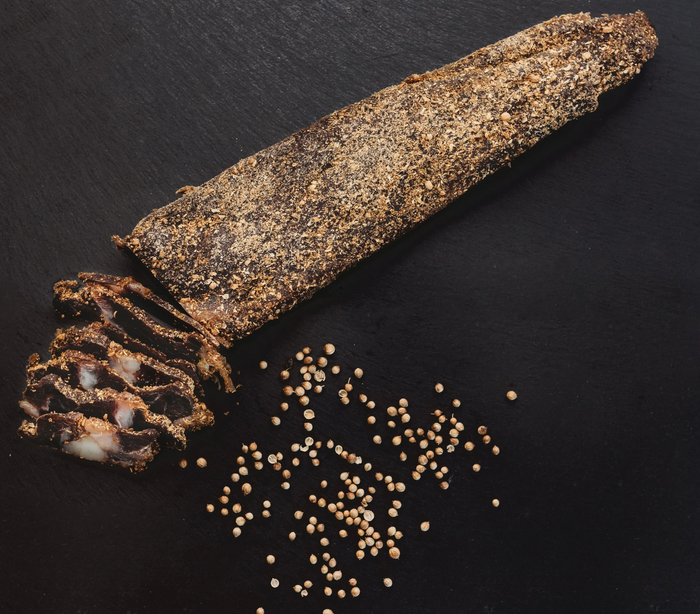
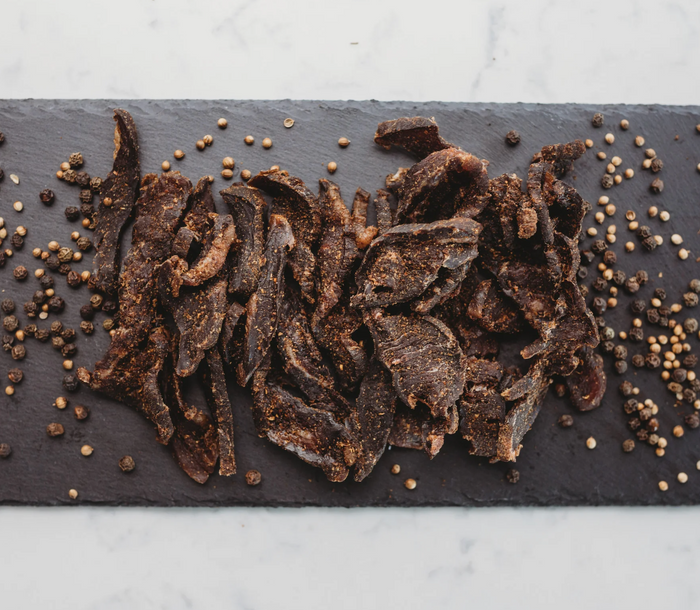
Biltong makers have used this for centuries, and it is the backbone of our Original biltong: beef, coriander, black pepper, salt, garlic and vinegar. Add a splash of vinegar to the dry rub and you are close. Toasting the coriander in a dry pan for a minute brings out the citrus note. Kosher check: whole seeds are the safest option, because there is nothing to add. Crush them yourself.
4. Cayenne heat
- 1 tablespoon kosher salt
- 1 tablespoon brown sugar
- 2 teaspoons cayenne
- 2 teaspoons coarse black pepper
- 1 teaspoon garlic powder
Heat that builds rather than shouts. Adjust the cayenne in half-teaspoon steps, because drying makes it hotter. Our Peri Peri biltong takes the same road with red pepper and a little brown sugar. Kosher check: ground chili is a common place for fillers to hide. Check for a certification and for a short ingredient list that says only chili.
5. Garlic and black pepper, wet
- 1/3 cup apple cider vinegar
- 2 tablespoons kosher salt
- 1 tablespoon honey
- 1 tablespoon cracked black pepper
- 1 tablespoon garlic powder
The one wet blend here, and it has no soy or Worcestershire in it. Whisk, then marinate 8 to 12 hours. Discard the marinade afterward. Do not reuse it or baste with it, because raw beef has been sitting in it. Kosher check: vinegar is the one to read. Look for a certification on the bottle.
The kosher checks that matter most
Seasoning is a bigger risk than it looks, because a label can be short and still hide a problem. These are the checks worth making every time.
- "Natural flavors," "spices" and "seasoning." These are catch-all words. They can cover ingredients that need their own certification. A certification symbol on the container settles it. A friendly front label does not.
- Dairy in a meat seasoning. Some bottled blends and seasoning packets contain whey, milk powder or cheese powder. Meat and dairy are kept separate, so a jerky seasoned with dairy is a problem. Read for milk, whey, casein and lactose.
- Worcestershire. Traditional Worcestershire contains anchovies. Fish and meat together is a separate issue from dairy, so a bottle that is not specifically certified is not for this recipe.
- Liquid smoke. Often a bottled product with its own supervision question. Smoked paprika is the easier way to get smoke.
- Soy sauce, teriyaki and BBQ sauce. Each is a bottled, multi-ingredient product. Each needs its own certification.
- Passover. If you are making anything for Pesach, every ingredient needs a Pesach certification. Many spice blends do not have one. When in doubt, ask your rabbi.
One more honest point. Even with a perfect pantry, the meat has to be kosher meat from a source you trust, and your equipment has to be right for meat. A seasoning cannot fix either one.
Drying it safely at home
We keep this conservative. Heat the seasoned strips to 160°F with a meat thermometer, either briefly in a hot oven or by steaming them first. Then dry at 160 to 175°F for about 3 to 5 hours, until a strip bends and cracks without snapping in half. Cool it completely before bagging. Keep it in the refrigerator and eat it within about two weeks, or freeze it.
Homemade jerky does not have the commercial drying and packaging that makes a store-bought bag shelf-stable. That is the quiet reason people buy it instead of making it.
When to skip the blending and buy it
Home seasoning is a good hobby. It is the wrong pick if you need a lot, need it kosher with certainty, or need it to last in a bag in a drawer.
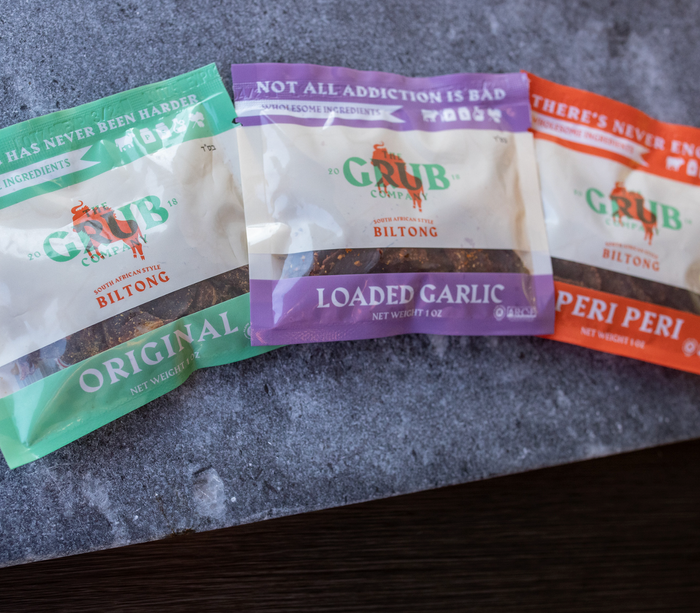
For a kitchen that keeps kosher, a blend with five spice jars means five labels to verify, plus the beef, the salt and the vinegar. That is exactly why a certified product exists. Our Sliced Biltong is air-dried, savory and already seasoned in Original, Peri Peri and Loaded Garlic. If you want the sweeter, cooked style, Meat Candy comes in Hickory Kickory Dock (smoky hickory) and Baa-Baa BBQ Sheep (Korean BBQ). Browse the full range of kosher beef jerky, or see everything on Buy Biltong Online. US orders over $50 ship free.
If you are curious how a biltong spice blend is built, read the spice blend behind Peri Peri biltong.
The bottom line
Build every seasoning from salt, sweet, sharp and heat or smoke. Start with a dry rub. Read every label for a certification, not just an ingredient list, and watch for dairy, fish and "natural flavors." If a kosher kitchen is the goal, fewer jars is safer.
Frequently Asked Questions
What is the best seasoning for beef jerky?
For most people, salt, coarse black pepper, garlic powder and a little brown sugar. It is simple, it works on any lean cut, and it lets the beef come through. Add smoked paprika or cayenne once you have the base right.
How much salt should I use per pound of beef?
About 1 to 1.5 teaspoons of kosher salt per pound of beef in a dry rub is a sensible start. Drying concentrates salt, so go lighter than you would for a steak. Taste a small test batch before you season everything.
Is beef jerky seasoning kosher?
Not automatically. Plain single spices are often fine, but blends and bottled sauces can carry hidden ingredients, dairy or fish. Look for a reliable certification on every container, and ask your rabbi if you are unsure.
Can I use a store-bought jerky seasoning packet?
Only if the packet itself is certified and has no dairy in it. Many packets include whey or "natural flavors." Check the packet, and check any cure or liquid that comes with it.
Dry rub or marinade: which is better?
A dry rub gives a chewier jerky with a spicy crust and avoids most bottled ingredients. A marinade gives a softer, deeper-flavored jerky but needs more label-checking. Beginners usually do better with a dry rub.
Is homemade jerky as safe as store-bought?
Only if you are careful. Heat the strips to 160°F, dry them fully, cool them, refrigerate them and eat them within about two weeks. A commercial bag is dried and packed to be shelf-stable. A homemade batch is not.
Is Grub's biltong seasoned the same way as jerky?
Not quite. Biltong is air-dried with a savory blend: Original uses coriander, black pepper, salt, garlic and vinegar. Our Meat Candy jerky is cooked and sweeter. Both are certified Glatt Kosher.