What Is Biltong? The Cured Dried Meat Explained
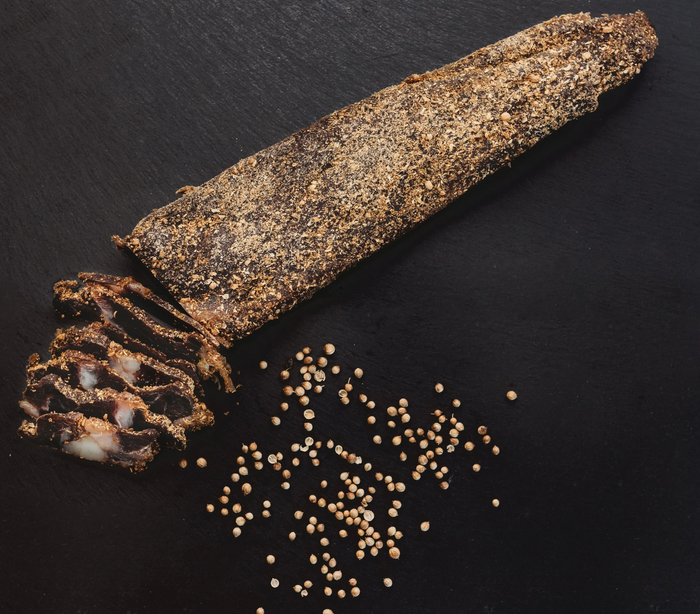
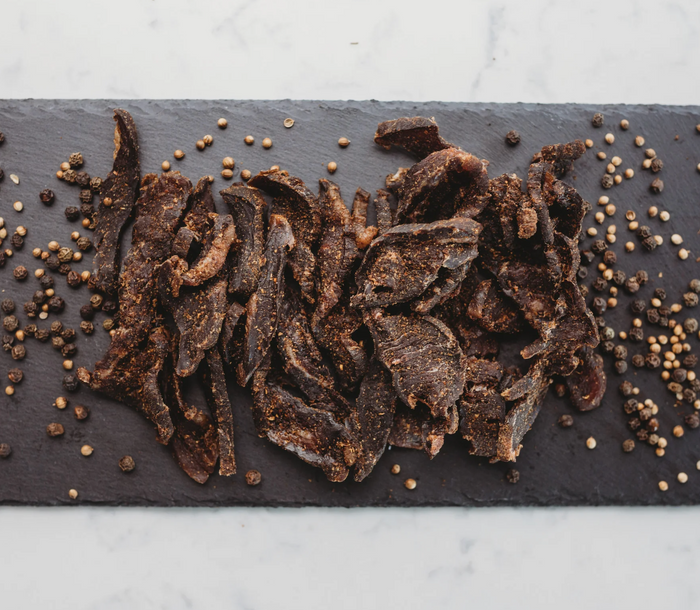
The real difference between biltong and beef jerky comes down to how each one is made. Jerky is sliced thin and heat-dried or smoked. Biltong uses whole strips or thick chunks, no heat, no smoke, just vinegar, salt, and air. That process gives biltong a softer, more tender texture and a flavor that's savory and spiced rather than smoky. The coriander seed is load-bearing here. It's the flavor note that makes biltong taste distinctly like biltong and not like any other dried meat you've had.
Traditional seasoning is salt, black pepper, coriander, and malt or apple cider vinegar. Regional and commercial versions layer in garlic, cloves, or chili depending on preference. None of those additions change the underlying process, which has stayed largely the same since the 1600s.
If you want to understand how biltong fits into different dietary needs, our guide to kosher biltong certification covers what to look for when sourcing it. And if you're weighing your snacking options, the breakdown on how biltong compares to beef jerky goes deeper on texture, flavor, and ingredient differences so you can pick the right one for what you actually want.