Why Grass-Fed Beef Matters for Biltong (And When It Doesn't)
What "Grass-Fed" Actually Changes
Grass-fed beef comes from cattle that ate mostly grass and forage instead of being finished on a grain-heavy feedlot diet, and that diet changes the fat on the animal before any curing ever starts. Grass-fed beef tends to carry less overall fat and a different fat composition than grain-fed beef, since the animal's diet directly shapes how fat builds up in and around the muscle.
Shop the real thing: buy biltong online, Glatt Kosher and made in Florida. US orders over $50 ship free.
None of that is a flavor opinion, it's just what the diet does to the raw material. A grain-fed steer finished for months on corn puts on marbling fast, which is exactly what a lot of steak cuts are built around. A grass-fed steer builds leaner muscle over a longer growing period. Neither one is the wrong kind of beef. They're suited to different jobs.
Why It Matters More in a Dried, Cured Product
Biltong is where the leaner side of that equation actually matters. When you air-dry meat over days, fat behaves very differently from lean muscle. Fat doesn't dry the way muscle does, and fat that sits in a product for a long shelf life has more chance to turn rancid over time than the lean muscle around it does. Starting with leaner beef means there's less fat sitting in the cut waiting to go off, and the drying happens more evenly through the piece instead of drying around pockets of fat.
Say you're comparing two bags side by side, one made from a well-marbled grain-fed cut and one from grass-fed beef. The grass-fed cut is going to dry more consistently end to end, because there's less fat interrupting the muscle fiber the vinegar cure and air need to reach. That's not just a taste preference, it's a practical reason grass-fed beef suits this specific process better than a heavily marbled cut would.
Where the Difference Gets Smaller
Grass-fed doesn't matter the same way in every context, and it's worth being straight about that. If you're searing a ribeye and want maximum marbling melting through the meat while it cooks, a well-marbled grain-fed cut is going to give you something grass-fed beef isn't built to deliver. That's a real difference, and pretending grass-fed wins every category wouldn't be honest.
For biltong specifically, though, you're not cooking the fat down or relying on marbling for juiciness. You're drying the meat slowly at room temperature, so the qualities that make grass-fed beef work well here, leaner muscle and more even moisture loss, are exactly the qualities the process depends on. The same trait that makes grass-fed beef less ideal for a fatty, marbling-driven cut is what makes it a better starting point for a long air cure.
The Standard Behind It
Grub Company starts every batch with grass-fed beef and kosher certification, and that's not a marketing detail, it's the baseline. We won't compromise on the starting cut, and we won't cure something we wouldn't hand to our own families. Mechanically separated meat and grain-fed trim built for cheap volume don't belong in a product where the whole point is to actually taste the beef and the cure, not a fatty coating hiding what's underneath.
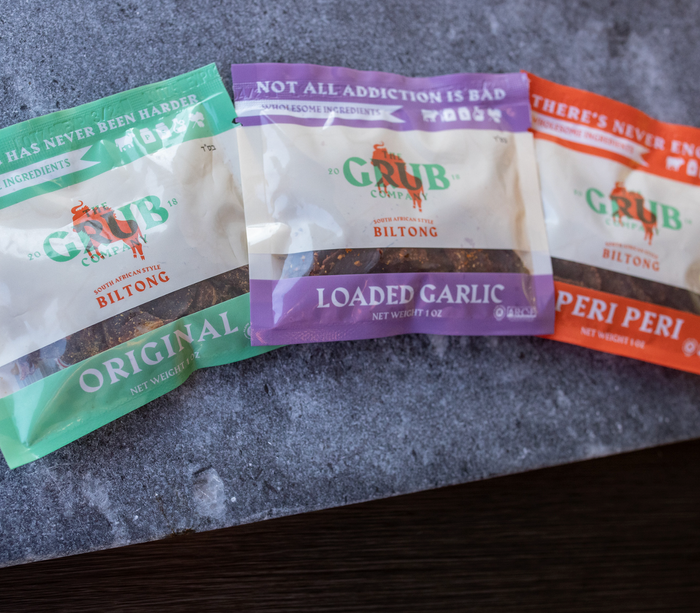
Once you understand why the cut matters, the next thing worth figuring out is which flavor fits how you actually like to eat. The Sampler Pack is the lowest-risk way to try Original, Peri Peri, and Loaded Garlic side by side before committing to a full bag of one.
Frequently Asked Questions
Is grass-fed beef always leaner than grain-fed beef?
Generally yes. Cattle raised mostly on grass and forage tend to build less overall fat than cattle finished on a grain-heavy diet, since grain finishing is specifically what drives fast fat gain and heavy marbling. There's some variation by breed and age, but as a general rule, grass-fed beef runs leaner than grain-fed beef, which is part of why it behaves differently once it goes into a long drying process like biltong.
Does grass-fed beef taste different from grain-fed beef?
Yes, and the difference comes from both the diet and the fat content. Less marbling changes texture and mouthfeel, and the fat itself carries flavor, so a leaner animal tastes a bit different than a heavily marbled one. In biltong, where the meat is cured and air-dried rather than cooked in its own fat, the beef flavor and the spice cure come through more directly than the fat would.
Why does fat content matter for biltong specifically?
Air-drying works by slowly removing moisture from the meat over days. Fat doesn't dry the same way lean muscle does, and it's more prone to going rancid over a long shelf life than lean muscle is. Starting with leaner, grass-fed beef means the meat dries more evenly and there's less fat sitting in the product waiting to turn. That's a practical reason grass-fed suits this specific curing method well.
Is grass-fed beef better for every cut of meat?
No, and it's worth being honest about that. For cuts where marbling drives the eating experience, like a ribeye you're searing hot and fast, a well-marbled grain-fed cut can outperform a leaner grass-fed one. Grass-fed beef isn't automatically the better choice everywhere. It's the better starting point specifically for something like biltong, where slow air-drying and even moisture loss matter more than marbling.
Is Grub Company biltong kosher as well as grass-fed?
Yes, Grub Company biltong is kosher certified and starts with grass-fed beef in every batch. Both of those are non-negotiable parts of how it's made, not features layered on for marketing. The goal is a product with a short, honest ingredient list built from a cut of beef worth curing in the first place.
Where do I start if I'm new to biltong made from grass-fed beef?
The Biltong Sampler Pack is a good starting point since it comes with three mini bags, so you can try Original, Peri Peri, and Loaded Garlic without committing to a full bag of a flavor you haven't tasted yet. From there, Sliced Biltong or the Bulk Biltong option make sense once you know which flavor you actually like.