What Is a Hechsher, and Where to Find It on a Bag of Jerky
A hechsher is a kosher certification symbol: a small mark printed on the package by the agency that supervises the product. On a bag of jerky, it is the single most important thing to find, because it is the difference between a brand saying "kosher" about itself and an independent agency saying it. Here is where to look and what it should tell you.
Looking to buy kosher biltong? Everything is Glatt Kosher.
See also: what makes meat kosher.
What a hechsher is
The word comes from the Hebrew for "fit" or "approved." Each kosher agency has its own symbol, usually a simple logo with a letter or shape inside it. When it appears on a product, it means that agency supervises how the product is made, including the ingredients, the equipment and the process, and puts its name behind the result.
Where to find it on a jerky bag
- Front, near the brand name, on many products.
- Back, near the ingredient list or nutrition panel, on many others.
- Next to the word "meat" or a letter "M", which tells you it is a meat product. On beef jerky that designation should always be there, or be obvious.
If you cannot find a symbol, do not assume. The word "kosher" printed on its own, with no symbol, is the brand's own claim.
What to do once you find it
- Identify the agency. Search the symbol if you do not recognize it.
- Check your community accepts that agency. Standards vary between agencies. That is a question for your rabbi.
- Check it covers the finished product, not just an ingredient. Certified beef processed in an uncertified plant is not a certified jerky.
- Look for a current certificate. Serious producers publish theirs.
Things that are not a hechsher
| You see | What it actually is |
|---|---|
| "Kosher-style" | A description of a kind of food. No supervision |
| A plain letter K | Often a brand's own claim; the letter K alone cannot be trademarked |
| "All natural," "no pork" | Unrelated to kashrut |
| A Star of David on the label | Decoration, not certification |
Common hechsher symbols
Most kosher symbols in the United States belong to a handful of large agencies. You will often see the OU (Orthodox Union), the OK (OK Kosher Certification), Star-K, KOF-K and the CRC (Chicago Rabbinical Council). Smaller local and regional agencies also certify meat, especially butchers and producers. Each agency sets its own standards and decides which plants and products it will put its name on, so two symbols are not interchangeable. Whether your household or community accepts a particular agency is a question for your rabbi.
Glatt and regular kosher meat
For beef, you will often see the word "glatt" next to the symbol. Glatt is a Yiddish word meaning "smooth." It originally described an animal whose lungs were found free of certain adhesions when inspected. Today many people use "Glatt Kosher" on beef to mean the stricter standard, and some communities will only buy glatt meat. A product that is kosher but not glatt is still kosher under some opinions, which is why the answer depends on your own practice. If this matters to you, check the certificate, and ask your rabbi.
Questions people ask
Is a plain K a hechsher? No. A plain letter K is often a brand's own claim, and a K cannot be trademarked. A hechsher names an agency that stands behind the product.
Does one hechsher fit every community? No. Agencies differ, and communities differ in which agencies they accept. That is a question for your rabbi.
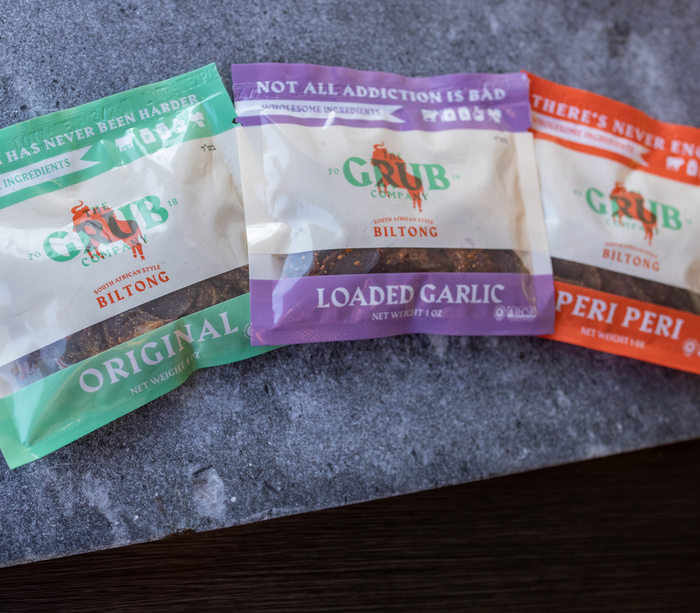
Where is the hechsher on a bag of biltong? The same places as on jerky: usually on the front near the brand name, or on the back beside the ingredients. On meat it should come with a meat designation.
Is the word "kosher" alone enough? Only if a symbol or a published certificate sits behind it. Without one, it is the brand's own statement.
Ours
Every bag we make, our kosher beef jerky and our biltong, is certified Glatt Kosher. The certificates are published so you can read the agency and check it yourself. For everything else to check on a bag, see is beef jerky kosher?
Try it: Is This Jerky Kosher? Label Checker. Answer five questions about the bag in your hand.