sliced biltong for first-time buyers — Frequently Asked Questions
Sliced Biltong for First-Time Buyers: Your Questions Answered
Sliced biltong is the easiest entry point into South African cured meat. Each piece is ready to eat straight from the pack, requires no preparation, and delivers a tender, melt-in-mouth texture that surprises almost every first-time buyer expecting something closer to beef jerky. This page covers the questions newcomers ask most often, from what that white coating actually is to how quickly you need to finish an opened bag.
What exactly is biltong, and how is it different from beef jerky?
Biltong is a vinegar-and-salt-cured, air-dried meat originating in Southern Africa, most notably South Africa and Namibia, where a dry climate made outdoor curing practical for centuries. Jerky is typically smoked or heat-dried, which produces a chewy, slightly leathery strip. Biltong is never smoked. The vinegar cure tenderises the fibres before drying, so the finished product is softer, more moist, and pulls apart easily rather than requiring sustained chewing. If your only reference point is a gas-station jerky stick, sliced biltong will feel like a completely different product category.
Why does sliced biltong have a white powdery coating on the surface?
The white coating is naturally occurring surface mold, typically penicillium species, that develops during the curing and drying process. It is a quality indicator, not a contamination warning. First-time buyers discard perfectly safe product every day because they mistake this bloom for spoilage. Experienced biltong consumers recognise it immediately as a sign the meat was properly air-cured at the right humidity. You can eat straight through it. It does not affect flavour negatively and in many cases adds a subtle aged complexity. If in doubt, the smell test settles it: properly cured biltong smells clean, savoury, and slightly tangy. Off product smells sour or putrid, and the distinction is unmistakable.
Why does biltong feel so much more tender than I expected?
The vinegar marinade used before drying partially denatures the muscle proteins, breaking down the connective tissue that makes other dried meats tough. The result is a texture that some describe as melt-in-mouth, especially in thinner slices. This is the single most common surprise for first-time buyers: they brace for a jaw workout and instead get something closer to charcuterie. Whole biltong chunks require more chewing because the interior muscle fibres are thicker, which is one reason the sliced format is recommended for newcomers.
What are the main flavour varieties in sliced biltong?
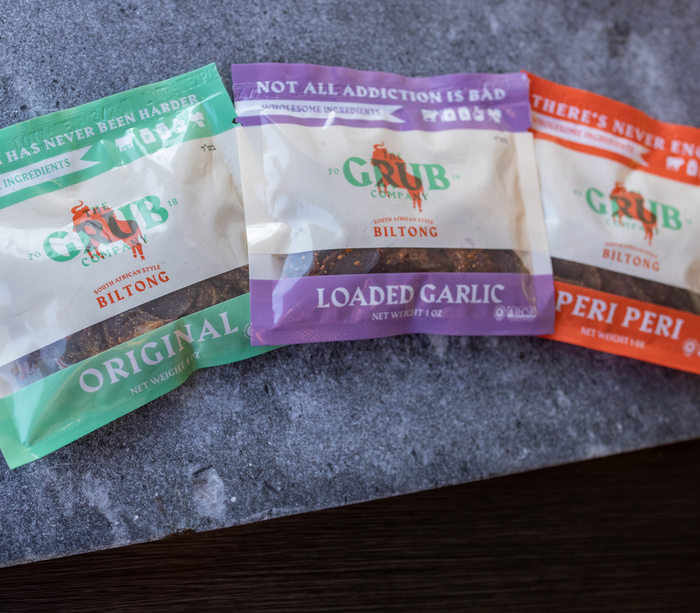
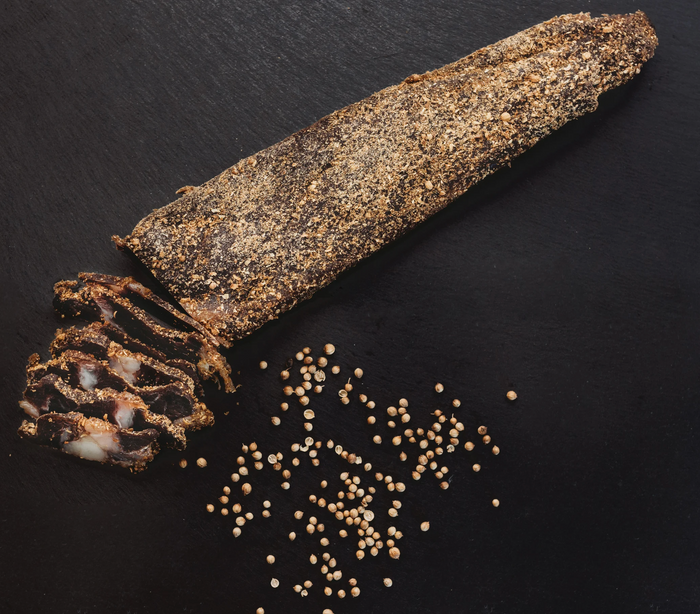
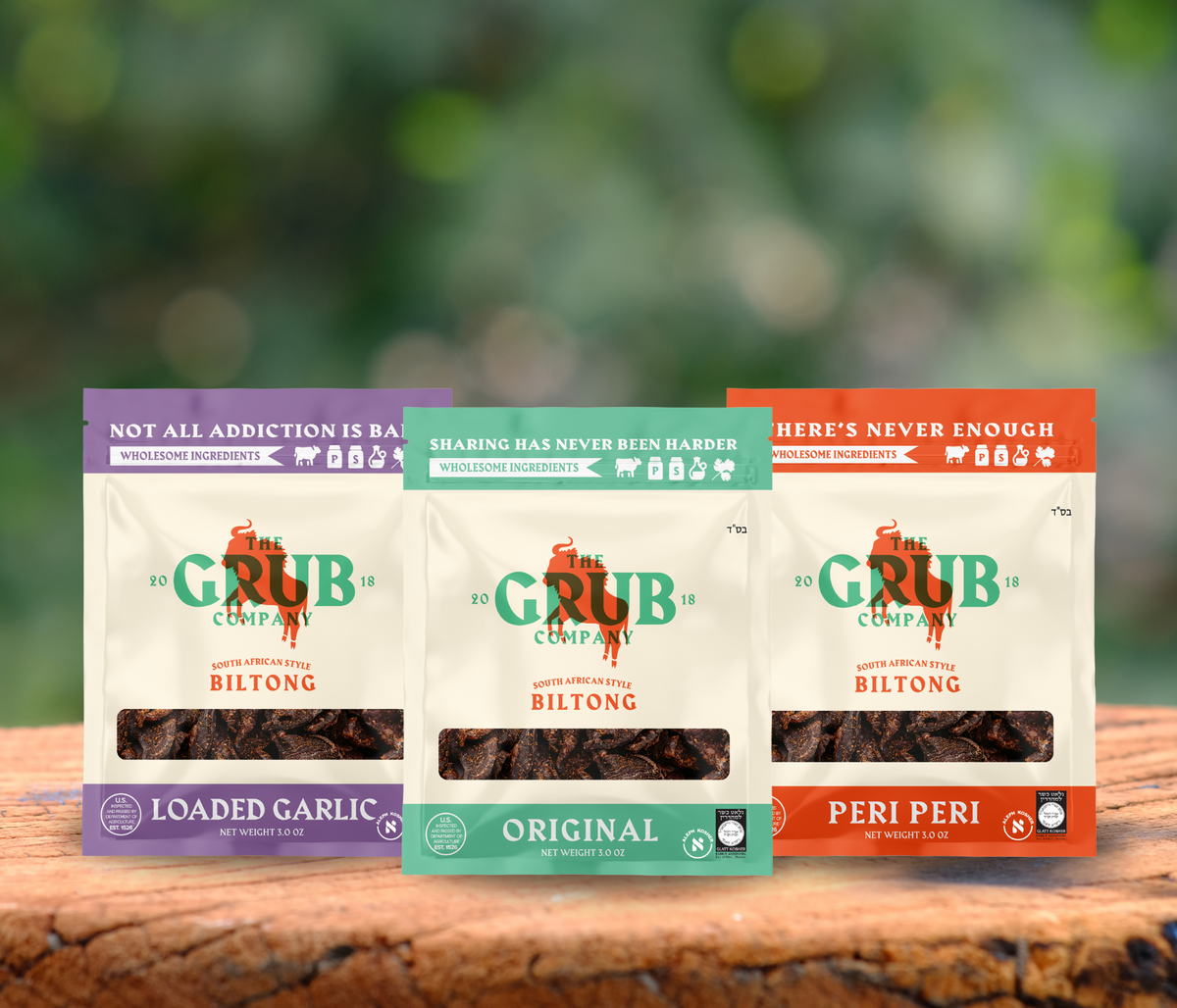
Most producers offer at least three profiles: plain (salt and vinegar only), peppered (coarse black pepper crust), and spiced (blends that may include coriander, chilli, or paprika, depending on the maker). Coriander seed is the most traditional seasoning in South African biltong and appears in almost every recipe. The sliced format is ideal for sampling because you can try each variety without committing to a large whole slab of each type. Whole biltong in smaller trial weights is economically inefficient to produce, so sliced packs are the practical sampler vehicle.
Does sliced biltong need refrigeration before opening?
Vacuum-sealed sliced biltong is shelf-stable and does not require refrigeration before the pack is opened. The vacuum removes the oxygen that drives oxidation and microbial growth, allowing the product to be stored at room temperature away from direct sunlight and heat. Check the best-before date on the specific pack you buy, as production date and moisture content vary between makers. Once the seal is broken, the storage rules change significantly, which is covered in the next question.
How should I store sliced biltong after opening, and how quickly must I eat it?
Sliced biltong has a much larger surface-area-to-mass ratio than whole pieces or slabs. Once the vacuum seal is broken and the meat is exposed to air, oxidation begins immediately and the slices dry out and lose texture noticeably faster than a whole piece would. Transfer any leftovers to an airtight container or resealable bag, pressing out as much air as possible, and consume within 2 to 3 days for best texture and flavour. Whole biltong maintains moisture longer after opening because far less surface is exposed relative to its mass. Sliced packs are sized for a single sitting or short-term use precisely because of this difference.
Is there any mold I should actually be worried about?
Yes. The white penicillium bloom described above is harmless. Green, black, or fuzzy mold patches with irregular edges are a different matter and indicate the product was stored in conditions that allowed harmful mold species to establish. If you see colour other than white, or the white bloom has a slimy rather than powdery texture, discard the product. A properly sealed pack stored at room temperature will not develop these. They appear only when product is stored damp, in contact with other contaminated food, or well past its date.
Can I eat biltong if I am not used to high-salt foods?
Biltong is a cured meat, and salt is a core preservative in the process. A typical 30 g serving sits in the range of 400 to 700 mg of sodium depending on the producer, which is meaningful if you are managing sodium intake. The slice format actually helps here: because the pieces are portioned, it is easier to moderate quantity than it is with a whole slab where the temptation is to keep cutting. If you are salt-sensitive, start with a smaller serving and check the nutrition panel on the specific pack.
How does biltong compare to jerky on protein content?
Biltong is generally higher in protein per gram than most commercial jerky because jerky formulas often include added sugars, sauces, and flavourings that dilute the meat content. A 30 g serving of biltong typically delivers 15 to 18 g of protein with little or no added sugar. Jerky in the same serving size commonly contains 2 to 6 g of sugar from marinades. For buyers prioritising protein density, biltong consistently outperforms standard jerky by a meaningful margin.
What should I look for to know the biltong is good quality before I buy?
Four markers distinguish well-made sliced biltong. First, the colour inside the slice should be a deep burgundy-red, not grey or uniformly brown throughout, which signals over-drying. Second, the edges should show the characteristic darkened crust while the centre retains some moisture. Third, the ingredient list should be short: meat, vinegar, salt, and spices. Long ingredient lists with preservatives, nitrates, or extensive additives are a sign the producer is compensating for a shorter or less careful curing process. Fourth, reputable producers will state the origin and cut of meat used, most commonly beef silverside or topside.
Is sliced biltong safe for children?
Sliced biltong is appropriate for older children who can manage normal solid foods. The tender texture of sliced biltong is actually easier for younger eaters to handle than whole chunks or tough jerky strips, since no significant jaw effort is required. The main considerations are sodium content per serving and any spice level in flavoured varieties. Plain or lightly peppered options are the safest starting point. As with any high-protein cured meat, supervise very young children to ensure pieces are small enough to swallow safely.
Where can I learn more about biltong varieties and how they are made?
If you want to go deeper on how biltong curing works, what cuts of beef are used, or how whole biltong compares to the sliced format you just read about, the motty learning hub covers the process in detail. You can also browse the full range of sliced and whole biltong options in the biltong collection to compare flavour profiles side by side.